The Cancel Button You Think Is Required Is Not
The FTC's click-to-cancel rule was struck down. Its own March 2026 filing calls it "the vacated 2024 Rule".
If you buy through our links, we may earn a commission. It never affects our verdicts or scores — how that works. As an Amazon Associate I earn from qualifying purchases.
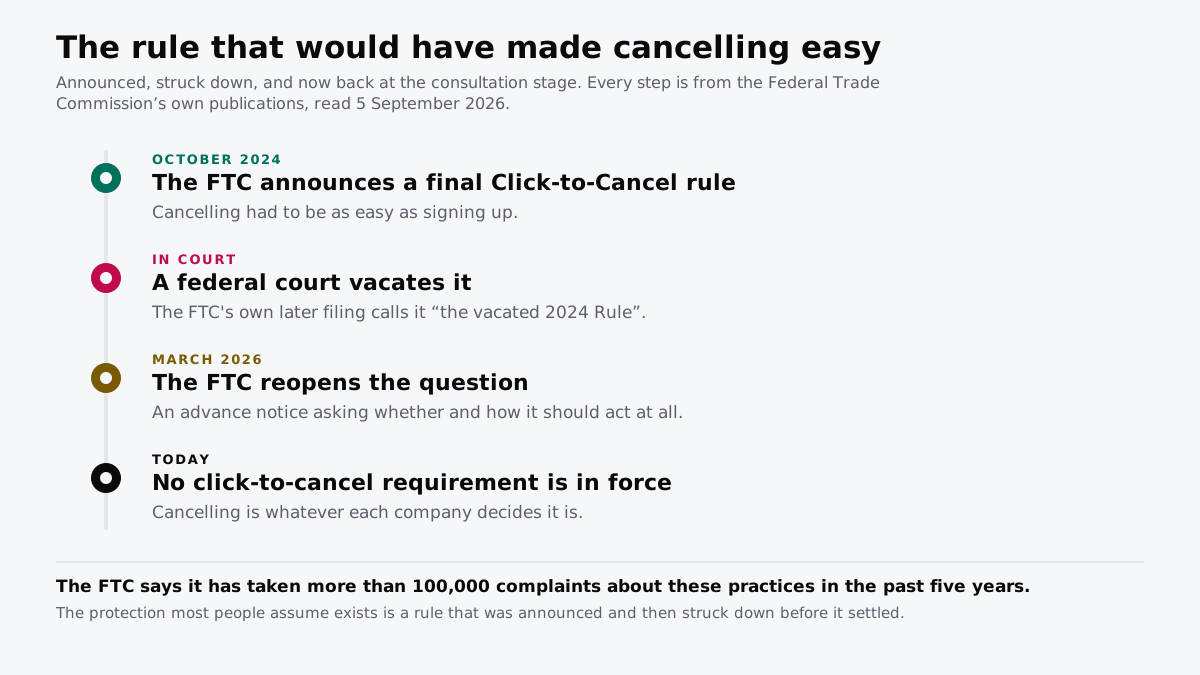
The rule that would have made cancelling as easy as subscribing does not exist. The FTC announced it in October 2024, a court struck it down, and the Commission’s own March 2026 filing refers to “the vacated 2024 Rule”.
Which matters for every page we have published this season about what a device costs after you buy it, because all of them assume you can leave.
What happened, in four steps
| October 2024 | The FTC announces a final Click-to-Cancel rule. Cancelling had to be as easy as signing up. |
| In court | A federal court vacates it. |
| March 2026 | The FTC opens an advance notice asking whether and how it should act at all. |
| Today | No federal click-to-cancel requirement is in force. |
Every step from the Commission’s own publications, read 5 September 2026.
The gap between what people believe and what is true
The rule was announced loudly, covered everywhere, and entered public memory as a thing that happened. The vacatur was covered far less, and the reopening of the rulemaking barely at all.
So a large number of people believe there is a legal requirement that a subscription be cancellable in the same number of clicks it took to start. There is not, and the FTC’s own numbers suggest the underlying problem never went away: more than 100,000 complaints in five years about deceptive enrolment, difficult cancellation and unauthorised billing.
What is actually left
Three things, and none of them is a click-to-cancel button.
The older Negative Option Rule still exists. It is narrow, and it is not the 2024 rule. What the FTC is now consulting on is precisely whether to replace or extend it.
State law has not gone anywhere. Several US states have their own automatic renewal statutes that operate regardless of the federal position, and they are where a real obligation is most likely to be found today.
General prohibitions on deception still apply. A company that makes cancellation deliberately obstructive is exposed under law that predates any of this. What is missing is the specific, bright-line requirement.
Why this belongs on a tech site
Because subscriptions are now attached to hardware rather than sold separately, and the decision to accept one is made in the same minute as the decision to buy a doorbell or a console.
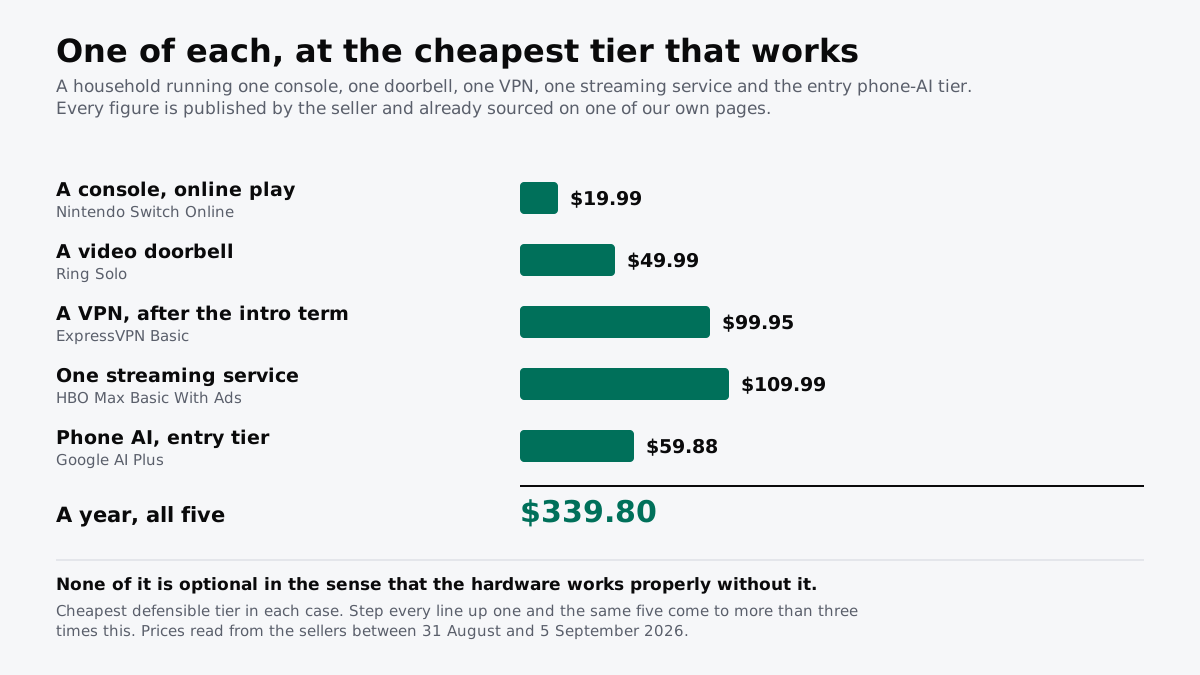
Our own count of what a household pays in a year came to $339.80 at the cheapest tiers across five categories. The ease of leaving any of them is not a legal guarantee. It is a design choice each company makes, and the regulator is currently asking the public whether it should be otherwise.
What to actually do
- Assume cancelling is harder than subscribing, and find out how before you start, not after. The path is usually documented in the help pages.
- Prefer the tier or the store that lets you cancel where you signed up. A subscription bought through an app store can usually be stopped there in a few taps, which is a stronger practical protection than any rule currently in force.
- Diary the renewal date. It is the one defence that works regardless of what the seller’s cancellation flow looks like.
- Check your own state’s automatic renewal law if a company will not let you leave. That is where an enforceable obligation is most likely to sit today.
- Comment if you have a view. The FTC’s notice is an open consultation, which is the rarest thing on this page: a regulator explicitly asking.
How we researched this
No one at bitcritiq has handled this product. Everything here comes from published sources, listed below.
- What this cannot tell you
- This describes federal rulemaking in the United States and is not legal advice. Several US states have their own automatic renewal laws that continue to apply regardless of the federal position, and a company operating in the European Union or United Kingdom faces separate requirements this page does not cover. It does not name any company as behaving badly. And rulemaking moves: the FTC has an open consultation, so the position described here is the position on the date it was read.
How we chose this, and what we did
- Why this subject
- We have spent this season costing out subscriptions attached to hardware — a console, a doorbell, a phone's AI features, a VPN. Every one of those pages assumes the reader can leave when they want to. That assumption rests on a rule most people believe exists, and it does not. The status is a matter of public record on the regulator's own site, which makes it reportable rather than arguable.
- How we looked at it
- Every statement about the rule's status is taken from the Federal Trade Commission's own publications: its press release announcing the 2024 rule, its rule page, and its March 2026 advance notice of proposed rulemaking. Where this page describes the rule as vacated, that is the FTC's own word for it in that March 2026 filing.
What this rests on
5 claims, all official. Nothing here was measured by bitcritiq — see how we test for why. Open a claim to read the source it came from.
The FTC announced a final Click-to-Cancel rule on 16 October 2024, requiring a simple mechanism to stop recurring charges.Official
Its own press release of that date announced the final rule and states it requires sellers to provide simple cancellation mechanisms to immediately halt recurring charges.
That rule was vacated, and the FTC itself refers to it as vacated.Official
The Commission's March 2026 advance notice of proposed rulemaking refers to "the vacated 2024 Rule".
In March 2026 the FTC reopened the question of whether to regulate this at all.Official
Its March 2026 release seeks comment on whether and how the Commission should use its authority to address negative option marketing, including whether to amend the current rule.
The FTC says it has received more than 100,000 complaints about these practices in the past five years.Official
Stated in its March 2026 announcement, alongside descriptions of deceptive enrolment, difficult cancellation and unauthorised billing.
No federal click-to-cancel requirement is in force today.Official
The 2024 rule that would have imposed one is described by the Commission as vacated, and the March 2026 notice is an advance notice rather than a rule.
Sources 4
- FTC Seeks Public Comment in Response to Advance Notice of Proposed Rulemaking Regarding Negative Option Marketing Practices — Federal Trade CommissionOfficialStandards / .govaccessed Sep 5, 2026
- Federal Trade Commission Announces Final Click-to-Cancel Rule — Federal Trade CommissionOfficialStandards / .govaccessed Sep 5, 2026
- Negative Option Rule — Federal Trade CommissionOfficialStandards / .govaccessed Sep 5, 2026
- Everything in the House That Needs a Subscription — bitcritiqaccessed Sep 5, 2026
No email, no account
Follow bitcritiq
Every new article, in whatever reader you already use.
Subscribe by RSSAll the ways to follow
Using Chrome on Android? Open the browser menu and tap Follow. New articles then turn up in the Following tab in Discover.
read next
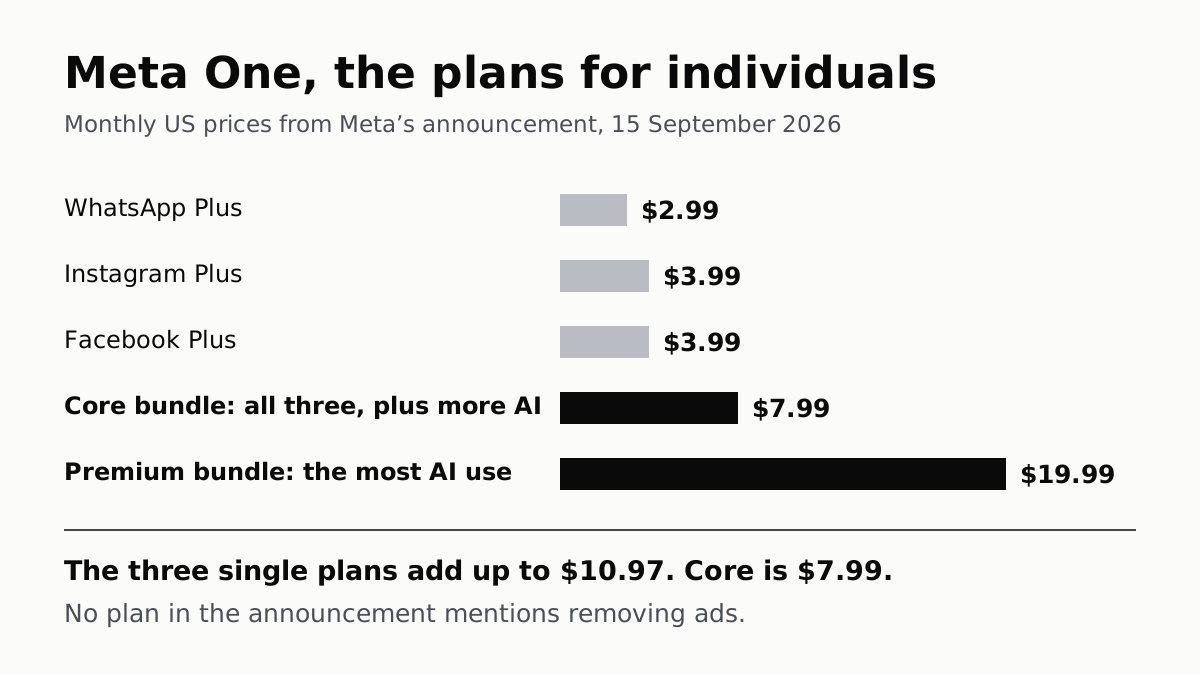
Meta One Starts at $2.99, and No Plan Says It Removes Ads
Meta priced nine plans on 15 September. Core at $7.99 undercuts its three apps bought singly, and none promises an ad-free feed.
Everything in the House That Needs a Subscription
One console, one doorbell, one VPN, one streaming service and entry-tier phone AI comes to $339.80 a year.
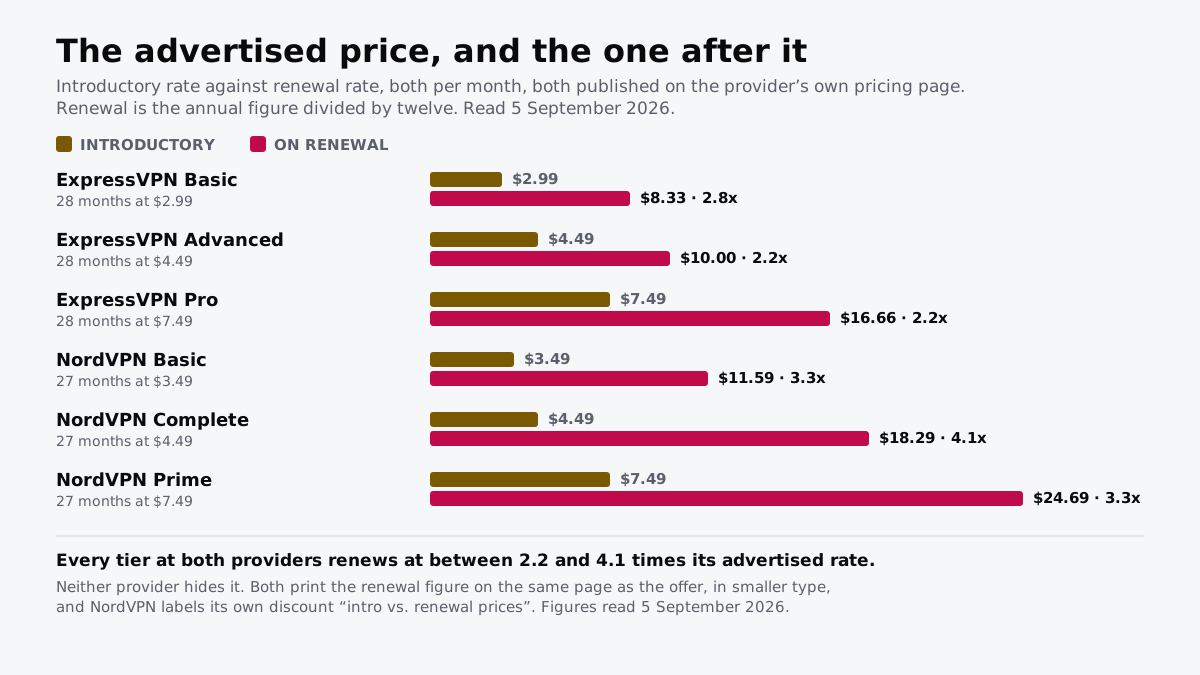
The VPN Price You See Is Not the One You Pay
NordVPN's $3.49 a month renews at $139.08 a year. ExpressVPN's $2.99 renews at $99.95. Both say so on the page.
What Streaming Actually Costs Once You Take the Ads Out
Netflix charges $132 a year to remove its ads. A whole year of HBO Max, ads included, is $109.99.