The VPN Price You See Is Not the One You Pay
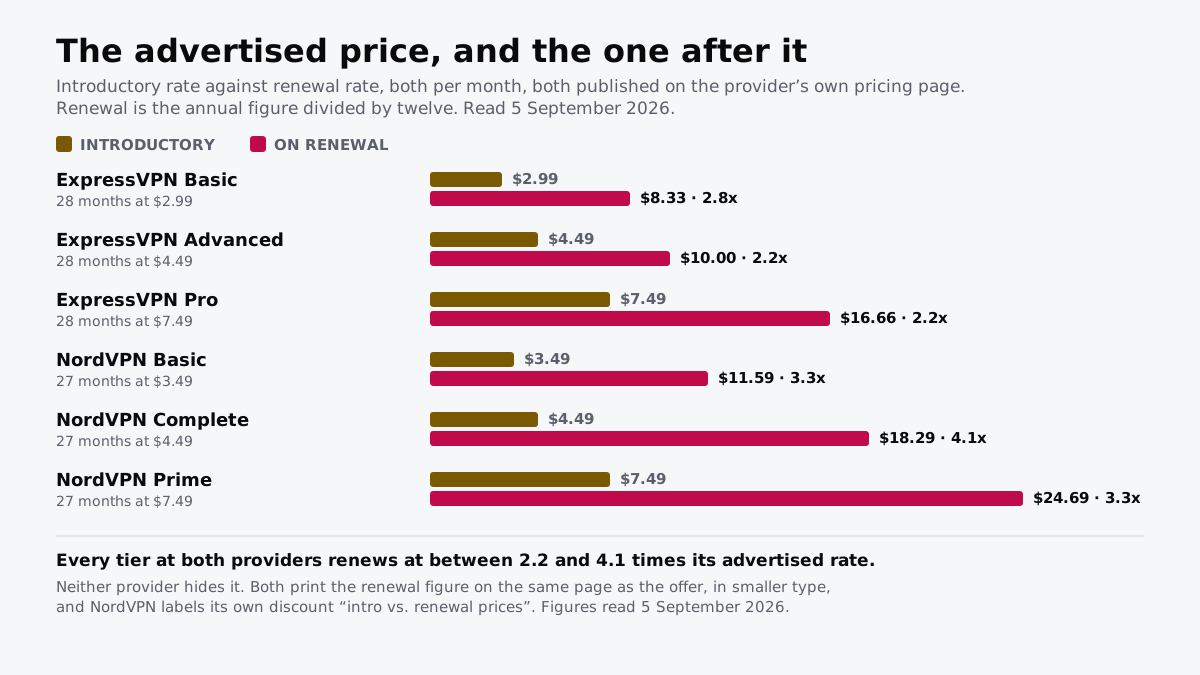
NordVPN's $3.49 a month renews at $139.08 a year. ExpressVPN's $2.99 renews at $99.95. Both say so on the page.
If you buy through our links, we may earn a commission. It never affects our verdicts or scores — how that works. As an Amazon Associate I earn from qualifying purchases.
The monthly price on a VPN’s front page is an introductory rate, and the renewal is roughly three times it. NordVPN’s Complete tier advertises $4.49 a month and renews at $219.48 a year, which is $18.29 a month.
Neither provider hides this. Both print the renewal figure on the same page, in smaller type, and NordVPN labels its own discount as the gap between the two.
What each tier actually renews at
| Advertised | Renews at | Per month | Multiple | |
|---|---|---|---|---|
| ExpressVPN Basic | $2.99 | $99.95/yr | $8.33 | 2.8× |
| ExpressVPN Advanced | $4.49 | $119.95/yr | $10.00 | 2.2× |
| ExpressVPN Pro | $7.49 | $199.95/yr | $16.66 | 2.2× |
| NordVPN Basic | $3.49 | $139.08/yr | $11.59 | 3.3× |
| NordVPN Complete | $4.49 | $219.48/yr | $18.29 | 4.1× |
| NordVPN Prime | $7.49 | $296.28/yr | $24.69 | 3.3× |
Both providers’ own figures, read 5 September 2026. The introductory rate is the initial charge divided by the months it covers, which is their arithmetic. The renewal rate is the published annual figure divided by twelve.
The comparison everyone makes is the wrong one
Line the two providers up on their advertised rates and ExpressVPN Basic looks cheaper than NordVPN Basic, $2.99 against $3.49. Line them up on what they renew at and the gap reverses and widens: $99.95 a year against $139.08.
That is a 39 per cent difference on the number you will actually pay for most of the time you own the thing, hidden behind a 50 cent difference on the number the page leads with. Any comparison built on the advertised rate is comparing the part of the price that lasts two years to the part that lasts forever.
The initial term is longer than a year on purpose
ExpressVPN bills its two-year plans for the first 28 months. NordVPN bills for the first 27. Neither is a two-year plan in the sense of a term that ends after two years; both are a discounted opening period followed by an annual renewal at a different price.
The practical effect is that the renewal lands more than two years after the purchase, which is long enough that most people will not remember what they signed up for, and long enough that the card on file will very likely still work.
What this is not
It is not a trick, and it is not unique to VPNs. Introductory pricing is ordinary, disclosed, and legal, and both companies disclose it clearly enough that this page could be written entirely from their own words.
What makes it worth writing down is the size. A 2.2× step is unusual in consumer software and a 4.1× step is remarkable, and the number doing the advertising is the one that applies for the shortest part of the relationship. This page takes no view on whether either service is worth its renewal price, because that would need testing we have not done.
What to actually do
- Write down the renewal figure before you subscribe, not the monthly one. It is on the same page, usually one line below.
- Compare providers on renewal, never on the advertised rate. On these two, the ranking changes when you do.
- Put a reminder a month before the initial term ends. Twenty-seven months is longer than most people’s memory and longer than most cards’ expiry.
- Treat a sale-season VPN offer as a discount on the first term only. A deeper introductory price does not move the renewal, which is the number that decides what the service costs you.
- Decide whether you need one at all first. Our explainer on why a VPN slows your internet sets out what the technology does and does not do for you.
How we researched this
No one at bitcritiq has handled this product. Everything here comes from published sources, listed below.
- What this cannot tell you
- Two providers, one country, one day. VPN pricing is heavily geo-varied and changes constantly, and a third provider's page would not render to us at the time of writing. This page does not rank VPNs, does not say whether any of them is worth buying, and carries no score — we have not tested their speeds or their logging claims. Sales tax is excluded because both providers exclude it from the figures quoted. Prices seen in a sale week will be lower than these and the renewal figure will not be.
How we chose this, and what we did
- Why this subject
- VPNs discount harder than almost any category in the sale season, and the discount is structured differently from a hardware discount: it applies to an initial term rather than to a product, and the price after it is a separate number. That second number is published, so it can be quoted exactly. We already explain what a VPN does and does not do; this is what one costs.
- How we looked at it
- Introductory and renewal figures are quoted from ExpressVPN's and NordVPN's own pricing pages, read on 5 September 2026 from a US session. The introductory monthly rate is the total initial charge divided by the number of months it covers, which is the providers' own arithmetic. The renewal monthly rate is the published annual renewal divided by twelve, so the two columns compare like with like.
What this rests on
5 claims, all official. Nothing here was measured by bitcritiq — see how we test for why. Open a claim to read the source it came from.
Every tier at both providers renews at between 2.2 and 4.1 times its advertised monthly rate.Official
ExpressVPN Basic $2.99 introductory against $99.95 a year, which is $8.33 a month. NordVPN Complete $4.49 against $219.48 a year, which is $18.29 a month. Both figures are on the providers' own pricing pages.
NordVPN describes its own headline saving as the gap between introductory and renewal pricing.Official
Its pricing page carries the line "Savings: intro vs. renewal prices" beside each plan, alongside the renewal figure.
The initial term is longer than a year at both providers, so the renewal price does not arrive for more than two years.Official
ExpressVPN bills its two-year plans for the first 28 months; NordVPN bills for the first 27. The renewal rate applies after that.
NordVPN's cheapest tier renews at a higher yearly figure than ExpressVPN's most comparable one.Official
NordVPN Basic renews at $139.08 a year against ExpressVPN Basic at $99.95, despite NordVPN advertising the higher introductory monthly rate of the two at $3.49 against $2.99.
Neither provider conceals the renewal price.Official
Both print it on the same page as the offer, in smaller type, adjacent to the discounted figure.
Sources 4
- VPN plans and pricing — ExpressVPNOfficialaccessed Sep 5, 2026
- Pricing — NordVPNOfficialaccessed Sep 5, 2026
- How to Tell a Real Tech Deal From a Fake One — bitcritiqaccessed Sep 5, 2026
- Why a VPN Slows Your Internet — bitcritiqaccessed Sep 5, 2026
No email, no account
Follow bitcritiq
Every new article, in whatever reader you already use.
Subscribe by RSSAll the ways to follow
Using Chrome on Android? Open the browser menu and tap Follow. New articles then turn up in the Following tab in Discover.
read next
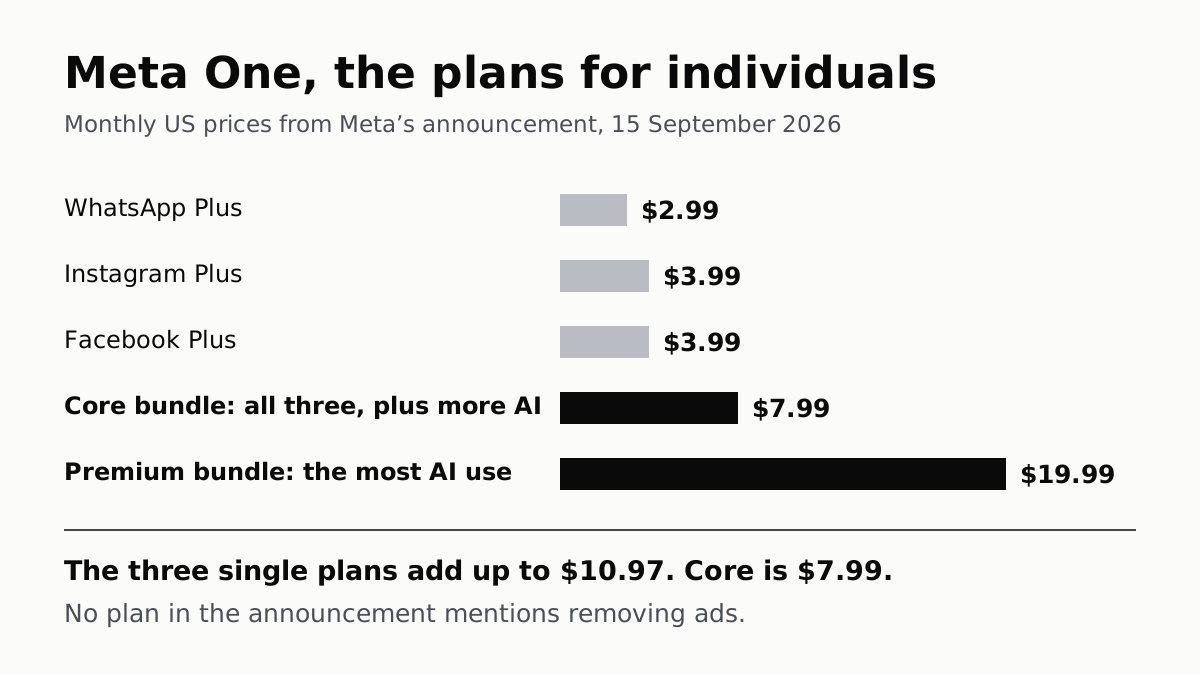
Meta One Starts at $2.99, and No Plan Says It Removes Ads
Meta priced nine plans on 15 September. Core at $7.99 undercuts its three apps bought singly, and none promises an ad-free feed.
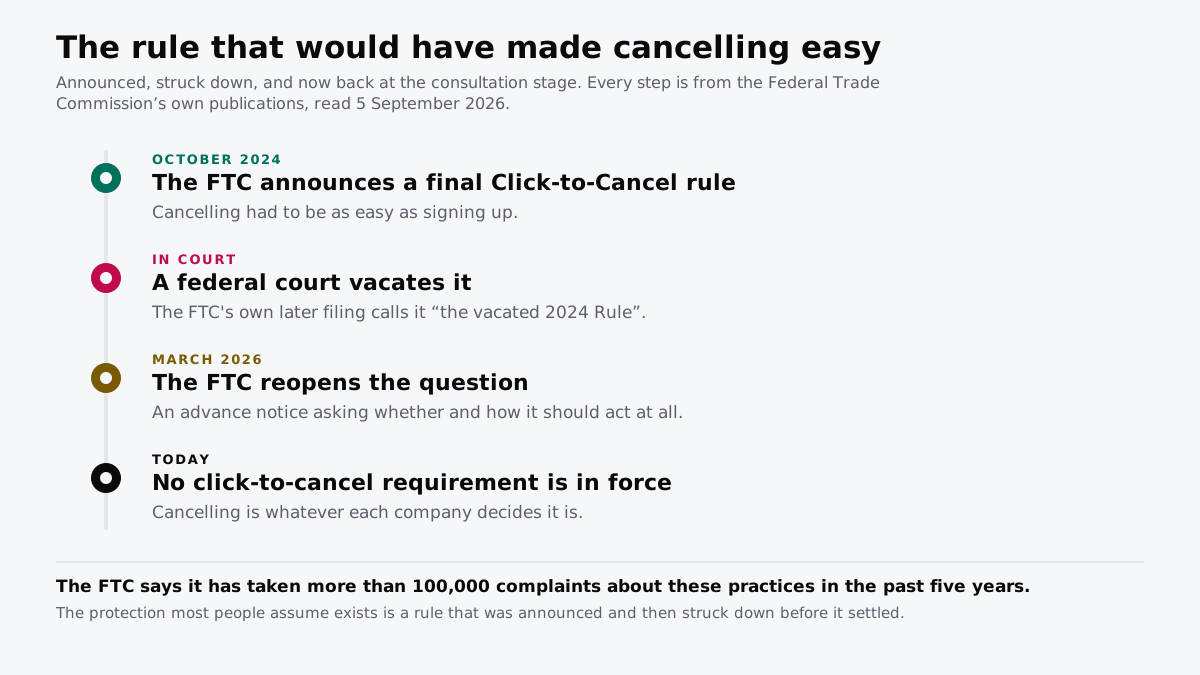
The Cancel Button You Think Is Required Is Not
The FTC's click-to-cancel rule was struck down. Its own March 2026 filing calls it "the vacated 2024 Rule".
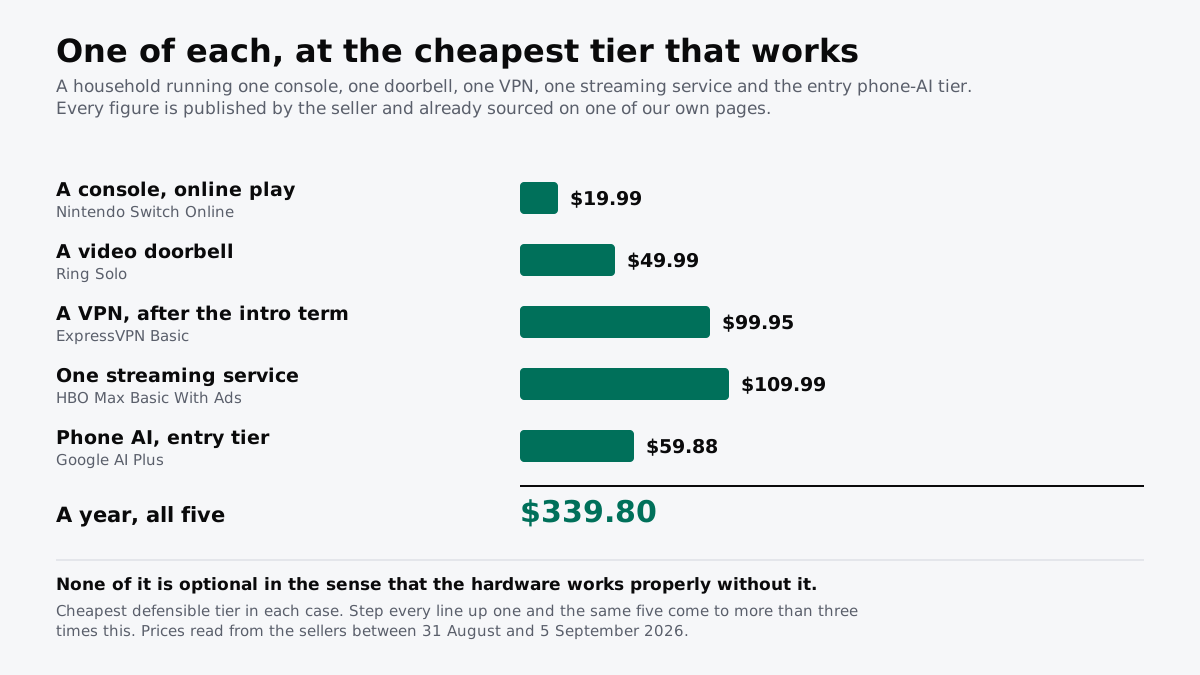
Everything in the House That Needs a Subscription
One console, one doorbell, one VPN, one streaming service and entry-tier phone AI comes to $339.80 a year.
What Streaming Actually Costs Once You Take the Ads Out
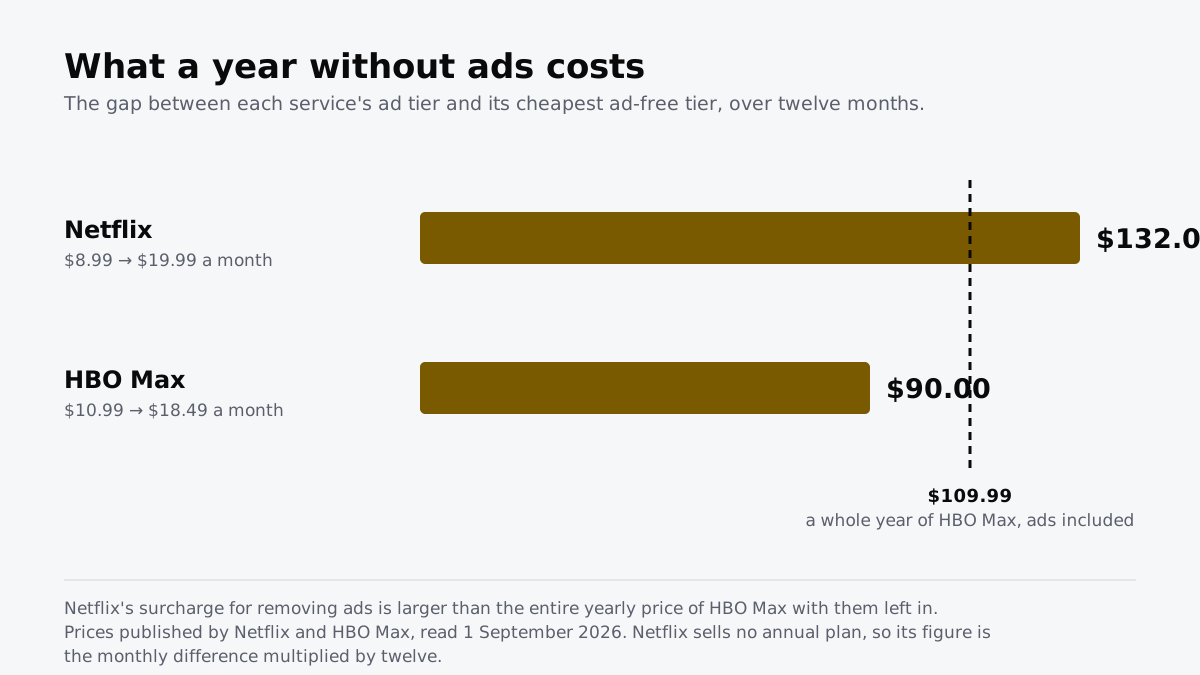
Netflix charges $132 a year to remove its ads. A whole year of HBO Max, ads included, is $109.99.