How to Tell a Real Tech Deal From a Fake One
We do not publish deal lists. We publish the number a deal has to beat, and four checks that catch most of the fakes.
If you buy through our links, we may earn a commission. It never affects our verdicts or scores — how that works. As an Amazon Associate I earn from qualifying purchases.
We do not publish deal lists, and we are not going to. A list of live prices is wrong within hours, it cannot be checked, and it is where a site’s credibility goes to die. What we publish instead is the number a deal has to beat — a list price, with the date we read it and the source we read it from, on every product in every shortlist here.
That is deliberately less exciting than a countdown timer. It is also the only part of a sale that is checkable.
Check one: what was the price before the sale?
A discount is a percentage of a number the seller chose, and sellers move that number.
The cleanest example available this year is Microsoft’s. Xbox console prices rose by $100 on 512GB models and $150 on 1TB models on 1 August — before the season, by Microsoft’s own announcement. Any November percentage is calculated against the raised figure, so the same headline discount returns less money than it did in July, and a saving measured against the price you remember from last year is not a saving at all.
This is why a dated list price is worth more than a percentage. Ours are on the product cards, and they say when we looked.
Check two: is it the current generation, or the one being cleared?
Sales are how last year’s stock leaves the building, and that is not automatically a bad thing — but you should know which one you are buying.
Two live examples from our own pages. Samsung’s Galaxy Watch 9 arrived in August and scored lower than the Watch 8 at both outlets that rated both, for $30 more, on the same design and sensors — so the previous model is both cheaper and better reviewed. Samsung’s soundbar line splits the other way: the roundups disagree about whether the HW-Q990F or the newer HW-Q990H is the pick, which is exactly the confusion a sale exploits.
A deep discount on a product three weeks before its replacement ships is a clearance, not a bargain — unless the replacement is worse, which happens more often than the marketing suggests.
Check three: does the thing you must buy afterwards swamp the discount?
The purchase price is frequently the smaller number.
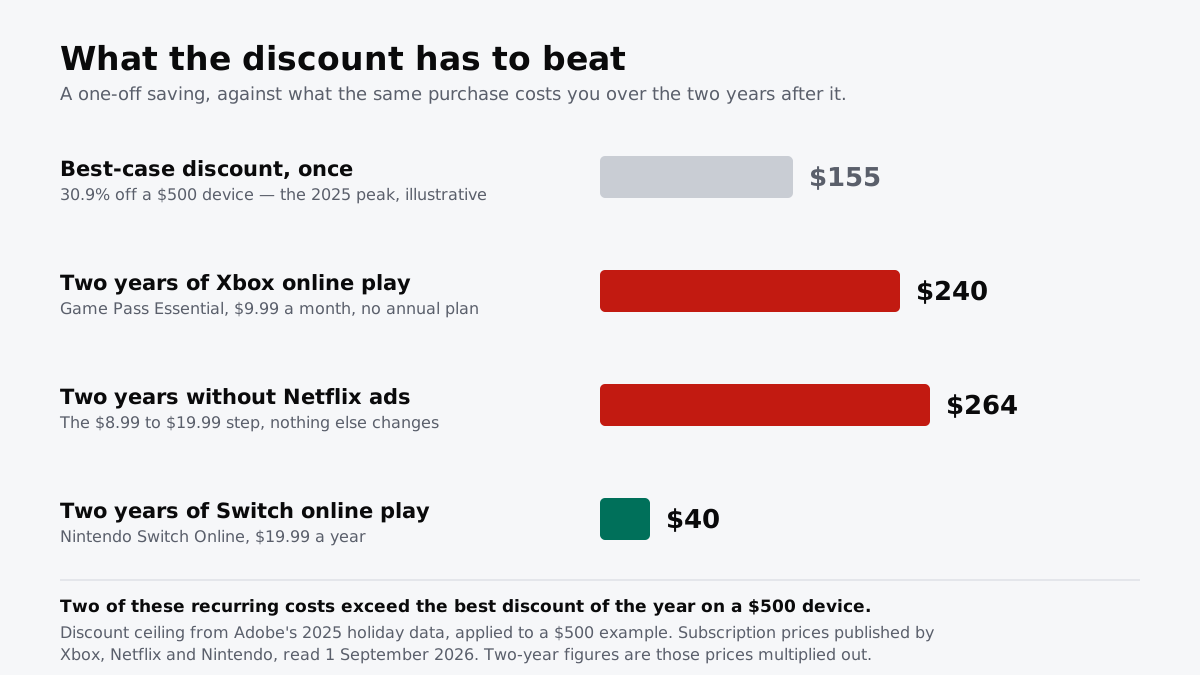
- A console at 20% off still needs online play, which runs from $19.99 a year on one platform to about $120 on another, and storage that is proprietary on two of the three.
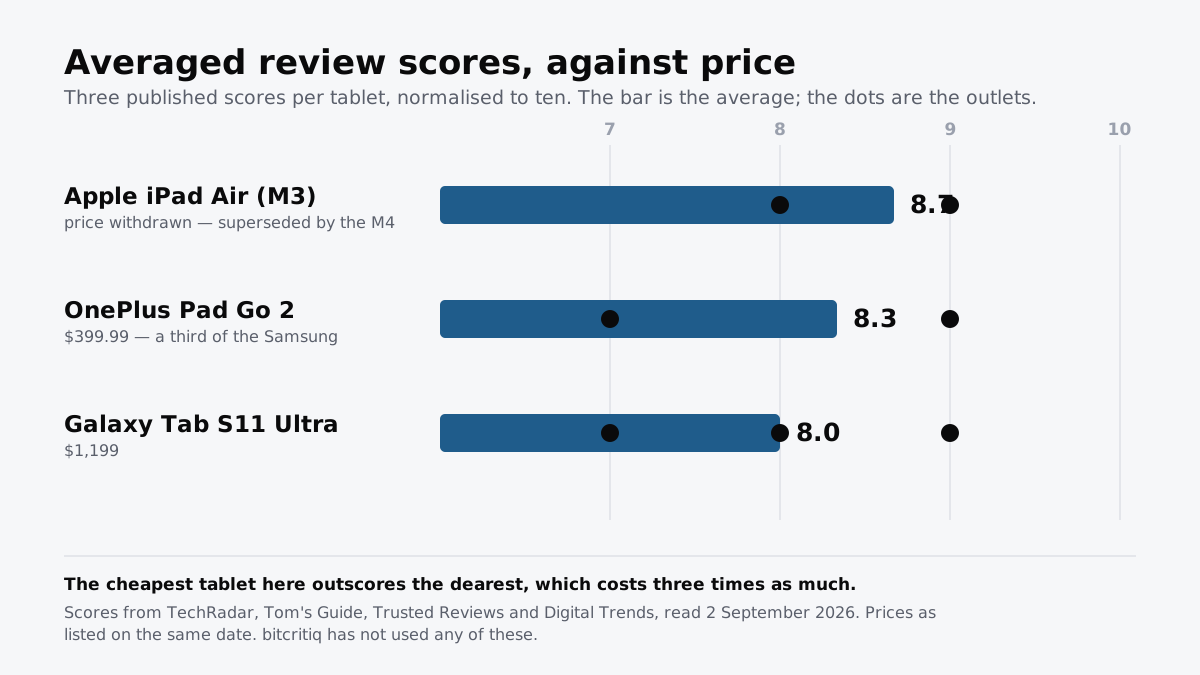
- A tablet at $399 needs a keyboard and stylus that are sold separately and can add hundreds.
- A streaming subscription is where the ad-free tier costs $132 a year on one service and $90 on another for the identical removal.
Work out the two-year cost before the discount impresses you. On subscriptions and consumables it will frequently exceed the saving.
Check four: is the cheap one already as good?
This is the check that saves the most money, and it is the one nobody markets to you.
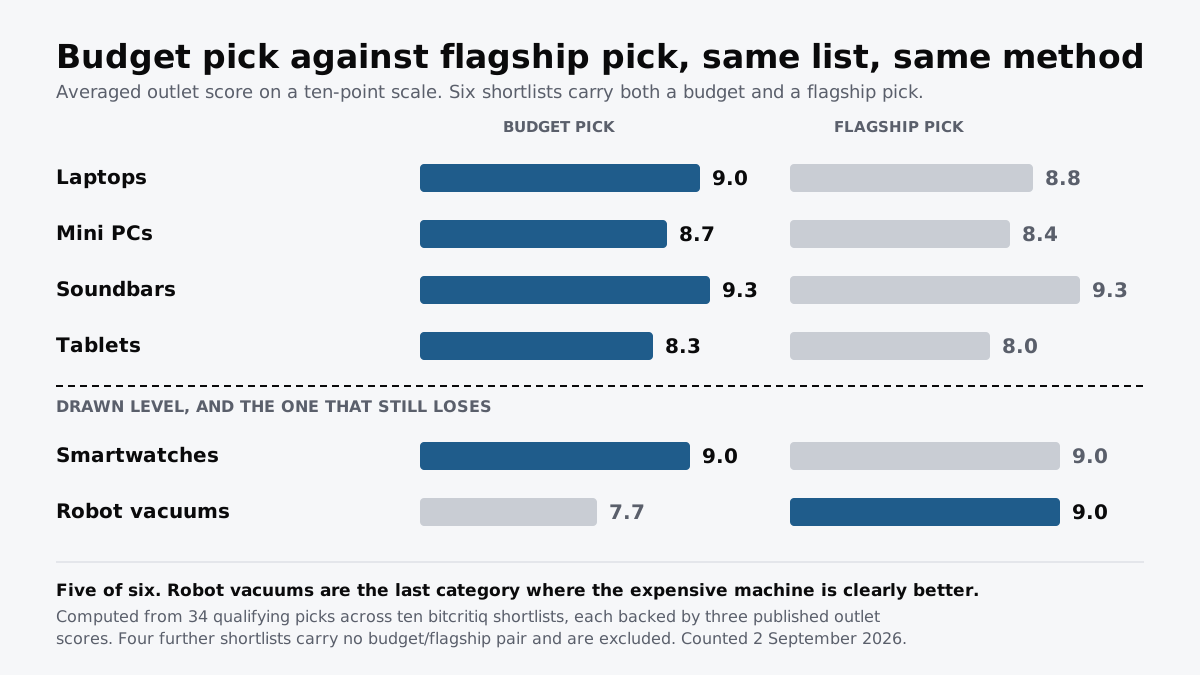
Across our shortlists, in four of the six categories carrying both a budget and a flagship pick, the budget pick matches or beats the flagship on averaged review score — laptops, mini PCs, soundbars and tablets. In the two where the expensive product wins, robot vacuums and smartwatches, it wins by 1.3 points and 0.3 respectively, and only one of those is a real gap.
The implication for a sale is direct: a 20% discount on the flagship is often a worse purchase than the full price of the budget model, because you are paying a premium to reach a score the cheaper thing already had. The full working is in the cheap one wins four times out of six.
What the season actually looks like
Adobe’s data puts the ceiling on electronics discounting at 30.9% off list at its 2025 peak. That is the good end, not the typical one, and it arrives on specific days rather than across the month.
The more useful finding in the same data is behavioural: discounting moves people upmarket rather than saving them money. Shoppers do not spend less; they spend the same on a better model. That is worth knowing about yourself before you open a sale page, because it is the mechanism the whole season is built on rather than an accident of it. Our piece on why headphones are the biggest spike covers where that pressure lands hardest.
How to use this site during a sale
- Open the shortlist for the category and note the list price and the date we checked it.
- Subtract the advertised price from that, not from the crossed-out number on the retailer’s page.
- Check the generation — our picks name the model, and say when a newer one exists and scores worse.
- Add the two-year running cost where there is one: subscriptions, storage, consumables.
- Compare the budget pick’s score to the flagship’s before paying the premium.
If a deal survives all five, it is probably real. We will not email you about it, and there is no timer on this page.
How we researched this
No one at bitcritiq has handled this product. Everything here comes from published sources, listed below.
- What this cannot tell you
- We cannot tell you today's price at any retailer. There is no live price tracking here, no affiliate feed, and no automated deal alerts — and we would rather say so than imply a currency we do not have. What we can give you is a dated list price with a source, and the reasoning to judge a discount yourself. Historical percentages are also averages across a whole category, so they describe the season rather than any individual product.
How we chose this, and what we did
- Why this subject
- Every shortlist we publish now carries list prices with the date and source attached. That turns the site into something more useful during a sale than another list of links: a reference price a reader can measure any advertised discount against. This page explains how to use it, and what the discount number is actually doing.
- How we looked at it
- The season-wide figures come from Adobe's own published holiday data. The console price change comes from Microsoft's announcement of it. The category findings are our own, computed from the published outlet scores on our shortlists, and each links back to the page that shows the working.
What this rests on
Each claim below, and how firmly it is held. Nothing here was measured by bitcritiq — see how we test for why.
Microsoft raised Xbox console prices by $100 for 512GB models and $150 for 1TB models, effective August 1, 2026.
Electronics discounts peaked at 30.9% off list price during the 2025 holiday season.
Discounting tends to move buyers upmarket rather than simply saving them money.
In four of six bitcritiq shortlists carrying both tiers, the budget pick matches or beats the flagship on averaged review score.
Sources 3
- Adobe: Holiday Shopping Season Drove a Record $257.8 Billion OnlineOfficialaccessed Sep 2, 2026
- Adobe: Cyber Monday Hits Record $14.25 Billion in Online SpendingOfficialaccessed Sep 2, 2026
- Updated Xbox Console Prices — Xbox WireOfficialaccessed Sep 2, 2026
Follow bitcritiq
New articles, no email address, no account. Subscribe by RSS in any reader.
Using Chrome on Android? Open the browser menu and tap Follow. New articles then turn up in the Following tab in Discover.
read next
The Cheap One Wins Five Times Out of Six
The Best Tablets, According to the Reviews

Buying a Laptop in a Sale? Spend on What You Can't Change
