Headphones Are Black Friday's Biggest Spike
Bluetooth audio sold 1,850% above its October rate on Cyber Monday. That tells you about the selection — and about the pressure.

If you buy through our links, we may earn a commission. It never affects our verdicts or scores — how that works. As an Amazon Associate I earn from qualifying purchases.
Nothing in consumer electronics spikes harder. Adobe Analytics measured online sales of Bluetooth headphones and speakers running 1,850% above their October rate on Cyber Monday — ahead of games consoles, smart home kit and computers.
That is worth knowing for two opposite reasons. The selection and the discounting are genuinely at their best. So is the pressure to buy the wrong thing quickly.
What the discount number actually means
Adobe found electronics carried the season’s deepest cuts, “peaked at 30.9% off listed price”. Computers reached 23.4% and televisions 24.3%.
Read the wording. Off listed price. A list price is what the manufacturer says a thing costs, not what it was selling for in October — and a headline percentage measured against a number nobody was paying is the oldest device in retail. The only discount that means anything is against what the item actually cost last month.
The part the sale is designed around
This is the finding worth carrying, and it is not about saving money.
Adobe reports that during the season the share of units sold that were the most expensive goods rose 20% against the rest of the year — and within electronics specifically, 56%.
So the dominant effect of discounting is not that people buy the same thing for less. It is that they buy a more expensive thing than they came for, and feel they saved. That is the mechanism, it works, and knowing it is most of the defence.
The timing has moved
Waiting for Cyber Monday used to be the advice. The data says the centre of gravity shifted: Cyber Monday still took the most money at $14.25 billion, but Black Friday grew faster — up 9.1% against Cyber Monday’s 7.1% — which Adobe attributes to consumers embracing earlier deals.
Twenty-five separate days cleared $4 billion, against eighteen the year before. The season is now weeks long, not a weekend, and the best price on a specific model is as likely to appear in early November as on the Monday.
What to actually do
- Decide the model before the sale, not during it. The research you do while a countdown timer is running is not research. Pick two or three candidates in October and wait for one of them, rather than choosing from whatever is discounted.
- Check the price history, not the percentage. A browser extension or price-tracking site will show what the thing cost in October. That is the only baseline that matters, and it takes ten seconds.
- Set the number you will pay in advance and hold it. This is the specific defence against the trade-up effect above, which is measurable and is aimed at you.
- Ignore codec badges when comparing. They advertise a ceiling conditions decide whether you reach — LDAC’s 990kbps is rarely 990kbps sets out why.
- Spend on fit before specification. A poor seal loses more bass than any feature on the box recovers, and better tips cost a few pounds against the hundreds a “better” model does.
- If nothing you actually wanted goes on sale, buy nothing. There will be another one in weeks. The data above is a description of a machine built to prevent you concluding that.
How we researched this
No one at bitcritiq has handled this product. Everything here comes from published sources, listed below.
- What this cannot tell you
- Adobe's data is US e-commerce and covers the 2025 season; 2026 will differ and the figures here are a guide to shape rather than a forecast. It measures what sold, not whether any of it was a good buy. Nothing here recommends a product — bitcritiq has tested no headphones, and this is about how to read a sale rather than what to put in the basket.
How we chose this, and what we did
- Why this subject
- Sale season is when most headphones are bought and when the least careful buying happens. There is hard transaction data on what actually moves and by how much, published by a measurement firm rather than a retailer, and it points at a specific trap rather than the usual advice to shop around.
- How we looked at it
- Took the demand and discount figures from Adobe Analytics' own holiday and Cyber Monday releases, which report measured transactions across US retail sites. Quoted the figures in their published form, including the base they are measured against, because a percentage without its base is the exact trick this article is about.
What you would need
Replacement ear tips for in-ear headphones
Match the stem diameter of your model and buy a multi-size pack rather than guessing. Fit changes perceived bass more than any specification on the box, and a set costs a fraction of the upgrade people buy instead.
Check price on Amazon (affiliate link, opens in a new tab)
We have not tested these and are not picking one for you — each link is a search for the class of thing described above. If you buy through one we may earn a commission, which changes nothing on this page. How that works. As an Amazon Associate I earn from qualifying purchases.
What this rests on
4 claims, 3 official and 1 corroborated. Nothing here was measured by bitcritiq — see how we test for why. Open a claim to read the source it came from.
Bluetooth headphones and speakers sold 1,850% above their October rate on Cyber Monday 2025.Official
Adobe Analytics, which measures transactions across US retail sites rather than surveying shoppers.
Electronics discounts peaked at 30.9% off list price during the 2025 season.Official
Adobe Analytics. Note this is off listed price, which is not the same as off the price the item sold at in October.
Discounting moves buyers upmarket rather than simply saving them money.Official
Adobe reports the share of units sold that were the most expensive goods rose 56% in electronics against the rest of the year.
A good seal affects perceived bass more than codec choice does.Corroborated
Long-standing agreement across audio measurement literature and manufacturer fitting guidance. Not measured by bitcritiq.
Sources 2
- Adobe: Holiday Shopping Season Drove a Record $257.8 Billion OnlineOfficialaccessed Aug 30, 2026
- Adobe: Cyber Monday Hits Record $14.25 Billion in Online SpendingOfficialaccessed Aug 30, 2026
Pass it on
Know someone weighing this up? Send them the answer.
bitcritiq.com/v9c8The link is permanent: it opens this article for good, even if the title changes.
No email, no account
Follow bitcritiq
Every new article, in whatever reader you already use.
Subscribe by RSSAll the ways to follow
Using Chrome on Android? Open the browser menu and tap Follow. New articles then turn up in the Following tab in Discover.
read next
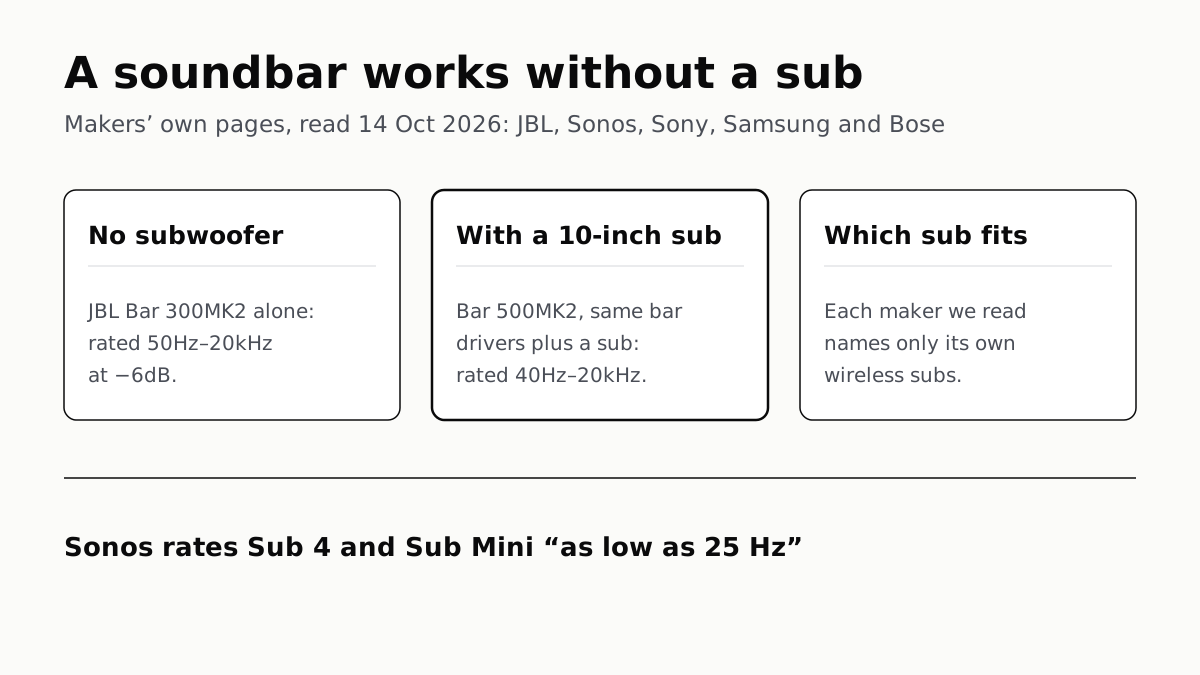
A Soundbar Works Without a Sub; Add One for the Lowest Bass
In JBL’s specs, the same bar drivers reach 50Hz alone and 40Hz with a 10-inch sub. Sony, Sonos and Samsung list only their own subs.
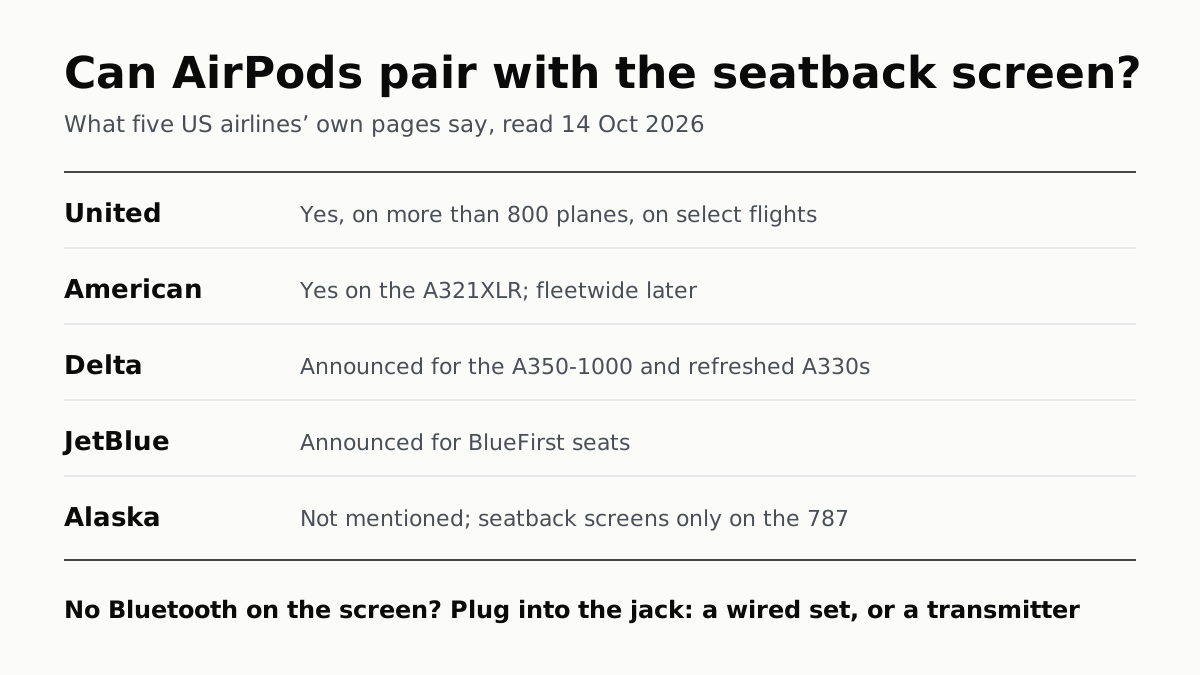
Seatback Bluetooth: United on 800+ Planes, Others Starting
American’s A321XLR has it and JetBlue and Delta have announced it. Without it, the seatback jack needs a wired plug or a transmitter.
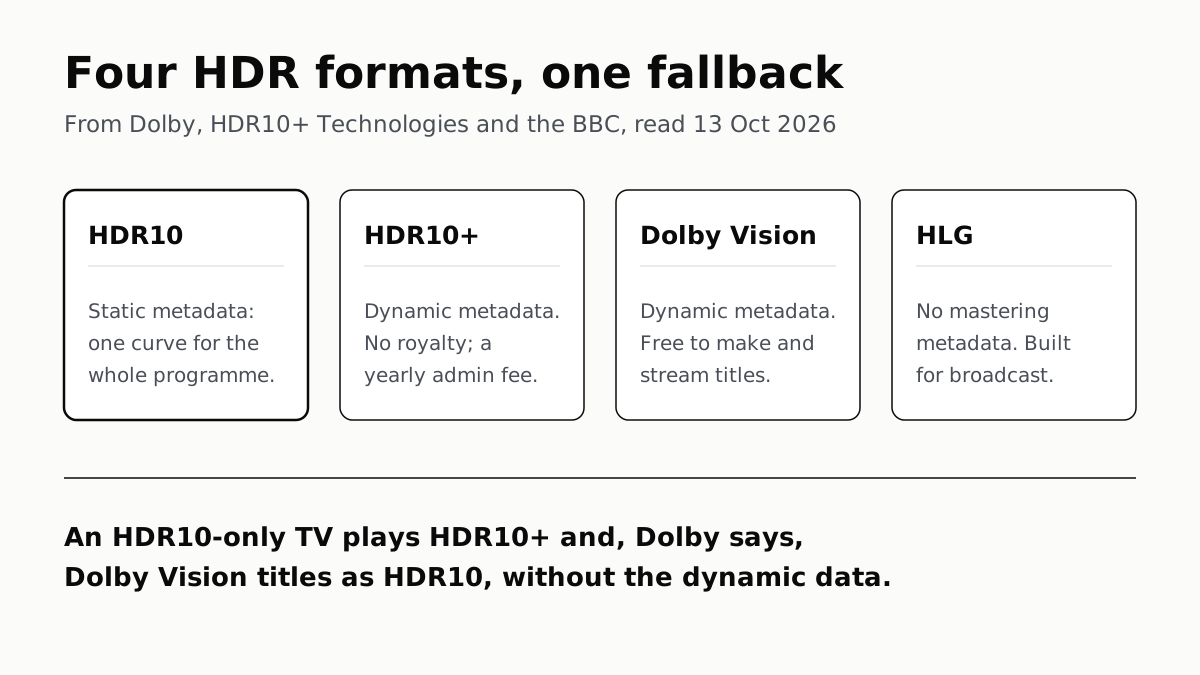
HDR10 Is the Fallback; Dolby Vision and HDR10+ Are Upgrades
Samsung’s S90F lists HDR10+, not Dolby Vision; LG’s C6 the reverse. TCL’s QM7K lists both.
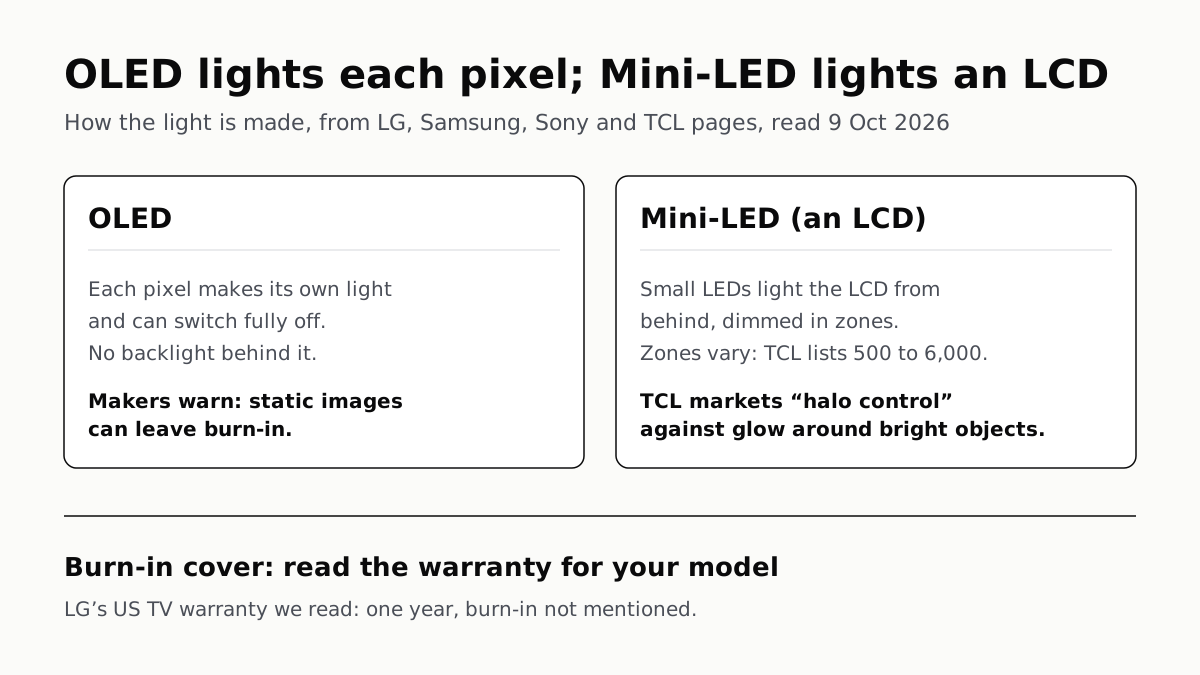
OLED Lights Each Pixel; Mini-LED Lights an LCD Behind It
Self-lit pixels give OLED its blacks and a burn-in risk; a zoned backlight gives Mini-LED brightness and a halo risk.