The Extended Warranty Offered at Checkout
The FTC's test is one sentence: it is not a good value if it does not cover more than the warranty already included.
If you buy through our links, we may earn a commission. It never affects our verdicts or scores — how that works. As an Amazon Associate I earn from qualifying purchases.
The regulator’s whole test fits in one sentence. The FTC’s guidance says an extended warranty “is not a good value if it doesn’t offer more coverage than the warranty that came with the product.”
Which turns the checkout question into a research question you can answer in thirty seconds, and almost nobody does, because it is asked at the moment you have already decided to buy.
Start by finding what you already have
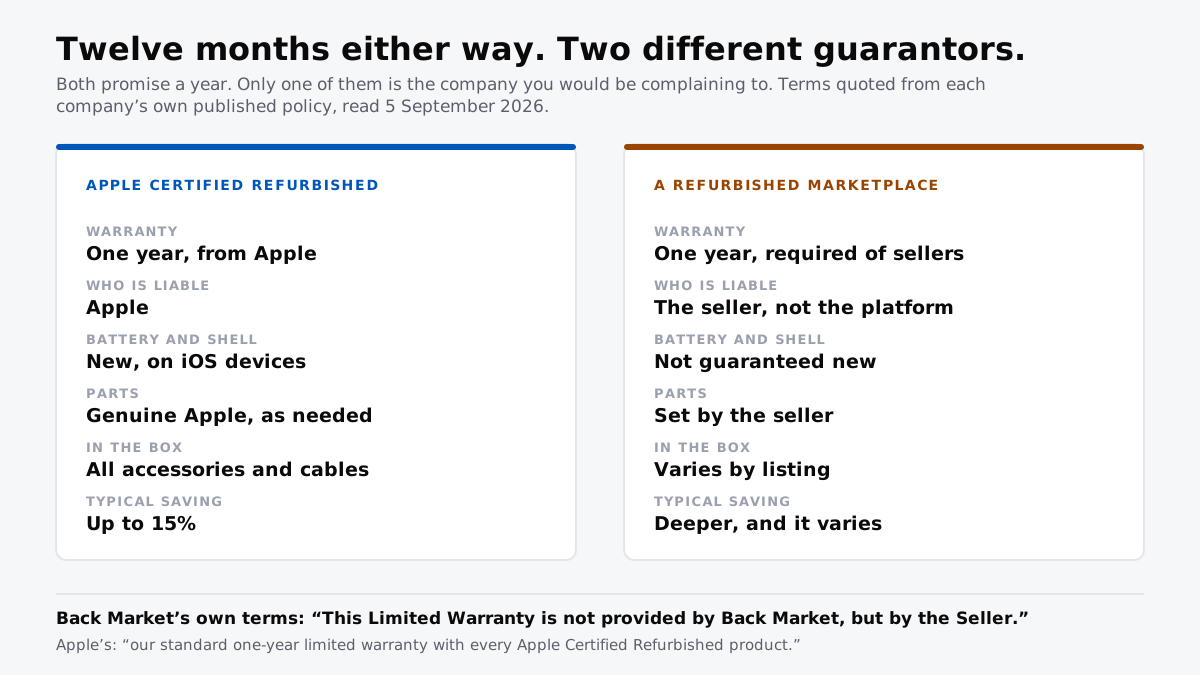
Most electronics arrive with a manufacturer warranty, and the plan being sold to you at checkout may substantially duplicate it. Apple, for instance, states that most of its hardware comes with a one-year limited warranty and up to 90 days of technical support, and that every Certified Refurbished product carries the same year.
A three-year plan sold over the top of that is, in practice, two additional years, not three. The FTC’s phrasing is precise about this: the coverage has to be more, not longer-sounding.
The five things the regulator says to check
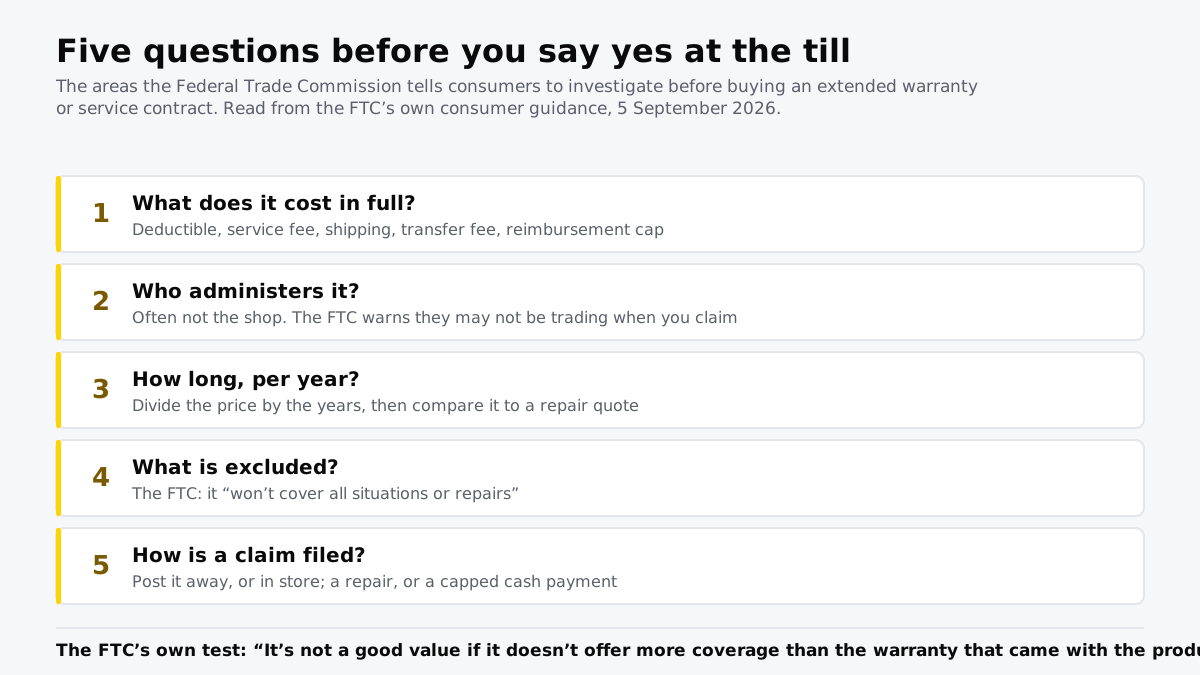
Cost, in full. Not the sticker on the plan but the deductible, the service fee, shipping charges, transfer fees and any reimbursement limit. A plan with a deductible close to the repair cost is protection in name only.
Who administers it, and whether they will exist. The FTC’s warning here is blunt: the company responsible for the contract might not be in business when you need its services. The seller and the administrator are often different companies, and it is the second one that matters.
Length, expressed per year. Divide the price by the years and compare it to what a repair costs. That single division answers the question more often than any feature list does.
What is excluded. The FTC states directly that these contracts will not cover all situations or repairs. Accidental damage, wear, and consumable parts like batteries are the usual exclusions, and they are also the most likely failures.
How a claim actually works. Whether you post the device away, whether you lose it for three weeks, and whether you get a repair or a cash limit.
Where the calculation flips
None of this makes extended cover always wrong. It makes it a product to be priced rather than a reassurance to be accepted.
It is most defensible where the repair is expensive relative to the item and the failure mode is common — a screen, a hinge, a battery on a sealed device. It is least defensible on anything whose replacement cost is close to the plan cost over its term, which at the cheaper end of electronics is a lot of things.
What to actually do
- Ask what the manufacturer already gives you before answering the question at the till. It is usually a year, and the plan is being sold as though it is the only cover you have.
- Divide the plan price by its years and set that against a repair quote. It is the fastest honest test available in a shop.
- Find out who administers it, not who sold it, and whether it survives if you sell the device on. Transfer fees are on the FTC’s list for a reason.
- Read the exclusions before the inclusions. The inclusions are the sales pitch; the exclusions are the product.
- Decline it if you cannot answer those in the shop, and buy it later if the plan allows. Deciding under time pressure at a till is the one condition the seller controls and you do not.
How we researched this
No one at bitcritiq has handled this product. Everything here comes from published sources, listed below.
- What this cannot tell you
- This is consumer guidance, not legal advice, and it describes the United States. Statutory rights differ by state and by country and sit alongside anything a shop sells you rather than being replaced by it. The page does not say whether any particular plan is worth buying — that depends on the product's failure rate, which is exactly the number neither the seller nor we can give you. It does not cover accidental damage cover, which is a different product with a different justification.
How we chose this, and what we did
- Why this subject
- The extended warranty is the last decision in every electronics purchase and the one made with the least information, because it arrives after the buying decision is already emotionally settled and it is presented as protection rather than as a product. The US regulator publishes specific guidance on it, which means the questions to ask are a matter of public record rather than of opinion.
- How we looked at it
- The framework and every quoted line come from the Federal Trade Commission's own consumer guidance on extended warranties and service contracts. Manufacturer warranty terms are quoted from Apple's own pages. Nothing here is a recommendation about a specific plan, and no plan's price is quoted, because plan pricing is set per product and per retailer and any figure would mislead.
What this rests on
5 claims, all official. Nothing here was measured by bitcritiq — see how we test for why. Open a claim to read the source it came from.
The FTC's test for an extended warranty is whether it covers more than the warranty already included with the product.Official
Its consumer guidance states: "It's not a good value if it doesn't offer more coverage than the warranty that came with the product."
The FTC states plainly that these contracts do not cover everything.Official
Its guidance states: "An extended warranty or service contract won't cover all situations or repairs."
The regulator warns that the company responsible for the contract may not still be trading when a claim is made.Official
Its guidance warns it might be risky to buy from a telemarketer because the company responsible for the contract might not be in business when you need its services.
The FTC directs buyers to five specific areas: cost, the provider's reputation, length, exclusions, and the claims process.Official
Its guidance lists costs including deductibles, service fees, shipping charges, transfer fees and reimbursement limits; the provider's history and complaints; length of coverage calculated per year or month; what is excluded; and how claims are filed.
Most Apple hardware already includes a one-year limited warranty and 90 days of technical support.Official
Apple states that most Apple hardware comes with a one-year limited warranty and up to 90 days of complimentary technical support.
Sources 3
- Extended Warranties and Service Contracts — Federal Trade CommissionOfficialStandards / .govaccessed Sep 5, 2026
- About Apple Certified Refurbished — AppleOfficialaccessed Sep 5, 2026
- Refurbished: Read Who Backs the Warranty — bitcritiqaccessed Sep 5, 2026
No email, no account
Follow bitcritiq
Every new article, in whatever reader you already use.
Subscribe by RSSAll the ways to follow
Using Chrome on Android? Open the browser menu and tap Follow. New articles then turn up in the Following tab in Discover.
read next
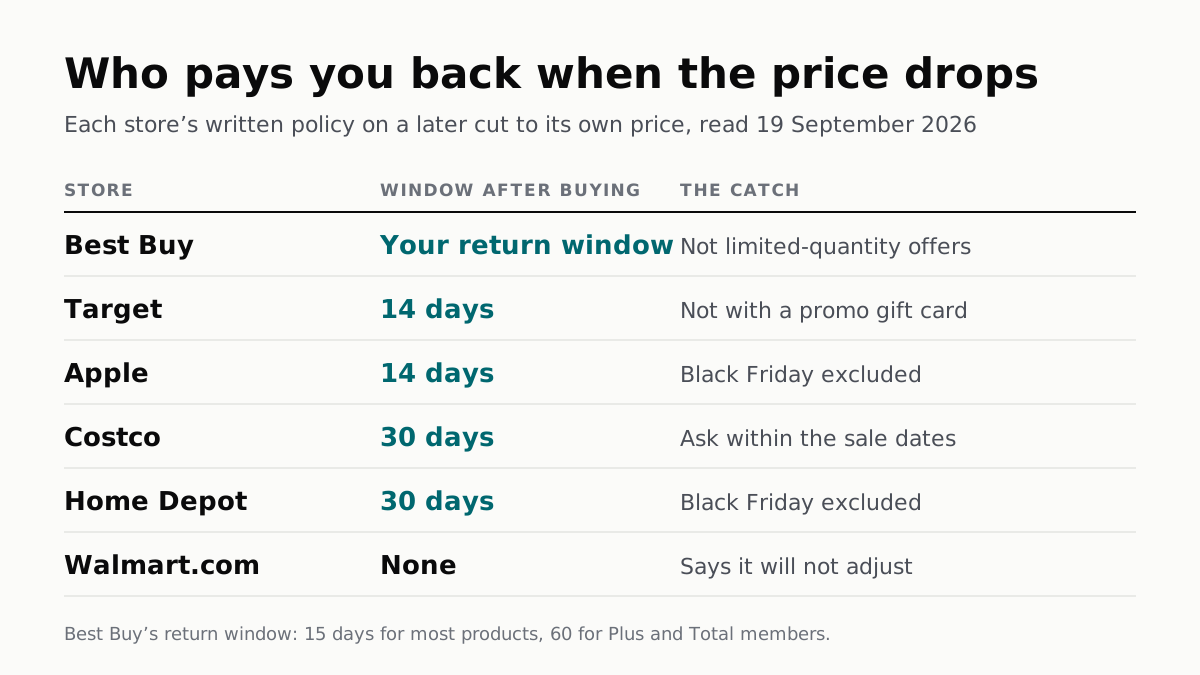
Five Stores Pay Back a Price Drop. Walmart.com Does Not
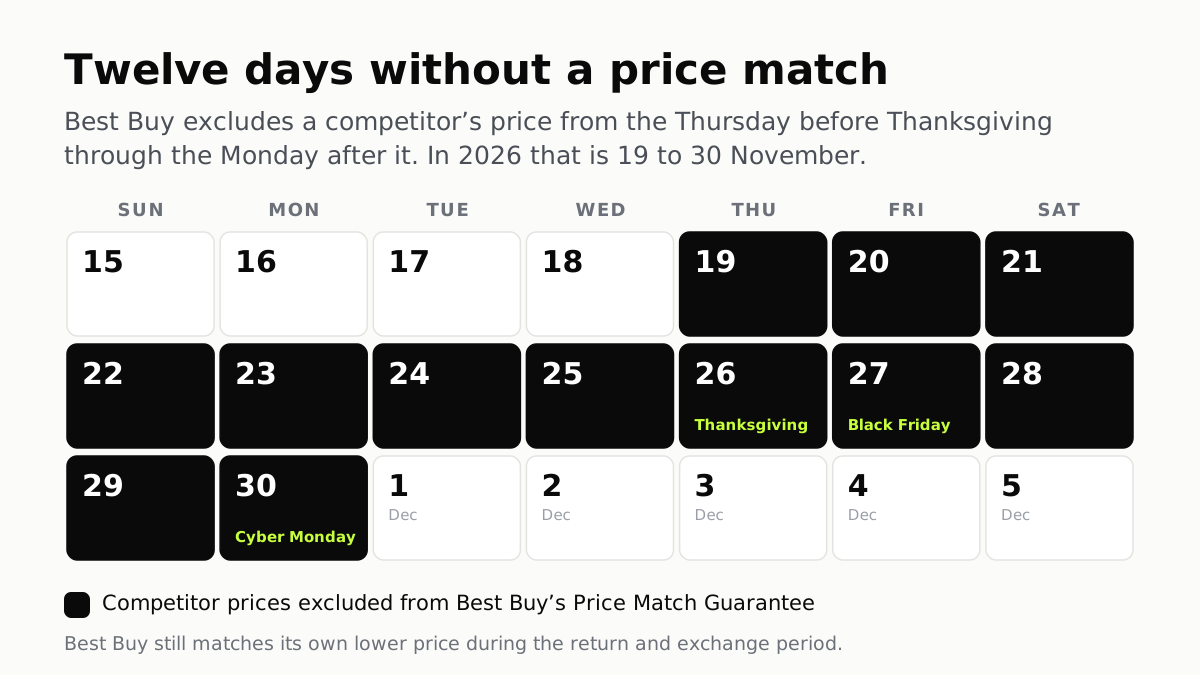
Best Buy's Price Match Is Off for Twelve Days
What a Crossed-Out Price Has to Have Been