Dolby Atmos Soundbars Can Work Without Up-Firing Speakers
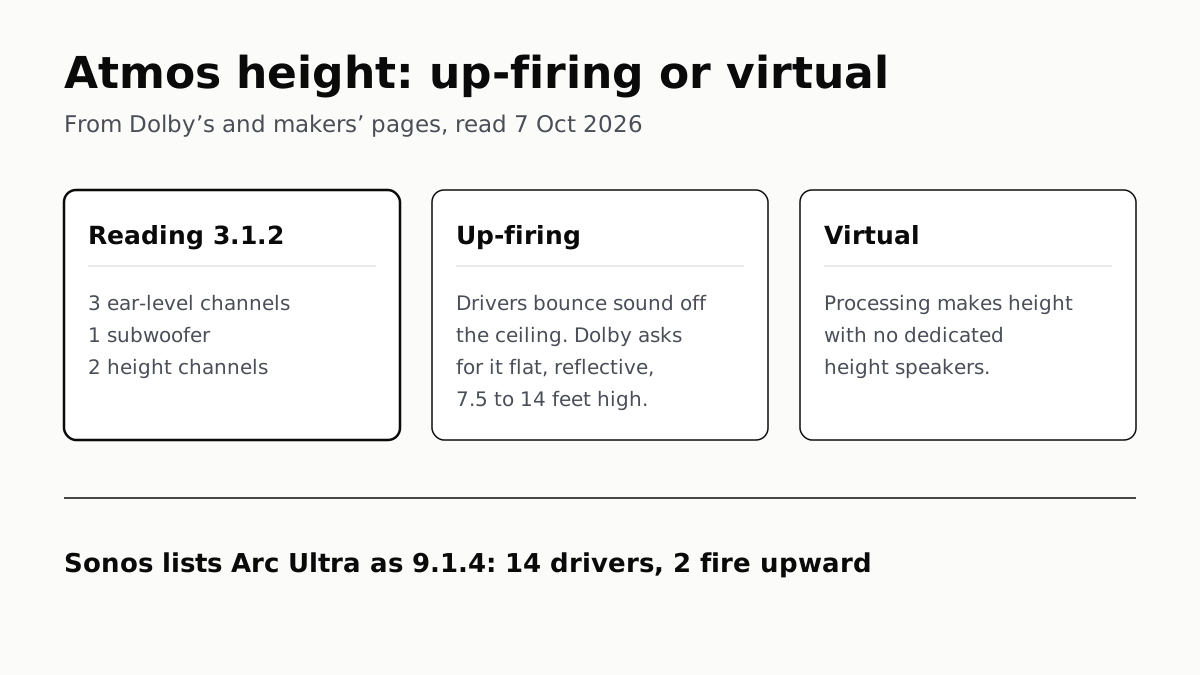
Dolby counts processed, virtual height as Atmos too. In 3.1.2 or 5.1.4, the last number is height channels; the middle one is bass.
If you buy through our links, we may earn a commission. It never affects our verdicts or scores — how that works. As an Amazon Associate I earn from qualifying purchases.
No. Dolby says Atmos height can come from upward-firing drivers or from processing alone, which it calls virtual Dolby Atmos. Sony, for one, sells a Dolby Atmos soundbar with no height drivers. In a label such as 3.1.2 or 5.1.4, the first number counts ear-level channels, the second subwoofers and the third height channels.
The trade between the two methods is about your room. Up-firing drivers bounce sound off the ceiling, so Dolby asks for a ceiling that is flat, hard and 7.5 to 14 feet high; the pages we read give no ceiling condition for virtual height.
What the numbers mean
Dolby’s definition, from its speaker setup guide: the first number is “standard ear-level speakers”, the second, after the dot, “the number of subwoofers”, and the third, “if there is one, is the number of height speakers for Dolby Atmos”. Its examples include 2.1.2, 5.1.2 and 7.1.4. A 0 in the middle, as in Dolby’s own 3.0.2 example, means no subwoofer.
Here is how makers apply it, with drivers exactly as each lists them:
| Label | Ear-level / sub / height | Example, and what its maker says is inside |
|---|---|---|
| 3.1 | 3 / 1 / none | Sony HT-S2000: “dual built-in subwoofers and three front speakers”; height from processing, “without upward-firing speakers” |
| 3.1.2 | 3 / 1 / 2 | Sony BRAVIA Theater Bar 6 (affiliate link to Amazon, opens in a new tab): six speaker units, “3 front-firing speakers, dual up-firing speakers”, plus a wireless subwoofer |
| 9.1.4 | 9 / 1 / 4 | Sonos Arc Ultra: one bar with 14 drivers; two of its seven tweeters “fire upward” |
| 11.1.4 | 11 / 1 / 4 | Samsung HW-Q990H (affiliate link to Amazon, opens in a new tab): 23 speakers including up-firing ones, with a wireless subwoofer and rear speakers in the box |
Two things in that table break the tidy reading. The label counts channels, not boxes: the HT-S2000 is a 3.1 with no separate subwoofer, its bass drivers built into the bar. Dolby itself only says each channel “normally” has one speaker. And it does not count drivers aimed at the ceiling. Sonos sells the Arc Ultra as 9.1.4 with two upward-firing tweeters, and does not say how two drivers make four height channels.
Not every maker gives a label at all. Bose lists its Smart Ultra Soundbar (affiliate link to Amazon, opens in a new tab) as nine speakers, three tweeters and six woofers, and says two of them are “upward firing dipole speakers”, without an x.y.z figure on any page we read.
Up-firing and virtual height
Up-firing drivers sit on top of the bar, angled at the ceiling. Dolby: “Upward-firing speakers with Dolby Atmos reflect sound off of the ceiling and back down to the listener.” The ceiling is part of the speaker.
Virtual height has no such driver. Dolby calls it digital signal processing that creates “Dolby Atmos effects without dedicated speakers”. Sony’s HT-S2000 uses what Sony calls its Vertical Surround Engine for this. Some bars process non-Atmos sound the same way: Bose says its TrueSpace remixes stereo or 5.1 “to add ‘height’ without adding a ceiling speaker”, and Sony’s upmixer turns two-channel sound into what it calls multi-dimensional sound.
Dolby treats both as Atmos in its FAQ. Asked whether in-ceiling speakers are needed, it answers no, and names upward-firing speakers or virtual Dolby Atmos as the alternatives. For a small room it suggests “a 2.1 system using virtual Dolby Atmos or a 3.0.2 setup”.
Dolby’s pages do not all agree. Its soundbar setup guide says an Atmos soundbar “will contain a minimum of two Dolby Atmos-enabled speaker elements to generate height audio effects”, while its article on choosing a soundbar says “not all soundbars enabled with Dolby Atmos require extra speakers”. Sony sells the HT-S2000, with no height drivers, as a 3.1ch Dolby Atmos soundbar, which follows the second reading.
Where up-firing drivers depend on the room
Dolby’s conditions, from its setup guide and FAQ:
- Ceiling shape: flat, “not angled or vaulted”.
- Ceiling height: between 7.5 and 14 feet.
- Ceiling material: “acoustically reflective”, such as drywall, plaster or hardwood.
- Bar height: no higher than halfway up the wall, with nothing blocking the path to the ceiling. Upward-firing speakers “cannot” go in a bookshelf.
Sonos adds its own for the Arc Ultra: do not enclose it in a cabinet, and leave at least 4 inches between the top of the bar and the bottom of a TV above it.
Dolby gives these as conditions “for best results”, not as a cut-off below which up-firing drivers stop working, and it does not say how much a sloped or soft ceiling costs. A room that misses them lacks what up-firing drivers rely on, while virtual height asks nothing of the ceiling on the Dolby pages we read. Our soundbar shortlist marks which picks use which method; the two that average the highest review scores there use one each.
Before you count channels
A bigger third number does nothing if Atmos never reaches the bar. Streaming Atmos plays over ordinary HDMI ARC on a recent TV, while lossless Atmos from a disc needs eARC at both ends; our explainer on ARC and eARC has the details.
Questions people ask
Do you need up-firing speakers for Dolby Atmos?
No. Dolby lists three ways to get Atmos height: speakers in the ceiling, upward-firing speakers that bounce sound off it, or virtual Dolby Atmos, which uses processing to create the effect without dedicated height speakers.
What does 5.1.4 mean?
Five ear-level channels (left, centre, right and two surrounds), one subwoofer and four height channels, by Dolby’s definition. Dolby recommends a 5.1.4 layout for Atmos and says 5.1.2 works in almost any space.
What does 3.1.2 mean on a soundbar?
Three front channels (left, centre and right), one subwoofer and two height channels. Sony’s BRAVIA Theater Bar 6 is one: Sony lists three front-firing speakers, two up-firing speakers and a wireless subwoofer.
What is virtual Dolby Atmos?
Dolby describes it as digital signal processing that creates Dolby Atmos effects without dedicated speakers. Sony’s HT-S2000 works this way: Sony says its Vertical Surround Engine makes height effects without upward-firing speakers.
Do up-firing soundbars work with high or vaulted ceilings?
Dolby’s guidance is a flat ceiling, not angled or vaulted, between 7.5 and 14 feet, made of something hard such as drywall, plaster or hardwood. Outside that, Dolby does not say what happens; it only gives the range for best results.
Does the .1 mean the soundbar comes with a subwoofer?
Not necessarily. Dolby defines it as the subwoofer count, but Sony’s HT-S2000 is labelled 3.1 with its subwoofers built into the bar. Check the box contents for a separate subwoofer.
Can I put an up-firing soundbar in a TV cabinet?
Dolby says not to block the path from the height speakers to the ceiling, and that upward-firing speakers cannot go in a bookshelf. Sonos tells Arc Ultra owners not to enclose it in a cabinet.
How we researched this
No one at bitcritiq has handled this product. Everything here comes from published sources, listed below.
- What this cannot tell you
- We have not listened to any of these soundbars, and nothing here says whether up-firing or virtual height sounds better in a given room; no maker or Dolby page we read claims to settle that. Dolby’s own pages disagree on whether an Atmos soundbar needs height drivers. Sonos’s pages disagree with each other on the Arc Ultra’s tweeter count: its shop page says nine tweeters alongside six midwoofers and one woofer, which sums to 16, while the same page and its user guide say 14 drivers and the guide says seven tweeters; we use the guide’s figures. Sonos does not say how the Arc Ultra produces four height channels from two upward-firing tweeters, and Samsung does not say where the HW-Q990H’s up-firing speakers sit. Bose publishes no channel label for the Smart Ultra Soundbar on the pages we read.
How we chose this, and what we did
- Why this subject
- Soundbar interest is at about a third of its yearly peak and rising into the holiday season, and our soundbar shortlist is found for best-soundbar searches whose next question is what the channel numbers on the box mean and whether the bar needs drivers pointing at the ceiling. Our shortlist marks each pick as up-firing or virtual without explaining either, and our ARC and eARC explainer covers the connection, not the speakers.
- How we looked at it
- Read through a browser on 7 October 2026: Dolby’s Dolby Atmos Speaker Setup 101 guide and its FAQ, Dolby’s soundbar setup guide, and Dolby’s article on why you need a soundbar; Sonos’s Arc Ultra shop page and Arc Ultra user guide; Samsung US’s HW-Q990H product page and its spec list; Sony US’s HT-S2000 and BRAVIA Theater Bar 6 product pages, including their FAQ and spec data; Bose’s Smart Ultra Soundbar product page, its 2023 launch release and its support specifications. Driver counts are quoted as each maker states them. The statement that Dolby gives no ceiling guidance for virtual height is checked against the same FAQ page, which does give ceiling guidance for upward-firing speakers.
What this rests on
6 claims, all official. Nothing here was measured by bitcritiq — see how we test for why. Open a claim to read the source it came from.
Dolby says in-ceiling speakers are not required for Atmos; upward-firing speakers or virtual Dolby Atmos are the alternatives.Official
Dolby Atmos Speaker Setup 101 FAQ: “In-ceiling speakers are not required to enjoy entertainment in Dolby Atmos… You can use upward-firing speakers or virtual Dolby Atmos, which uses digital signal processing to create Dolby Atmos effects without dedicated speakers.”
In a layout such as 5.1.4, the first number counts ear-level speakers, the second subwoofers and the third height speakers.Official
Dolby: “The first number tells you the number of standard ear-level speakers… The second number, after the dot, indicates the number of subwoofers… The third number, if there is one, is the number of height speakers for Dolby Atmos.”
For upward-firing speakers Dolby asks for a flat ceiling between 7.5 and 14 feet, made of an acoustically reflective material.Official
Dolby FAQ: “the ceiling should be flat (not angled or vaulted), with a height between 7.5 and 14 feet. If you’re using upward-firing speakers your ceiling should be made of an acoustically reflective material, such as drywall, plaster, hardwood…”
Sonos lists the Arc Ultra as 9.1.4 from 14 drivers, two of them upward-firing tweeters.Official
Sonos: “creating a 9.1.4 spatial audio experience”; “14 Sonos-engineered drivers”; user guide: “Seven precisely angled silk-dome tweeters… Two of these fire upward, creating dedicated height channels for spatial audio.”
Sony’s HT-S2000 is sold as a 3.1-channel Dolby Atmos soundbar that makes height effects without upward-firing speakers.Official
Sony: “3.1ch(Built-in-Subwoofer)”; “The HT-S2000 uses Sony’s Vertical Surround Engine for height effects without upward-firing speakers.”
Dolby’s soundbar setup guide says an Atmos soundbar contains at least two height elements, which its other pages contradict.Official
Dolby soundbar setup guide: “If your soundbar is enabled with Dolby Atmos, it will contain a minimum of two Dolby Atmos-enabled speaker elements to generate height audio effects above the listener.” Dolby’s article on soundbars: “Not all soundbars enabled with Dolby Atmos require extra speakers… virtualized Dolby Atmos.”
Sources 11
- Dolby Atmos Speaker Setup 101 — DolbyOfficialaccessed Oct 7, 2026
- Soundbar setup guide — DolbyOfficialaccessed Oct 7, 2026
- Why you need a soundbar and where to put it — DolbyOfficialaccessed Oct 7, 2026
- Arc Ultra — SonosOfficialaccessed Oct 7, 2026
Show 7 more · 7 official or standards
- Arc Ultra user guide — SonosOfficialaccessed Oct 7, 2026
- Q-Series Soundbar HW-Q990H 11.1.4ch — Samsung USOfficialaccessed Oct 7, 2026
- HT-S2000 3.1ch Dolby Atmos Soundbar — Sony ElectronicsOfficialaccessed Oct 7, 2026
- BRAVIA Theater Bar 6, 3.1.2ch — Sony ElectronicsOfficialaccessed Oct 7, 2026
- Bose Smart Ultra Soundbar — BoseOfficialaccessed Oct 7, 2026
- Bose introduces Smart Ultra Soundbar — Bose pressroom, 21 September 2023Officialaccessed Oct 7, 2026
- Product Specifications: Bose Smart Ultra Soundbar — Bose SupportOfficialaccessed Oct 7, 2026
Pass it on
Know someone weighing this up? Send them the answer.
bitcritiq.com/84geThe link is permanent: it opens this article for good, even if the title changes.
No email, no account
Follow bitcritiq
Every new article, in whatever reader you already use.
Subscribe by RSSAll the ways to follow
Using Chrome on Android? Open the browser menu and tap Follow. New articles then turn up in the Following tab in Discover.
read next
A Soundbar Works Without a Sub; Add One for the Lowest Bass
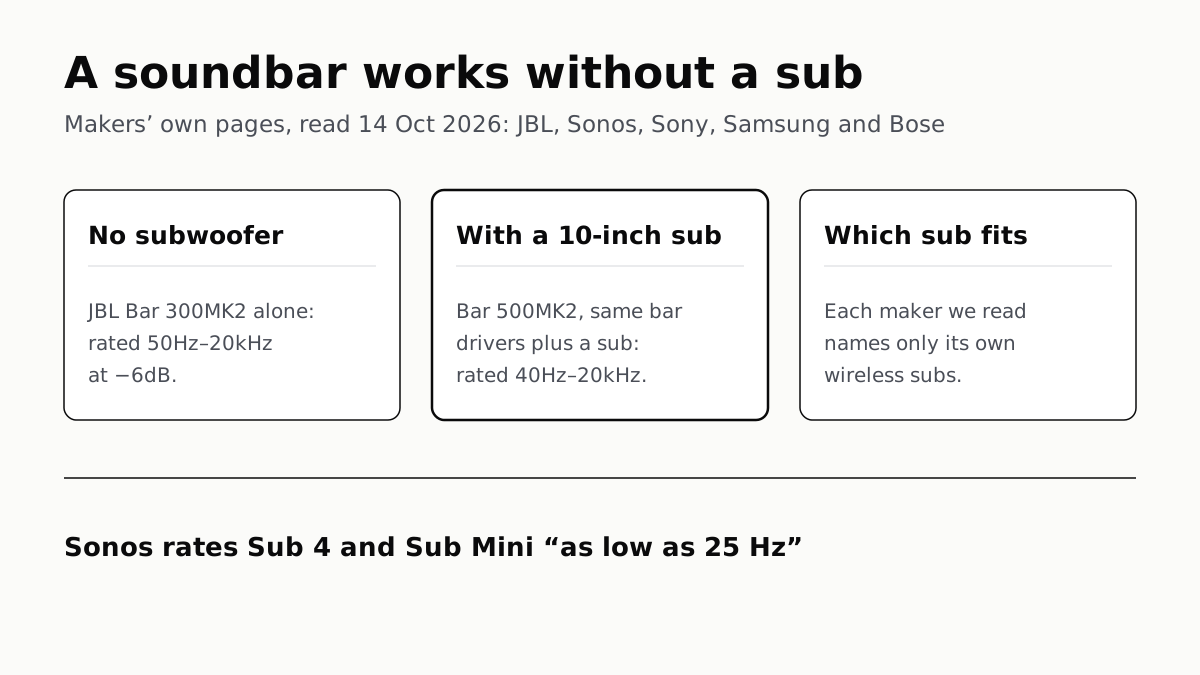
In JBL’s specs, the same bar drivers reach 50Hz alone and 40Hz with a 10-inch sub. Sony, Sonos and Samsung list only their own subs.
Seatback Bluetooth: United on 800+ Planes, Others Starting
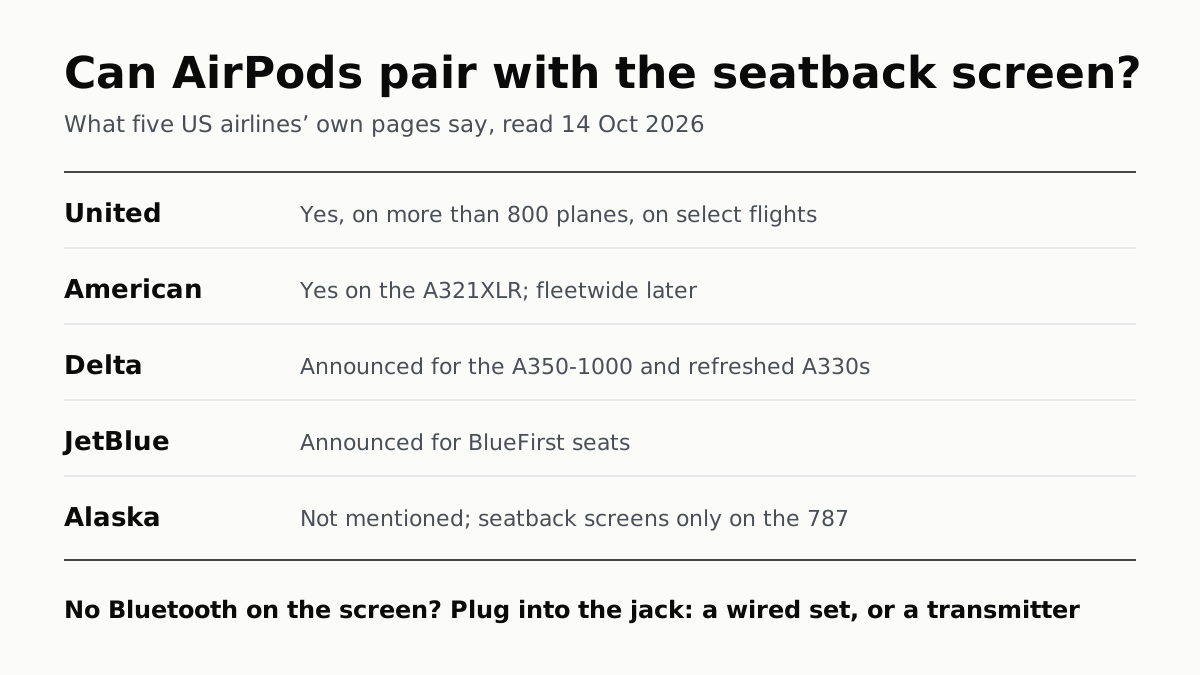
American’s A321XLR has it and JetBlue and Delta have announced it. Without it, the seatback jack needs a wired plug or a transmitter.
HDR10 Is the Fallback; Dolby Vision and HDR10+ Are Upgrades
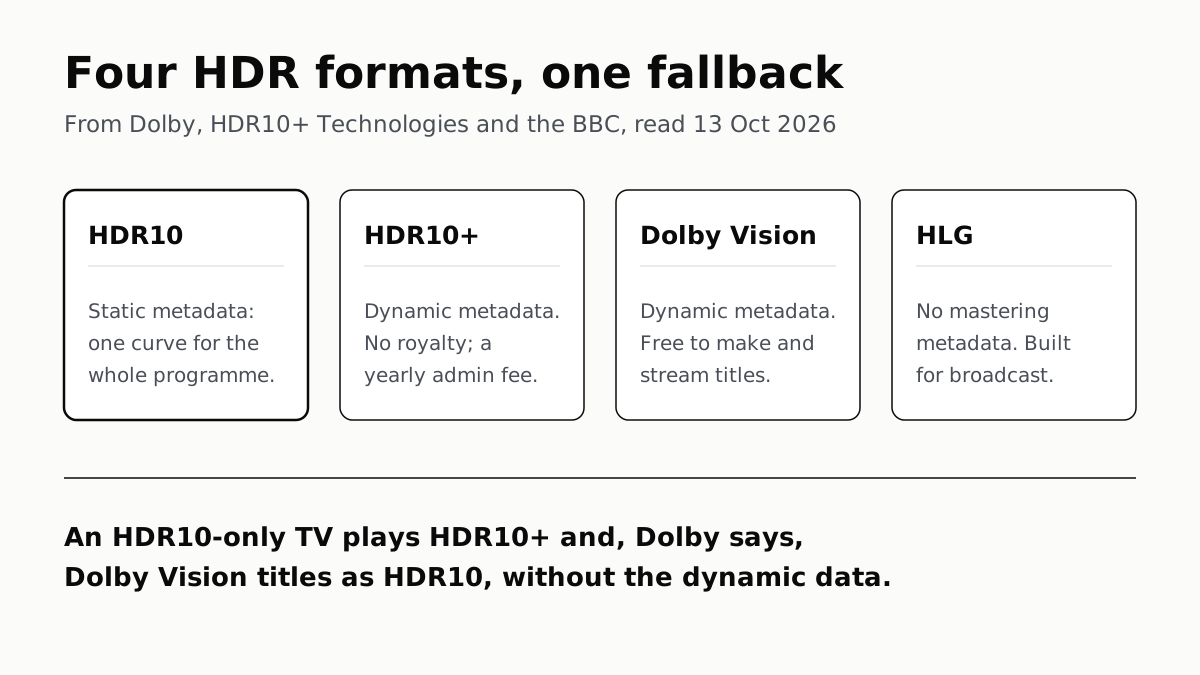
Samsung’s S90F lists HDR10+, not Dolby Vision; LG’s C6 the reverse. TCL’s QM7K lists both.
OLED Lights Each Pixel; Mini-LED Lights an LCD Behind It
Self-lit pixels give OLED its blacks and a burn-in risk; a zoned backlight gives Mini-LED brightness and a halo risk.