What Happens When a Smart Lock's Battery Dies
The bolt stays exactly where it is. Whether you get back in depends on which of three failsafes your model has, and where you keep it.

If you buy through our links, we may earn a commission. It never affects our verdicts or scores — how that works. As an Amazon Associate I earn from qualifying purchases.
The lock does not spring open, and it does not seize shut. The bolt stays exactly where it was. The real question is not what the lock does, it is how you get in, and that depends entirely on which failsafes your model has.
Aqara, which sells these, is unusually frank about the general case: “For a lot of locks, that means you’re locked out. Some models won’t even recognize a code with the batteries drained.”
Three failsafes, and most locks have two
Aqara describes its range as shipping “at least two out of three failsafes: Physical Keys… Emergency USB-C Ports… Battery Life Alerts”. That is a useful way to audit any lock, including one you already own.
A physical key. The oldest answer and still the best. Schlage’s user guide is precise about when it applies: Emergency Key Override “can be used when the battery is completely dead, or when no valid User Code is known.”
External emergency power. For locks with no keyhole, this is the key. Aqara: “No key? Don’t panic. Aqara’s top models include an emergency USB-C port. Just plug in a power bank, wait a few seconds, and you can activate the keypad or fingerprint sensor.” Other designs expose contacts for a 9-volt battery held against the outside of the lock. Ring’s first smart lock, announced for early 2027, puts a hand-turned backup dial on the lock itself.
Warnings before it happens. This is the failsafe people actually rely on and the one they ignore. Schlage quotes “3-year battery life with low battery indicator”; Aqara describes “flashing lights”, a chime, or a push notification.
The mistake that turns a dead battery into a locksmith
Here is the consequence nobody puts on the box.
If your lock has no keyhole, and your recovery method is an emergency USB port, then the power bank is your key. A power bank charging on the kitchen counter is inside the house you cannot enter. So is the spare 9-volt battery in the drawer.
Keep it where a key would be kept: in the car, in a bag you carry, with a neighbour. A recovery method stored behind the lock it recovers is not a recovery method.
Two details from the manuals worth knowing in advance
The key may not come back out. Schlage’s guide notes that after an override, “the key cannot be removed from the cylinder while the lock is unlocked.” That is by design, and it is a surprising thing to discover on a doorstep in the rain.
An override is not a repair. Both manufacturers frame these procedures as getting you through the door so you can change the batteries — the Schlage guide sends you straight from the override to the battery-replacement page. The lock is still dead until you do.
This is a slow failure, which is why it catches people
Nothing here happens suddenly. A three-year battery life with a low-battery indicator means weeks of warning, delivered by a lock that is still working perfectly. Because it still works, the warning gets dismissed.
The failure mode is not really electrical. It is that a functioning lock is very easy to keep ignoring, right up until it is not one.
What to actually do
- Find out today whether your lock has a keyhole. Look at it. If it does, you need a key somewhere reachable. If it does not, you need the other thing.
- Store the recovery method outside the house. Car, bag, neighbour, key safe. Not the hall drawer.
- Test the override once, deliberately, while everything works. Standing outside in the dark is not when you want to learn that the key does not turn or the port is under a cover you cannot open.
- Act on the first low-battery warning, not the fifth. It is a five-minute job on a Sunday or a locksmith on a Tuesday.
- Change batteries on a schedule if the lock is on your only door. Once a year, same week each year, regardless of what the indicator says. Batteries are cheaper than the alternative.
- Keep a spare set of the right cells at home. Locks often use a mix — the Schlage guide above lists “two AAA and one 9-volt” — and the shop being shut is its own kind of lockout.
How we researched this
No one at bitcritiq has handled this product. Everything here comes from published sources, listed below.
- What this cannot tell you
- Models differ enormously and this is the kind of thing to check on your own lock rather than take from an article. In particular, whether a lock has a keyhole at all, and whether it has an external power contact, varies within a single manufacturer's range. Nothing here covers what happens in a fire or a power cut to the building, which is a question about your door's locking mechanism and local regulations, not about batteries.
How we chose this, and what we did
- Why this subject
- It is the objection everyone raises about smart locks and the one most often answered with reassurance rather than detail. The detail matters, because the answer is different for a lock with a keyhole and a lock without one, and the difference determines whether you are standing outside your own house.
- How we looked at it
- Took the failure behaviour and the recovery procedures from two manufacturers' own materials — a Schlage keypad lock user guide and Aqara's published account of the same question — because a manual documenting an emergency procedure is documenting the emergency it expects.
Sources 2
- Keypad Locks User Guide, BE365 / FE575 / FE595 — SchlageOfficialaccessed Aug 29, 2026
- What Happens If Smart Lock Battery Dies? — AqaraOfficialaccessed Aug 29, 2026
Pass it on
Know someone weighing this up? Send them the answer.
bitcritiq.com/q575The link is permanent: it opens this article for good, even if the title changes.
No email, no account
Follow bitcritiq
Every new article, in whatever reader you already use.
Subscribe by RSSAll the ways to follow
Using Chrome on Android? Open the browser menu and tap Follow. New articles then turn up in the Following tab in Discover.
read next
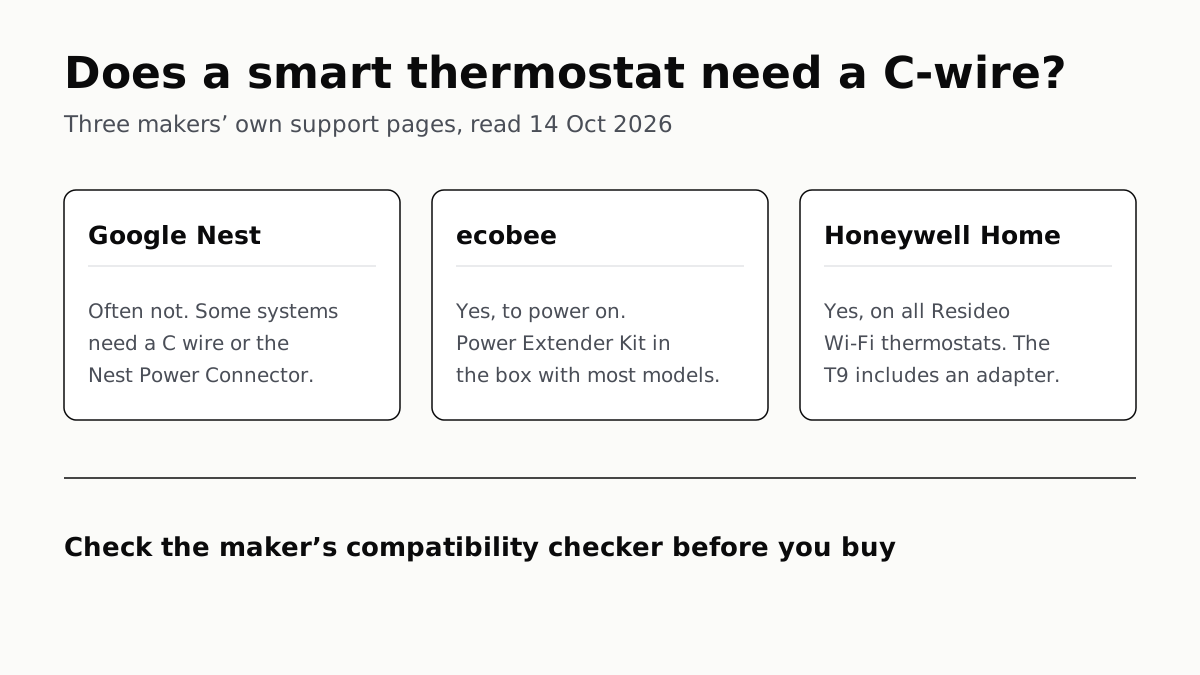
Ecobee and Honeywell Need a C-Wire; Nest Often Doesn’t
Each maker has a fix for homes without the wire, and each sends you to its own compatibility checker before you buy.
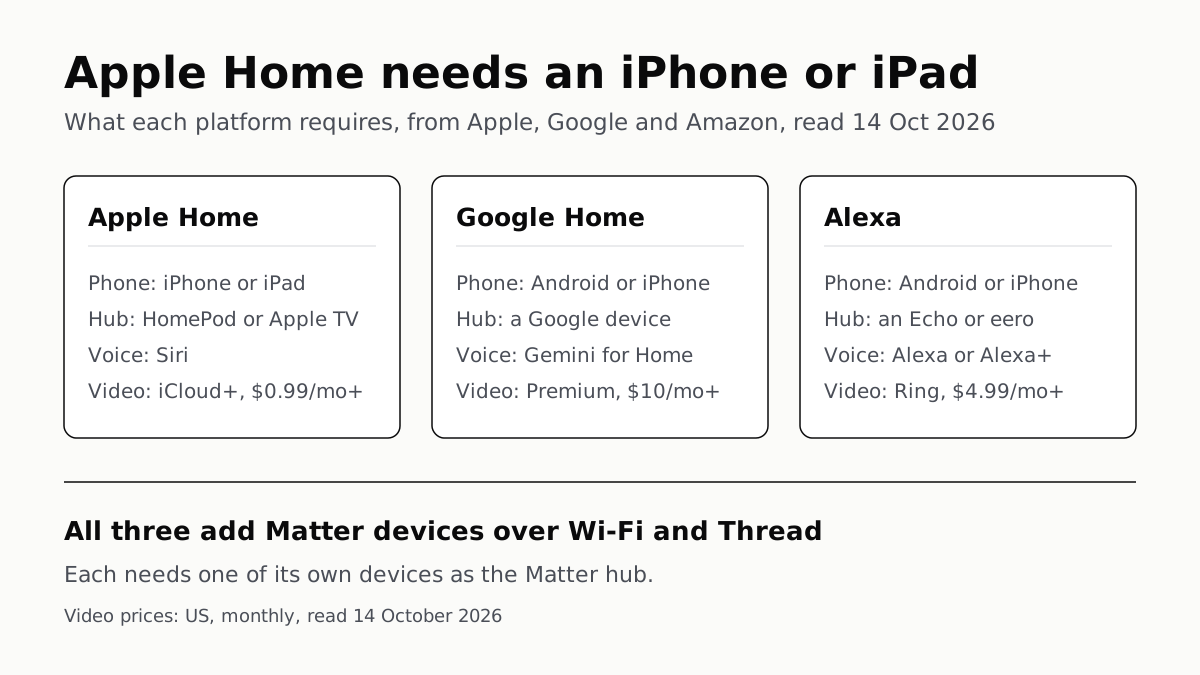
Apple Home Needs an iPhone; Google and Alexa Run on Both
All three add Matter and Thread devices. They differ in which hub you need, which assistant answers and what camera video history costs.
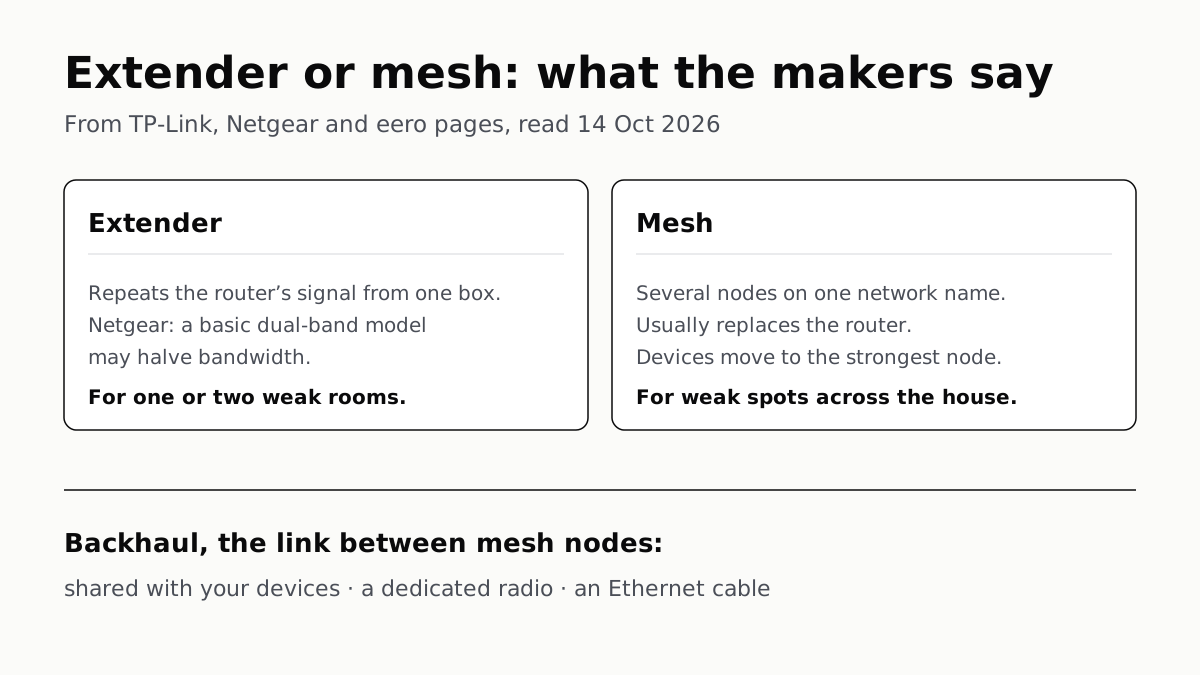
Extender for One Dead Room, Mesh for a Whole House
An extender repeats your router from one plug; mesh runs several nodes as one network. How the nodes link sets the speed.
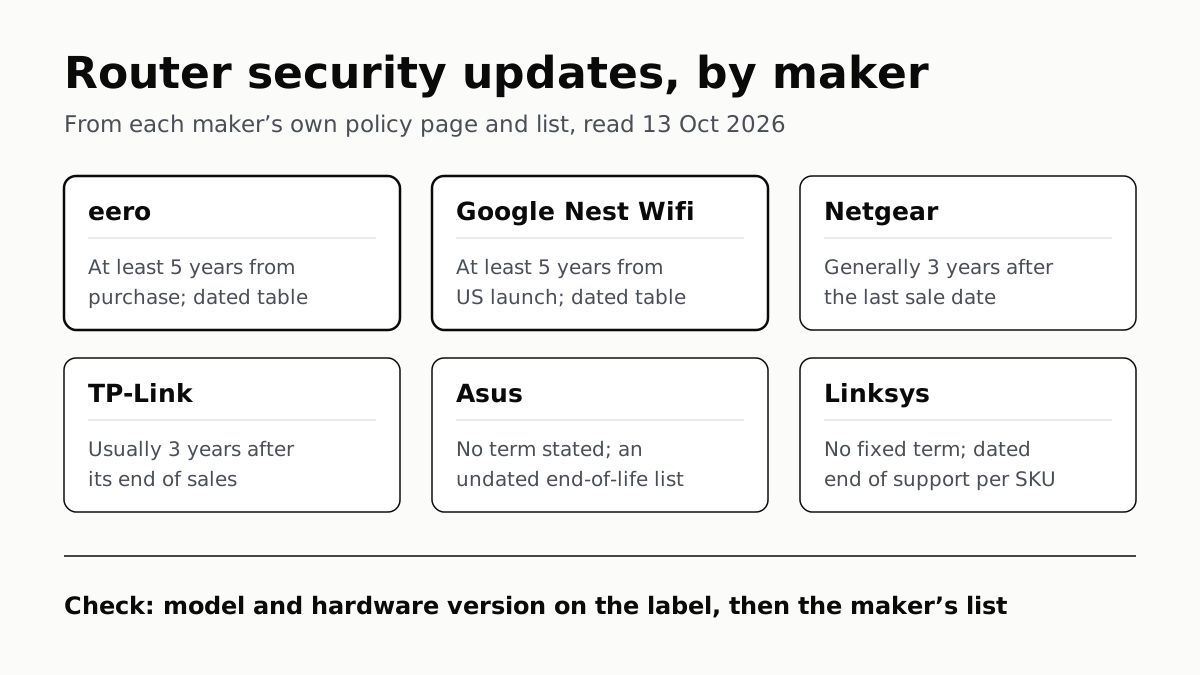
Four Router Makers Set an Update Term; Asus, Linksys Don’t
eero and Google guarantee five years at minimum; Netgear and TP-Link stop about three years after a model leaves sale.