At 7 Feet, TV Makers’ Own Guides Range From 46 to 70 Inches
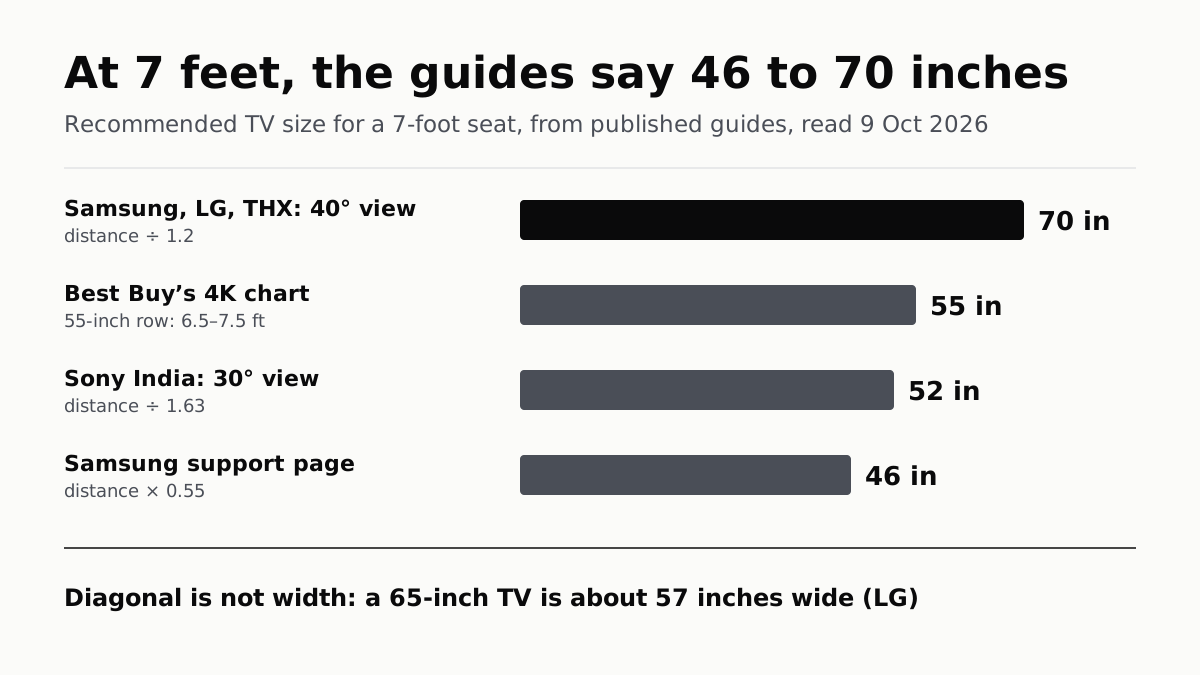
Samsung, LG and THX divide your distance by 1.2. Sony’s 30° table and Samsung’s own support page point you smaller.
If you buy through our links, we may earn a commission. It never affects our verdicts or scores — how that works. As an Amazon Associate I earn from qualifying purchases.
If you sit 7 feet from the screen, the size guides TV makers publish recommend anything from a 46-inch TV to a 70-inch one. Samsung’s and LG’s US buying guides and THX all come out at 70 inches, by dividing your distance in inches by 1.2; Sony’s 30° guidance gives about 52, and Samsung’s own support page about 46.
Most of the gap is one choice: how much of your view the screen should fill.
What each guide recommends
| You sit | 40° rule: Samsung, LG, THX | 30° rule: Sony India | Best Buy, 4K | Samsung support page |
|---|---|---|---|---|
| 6 ft | 60 in | 44 in | 40 in | 40 in |
| 7 ft | 70 in | 52 in | 55 in | 46 in |
| 8 ft | 80 in | 59 in | 65 in | 53 in |
| 9 ft | 90 in | 66 in | 65 in | 59 in |
| 10 ft | 100 in | 74 in | 80 in | 66 in |
How each column is worked out, from the sources’ own words:
- 40° rule. Samsung’s buying guide puts a 55-inch at 5.5 feet and a 75-inch at 7.5 feet, on a diagram marked 40°. LG says to “divide your viewing distance (in inches) by 1.2”. THX says to multiply the distance by 0.835, which is the same rule written the other way round. Column: distance in inches ÷ 1.2.
- 30° rule. Sony’s India support page has a “Recommended Mixed Usage Distance (30°)” column: 7.5 feet for a 55-inch, 8.9 feet for a 65-inch. Column: distance in inches ÷ 1.63, our arithmetic for a 30° view, which reproduces Sony’s rows.
- Best Buy. Its 4K chart gives ranges, so the column shows the size whose range covers your seat: 40 inches at 4–6 feet, 55 at 6.5–7.5, 65 at 8–9, 80 at 10–13.
- Samsung’s support page. Its wall-mounting article says to “take your TV’s size and divide it by .55”, so a 60-inch TV is 109 inches away. Column: distance × 0.55.
Samsung publishes two of the four answers, on two of its own US pages, and they are 24 inches apart at a 7-foot seat.
Why they differ: the angle each one aims for
A viewing angle is how wide the screen looks from your seat. For a 16:9 TV, the distance that gives a particular angle is a fixed multiple of the diagonal, which is what each “divide by” rule encodes.
| Rule | Distance as a multiple of the diagonal | Angle the screen fills |
|---|---|---|
| Samsung’s and LG’s buying guides, THX | 1.2 × | 40° |
| Sony India “mixed usage” | about 1.6 × | 30° |
| Samsung support page (÷ 0.55) | about 1.8 × | about 27° |
| Sony US 4K minimum (1.5 × screen height) | about 0.74 × | about 61° |
The angles in the last two rows are our arithmetic; the pages give only the formula.
Who says what about SMPTE. LG heads its 40° table “The Society of Motion Picture and Television Engineers: Recommended Cinema Distance (40°)” and credits SMPTE and RTINGS.com in a footnote. RTINGS’s size-to-distance guide, read on 9 October, attributes a different figure to SMPTE: a minimum of 30° for mixed use. We could not read a SMPTE document to settle which. RTINGS also cites a 62° SMPTE maximum, and when a reader asked in its comments for the source, its staff replied that they were having a hard time finding it.
Who says what about THX. THX’s pages give the 0.835 ratio, not an angle. On a 16:9 screen that ratio works out at 40°. Its room-size page also describes screen size ÷ 0.835 as “the ideal maximum gap” between couch and a 4K set, so THX treats the figure as a farthest seat rather than a closest one.
Resolution moves the closest seat, not the recommended one. Sony’s US page is about how near you can sit: 1.5 times the screen’s height for a 4K TV, three times for HD, because at that distance “the naked eye can’t differentiate individual pixels” on a 4K set. On a 65-inch that is 47 inches. THX made the same point in 2013: a 4K screen lets you sit closer, or buy bigger, before pixels show.
LG’s pages disagree with each other too. Its buying guide uses the 40° rule; its “how to measure” page has a table at the 30° figures (7.5 feet for a 55-inch) and, a few paragraphs later, a 4K rule of 0.07 feet per inch of diagonal, which is 3.9 feet for the same set.
How to pick a size for your room
- Measure the seat. THX’s wording is the plain one: measure the distance between your couch and where the TV will be, in inches.
- Pick an angle. Divide by 1.2 if you want the 40° view the makers’ buying guides describe as cinematic. Divide by about 1.6 for Sony India’s 30° everyday figure. Anything between the two is inside the published range. If you are between two sizes, the 30° figure is the smaller choice and the 40° figure the bigger one.
- Check the width, not the diagonal. LG’s measuring guide gives approximate widths: a 55-inch is about 48.5 inches wide, a 65-inch about 57 inches and a 75-inch about 66 inches. For the exact figure, Samsung says to look under the specs for “Set Size” on the TV’s own product page; the figure with the stand is the one that has to fit on furniture.
- Check the model number for that size. At Samsung and LG the size can change the panel, as our roundup of the TVs reviewers score highest found, so a review of the 65-inch may not describe the 77-inch. Sale season adds one-retailer model numbers that no review covers.
Size is the first decision, not the last. Once it is made, which TV specs are comparable between brands is the shorter list to work through.
Questions people ask
What size TV should I get for 8 feet away?
An 80-inch TV by the divide-by-1.2 rule that Samsung’s and LG’s buying guides and THX use. About 59 inches by Sony India’s 30° guidance, 65 inches on Best Buy’s 4K chart, and 53 inches by the rule on Samsung’s own support page.
How far should I sit from a 65-inch TV?
Samsung’s buying guide says 6.5 feet. Sony India’s 30° table says 8.9 feet and Best Buy’s 4K chart 8 to 9 feet. Sony’s US minimum for a 65-inch 4K set is 47 inches, just under 4 feet.
How do I work out TV size from viewing distance?
Measure from your seat to where the screen will be, in inches. Divide by 1.2 for a 40° view, the figure Samsung, LG and THX use; THX writes the same thing as multiplying by 0.835. Divide by about 1.6 for a 30° view, the figure in Sony India’s table.
Can you sit closer to a 4K TV than an HD one?
Sony says so: its minimum is 1.5 times the screen’s height for 4K and three times for HD, because at that distance you cannot pick out a 4K set’s pixels. THX says the same in general terms: higher resolution lets you sit closer before the pixels show.
Is a 75-inch TV too big for my living room?
Samsung puts a 75-inch at 7.5 feet and LG at 2.1 to 2.3 meters, about 7 to 7.5 feet. Sony India’s 30° figure is 10.2 feet. So at 7.5 feet it fits the 40° rule, and at about 10 feet the 30° one. LG says it is about 66 inches wide, so check the wall too.
Why do TV size charts give different answers?
Mostly because they aim for different viewing angles. A 40° view, used by Samsung, LG and THX, puts you 1.2 times the diagonal away; a 30° view, used in Sony India’s table, about 1.6 times. Samsung’s support page uses 1.8 times, about 27°.
How we researched this
No one at bitcritiq has handled this product. Everything here comes from published sources, listed below.
- What this cannot tell you
- We could not read a SMPTE document. What SMPTE recommends is reported here second-hand: LG puts SMPTE's name on a 40° table, and RTINGS says SMPTE recommends a minimum of 30°; RTINGS's own staff wrote in its comments that they were having a hard time finding the SMPTE document behind a 62° figure it also cites. THX's pages give a ratio, not an angle. Sony's 30° and 40° columns are on its India support page, not the US one. None of these guides says anything about your eyesight or your room's light, and we have not tested any TV at any distance.
How we chose this, and what we did
- Why this subject
- Search Console shows our best-TVs roundup collecting queries like “best tv 2026” and “best new tvs”, and Google Trends has “oled tv” rising toward Black Friday. Screen size is the first decision those buyers make, and bitcritiq had no page on it. Every TV maker publishes a size guide; we wanted to know whether they agree.
- How we looked at it
- Read on 9 October 2026, through a browser: Samsung US's buying guide “What size TV should I get?” (its chart is an image; the figures are from its alt text) and Samsung US support article ANS10006945; LG US's buying guide on choosing a TV size and its “How to measure and read TV sizes” page; Sony US support article 00008601 (the 4K and HD tables are in collapsed sections, read from the page source) and the Sony India version of the same article, which adds 30° and 40° columns; THX's “What size TV should I buy for my living room?”, its room-size page and its 2013 post “When does 4K matter?”; and Best Buy's “What TV Size Is Best for My Room?”. RTINGS's size-to-distance page is used only for what it says about SMPTE, labelled as reporting. Sizes for each distance are either read from a source's own table or worked out from its published formula, and the formula is shown. Viewing angles are our arithmetic for a 16:9 screen, whose width is 0.872 times its diagonal.
What this rests on
6 claims, all official. Nothing here was measured by bitcritiq — see how we test for why. Open a claim to read the source it came from.
Samsung's US buying guide recommends about 1 foot of viewing distance per 10 inches of screen, filling a 40° view.Official
Samsung US, “What size TV should I get?”, chart alt text: “The recommended Viewing Distance for a 55 inch TV is 5.5 ft (1.7m), 65 inches is 6.5 ft (2m). 75 inches is 7.5 ft (2.3m) and 85 inches is 8.5 ft (2.6m)”; its diagram shows a 75-inch TV at 2.3 meters and “the 40 degree angle”.
Samsung's own US support page uses a different rule that puts you about half as far again from the same screen.Official
Samsung US Support ANS10006945: “To calculate the proper viewing distance, take your TV's size and divide it by .55. For instance, the recommended distance to sit away from a 60-inch TV would be 109 inches.”
LG says to divide viewing distance in inches by 1.2, based on a 40° viewing angle, and labels its table with SMPTE's name.Official
LG USA: “A common guideline is to divide your viewing distance (in inches) by 1.2 to estimate the recommended TV screen size based on a 40-degree viewing angle.” Its table is headed “The Society of Motion Picture and Television Engineers: Recommended Cinema Distance (40°)”.
THX says to multiply the distance from couch to TV, in inches, by 0.835 to get a screen size.Official
THX: “measure the distance between your couch and where your TV will be located (in inches). Then multiply that number by .835, and that should help you determine what screen size you should get.”
Sony's minimum distance for a 4K TV is 1.5 times the screen's height, half its figure for an HD TV.Official
Sony US Support 00008601: “The recommended distance for watching a 4K TV is 1.5 times the TV's vertical screen size” and for HD “three (3) times”; “The distances below are the minimum distances for your reference.”
Sony India's version of the page recommends a 30° view for mixed use and 40° for a cinematic one.Official
Sony India Support 00008601: “For sports, gaming, and everyday viewing, the screen should ideally fill 30° of your field of vision. For a more cinematic experience, you may prefer to sit closer, allowing the screen to fill 40°.” Its table gives a 55-inch TV 7.5 feet at 30° and 5.5 feet at 40°.
Sources 11
- What size TV should I get? — Samsung USOfficialaccessed Oct 9, 2026
- Things to consider before mounting your Samsung TV to a wall — Samsung US Support ANS10006945Officialaccessed Oct 9, 2026
- How to Choose the Right TV Size for Your Room — LG USAOfficialaccessed Oct 9, 2026
- How to measure and read TV sizes — LG USAOfficialaccessed Oct 9, 2026
Show 7 more · 6 official or standards
- Recommended viewing distance for watching TV — Sony USA Support 00008601Officialaccessed Oct 9, 2026
- What is the recommended viewing distance for televisions? — Sony India Support 00008601Officialaccessed Oct 9, 2026
- What size TV should I buy for my living room? — THXOfficialaccessed Oct 9, 2026
- How to build the THX home theater of your dreams — THXOfficialaccessed Oct 9, 2026
- When does 4K matter? — THX, 8 January 2013Officialaccessed Oct 9, 2026
- What TV Size Is Best for My Room? — Best BuyOfficialaccessed Oct 9, 2026
- TV Size To Distance Calculator (And The Science Behind It) — RTINGSaccessed Oct 9, 2026
Pass it on
Know someone weighing this up? Send them the answer.
bitcritiq.com/fr57The link is permanent: it opens this article for good, even if the title changes.
No email, no account
Follow bitcritiq
Every new article, in whatever reader you already use.
Subscribe by RSSAll the ways to follow
Using Chrome on Android? Open the browser menu and tap Follow. New articles then turn up in the Following tab in Discover.
read next
A Soundbar Works Without a Sub; Add One for the Lowest Bass
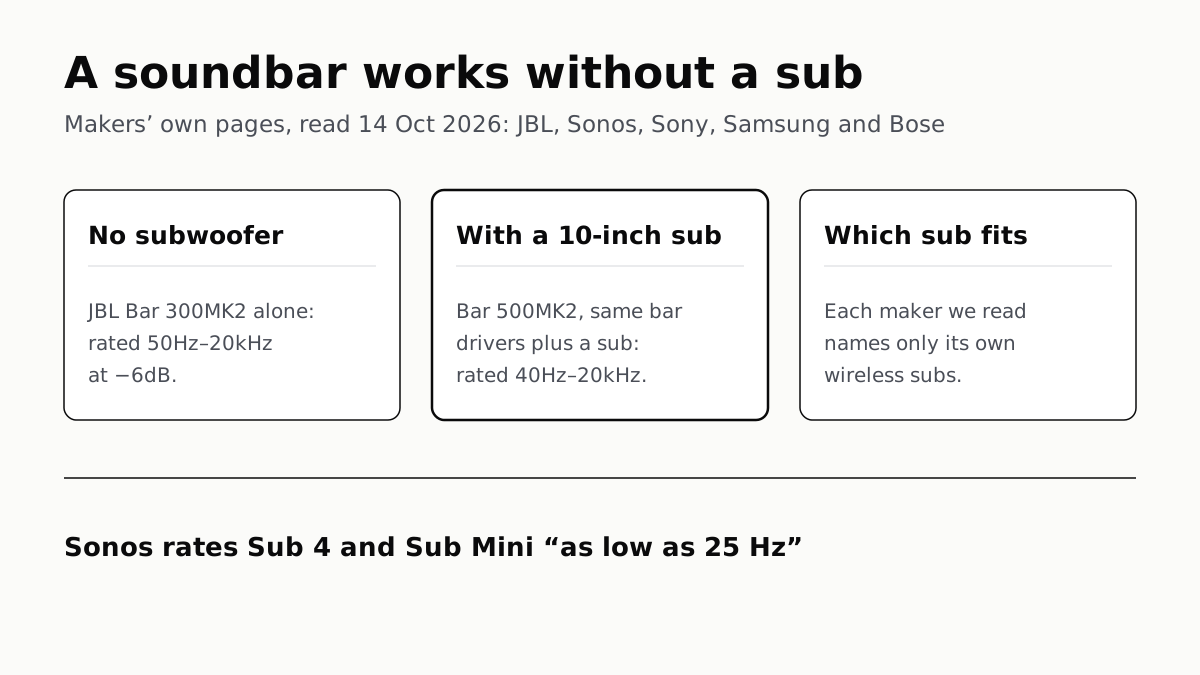
In JBL’s specs, the same bar drivers reach 50Hz alone and 40Hz with a 10-inch sub. Sony, Sonos and Samsung list only their own subs.
Seatback Bluetooth: United on 800+ Planes, Others Starting
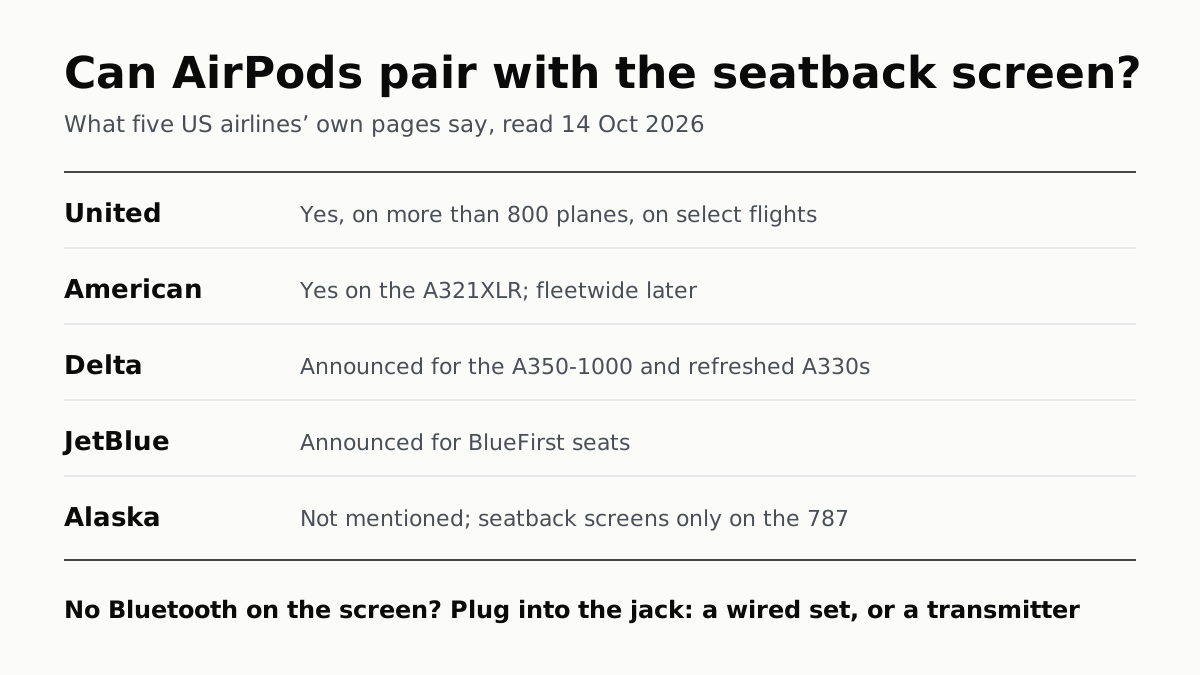
American’s A321XLR has it and JetBlue and Delta have announced it. Without it, the seatback jack needs a wired plug or a transmitter.
HDR10 Is the Fallback; Dolby Vision and HDR10+ Are Upgrades
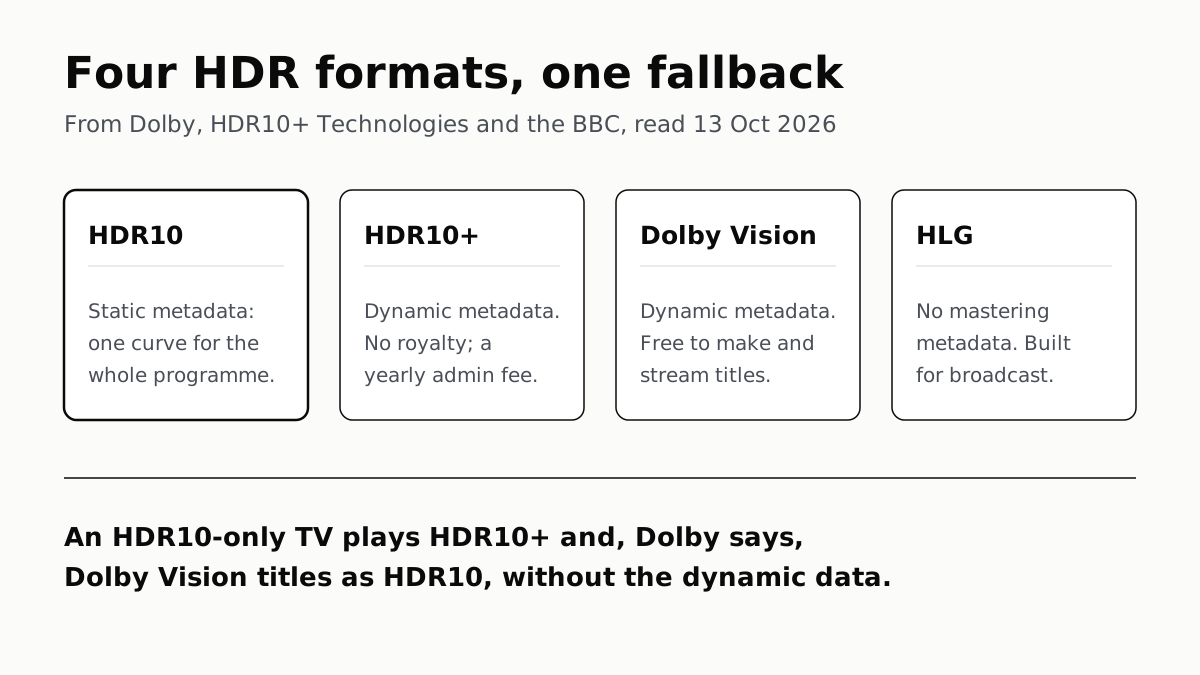
Samsung’s S90F lists HDR10+, not Dolby Vision; LG’s C6 the reverse. TCL’s QM7K lists both.
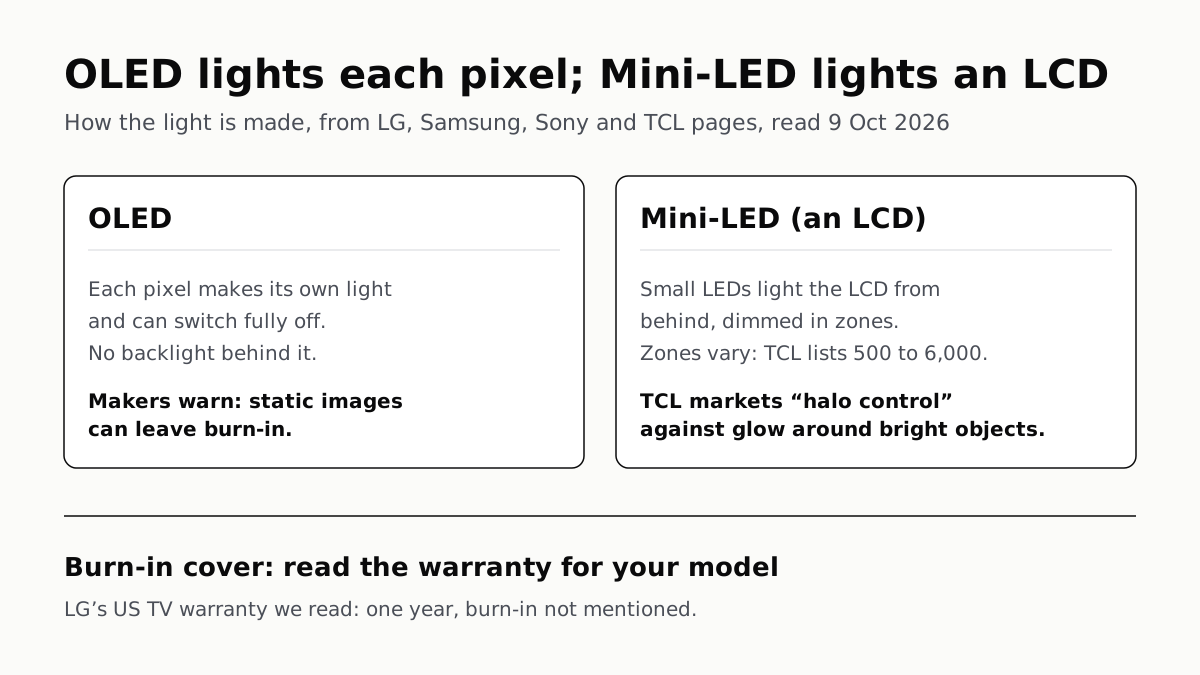
OLED Lights Each Pixel; Mini-LED Lights an LCD Behind It
Self-lit pixels give OLED its blacks and a burn-in risk; a zoned backlight gives Mini-LED brightness and a halo risk.