Five Gigabytes Is Not a Phone Backup
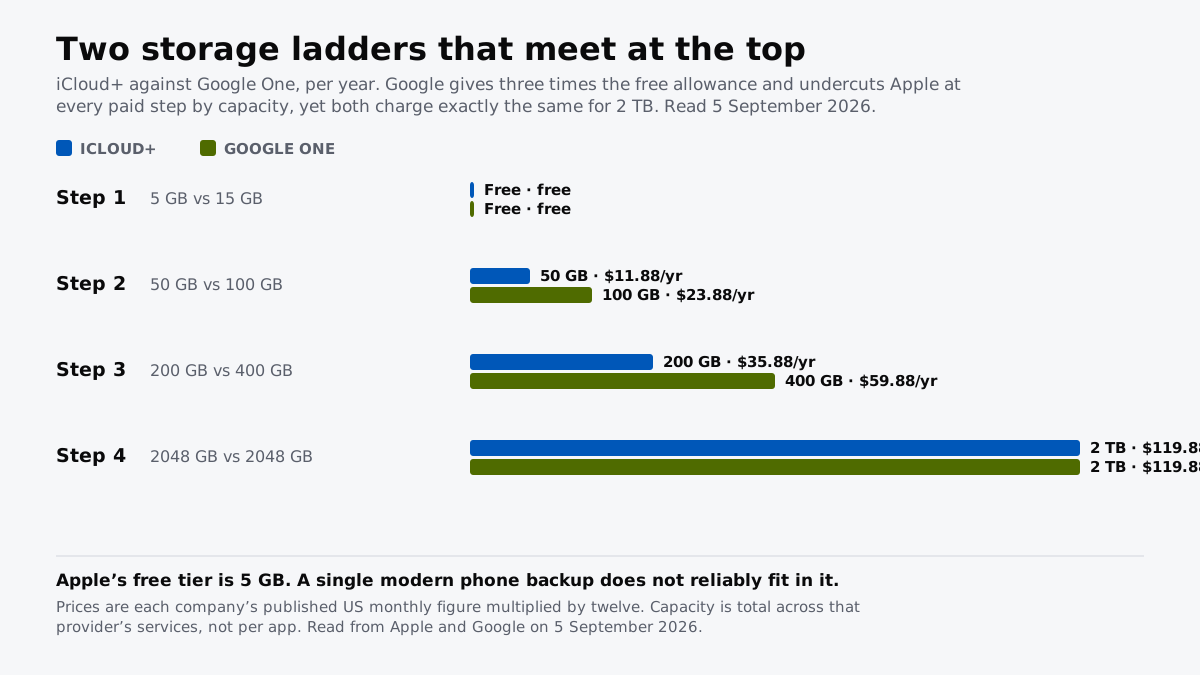
Apple gives 5GB free, Google up to 15GB. The two ladders above them meet at exactly the same price for 2TB.
If you buy through our links, we may earn a commission. It never affects our verdicts or scores — how that works. As an Amazon Associate I earn from qualifying purchases.
Both platforms hand you a free allowance smaller than the thing it is meant to hold. Apple gives 5GB. Google gives up to 15GB. A modern phone full of photographs does not reliably back up into either.
Which means the storage decision is not made when you buy the phone. It is made during setup, by whoever is holding it, usually on the day they were given it.
The two ladders
| Step | iCloud+ | A year | Google One | A year |
|---|---|---|---|---|
| Free | 5 GB | — | up to 15 GB | — |
| 1 | 50 GB | $11.88 | 100 GB | $23.88 |
| 2 | 200 GB | $35.88 | 400 GB | $59.88 |
| 3 | 2 TB | $119.88 | 2 TB | $119.88 |
Each company’s published US monthly price times twelve, read 5 September 2026. Capacity is the total across that provider’s services, not per app.
Google gives more at every step, then stops
Below the top tier the pattern is consistent: Google gives roughly double the capacity for roughly double the price, so the cost per gigabyte is close, and gives three times the free allowance for nothing.
At 2 TB the two converge exactly, to the cent. $9.99 a month on both, $119.88 a year on both. Two companies with different cost structures, different customers and different reasons to want you in the ecosystem arriving at an identical number is a pricing decision, not an accident.
The comparison is not quite like for like any more
Worth saying plainly, because it cuts against the neat table above. Google’s middle tiers are no longer storage products. Its 400 GB and 2 TB plans are sold as Google AI Plus and carry Gemini usage allowances alongside the gigabytes.
So a household comparing $59.88 against Apple’s $35.88 is not comparing storage to storage. It is comparing storage to storage-plus-an-AI-quota, which may be worth the difference or may be a bundle for something they were never going to use. Our page on what phone AI features cost sets out that side separately.
Why this matters most on a gift
A phone handed over on Christmas Day runs setup once, and setup asks for a backup. The free tier will accept the account and then fill, quietly, over the following weeks, and the first symptom is a phone that has stopped backing up without saying so loudly.
That is the moment the subscription gets bought — under mild pressure, without comparison, at whatever tier is offered first. Deciding in advance costs nothing and takes a minute.
What to actually do
- Check the used storage on the old phone before you set up the new one. That number, not the marketing, tells you which step you need.
- Skip step one on Apple. 50 GB is above the free tier and below a photo library, which is the worst of both.
- Compare at the tier you actually need, not at the top. The two ladders are identical at 2 TB and are not identical anywhere below it.
- Count it as a recurring cost, because it is one. It belongs on the same list as everything else in the house that needs a subscription.
- Do the account housekeeping first if the phone is a hand-me-down, or the storage question will not be the one that stops you.
How we researched this
No one at bitcritiq has handled this product. Everything here comes from published sources, listed below.
- What this cannot tell you
- Prices and tiers are for the United States and change. This page does not compare what the two services do beyond storage — iCloud+ and the Google plans both bundle features that are not storage, and Google's middle tiers now carry AI allowances that make a like-for-like capacity comparison incomplete. It says nothing about which service is better, and carries no score. It also does not cover buying more storage in the handset itself, because the upgrade price varies by model and is not published as a standalone figure.
How we chose this, and what we did
- Why this subject
- A phone given as a gift is set up on Christmas Day, and the first thing it asks for is a backup. The free allowance both platforms give is smaller than the thing it is being asked to hold, which turns setup into a purchase decision made by somebody who has just been handed a present. Both ladders are published in full, so the arithmetic can be done in advance instead.
- How we looked at it
- Tiers and monthly prices are quoted from Apple's own iCloud+ support page and Google One's own plans page, read on 5 September 2026. Annual figures are the published monthly price multiplied by twelve. Capacity figures are each provider's own, and are totals across that provider's services rather than per application.
What this rests on
5 claims, all official. Nothing here was measured by bitcritiq — see how we test for why. Open a claim to read the source it came from.
An Apple Account includes 5GB of free storage; a Google Account includes up to 15GB.Official
Apple's support page states iCloud provides 5 GB of storage for free before upgrading to iCloud+. Google's plans page states all Google accounts come with up to 15 GB of storage, included in the total offered by paid plans.
Apple's paid ladder runs $0.99, $2.99, $9.99, $29.99 and $59.99 a month.Official
Apple's own page lists 50 GB at $0.99, 200 GB at $2.99, 2 TB at $9.99, 6 TB at $29.99 and 12 TB at $59.99 per month in the United States.
Google gives more capacity than Apple at every paid step below 2 TB, then charges exactly the same at 2 TB.Official
Google lists 100 GB at $1.99 and 400 GB at $4.99 against Apple's 50 GB at $0.99 and 200 GB at $2.99. Both list 2 TB at $9.99 a month, which is $119.88 a year.
Apple's cheapest paid tier costs $11.88 a year and its 2 TB tier $119.88.Official
$0.99 and $9.99 a month respectively, multiplied by twelve.
Google's middle tiers are no longer storage-only, which makes a capacity comparison incomplete.Official
Google's 400 GB and 2 TB tiers are sold as Google AI Plus and carry Gemini usage allowances alongside the storage, per its own plans page.
Sources 4
- iCloud+ plans and pricing — Apple SupportOfficialaccessed Sep 5, 2026
- Google One plans and pricing — GoogleOfficialaccessed Sep 5, 2026
- Everything in the House That Needs a Subscription — bitcritiqaccessed Sep 5, 2026
- The Hand-Me-Down Phone That Will Not Switch On — bitcritiqaccessed Sep 5, 2026
No email, no account
Follow bitcritiq
Every new article, in whatever reader you already use.
Subscribe by RSSAll the ways to follow
Using Chrome on Android? Open the browser menu and tap Follow. New articles then turn up in the Following tab in Discover.
read next
The Charging Pad Is Not What Ages Your Battery
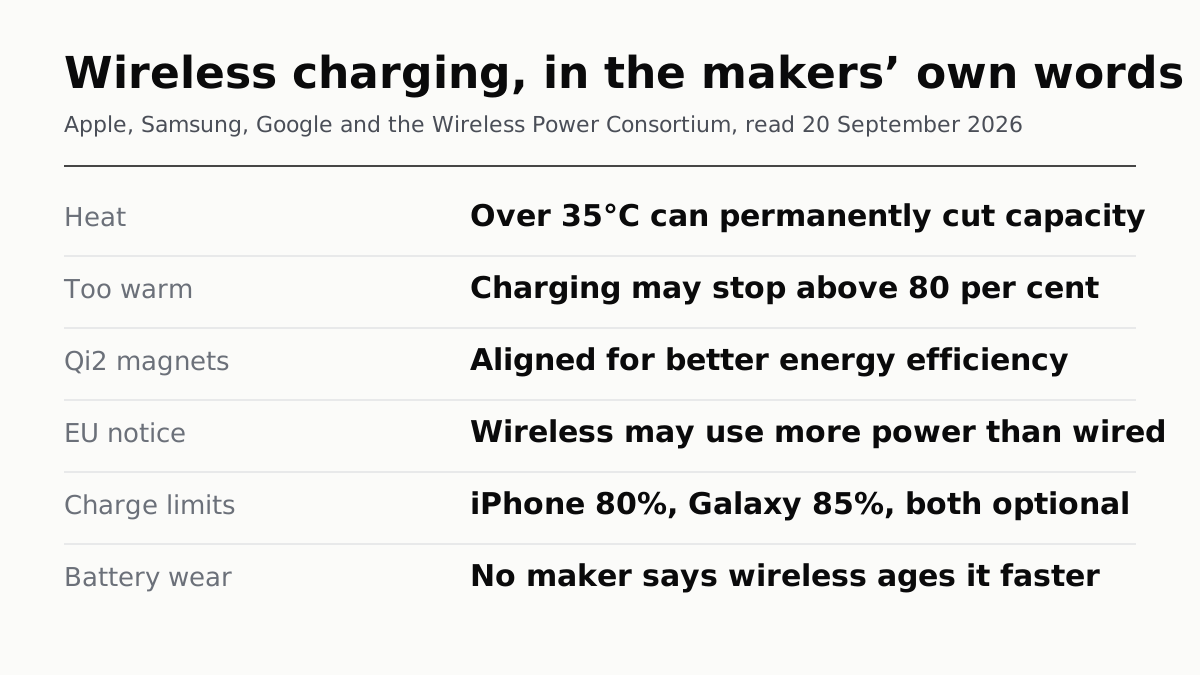
Apple, Samsung and Google name heat, cycles and time spent full. None names the charging method. Above 35°C, Apple says damage is permanent.
CarPlay Ultra Adds the Gauges. Your Car Decides.
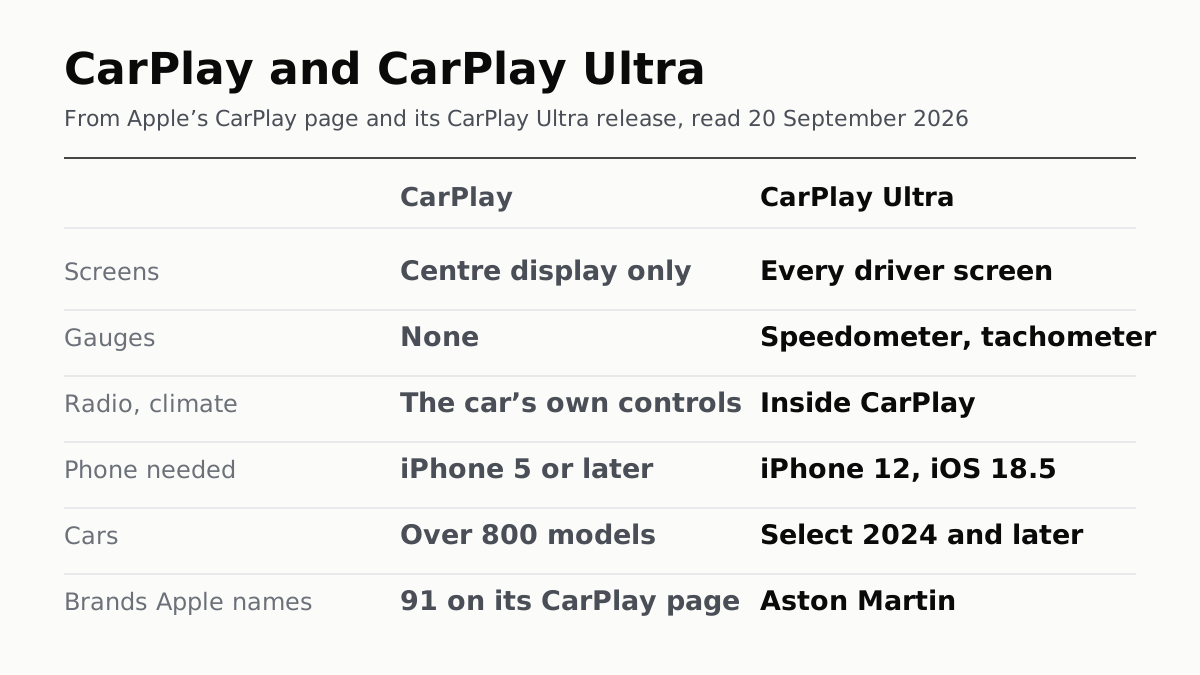
Apple asks for an iPhone 12 on iOS 18.5 and a select 2024-or-later car. Aston Martin is the one brand it has named shipping it.
When an iPad Says Not Charging, Apple Blames the Port
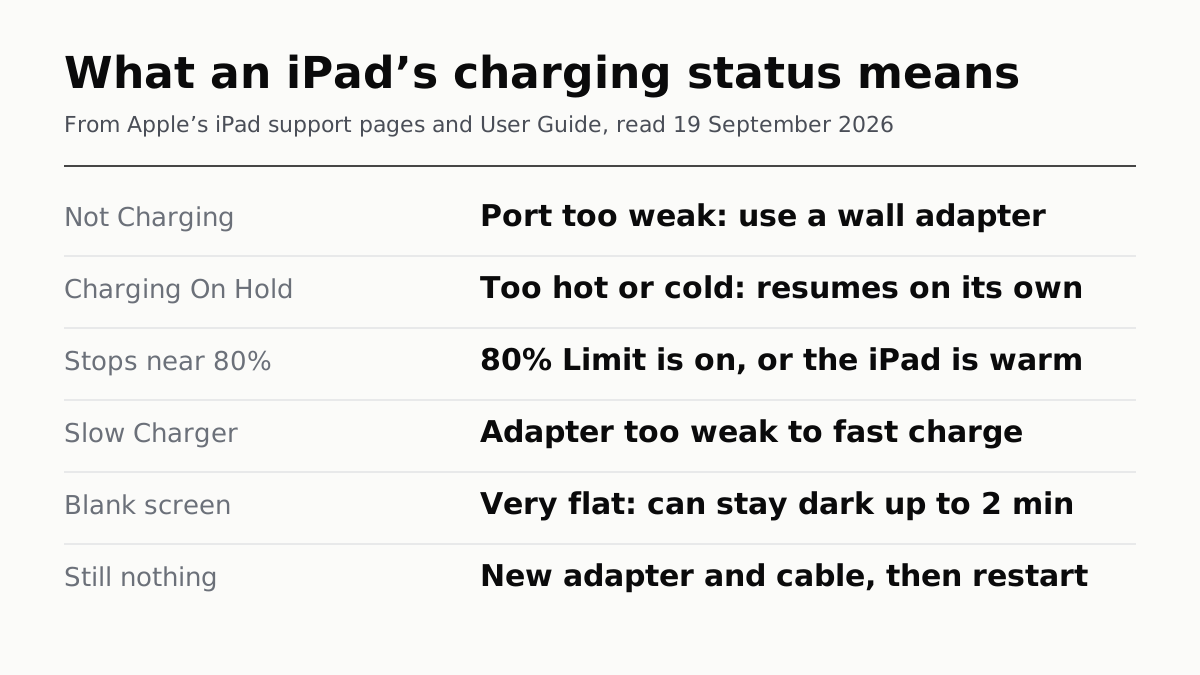
Apple's order of checks, the 15W minimum it sets for other adapters, and the two statuses that mean the iPad chose to stop.
An iPhone Battery From Apple Costs $69 to $129
Apple's own estimator, model by model: the 18 Pro costs $10 more than the 17 Pro, and AppleCare pays in full once capacity drops below 80%.