What the AI on Your New Phone Actually Costs
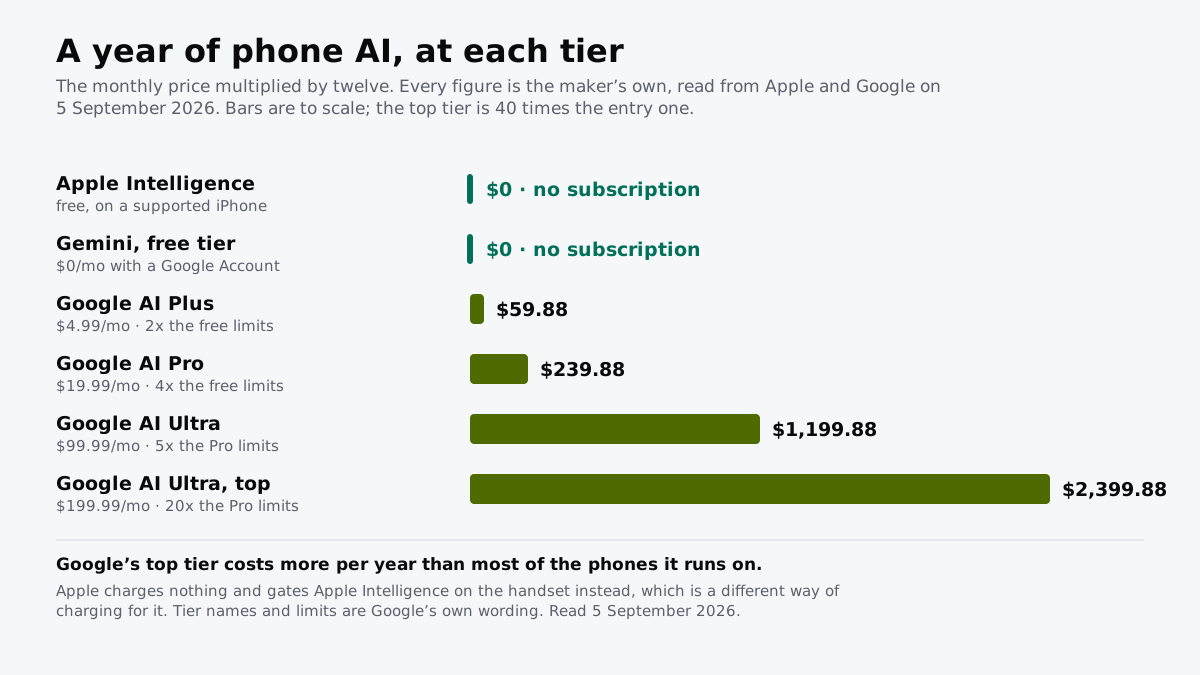
Google's ladder runs from nothing to $199.99 a month. Apple charges nothing and gates it on the handset instead.
If you buy through our links, we may earn a commission. It never affects our verdicts or scores — how that works. As an Amazon Associate I earn from qualifying purchases.
Update, 11 October 2026. The 7 October note below said free accounts get Flash-Lite alone from 9 October. Google has since revised its notice: free accounts get Auto, which sends most prompts to Flash-Lite and some that need deeper reasoning to Flash or Pro, without letting you choose. The model section and advice are corrected to match.
Update, 7 October 2026. This page said Google sells its tiers on usage limits rather than capability, and advised starting on the free tier. Google’s Help Center now says that from 9 October free personal accounts get one model, Flash-Lite, instead of Flash-Lite, Flash and Pro; AI Plus keeps Flash but loses Pro on a date Google emails each subscriber; Pro needs AI Pro at $19.99 or Ultra. Prices are unchanged. The quota section and the advice below are corrected, and what free Gemini loses on 9 October has its own page.
Update, 15 September 2026. Apple now states that its server-side Apple Intelligence features, including Siri AI and Image Playground, are subject to daily usage limits, and that “expanded access to such features will be available for a fee in the future.” Apple Intelligence still carries no subscription today, so the figures below stand, but Apple has said in writing it will not stay entirely free. Details in how to turn Apple Intelligence off.
Two makers, two ways of charging, and only one of them is a subscription. Google publishes four paid AI tiers above its free one, from $4.99 to $199.99 a month. Apple publishes no price at all and requires a recent iPhone instead.
Both are a cost. Only one of them appears on a bill.
The ladder, in a year
| Monthly | A year | |
|---|---|---|
| Apple Intelligence | no subscription | $0 |
| Gemini, free tier | $0 | $0 |
| Google AI Plus | $4.99 | $59.88 |
| Google AI Pro | $19.99 | $239.88 |
| Google AI Ultra | $99.99 | $1,199.88 |
| Google AI Ultra, top | $199.99 | $2,399.88 |
Prices are Google’s and Apple’s own, read on 5 September 2026. Annual figures are the monthly price times twelve. Introductory discounts are excluded: several tiers were discounted heavily on the day we read the page, and an introductory price is not a price.
What you are buying is a quota, and from 9 October a model
This is the part the advertising does not lead with. Google’s tiers are sold largely on usage limits — its own page describes them as two times, four times, five times and up to twenty times the level below.
Until October that was the whole difference: every tier, free included, could pick Flash-Lite, Flash or Pro. From 9 October Google’s Help Center splits them by model too. Free accounts get Auto, which sends most prompts to Flash-Lite and only some to Flash or Pro; AI Plus can choose Flash-Lite or Flash; and choosing Pro starts at AI Pro, $19.99 a month.
The quota half of the question is still hard to answer in a shop. Nobody buying a phone knows how many prompts a month they will run, which makes the tier close to unguessable at the point of sale.
The practical consequence: start at the cheapest tier that has the model you want, and let the limits tell you the rest. A tier you outgrow announces itself. A tier you overbought never does.
Apple’s version is not free, it is bundled
Apple charges nothing for Apple Intelligence and conditions it on an Apple Intelligence–enabled device. That is not generosity, it is the cost moved into the handset, and it has a sharper edge than a subscription: a subscription can be cancelled, and a phone that is one generation too old cannot be upgraded into eligibility.
It also means the honest comparison is not “free versus $19.99 a month”. It is “a new phone every few years versus a monthly line item”, and which of those is cheaper depends entirely on how long you keep a handset.
What to actually do
- Do not pay for an AI tier at the same time as buying the phone. A month on the free tier, or on AI Plus if you need Flash, shows whether you are hitting a limit. From 9 October the free tier answers mostly with Flash-Lite and lets Google decide when to use Pro, so it cannot reliably show you what Pro would do.
- Check what the tier bundles before comparing it to a rival. Google’s plans include cloud storage, so a household already paying for storage separately is comparing the wrong two numbers.
- Ignore an introductory price entirely. Ours is the same rule as anywhere else on this site: the number that matters is what it renews at.
- If you are buying an iPhone as a gift, check the model is eligible, because that is the whole of Apple’s paywall and it cannot be fixed afterwards.
- Treat this like any other subscription attached to hardware, the same way we cost out a console and a video doorbell.
- The same question is arriving on glasses. Snap has not priced Specs Intelligence beyond its free preview, but the glasses already carry an optional data plan: Snap Specs, on paper.
How we researched this
No one at bitcritiq has handled this product. Everything here comes from published sources, listed below.
- What this cannot tell you
- This covers what the makers charge, not whether any of it is worth paying for — that would need testing we have not done, and this page carries no score. Promotional pricing is excluded: Google was discounting several tiers heavily for introductory periods on the day we read the page, and an introductory price is not a price. Bundling changes the arithmetic too, since some tiers include cloud storage a household may already pay for separately. Samsung is described only where its own published position is clear, which as of this date it is not.
How we chose this, and what we did
- Why this subject
- Every phone sold this season is sold on its AI features, and the advertising never distinguishes between the ones included with the handset and the ones behind a subscription. That distinction is published, in full, on the makers' own pricing pages, so it can be quoted rather than estimated. It is also the cost that keeps running after the sale price is forgotten.
- How we looked at it
- Tier names, prices and usage-limit multiples are quoted from Apple's and Google's own pages on 5 September 2026. Annual figures are the published monthly price multiplied by twelve, which is arithmetic on today's list price rather than a forecast. No third-party summary is used, and no price is taken from a retailer.
What this rests on
5 claims, all official. Nothing here was measured by bitcritiq — see how we test for why. Open a claim to read the source it came from.
Google publishes four paid AI tiers above its free one, at $4.99, $19.99, $99.99 and $199.99 a month.Official
Google's own subscriptions page lists Free at $0, Google AI Plus at $4.99, Google AI Pro at $19.99, and Google AI Ultra starting at $99.99 with a $199.99 option carrying 20 times the Pro usage limits.
The gap between Google's cheapest paid tier and its most expensive is 40-fold.Official
$4.99 a month against $199.99 a month, both from Google's published pricing. Over a year that is $59.88 against $2,399.88.
Google's tiers differ in usage limits, at 2x, 4x, 5x and up to 20x, and from 9 October 2026 also in which models they include.Official
Google's page describes AI Plus as 2x higher usage access than Free, AI Pro as 4x, and AI Ultra as 5x or up to 20x the Pro limits. Gemini Apps Help 17004136 (read 11 October 2026): from 9 October users without a plan get “Auto”, where “Most prompts will go to Flash-Lite” and “Prompts that need deeper reasoning may go to Flash or Pro”; AI Plus keeps Flash-Lite and Flash, on a date Google emails; Pro needs AI Pro or Ultra.
Apple charges no subscription for Apple Intelligence and requires an Apple Intelligence-enabled device instead.Official
Apple's own Apple Intelligence page carries no price and repeatedly conditions features on an Apple Intelligence-enabled device; some Home features additionally require an eligible iCloud+ plan.
Google's top tier costs more over a year than most phones it runs on.Official
$199.99 a month is $2,399.88 a year. Every phone on our own shortlists costs less than that.
Sources 6
- Gemini subscriptions and pricing — GoogleOfficialaccessed Sep 5, 2026
- Changes to Gemini model access and limits — Gemini Apps Help 17004136Officialaccessed Oct 11, 2026
- Google One plans and pricing — GoogleOfficialaccessed Sep 5, 2026
- Apple Intelligence — AppleOfficialaccessed Sep 5, 2026
Show 2 more · 1 official or standards
- How to get the next generation of Apple Intelligence — Apple SupportOfficialaccessed Sep 15, 2026
- What a Console Costs After You Buy It — bitcritiqaccessed Sep 5, 2026
Pass it on
Know someone weighing this up? Send them the answer.
bitcritiq.com/k77fThe link is permanent: it opens this article for good, even if the title changes.
No email, no account
Follow bitcritiq
Every new article, in whatever reader you already use.
Subscribe by RSSAll the ways to follow
Using Chrome on Android? Open the browser menu and tap Follow. New articles then turn up in the Following tab in Discover.
read next
AI Coding Tools Free to Try: Five of Six, Not Claude Code
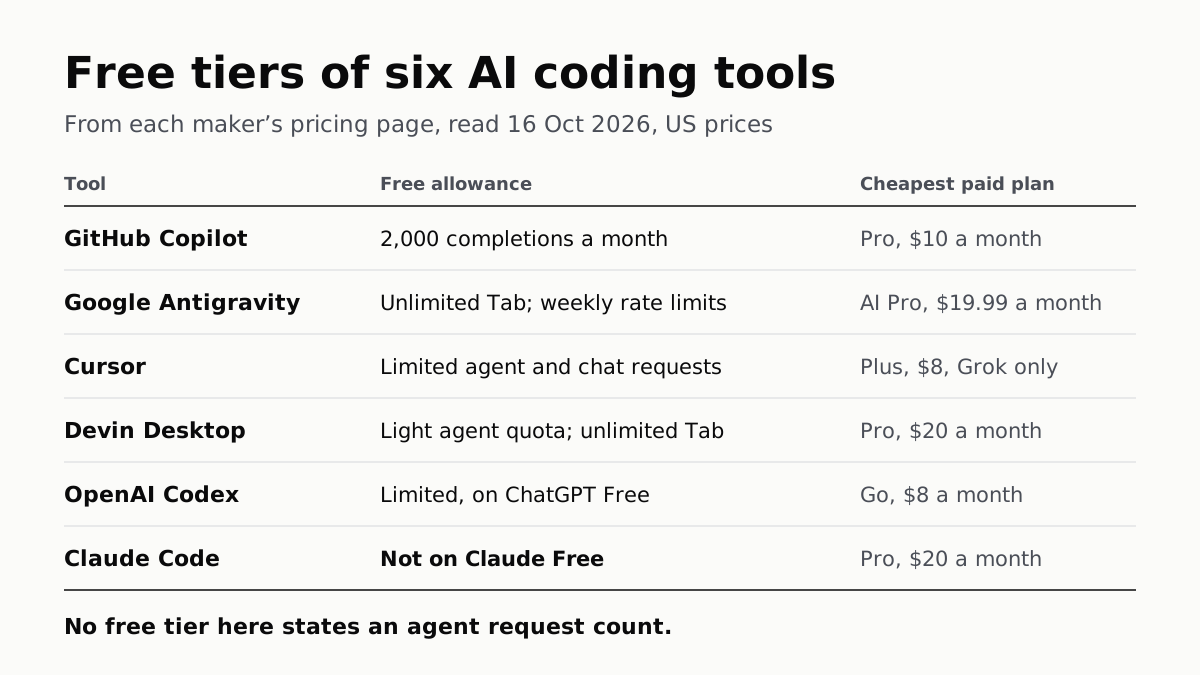
GitHub Copilot Free gives 2,000 completions a month; Antigravity replaced Google’s free Code Assist. Paid plans start at $8.
Hermes Agent Is Nous Research’s Open-Source AI Agent
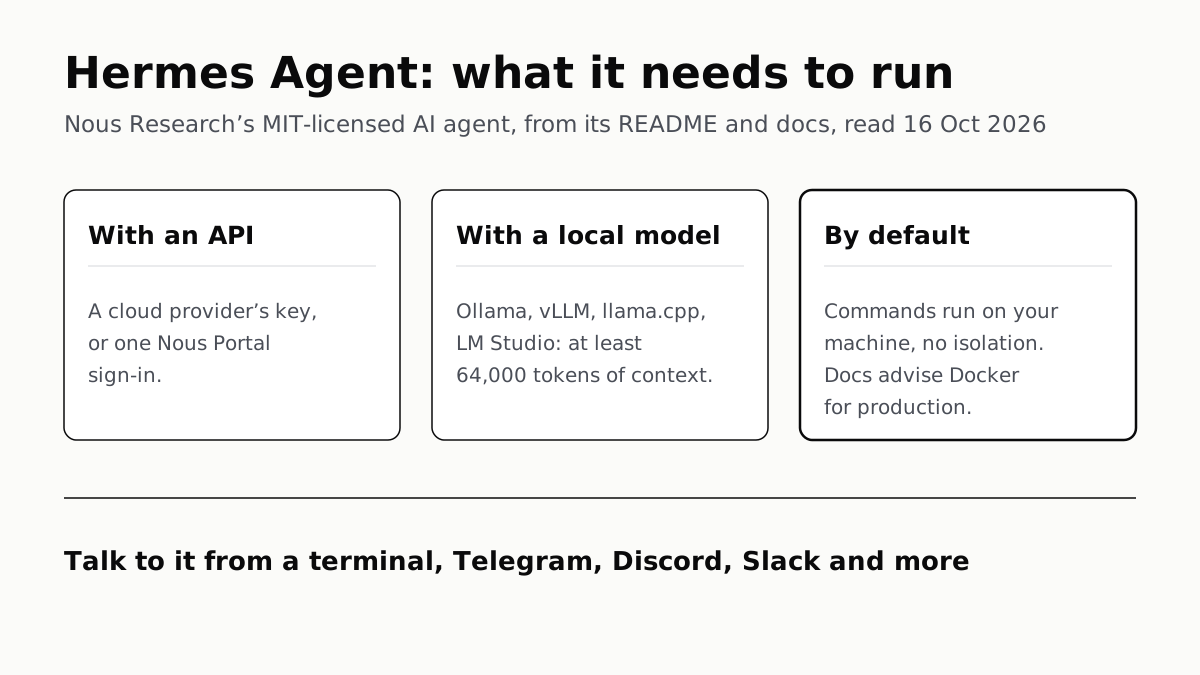
It runs on your machine, a server or a cloud sandbox, and uses a cloud API or a local model with at least 64,000 tokens of context.
OpenClaw Runs on a Local LLM via Ollama or LM Studio
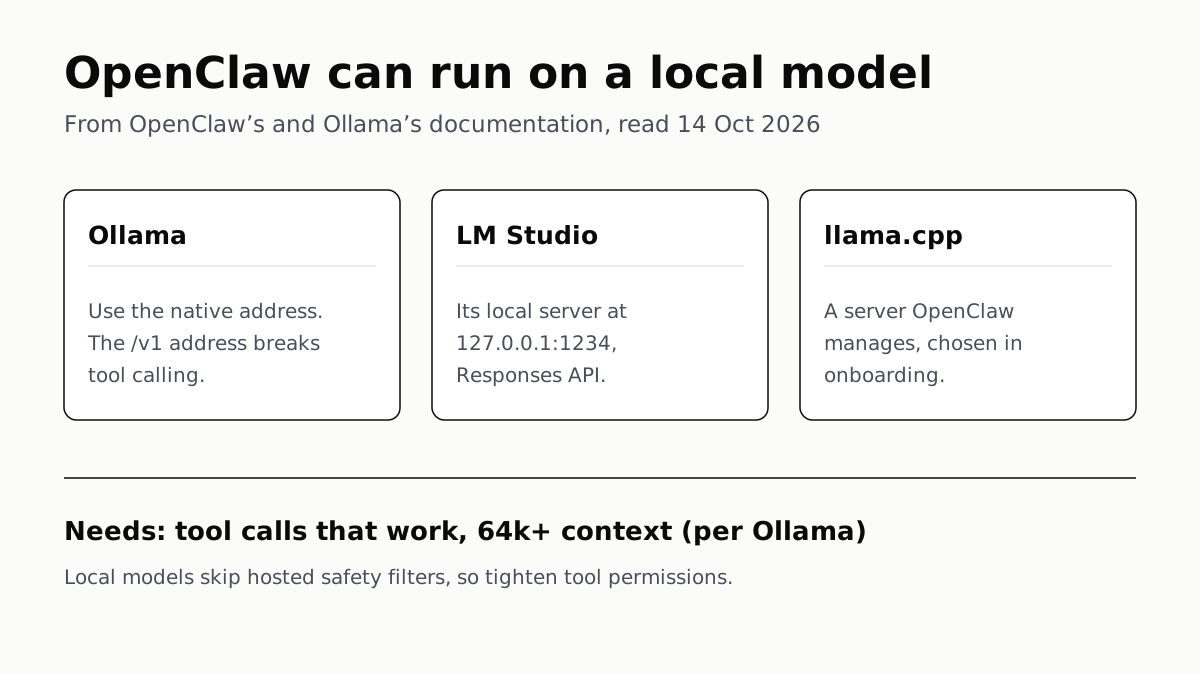
OpenClaw's docs also cover llama.cpp, vLLM and any OpenAI-compatible server. Ollama advises 64k context; small models are easier to hijack.
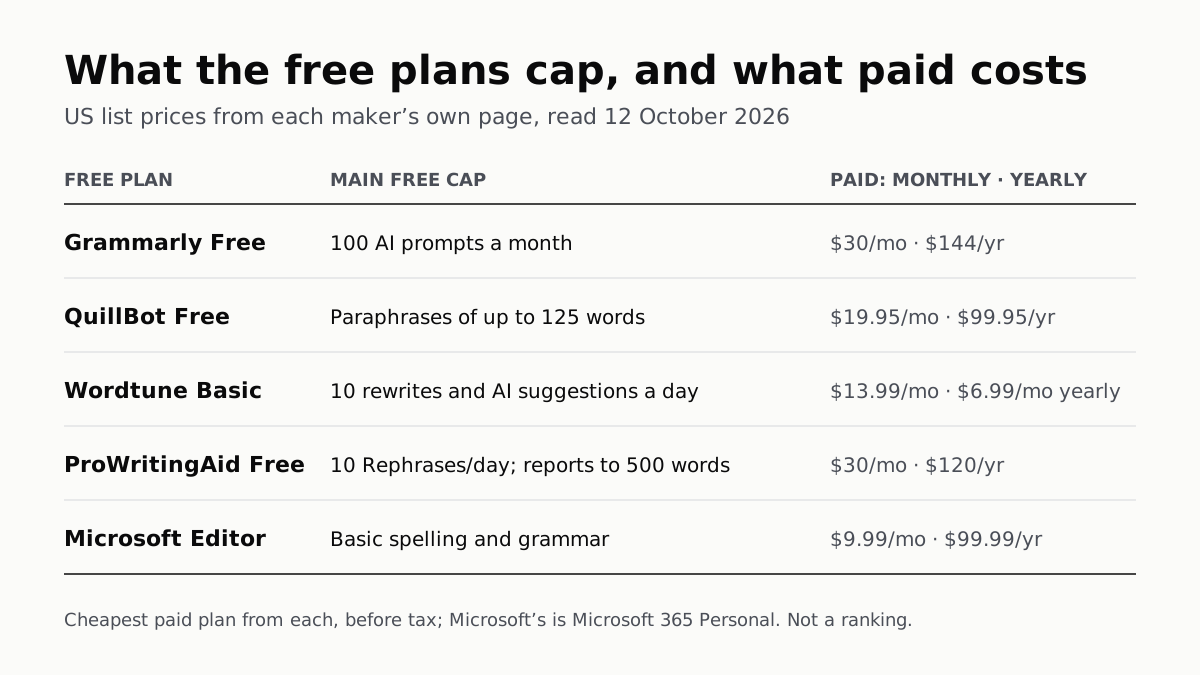
Free AI Writing Tools Ration Rewrites in Different Units
Grammarly gives 100 AI prompts a month, Wordtune 10 rewrites a day, QuillBot 125 words a paraphrase. Yearly billing halves most prices.