What an Intel N100 Mini PC Can Actually Do
The cheapest mini PCs nearly all run one chip. Intel publishes three limits that decide whether it fits what you want.

If you buy through our links, we may earn a commission. It never affects our verdicts or scores — how that works. As an Amazon Associate I earn from qualifying purchases.
Almost every mini PC under about $200 runs the same processor: the Intel N100. It is a genuinely capable little chip, and Intel publishes three numbers that tell you, before you buy anything, whether it will do what you want.
The first is the one nobody mentions. The N100 launched in the first quarter of 2023. A machine advertised as new in 2026 is very often a three-year-old chip in a new case, and that is not a scandal — it is why the price is what it is.
The three limits
16GB of memory, and only one channel. Intel’s specification gives a maximum memory size of 16GB and a single memory channel. That is the hard ceiling: no N100 machine can be upgraded past it, whatever the seller’s listing implies, and a single channel means memory bandwidth is roughly half what a dual-channel machine of the same era manages. This is the limit most likely to be the one that bites.
Four cores, four threads. There is no Hyper-Threading on this chip — Intel’s own page lists it as not supported. Four cores handle a browser, a document and a video call at once perfectly well. They do not handle a background compile, a virtual machine, or heavy multitasking while something else renders.
6W of base power. That figure is why the category can be silent, small and cheap to run — but it is a specification at base frequency, not a cap on what a chassis delivers, and it is not on its own the reason a long job slows down. Whether a given N100 holds its boost is decided by the power limits the vendor configures and the cooling it fits, which is why two machines with this same chip can behave quite differently under a sustained load. Read the 6W as the reason the category exists, not as a prediction about any particular box.
What it is genuinely good at
The published graphics specification is more generous than the price suggests: Intel UHD Graphics with 24 execution units, 4K output at 60Hz over HDMI 2.1 or DisplayPort 1.4, and up to three displays. Quick Sync is present, which is what makes hardware video decoding cheap on this chip.
So the jobs it suits are the ones that are light on cores and easy on memory: a browser and office machine, a media player driving a television, a always-on home server, digital signage, a terminal for remote work into something larger.
For those jobs an N100 is not a compromise, because none of them keeps four cores busy — a faster chip would spend most of its time idle. What spending more buys is headroom for the work in the next section, not speed at this work.
Where it stops
It runs out where the three limits meet. Photo editing on large files hits the 16GB wall. Video editing hits the wall and the core count together. Gaming beyond older or very light titles hits the graphics ceiling. Anything that runs a virtual machine alongside your normal work runs out of both cores and memory at once.
The tell in a listing is a machine sold as “16GB expandable” — on this chip 16GB is the maximum, not a starting point.
What to actually do
- Decide by memory, not by price. If any job you have needs more than 16GB, the N100 is ruled out and no other spec matters.
- Check the chip’s launch date on Intel ARK before believing a listing’s year. The N100 dates from Q1 2023.
- Serving video is the exception to all of this. Transcoding runs on the chip’s video engine rather than its four cores, so the memory ceiling barely applies — what an N100 can and cannot transcode is a separate question from how much work it can do.
- If it fits, buy the cheapest reputable one. Machines with identical chips and identical memory limits differ mainly in cooling and build, which is what reviews of specific models are for.
- If it does not fit, step up rather than sideways. The next tier is a different chip class, not a faster N100 — and our mini PC shortlist covers what the reviewers rate there.
How we researched this
No one at bitcritiq has handled this product. Everything here comes from published sources, listed below.
- What this cannot tell you
- A processor specification is a ceiling, not a performance prediction. Two N100 machines with the same chip can behave very differently depending on cooling, memory fitted and storage, and none of that is visible in the spec. This piece describes what the chip permits; it is not a substitute for a review of a particular machine.
How we chose this, and what we did
- Why this subject
- Searches for N100 mini PCs are rising inside a much larger surge of mini PC interest in our keyword data. The chip is in nearly every machine under about $200, and the listings that sell it rarely state the three limits that decide whether it suits a given job — all three of which Intel publishes openly.
- How we looked at it
- Read the specification for the Intel Processor N100 from Intel's own ARK database rather than from retailer listings, which frequently paraphrase it. Every figure below is Intel's published number, and the ARK page is linked so it can be checked directly.
What this rests on
4 claims, 2 official, 1 corroborated and 1 reported. Nothing here was measured by bitcritiq — see how we test for why. Open a claim to read the source it came from.
The N100 supports a maximum of 16GB of memory, on a single channel.Official
Intel's own product specification for the N100.
The chip has four cores and four threads, with no Hyper-Threading.Official
Listed as not supported on Intel's specification page.
Two mini PCs using this same chip can perform quite differently under a long load.Reported
Owner reports and published reviews of individual machines; the variable is the vendor's configured power limits and cooling, which no specification exposes. Not measured by bitcritiq.
An N100 is sufficient for a browser-and-office machine, a media player and a light home server.Corroborated
Agreement across the published reviews cited below, read against the graphics and decode specification. A judgement drawn from other people's testing, not ours.
Sources 4
- Intel Processor N100 specifications — Intel ARKaccessed Aug 27, 2026
- The Best Windows Mini PCs We've Tested for 2026 — PCMagaccessed Aug 27, 2026
- The best mini PCs in 2026 — Tom's Guideaccessed Aug 27, 2026
- Best mini PCs 2026 — TechRadaraccessed Aug 27, 2026
Pass it on
Know someone weighing this up? Send them the answer.
bitcritiq.com/8kduThe link is permanent: it opens this article for good, even if the title changes.
No email, no account
Follow bitcritiq
Every new article, in whatever reader you already use.
Subscribe by RSSAll the ways to follow
Using Chrome on Android? Open the browser menu and tap Follow. New articles then turn up in the Following tab in Discover.
read next
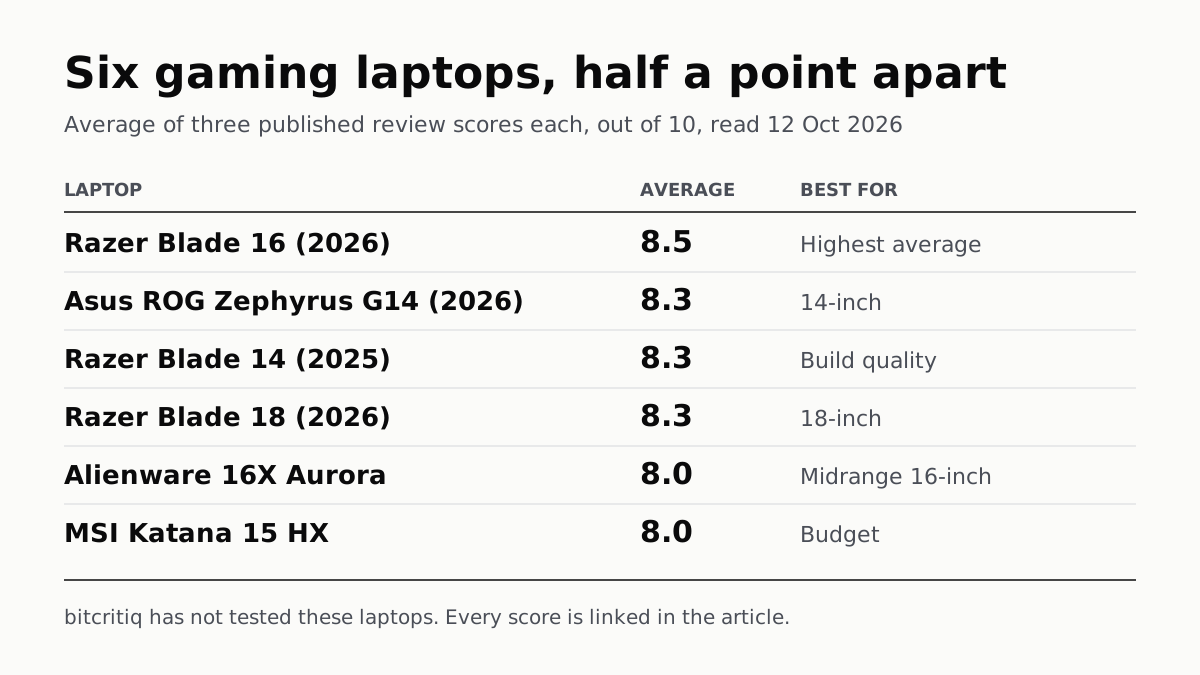
Razer Blade 16 Tops Gaming Laptop Reviews, by Half a Point
Eighteen review scores from eight outlets, all read on 12 October. Six laptops land within half a point, so pick by size and price.
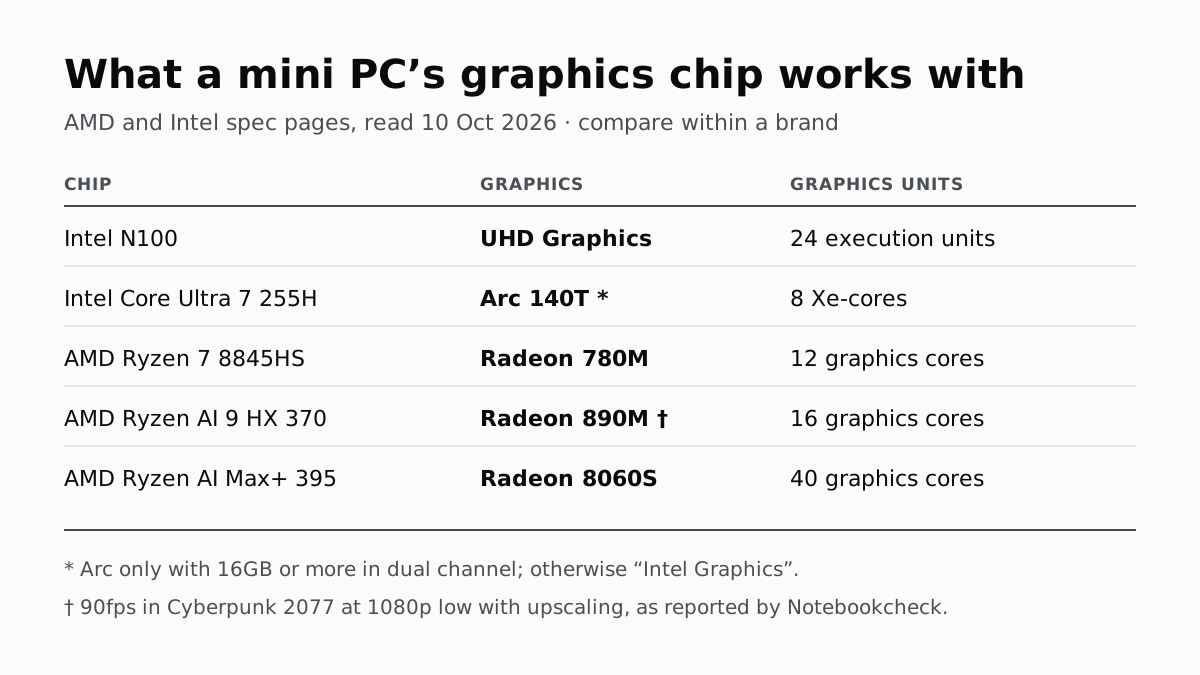
A Mini PC Can Game, but Its Graphics Chip Sets the Ceiling
Balatro's minimum is integrated graphics; Cyberpunk 2077's is a GTX 1060. A Radeon 890M ran Cyberpunk at 1080p low in one reported test.

A Used PC or CPU Can Carry Its Last Owner’s Game Ban
Riot and Activision ban hardware, not only accounts. Riot will re-check one on request; Activision rules out an appeal.
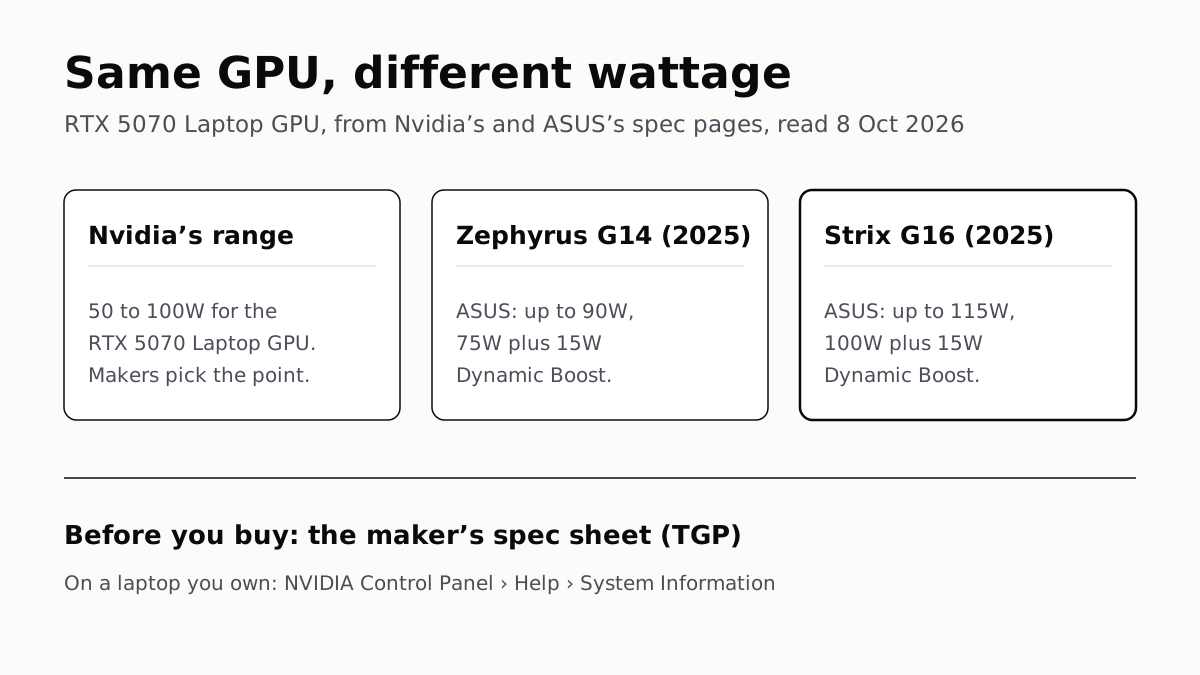
The Same RTX 5070 Laptop GPU Runs at 90W or 115W
Nvidia publishes a power range for each laptop GPU and the maker picks a point in it. The spec sheet, or Nvidia Control Panel, shows which.