A Used PC or CPU Can Carry Its Last Owner’s Game Ban
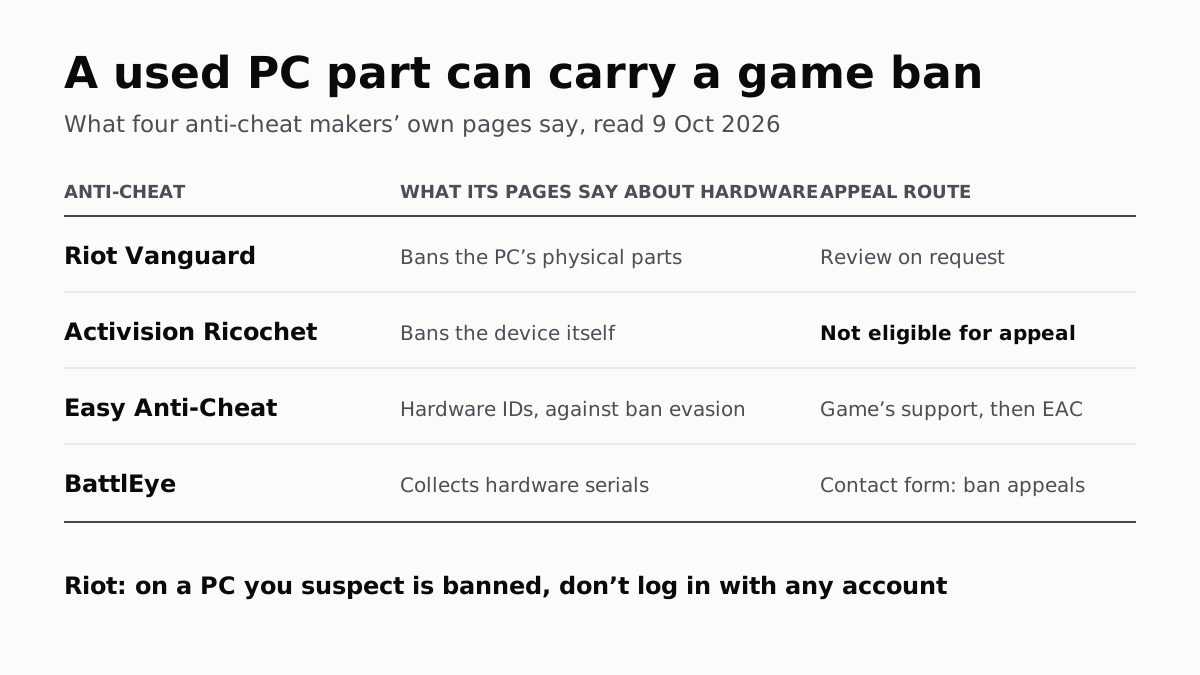
Riot and Activision ban hardware, not only accounts. Riot will re-check one on request; Activision rules out an appeal.
If you buy through our links, we may earn a commission. It never affects our verdicts or scores — how that works. As an Amazon Associate I earn from qualifying purchases.
Yes: a used PC, and by one buyer’s account a single used CPU, can arrive carrying a game ban that its previous owner earned. Two of four anti-cheat makers say in their own support pages that they ban hardware, not only accounts: Riot, which runs Vanguard, will re-check a hardware ban on request, and Activision says its Call of Duty hardware bans “are not eligible for appeal”.
What each anti-cheat maker says
| Anti-cheat | What its own pages say about hardware | Appeal route |
|---|---|---|
| Riot Vanguard (Riot’s games) | Bans “the physical components of that computer”, whatever account logs in | Player support ticket asking for re-evaluation; “never guaranteed” |
| Ricochet (Call of Duty) | “Hardware bans apply to the device and not the account” | None. “Hardware bans are not eligible for appeal” |
| Easy Anti-Cheat (many publishers) | Collects “hardware identifiers to prevent ban evasion”; the publisher decides the ban | The game’s support first, then the easy.ac appeal form |
| BattlEye (many publishers) | Collects hardware identifiers “(e.g. serial numbers)” | Its contact form, under “Ban appeals” |
All read on 9 October 2026. Easy Anti-Cheat and BattlEye say they collect hardware identifiers but do not say, on the pages we read, whether a ban stays with the hardware when it changes hands. Tom’s Hardware reported that both enforce bans across their games; neither maker’s pages say so.
How a part ends up banned
Riot’s support article is direct: when a computer has a hardware ID ban, “we’ve banned the physical components of that computer rather than just banning an account”. The ban is aimed at the device, “regardless of the account being used”. Riot hands them out for cheating with third-party tools, threats, and extreme repeated abuse.
Of the four makers’ pages we read, Activision’s policy is the one that addresses buyers. It tells players to “exercise caution when purchasing, borrowing, or using secondhand, shared, or publicly accessible devices”, because hardware bans “may remain in effect on devices previously used when policy violations occurred”.
Neither company names the component that carries the identifier. Easy Anti-Cheat’s own FAQ notes that on newer PCs the TPM, the security chip Windows 11 needs, “is usually a part of the CPU itself” — the AMD fTPM or Intel PTT setting in firmware. That would fit a ban following a processor, but no maker says the TPM is what it records.
The case that started this, and Riot’s answer
A Valorant player in Germany posted on Reddit that a used Ryzen 7 5800X3D (affiliate link to Amazon, opens in a new tab), bought on 21 September, got them kicked from the game, and that Riot support said the chip had been banned on 12 August after a previous owner cheated. PCWorld, XDA Developers and Tom’s Hardware reported it between 2 and 3 October. The buyer also said the rest of their PC was added to the denylist.
Phillip Koskinas, Riot’s head of anti-cheat, replied on X that this was “pretty unlikely”: Riot’s hardware bans “only last 4 months maximum, they’re game-specific”, support tells you the time remaining, and Riot does not add “everything else” when it matches one component. Riot’s own support article gives no duration for a hardware ban, and its scope reads wider than one game: it says the banned person should not use “any account on a Riot platform or game”. We have asked nothing of Riot ourselves; both statements are quoted as published.
If you already have the part
Do not test it with a second account on Riot’s games. Riot says that logging in to a hardware-banned computer with another account gets that account restricted on the device and “banned for a set period”, because the system assumes it is evading the ban. Its advice: if you suspect a computer has a hardware ban, “it’s best not to try to log in with any account”.
Read the error. Riot’s VAN 152 code means the device has a hardware ID ban; reinstalling Vanguard or the game will not clear it.
Then use the route for that system:
- Riot: submit a player support request asking for a re-evaluation, one ticket per affected account. Riot says lifting is “possible (but never guaranteed)”. Its page is written for the banned player and does not mention second-hand hardware, so say plainly that the part is newly bought.
- Call of Duty: Activision says hardware bans vary in length and the hardware “may be cleared for online gameplay” at any time, but cannot be appealed. To check a device’s status, log in with an account in good standing on any crossplay Call of Duty title; a banned device shows a notice.
- Easy Anti-Cheat games: contact the game’s support first, then use the easy.ac appeal form with the ban’s reference ID. Easy Anti-Cheat says an accepted appeal reverts the ban automatically.
- BattlEye games: use BattlEye’s contact form and choose “Ban appeals”.
Never spoof the hardware ID. Activision lists “any attempt to hide, disguise, or obfuscate … the identity of your hardware devices” as an infraction in its own right.
Before you buy
No maker publishes a lookup for banned hardware, and PCWorld found no way to know before buying unless the seller tells you. Asking the seller whether the machine was ever banned is the only check the reports describe, and it depends on their honesty.
A used part is not like a phone with someone else’s Activation Lock, which shows itself the first time you set it up. A hardware ban stays invisible until you launch the one game that enforces it, which may be after a return window has closed. A refurbished seller’s warranty, as our guide to who backs it found, is a promise about defects in materials and workmanship; none of the pages we read says whether a game ban counts.
The risk is narrow. PCWorld calls the problem “exceedingly rare”: you have to buy from someone who cheated in a game using the same anti-cheat, and got caught. For Call of Duty players buying a whole used PC, Activision’s warning is the strongest of the four, because it is the one with no appeal.
Questions people ask
Can a used CPU get you banned from Valorant?
It can. Riot says a hardware ban covers a computer’s physical components, not just the cheater’s account, and one buyer reported a used Ryzen 7 5800X3D arriving on Riot’s denylist. Riot’s head of anti-cheat says such bans last four months at most.
What does error VAN 152 mean?
Riot says VAN 152 means the device has a hardware ID ban. Reinstalling Vanguard or the game, changing your connection or restarting will not clear it. Riot’s HWID ban article explains how to ask for a review.
How long does a Valorant hardware ban last?
Riot’s support pages give no length. Its head of anti-cheat posted on 2 October 2026 that hardware bans last four months at most, and that support will tell you the time remaining if you write in.
Can you appeal a Call of Duty hardware ban?
No. Activision’s enforcement policy says hardware bans are not eligible for appeal. It also says their length varies and that banned hardware may be cleared for online play at any time.
How do I check if a used PC is hardware banned?
For Call of Duty, Activision says to log in with an account in good standing on any crossplay Call of Duty title on the device; a banned device shows a status notice. Riot advises the opposite for its games: do not log in on a PC you suspect is banned.
Will an HWID spoofer fix a hardware ban?
Do not try. Activision lists hiding or disguising the identity of your hardware as an infraction, and Riot treats an account used on banned hardware as an attempt to circumvent the ban and bans that account too.
How do I appeal an Easy Anti-Cheat ban?
Easy Anti-Cheat says to contact the game’s own support first; for Fortnite, Epic’s help site. Its appeal form at easy.ac takes the ban’s reference ID, and an accepted appeal reverts the ban automatically.
How we researched this
No one at bitcritiq has handled this product. Everything here comes from published sources, listed below.
- What this cannot tell you
- No maker publishes which component carries the identifier, so we cannot tell you whether a CPU, a motherboard or a drive is the part that matters for any one system. The four-month maximum and the 'game-specific' scope for Riot come from its head of anti-cheat's post on X, as reported by XDA and Tom's Hardware, not from Riot's support pages, and the support page's own wording ('any account on a Riot platform or game') reads wider than 'game-specific'. No maker says whether proof of purchase changes the outcome of a review. We have not bought banned hardware or contacted any support team, and the buyer's case rests on one Reddit post that Riot called 'pretty unlikely' in parts.
How we chose this, and what we did
- Why this subject
- In early October 2026 a German Valorant player reported that a second-hand Ryzen 7 5800X3D arrived on Riot's hardware denylist, and PCWorld (2 October), XDA Developers (2 October) and Tom's Hardware (3 October) covered it. Riot's head of anti-cheat disputed parts of the account. The reader's question is broader than one Reddit post: can hardware carry a ban to a new owner, and what can they do about it. That is answered by the anti-cheat makers' own policy pages, so the piece rests on those and uses the outlets only for the case and for Riot's comment.
- How we looked at it
- Read through a browser on 9 October 2026: Riot Games Support, 'Understanding Hardware ID (HWID) Bans' (dated 31 May 2026) and 'Error VAN 152' (16 July 2026); Activision Support, 'Call of Duty Security and Enforcement Policy'; Easy Anti-Cheat's support articles (the FAQ text, read from the page's structured data) and its appeal page; BattlEye's FAQ, privacy policy and contact page. Outlet reports read: PCWorld, XDA Developers, Tom's Hardware. Absence claims carry controls on the same page: Riot's HWID article names no component and no duration, while it does name the VAN 152 code and the re-evaluation steps; Easy Anti-Cheat's 'Accounts Bans' section speaks only of accounts, while its data FAQ on the same page does mention 'hardware identifiers'; BattlEye's FAQ does not say whether bans attach to hardware, while it does say it bans only 'for the use of actual cheats/hacks'.
What this rests on
6 claims, 4 official and 2 reported. Nothing here was measured by bitcritiq — see how we test for why. Open a claim to read the source it came from.
A Riot hardware ban applies to a computer's physical components and blocks it regardless of which account logs in.Official
Riot Games Support, Understanding HWID Bans: “When a computer has a hardware ID ban, it means that we've banned the physical components of that computer rather than just banning an account. This type of ban aims to prevent the use of that device for accessing the service—in this case, Riot's games—regardless of the account being used.”
Logging in to a hardware-banned computer with another account gets that account restricted on the device and banned for a set period.Official
Riot Games Support: “That account will be restricted from accessing Riot Games products on the hardware-banned device. That account will be banned for a set period, as the system assumes that the account is attempting to circumvent the original ban.” and “If you suspect a computer has an HWID ban, it's best not to try to log in with any account.”
Activision's Call of Duty hardware bans apply to the device rather than the account, can stay on second-hand devices, and cannot be appealed.Official
Activision, Call of Duty Security and Enforcement Policy: “Hardware bans apply to the device and not the account.” “Hardware bans are not eligible for appeal. Players should exercise caution when purchasing, borrowing, or using secondhand, shared, or publicly accessible devices. Hardware bans may remain in effect on devices previously used when policy violations occurred.”
Easy Anti-Cheat collects hardware identifiers to prevent ban evasion, and leaves the ban decision to the game's publisher.Official
Easy Anti-Cheat FAQ: “We only collect limited technical data while the game is running to identify cheats and hardware identifiers to prevent ban evasion.” and “When EAC flags an account for cheating, the game publisher may subsequently decide to suspend or ban the account from playing again.”
Riot's head of anti-cheat said its hardware bans last four months at most, are game-specific, and do not add a PC's other components when one is matched.Reported
Tom's Hardware, 3 October 2026, quoting Phillip Koskinas's post on X: “Our hw bans only last 4 months maximum, they're game-specific, and support tells you the time remaining on the ban when you write in. We also don't add ‘everything else’ onto the denylist when we match one component.” XDA, 2 October, says Riot's head of PR pointed it to the same post.
A Valorant player reported that a used Ryzen 7 5800X3D bought on 21 September 2026 had been hardware-banned on 12 August by Riot after a previous owner cheated.Reported
Tom's Hardware, 3 October 2026: “the CPU they bought on Sep. 21, 2026, was blacklisted by Vanguard on Aug. 12, 2026, because its previous user apparently cheated on Valorant.” XDA, 2 October, quotes the same Reddit post.
Sources 11
- Understanding Hardware ID (HWID) Bans — Riot Games SupportOfficialaccessed Oct 9, 2026
- Error VAN 152 — Riot Games SupportOfficialaccessed Oct 9, 2026
- Call of Duty Security and Enforcement Policy — Activision SupportOfficialaccessed Oct 9, 2026
- Technical Support Articles and FAQ — Easy Anti-CheatOfficialaccessed Oct 9, 2026
Show 7 more · 4 official or standards
- Decision Appeal — Easy Anti-CheatOfficialaccessed Oct 9, 2026
- FAQ — BattlEyeOfficialaccessed Oct 9, 2026
- Privacy Policy — BattlEyeOfficialaccessed Oct 9, 2026
- Contact — BattlEyeOfficialaccessed Oct 9, 2026
- A used CPU allegedly got an entire PC banned from Valorant, but Riot says that's not how its anti-cheat works — XDA Developers, 2 October 2026accessed Oct 9, 2026
- Buying used CPUs can expose users to existing bans from anti-cheat engines — Tom's Hardware, 3 October 2026accessed Oct 9, 2026
- Your used CPU might come with someone else's Valorant ban — PCWorld, 2 October 2026accessed Oct 9, 2026
Pass it on
Know someone weighing this up? Send them the answer.
bitcritiq.com/9pppThe link is permanent: it opens this article for good, even if the title changes.
No email, no account
Follow bitcritiq
Every new article, in whatever reader you already use.
Subscribe by RSSAll the ways to follow
Using Chrome on Android? Open the browser menu and tap Follow. New articles then turn up in the Following tab in Discover.
read next
Razer Blade 16 Tops Gaming Laptop Reviews, by Half a Point
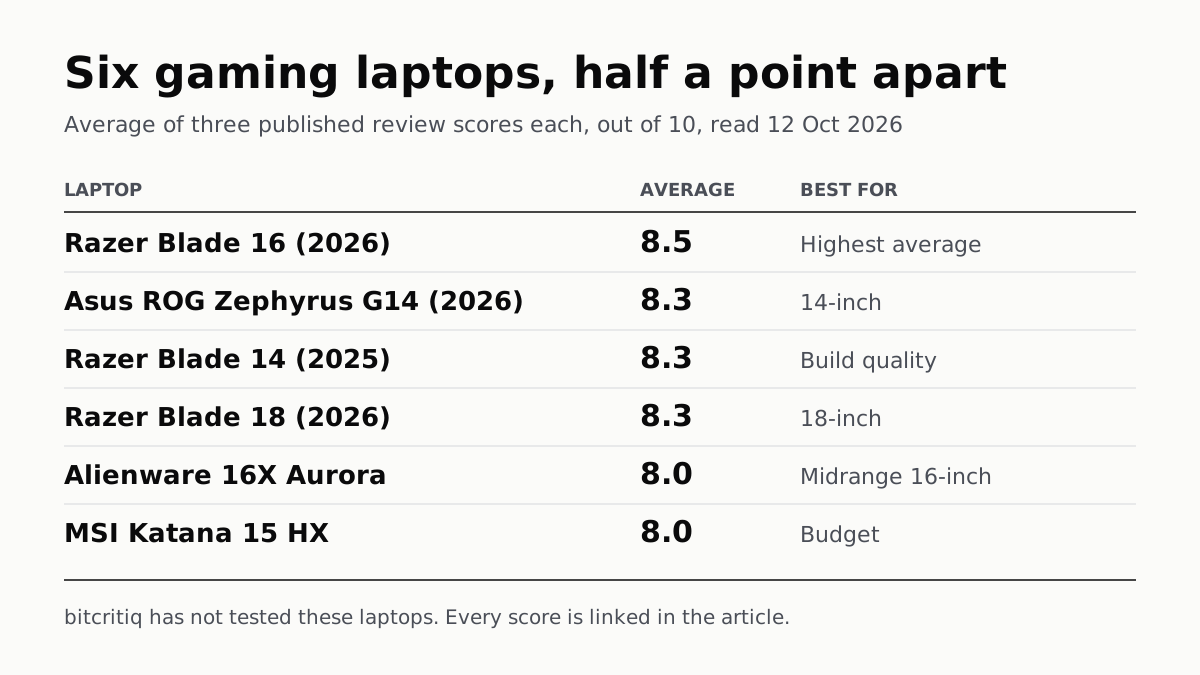
Eighteen review scores from eight outlets, all read on 12 October. Six laptops land within half a point, so pick by size and price.
A Mini PC Can Game, but Its Graphics Chip Sets the Ceiling
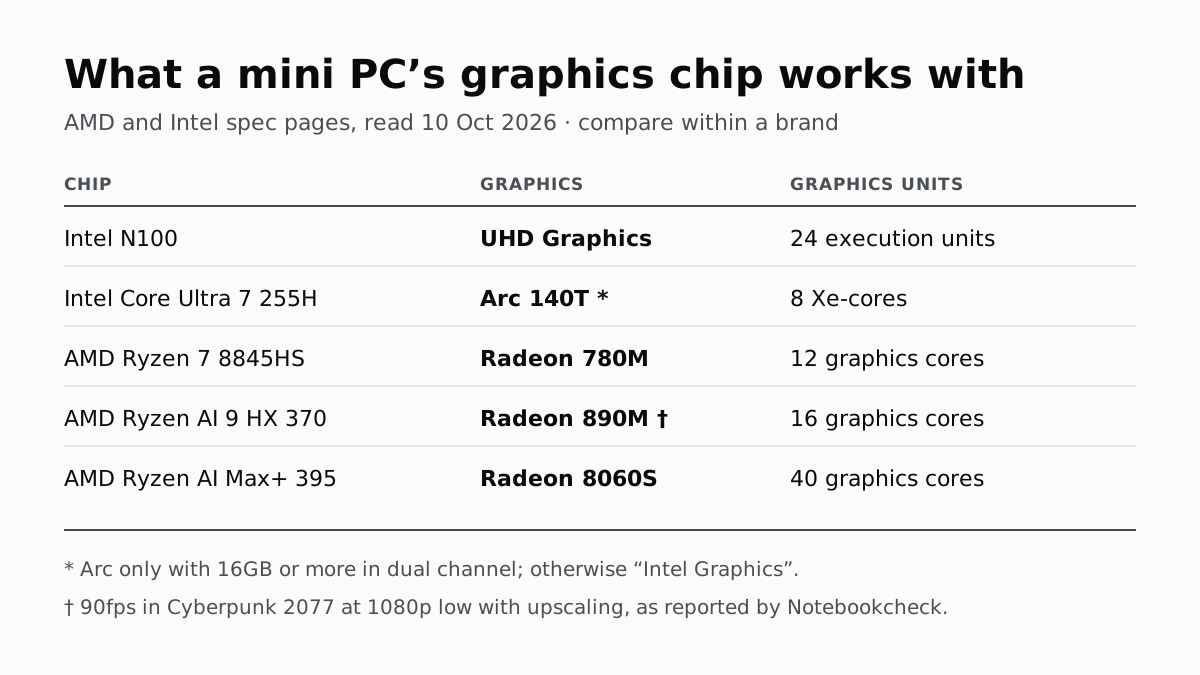
Balatro's minimum is integrated graphics; Cyberpunk 2077's is a GTX 1060. A Radeon 890M ran Cyberpunk at 1080p low in one reported test.
The Same RTX 5070 Laptop GPU Runs at 90W or 115W
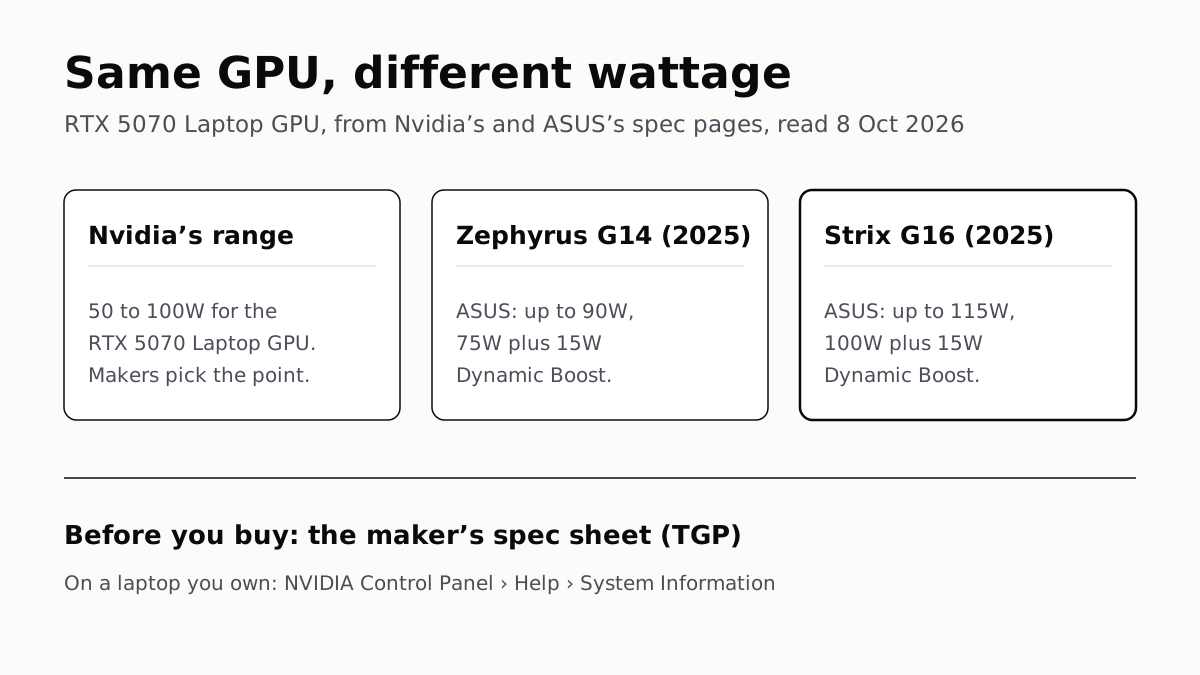
Nvidia publishes a power range for each laptop GPU and the maker picks a point in it. The spec sheet, or Nvidia Control Panel, shows which.

Surface Laptop Ultra Costs $2,599.99 to $5,899.99
Nvidia's RTX Spark gives a 15-inch Windows laptop up to 128GB of shared memory. Memory sets the price, and 128GB arrives in late November.