iPhone Duo: $1,999, Touch ID, and No SIM Card Anywhere
Apple's first foldable goes on pre-order on 16 October. Its release describes a fingerprint sensor, not Face ID, and eSIM in every country.
If you buy through our links, we may earn a commission. It never affects our verdicts or scores — how that works. As an Amazon Associate I earn from qualifying purchases.
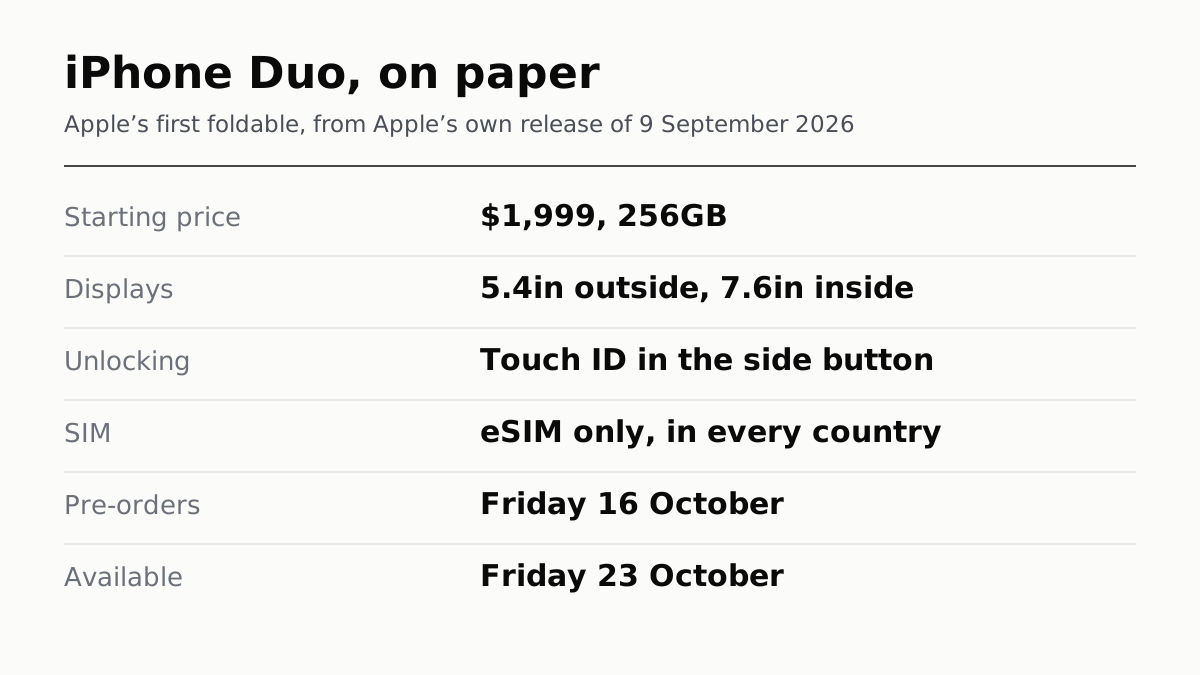
The iPhone Duo is a $1,999 phone that changes three habits, not one. Apple’s release describes it unlocking with Touch ID in the side button, holding no physical SIM in any country, and shipping with a 2x telephoto rather than the Pro’s 8x. The fold is the headline; those three are what you live with.
Pre-orders open on Friday 16 October, and the phone is available from Friday 23 October in more than 70 countries, with 28 more following on 30 October.
What $1,999 buys, in Apple’s own figures
| iPhone Duo | |
|---|---|
| Starting price (US) | $1,999, or $83.29 a month over 24 months |
| Storage | 256GB, 512GB, 1TB, 2TB |
| Outer display | 5.4in, about 90% of iPhone 18 Pro’s screen area |
| Inner display | 7.6in, 50% larger than iPhone 18 Pro Max |
| Chip | A20 Pro, the same as iPhone 18 Pro |
| Unlocking | Touch ID in the side button, or Apple Watch |
| SIM | eSIM only, worldwide |
| Water and dust | IP68 |
| Video playback | Up to 31 hours inner, up to 44 hours outer |
| Ships with | iOS 27.1 |
Apple’s own case is $79 and its Folio with kickstand is $129, both orderable from 16 October.
The three decisions buried in the release
Touch ID, not Face ID. The Duo release describes Touch ID “for easy, secure, and consistent authentication whether iPhone Duo is open or closed”. It does not mention Face ID at all, where the iPhone 18 Pro release published the same day does. Anyone used to Face ID will be unlocking with a finger again.
No SIM tray anywhere. Apple calls the Duo “eSIM-only design worldwide”. That is a wider rule than the iPhone 18 Pro, whose eSIM-only models are limited to twelve listed places, including the US, Canada, Japan and Mexico. Buy an 18 Pro in the UK or Germany and it still takes a physical SIM; buy a Duo there and it does not. Whether that matters depends on your carrier and how you travel, which we set out in what actually changes between eSIM and a physical SIM.
A 2x telephoto, not 8x. The Duo has two rear cameras: a 48MP Main with what Apple calls an “optical-quality 2x Telephoto”, and a 48MP Ultra Wide. Apple lists an 8x telephoto at 200mm on the iPhone 18 Pro. If you shoot distant subjects, the foldable is the one with less reach.
Where it matches the Pro, and where Apple says it goes further
The Duo uses the same A20 Pro chip as the iPhone 18 Pro, with its own vapor chamber, and Apple claims “up to 35 percent better sustained performance than iPhone 17 Pro”. The Ultra Wide camera is, in Apple’s words, “the same as on iPhone 18 Pro models”.
The battery figures depend on which screen you use. Apple quotes up to 44 hours of video on the outer display, 31 on the inner one, and 24 hours of mixed use when both are used equally. Wired charging reaches 50% in “around 20 minutes”; Apple says the 18 Pro does it in about 15.
The durability case — a hinge built from more than 100 components, a cover layer Apple says is up to 40% stiffer than others in the industry — is Apple’s description. Nobody outside Apple can test a fold’s lifespan until the phone ships.
Before 23 October
- It ships with iOS 27.1, a later version than the iOS 27 that reached existing iPhones on 14 September.
- Moving to it from an older iPhone means a backup first. Apple’s free iCloud tier is 5GB, which is why five gigabytes is not a phone backup.
- If you are choosing between this and the Pro, the other half of the comparison is in iPhone 18 Pro, on paper.
How we researched this
No one at bitcritiq has handled this product. Everything here comes from published sources, listed below.
- What this cannot tell you
- Apple's durability description of the hinge and inner display is Apple's, and nobody outside Apple can test it until the phone ships on 23 October. We cannot say how visible the crease is, how the phone feels closed, or how many apps adapt well to the inner screen. Where we say the release does not mention something, that is a statement about the release, which may not be the whole story.
How we chose this, and what we did
- Why this subject
- The iPhone Duo was announced on 9 September and covered by Ars Technica, CNET and The Verge within the week. Most of that coverage is about the fold. The decisions that change daily use for a buyer — how it unlocks, what happens to your SIM, which camera it does not have — are spread through Apple's release rather than stated together.
- How we looked at it
- Every price, date and specification is from Apple's own newsroom release for iPhone Duo, dated 9 September 2026 and read on 16 September. Comparisons with iPhone 18 Pro use Apple's iPhone 18 Pro release and tech specs page, read the same day. Nothing here has been handled or tested by us: this is the phone on paper, and every performance and battery figure is Apple's claim.
What this rests on
6 claims, all official. Nothing here was measured by bitcritiq — see how we test for why. Open a claim to read the source it came from.
iPhone Duo starts at $1,999 in the US, with pre-orders from 16 October and availability from 23 October.Official
Apple states iPhone Duo starts at $1,999 (U.S.) in 256GB, 512GB, 1TB and 2TB capacities, with pre-orders beginning Friday, October 16, and availability beginning Friday, October 23, in more than 70 countries and regions.
iPhone Duo unlocks with Touch ID in the side button; the release does not mention Face ID.Official
Apple's release says Touch ID is integrated into the side button and that users can also unlock with Apple Watch. Face ID does not appear anywhere in the Duo release, while Apple's iPhone 18 Pro release, as a control, describes the Dynamic Island continuing to enable Face ID.
iPhone Duo is eSIM-only in every country it is sold in.Official
Apple states: 'iPhone Duo features an eSIM-only design worldwide that saves internal space to maximize battery capacity.' eSIM-only iPhone 18 Pro models are limited to twelve listed countries and territories, including the US, Canada, Japan and Mexico.
The Duo's rear cameras are a 48MP Main and a 48MP Ultra Wide, with 2x as its telephoto option, while iPhone 18 Pro lists an 8x telephoto.Official
The Duo release describes a 48MP Fusion Main camera with an 'integrated optical-quality 2x Telephoto' and a 48MP Fusion Ultra Wide. Apple's iPhone 18 Pro specs list a 12MP optical-quality 8x Telephoto at 200mm.
Apple quotes up to 31 hours of video playback on the inner display and up to 44 hours on the outer one.Official
Apple states up to 31 hours of video playback using the inner display, up to 44 hours using the outer display, and up to 24 hours of usage per charge when both displays are used equally.
iPhone Duo ships with iOS 27.1, not the iOS 27 released on 14 September.Official
Apple's release states: 'iPhone Duo will be available with iOS 27.1.'
Sources 3
- Apple unveils iPhone Duo — Apple Newsroom, 9 September 2026Officialaccessed Sep 16, 2026
- Apple debuts iPhone 18 Pro and iPhone 18 Pro Max — Apple Newsroom, 9 September 2026Officialaccessed Sep 16, 2026
- iPhone 18 Pro and iPhone 18 Pro Max — Technical Specifications, AppleOfficialaccessed Sep 16, 2026
No email, no account
Follow bitcritiq
Every new article, in whatever reader you already use.
Subscribe by RSSAll the ways to follow
Using Chrome on Android? Open the browser menu and tap Follow. New articles then turn up in the Following tab in Discover.
read next
The Charging Pad Is Not What Ages Your Battery
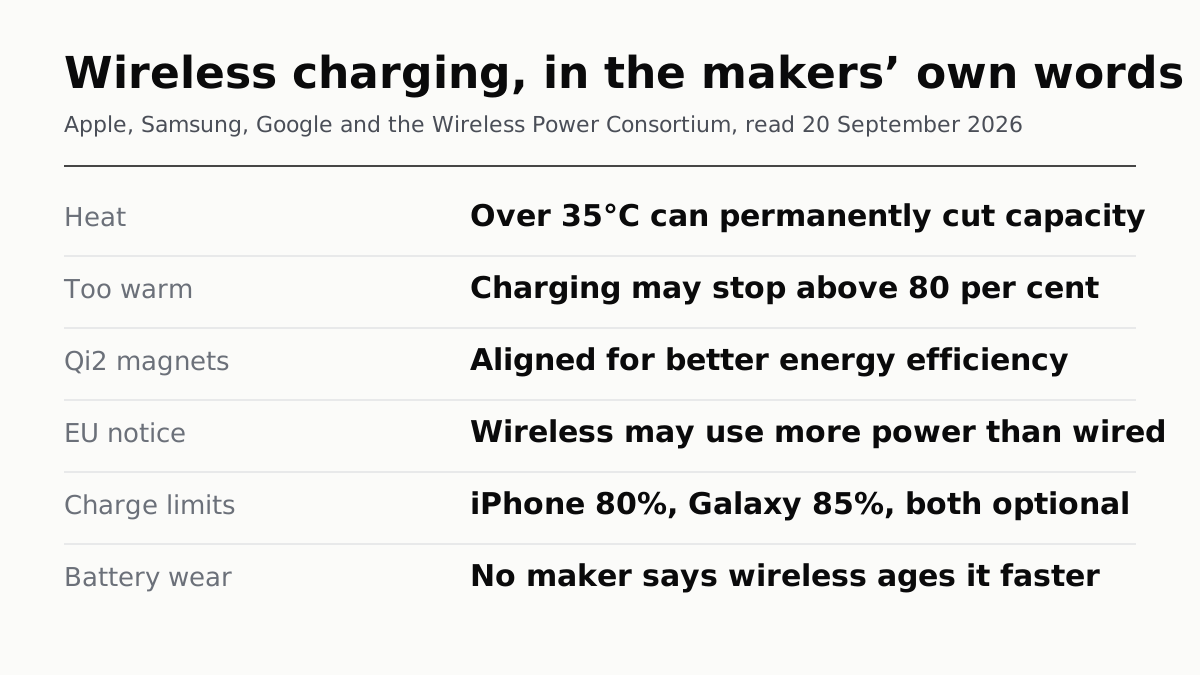
Apple, Samsung and Google name heat, cycles and time spent full. None names the charging method. Above 35°C, Apple says damage is permanent.
CarPlay Ultra Adds the Gauges. Your Car Decides.
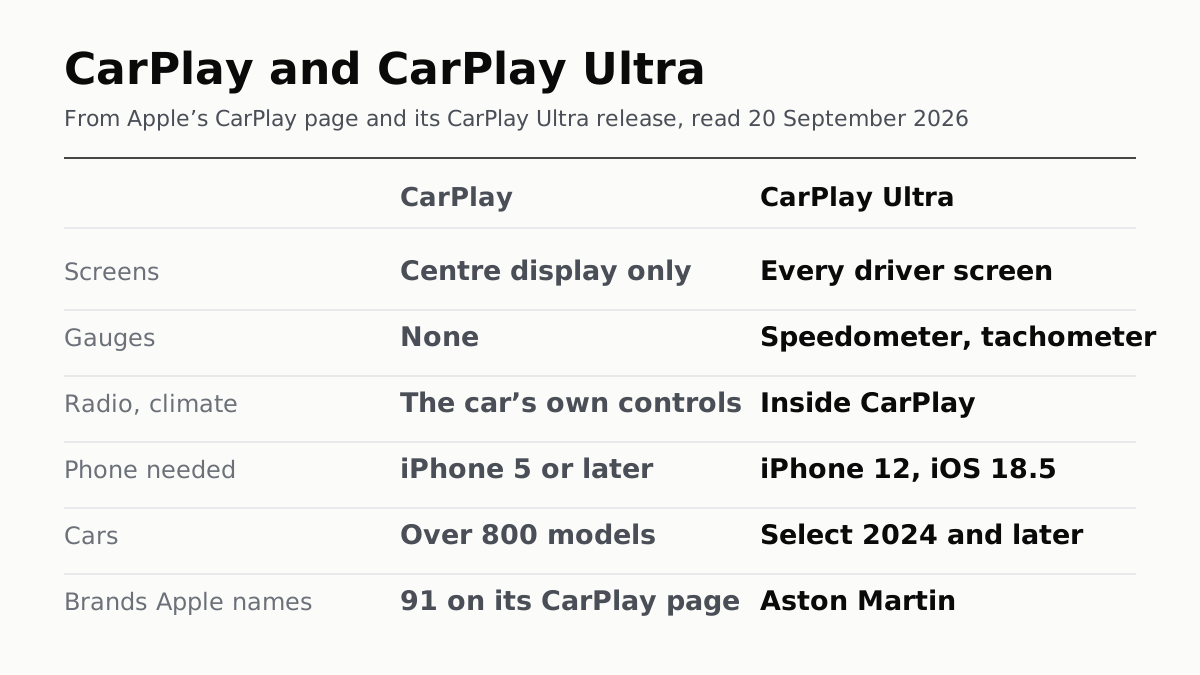
Apple asks for an iPhone 12 on iOS 18.5 and a select 2024-or-later car. Aston Martin is the one brand it has named shipping it.
When an iPad Says Not Charging, Apple Blames the Port
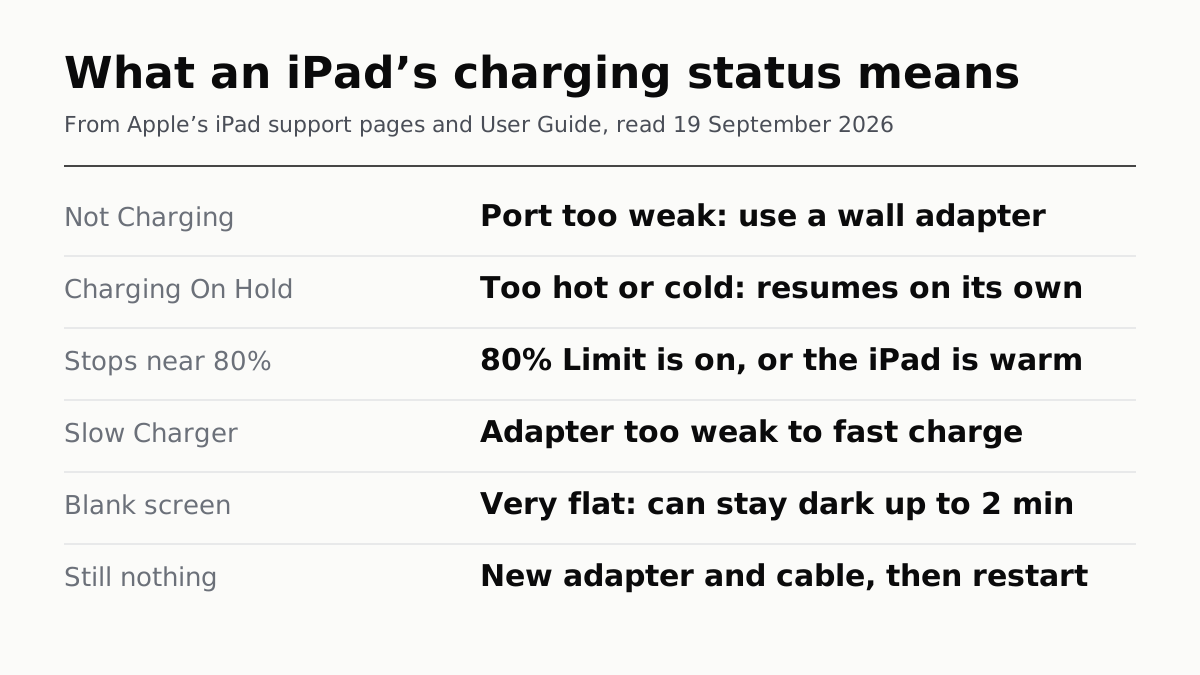
Apple's order of checks, the 15W minimum it sets for other adapters, and the two statuses that mean the iPad chose to stop.
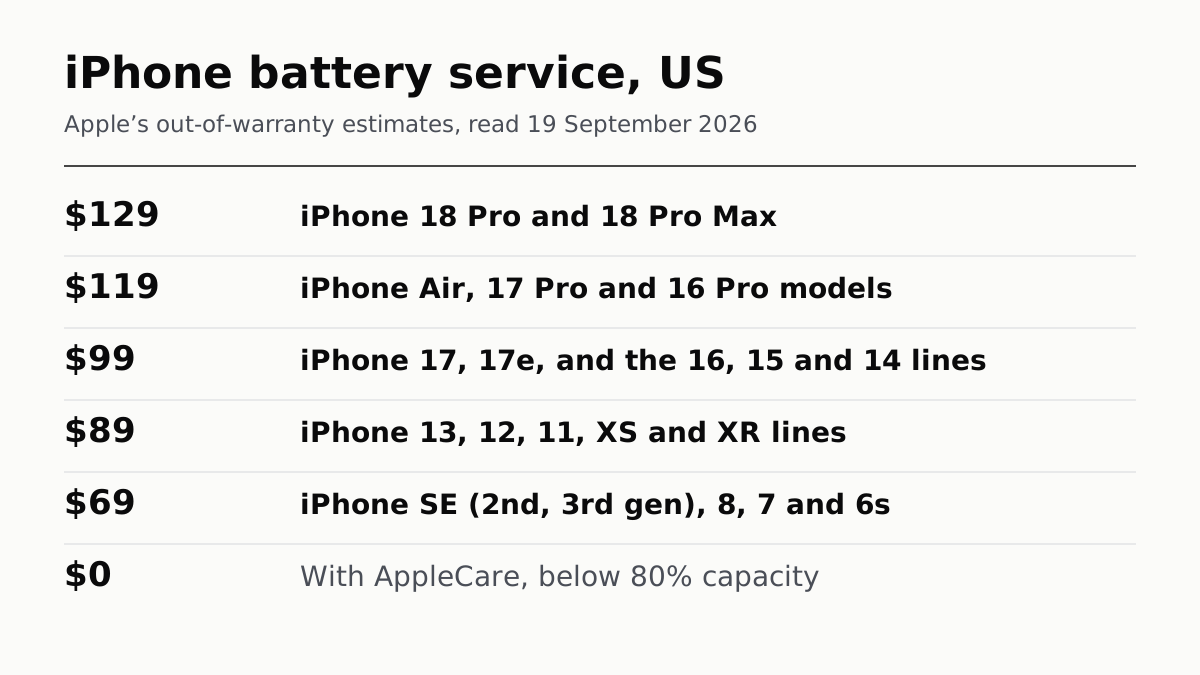
An iPhone Battery From Apple Costs $69 to $129
Apple's own estimator, model by model: the 18 Pro costs $10 more than the 17 Pro, and AppleCare pays in full once capacity drops below 80%.