Smart Bulbs or Smart Switches? Usually the Switch
A smart bulb needs permanent power, which makes your wall switch the thing most likely to break it. Two good reasons to accept that.

If you buy through our links, we may earn a commission. It never affects our verdicts or scores — how that works. As an Amazon Associate I earn from qualifying purchases.
Default to the switch. A smart bulb only works while it has power, so the wall switch beside the door becomes the one thing that can silently break it — and everyone in your house has been trained since childhood to press it.
A smart switch has the opposite property. It stays powered, keeps working, and the light behaves normally for anyone who has never heard of your smart home.
The manufacturers admit the problem by selling the fix
You do not have to take this on argument. Philips Hue sells in-wall modules whose entire purpose is to stop your wall switch doing what wall switches do.
Its own support article says the modules “allow you to control them with your existing wall switch without cutting power to the bulbs”, and describes the wired version as keeping your lights reachable “while maintaining power to the smart bulbs at all times.”
Read that as a description of the default state and it tells you everything: without the module, using the wall switch cuts power, and the bulb leaves your network. An accessory exists to solve it because the problem is real and common.
The workaround people try first is worse. Leaving the switch permanently on and telling the household not to touch it works until a guest, a child, a cleaner or a power cut intervenes — and then the lights are unreachable from the app and dead at the wall.
The wiring detail that decides it for many houses
Before choosing switches, find out whether your switch boxes have a neutral wire. Hue’s guide is explicit that the wired wall switch module “Requires a neutral wire”, and most smart switches do too — they need a small permanent current to stay alive.
There is a partial escape. The same guide notes its dimmer works “with or without neutral”, but is candid about the cost: without one, “the light is less bright and some LED bulbs may not work properly, so a bypass capacitor may be needed.”
Older housing stock frequently has no neutral at the switch. If that is you, the wiring may make the decision before the features do — and rewiring a switch box is an electrician’s job in most countries, which changes the budget considerably.
The two good reasons to choose bulbs anyway
Experienced owners converge on a short list. In a long r/homeautomation thread on exactly this question, the top answer allows two: “One is that you want or need colored lights, and the other is that the bulb is located somewhere that can’t be controlled by a smart switch or smart plug.”
The second is more common than it sounds — the same commenter had to use a smart bulb in a range hood, because its control is a small push button with no practical way to replace it. Anywhere the fitting has its own integral switch, a smart switch has nothing to replace.
Colour is the genuine one. No switch will make a white bulb turn purple, and if you want scenes with colour, bulbs are the only route.
But there is a middle path worth knowing about, offered in the same thread: if what you actually want is warmer light at night rather than colour, some LED bulbs shift colour temperature as they dim, so a smart dimmer with ordinary bulbs gets you there. One owner reports theirs going from 2700K at full power down to about 2200K — “almost orange” — with no smart bulb involved.
The short version
| Situation | Buy |
|---|---|
| Ceiling lights on a wall switch | Smart switch |
| You want colour scenes | Smart bulbs, plus a module or locked switch |
| Fitting has its own built-in switch | Smart bulb — nothing else can work |
| Table and floor lamps | Smart plug |
| You want warmer light at night, not colour | Smart dimmer with dimming-to-warm bulbs |
| No neutral wire at the switch box | Get an electrician’s view before buying either |
What to actually do
- Check for a neutral wire first. It costs nothing to find out and it can rule out half the options.
- Count the fittings, not the rooms. A switch controls five downlights for one purchase; smart bulbs mean five. The cost gap grows with every fitting.
- Mix deliberately rather than by accident. Switches everywhere, bulbs in the one or two places you actually want colour, plugs for lamps. Almost every good setup is a mix.
- If you go with bulbs, buy the switch solution at the same time. A module or a locked switch plate is part of the cost of smart bulbs, not an optional extra — and budgeting for it later is how people end up resenting the whole system.
- Whatever you pick, favour a local protocol. It is the difference between lights that work in an outage and lights that do not — why your smart home stops when the internet drops covers what decides that.
How we researched this
No one at bitcritiq has handled this product. Everything here comes from published sources, listed below.
- What this cannot tell you
- Wiring practice and switch hardware differ by country, and anything involving a neutral wire is work for a qualified electrician in most of them. Product examples are the ones owners named, and are illustrations of the categories rather than recommendations. This also assumes lights on a wall switch; lamps on a plug are a separate and much easier case, answered by a smart plug.
How we chose this, and what we did
- Why this subject
- This is the first real decision anyone makes when automating a house, it is expensive to reverse, and the two options are usually presented as equivalent. They are not. One of them has a structural flaw that the manufacturers themselves sell a product to work around, which is the clearest possible evidence that the flaw is real.
- How we looked at it
- Took the power behaviour and the wiring requirements from Philips Hue's own in-wall solutions support article, because a manufacturer describing what its accessory fixes is describing the underlying problem accurately. Then read a long r/homeautomation thread on the same question to see where experienced owners draw the line, and what they suggest instead.
Sources 3
- Full guide for Hue in-wall solutions — Philips Hue supportOfficialaccessed Aug 29, 2026
- Smart control for traditional lights — Philips HueOfficialaccessed Aug 29, 2026
- Smart switches or smart bulbs? — r/homeautomationaccessed Aug 29, 2026
Pass it on
Know someone weighing this up? Send them the answer.
bitcritiq.com/v4w8The link is permanent: it opens this article for good, even if the title changes.
No email, no account
Follow bitcritiq
Every new article, in whatever reader you already use.
Subscribe by RSSAll the ways to follow
Using Chrome on Android? Open the browser menu and tap Follow. New articles then turn up in the Following tab in Discover.
read next
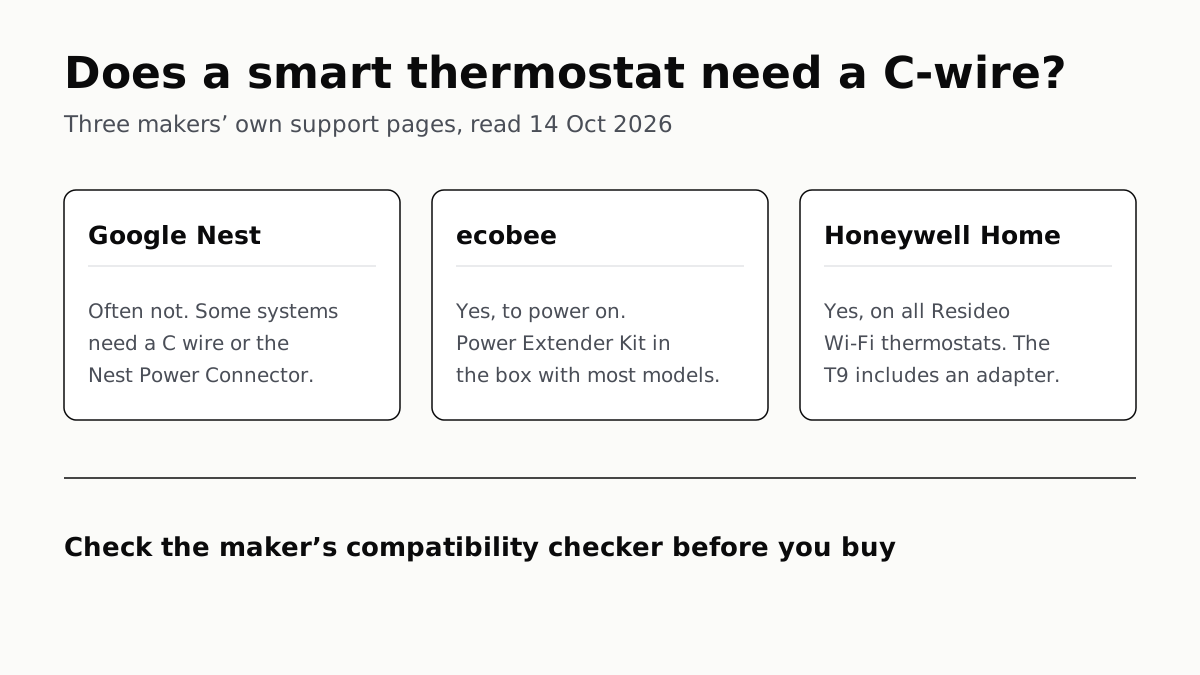
Ecobee and Honeywell Need a C-Wire; Nest Often Doesn’t
Each maker has a fix for homes without the wire, and each sends you to its own compatibility checker before you buy.
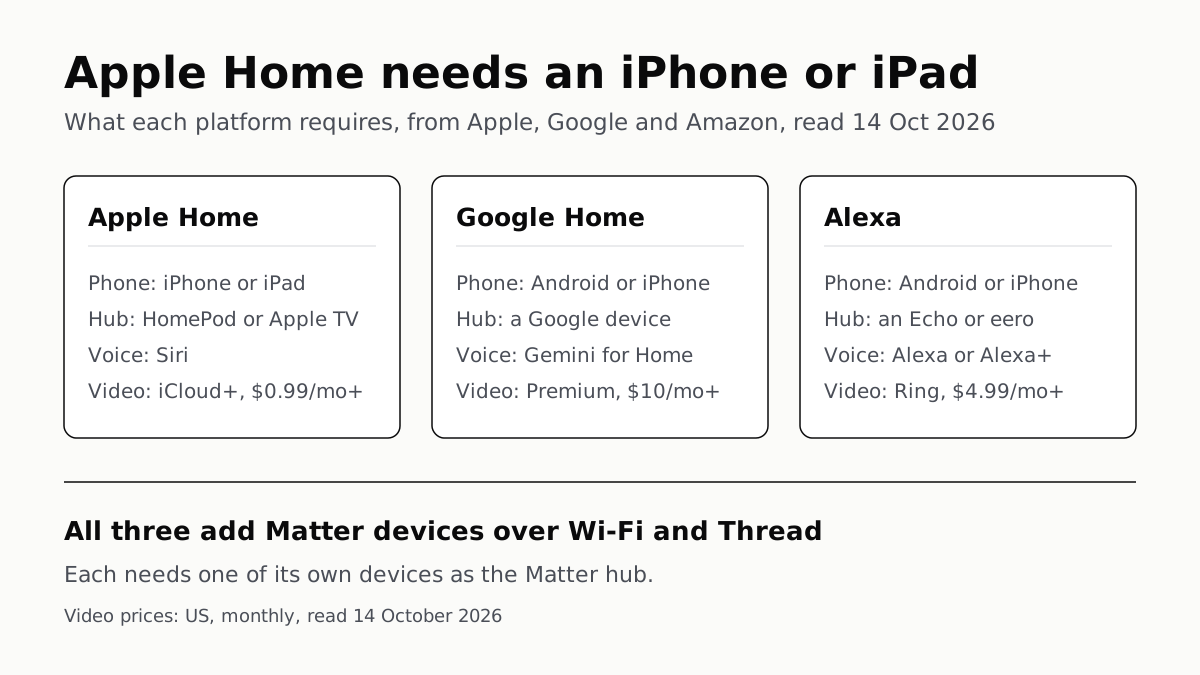
Apple Home Needs an iPhone; Google and Alexa Run on Both
All three add Matter and Thread devices. They differ in which hub you need, which assistant answers and what camera video history costs.
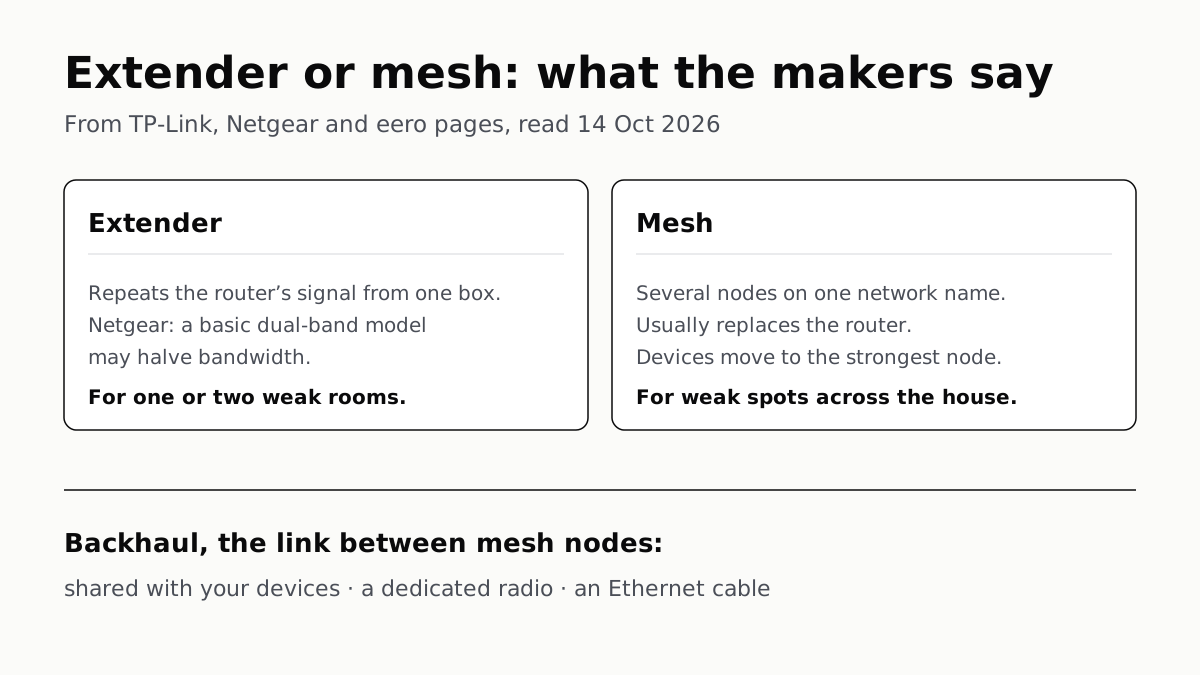
Extender for One Dead Room, Mesh for a Whole House
An extender repeats your router from one plug; mesh runs several nodes as one network. How the nodes link sets the speed.
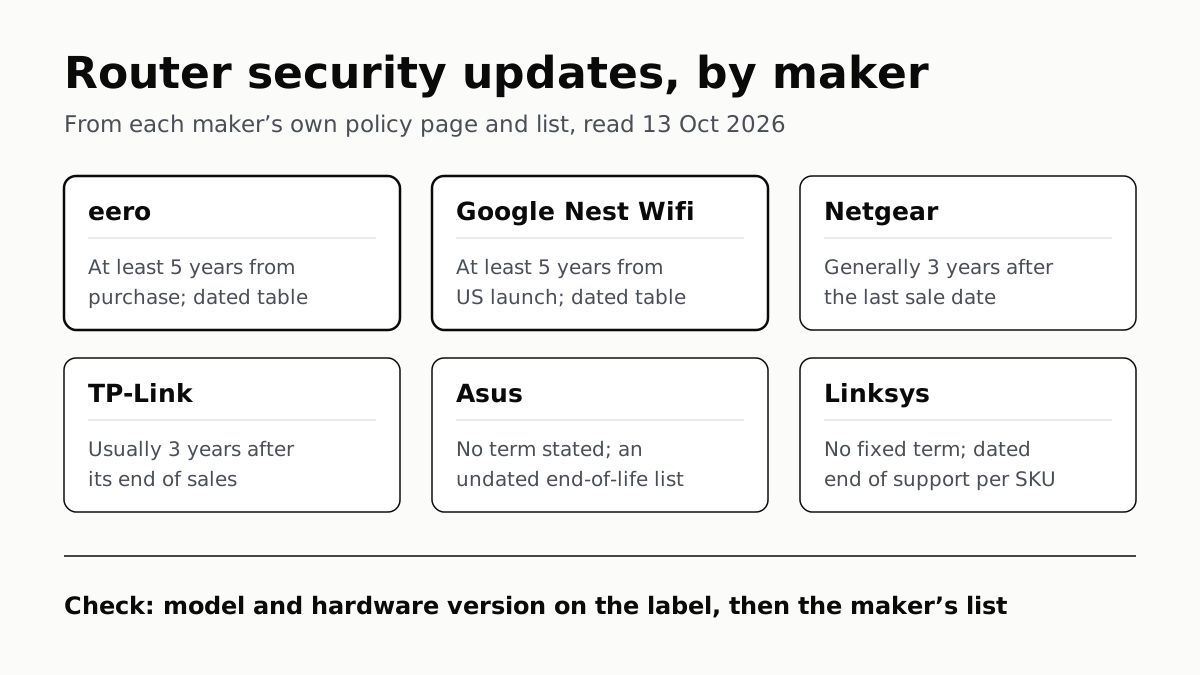
Four Router Makers Set an Update Term; Asus, Linksys Don’t
eero and Google guarantee five years at minimum; Netgear and TP-Link stop about three years after a model leaves sale.