Why ChatGPT Forgets What You Told It Earlier
The model has no memory between messages. Every turn re-sends the whole conversation, and there is a hard ceiling on how much fits.

If you buy through our links, we may earn a commission. It never affects our verdicts or scores — how that works. As an Amazon Associate I earn from qualifying purchases.
The model does not remember your last message. It never did. OpenAI’s own documentation is unambiguous: each text generation request is independent and stateless.
What creates the illusion of a conversation is that the entire conversation is sent again, from the beginning, every single time you press enter. The chat window is not a session. It is a document that gets longer, and gets re-read from the top on every turn.
So what is the context window?
It is the ceiling on how big that document can be. OpenAI defines it as “the maximum number of tokens that can be used in a single request”, and notes the number “includes input, output, and reasoning tokens” — so the answer being written counts against the same budget as everything you have already said.
Anthropic’s documentation frames the same limit as capacity rather than arithmetic: the context window is “all the text a language model can reference when generating a response, including the response itself”, and represents “a ‘working memory’ for the model.”
Everything goes in the bundle. Anthropic spells out that “everything in the request counts toward the context window: the system prompt, every message” — including tool results and images. The instructions you never see are in there too, spending your budget.
The forgetting, precisely
Now the mechanism. Each turn adds to the pile — Anthropic calls it “progressive token accumulation”, where each message “accumulates within the context window”.
Eventually the pile exceeds the ceiling. And here is the sentence that explains what you have experienced: chat interfaces “can also manage the context window on a rolling first in, first out basis.”
The oldest messages fall out of the front. Not summarised, not compressed — gone from what gets re-sent. So the model has not forgotten what you said an hour ago; it is no longer being shown what you said an hour ago, and it has no way to know anything is missing.
That is also why the failure is silent. There is no notice, because from the model’s side nothing went wrong.
A bigger window is not automatically better
This is the part that surprises people who go looking for the largest context window they can buy.
Anthropic’s documentation says it directly: “more context isn’t automatically better. As token count grows, accuracy and recall degrade, a phenomenon known as context rot.”
So a long thread degrades in two separate ways at once. The beginning falls off the front, and the middle gets less reliably used even while it is still there. A model with a million-token window will still answer a sprawling conversation worse than a tidy one.
There is a cost consequence too. OpenAI notes that even when chaining requests, “all previous input tokens for responses in the chain are billed as input tokens” — every turn re-bills the whole history. A long conversation gets slower and more expensive with each message, and the last message is the most expensive one you will send.
What to actually do
- Start a new conversation more often than feels natural. A fresh thread is a smaller, cleaner document. Most “the AI got worse” experiences are a thread that should have ended.
- Restate the important constraint when a thread gets long. If something matters, say it again near the end rather than trusting a mention from forty messages ago. Recency is doing real work here.
- Put the task last. The instruction closest to the end is the one least likely to have rotted or fallen off.
- Paste the source rather than referring back to it. “The document I sent earlier” may be nowhere in the request; the document is.
- Do not buy the biggest context window as a substitute for tidying up. Curation beats capacity, and the documentation of the company selling the capacity says so.
- Remember this is separate from memory features. Those store facts outside the conversation, which is why a chatbot can know your name next week and lose the middle of today — and if you would rather it stored nothing, what it does with your chats covers the controls.
How we researched this
No one at bitcritiq has handled this product. Everything here comes from published sources, listed below.
- What this cannot tell you
- Memory features are a separate system layered on top of this and work differently: they store facts outside the conversation and reinsert them, which is why a chatbot can recall your name across threads while losing the middle of today's conversation. Specific token limits change with every model release, so the figures here are examples of the shape rather than current specifications.
How we chose this, and what we did
- Why this subject
- People assume a chatbot remembers them and then feel misled when it does not. The real architecture is stranger and more useful to know: there is no memory at all between messages, and what looks like forgetting is a document being trimmed. Knowing that changes how you use the thing.
- How we looked at it
- Took the mechanism from the developer documentation of two labs independently — OpenAI's on conversation state and Anthropic's on context windows — because both describe the same underlying behaviour from different angles, and because documentation written for people building on the API describes what the chat product is actually doing.
Sources 2
- Conversation state — OpenAI API documentationOfficialaccessed Aug 29, 2026
- Context windows — Claude Platform DocsOfficialaccessed Aug 29, 2026
Pass it on
Know someone weighing this up? Send them the answer.
bitcritiq.com/j5g2The link is permanent: it opens this article for good, even if the title changes.
No email, no account
Follow bitcritiq
Every new article, in whatever reader you already use.
Subscribe by RSSAll the ways to follow
Using Chrome on Android? Open the browser menu and tap Follow. New articles then turn up in the Following tab in Discover.
read next
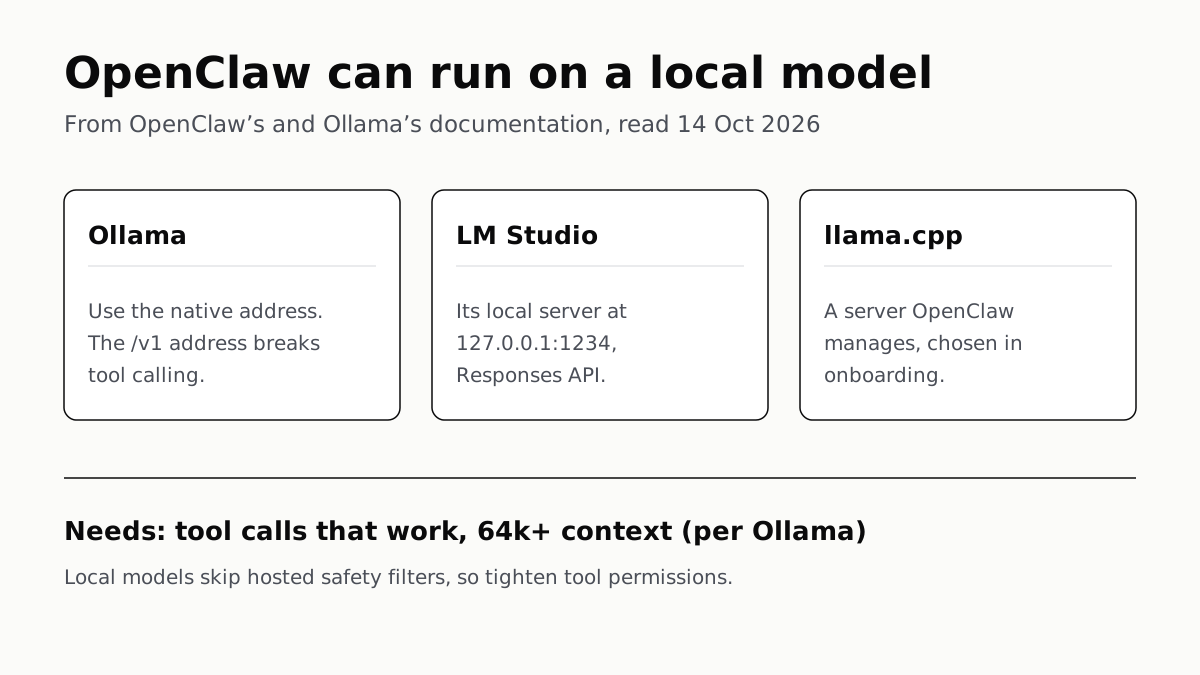
OpenClaw Runs on a Local LLM via Ollama or LM Studio
OpenClaw's docs also cover llama.cpp, vLLM and any OpenAI-compatible server. Ollama advises 64k context; small models are easier to hijack.
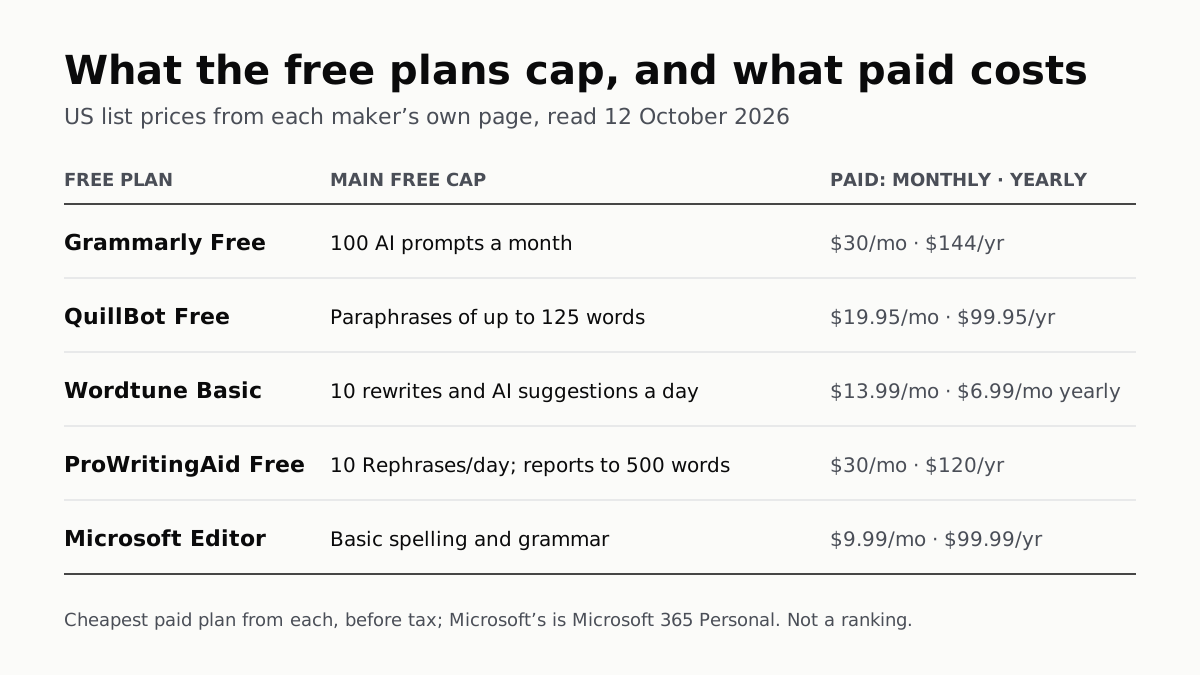
Free AI Writing Tools Ration Rewrites in Different Units
Grammarly gives 100 AI prompts a month, Wordtune 10 rewrites a day, QuillBot 125 words a paraphrase. Yearly billing halves most prices.
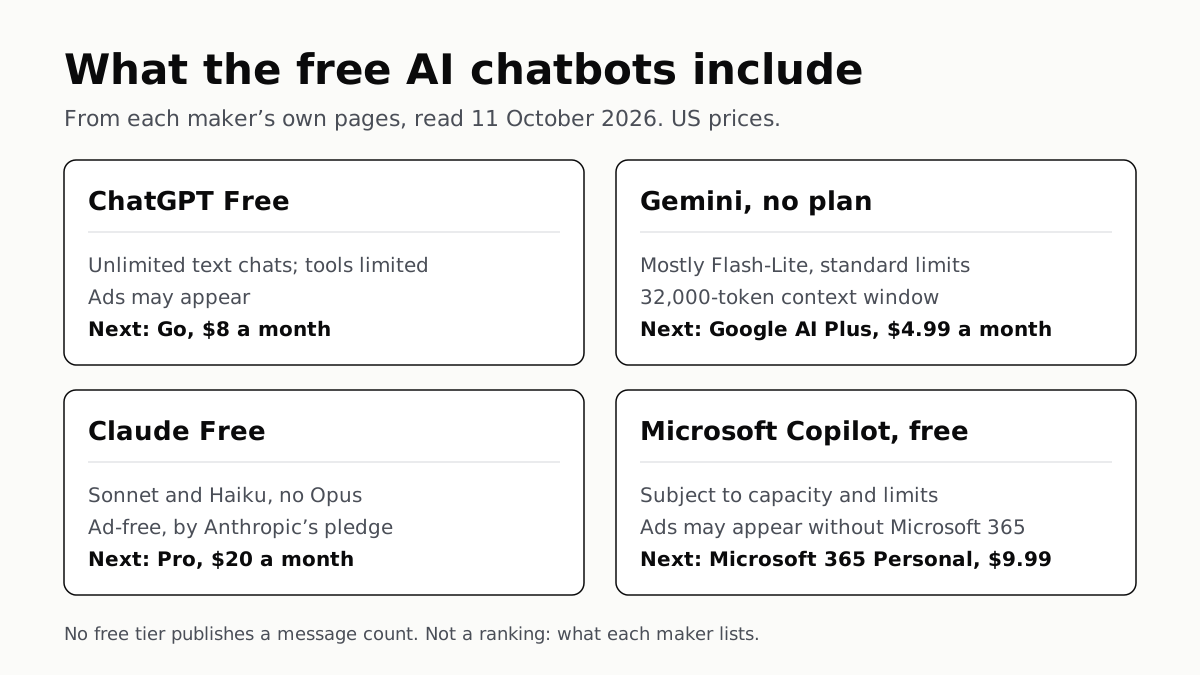
Of Four Free AI Chatbots, Only ChatGPT Lists Unlimited Chat
ChatGPT’s free tier carries ads, as Copilot’s may; Gemini’s leans on Flash-Lite and Claude’s leaves out Opus.
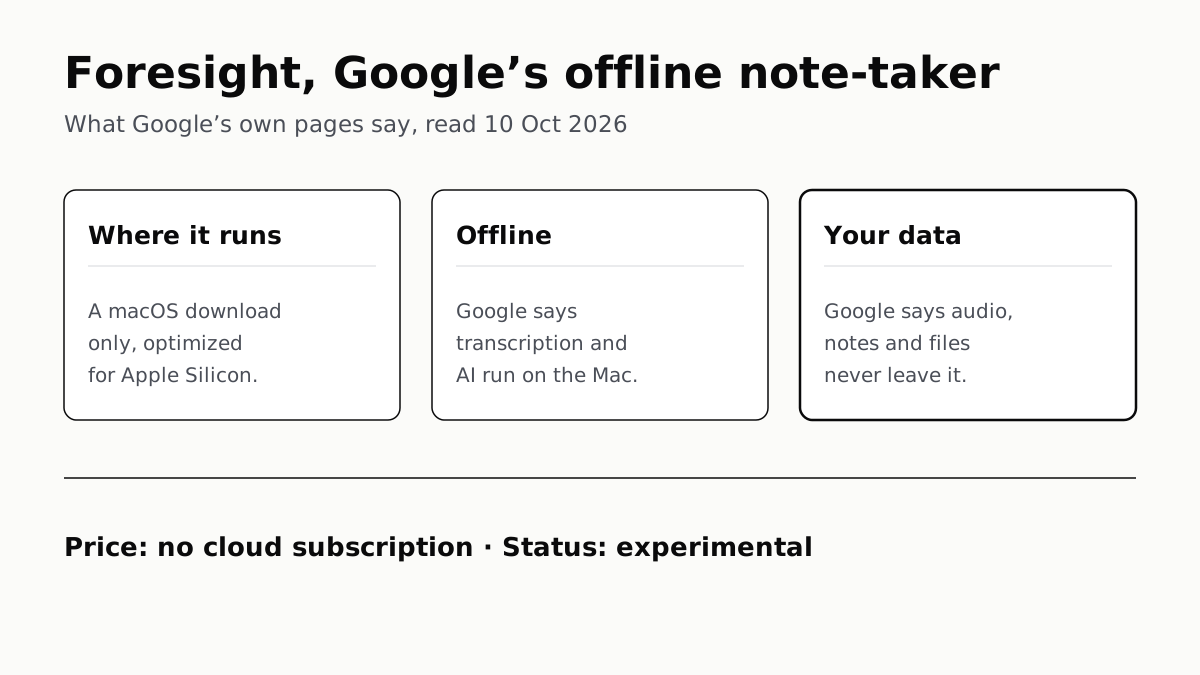
Google’s Offline AI Note-Taker Runs Only on a Mac
Transcription and AI run on the Mac itself, with no phone version. Google says your audio, notes and files never leave the computer.