ChatGPT Shows Ads on Free and Go, Not on Plus or Pro
With personalisation on, ads can draw on past chats and memory. Getting rid of them takes Plus, Pro or Free’s lower-limit Ads-Free mode.
If you buy through our links, we may earn a commission. It never affects our verdicts or scores — how that works. As an Amazon Associate I earn from qualifying purchases.
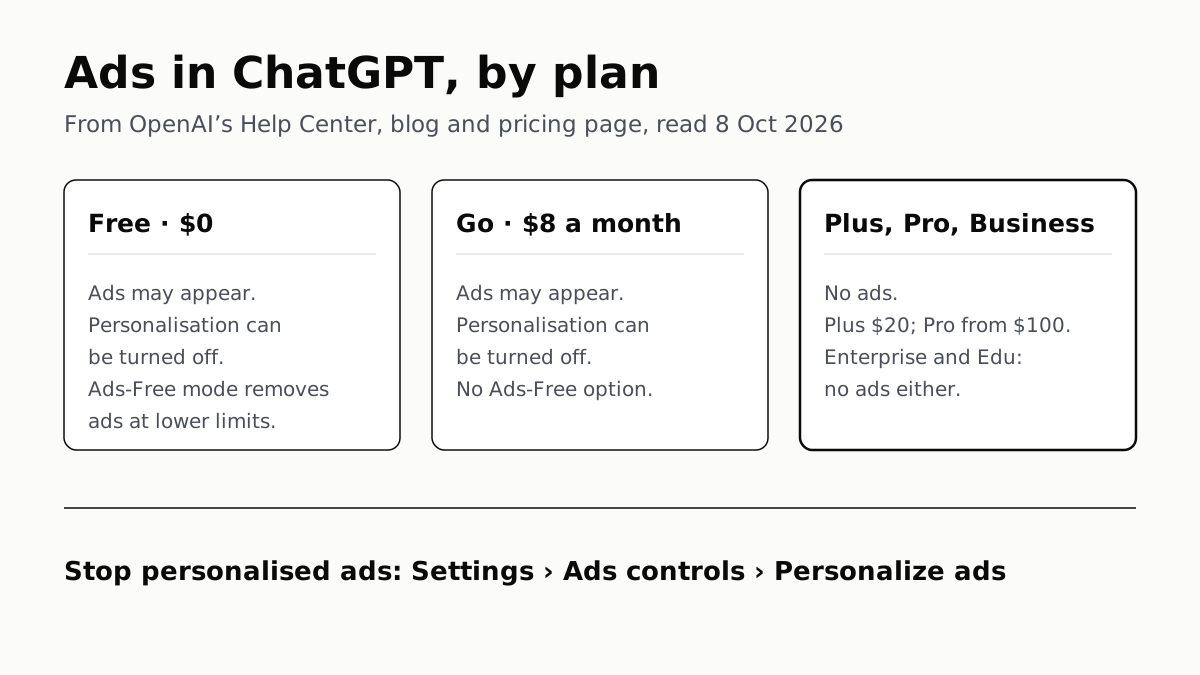
ChatGPT shows ads on the Free plan and on Go, which is $8 a month in the US, in the countries where OpenAI runs them; Plus at $20, Pro, Business, Enterprise and Edu accounts get none. To limit what the ads are based on, open Settings › Ads controls and turn off Personalize ads; to remove them, a Free user can switch to Ads-Free at lower limits, or pay for Plus or Pro.
Which plans see ads
| Plan (US price a month) | Ads? | Can you turn off personalisation? |
|---|---|---|
| Free ($0) | May appear where tested. Ads-Free mode removes them, at lower limits | Yes: Personalize ads |
| Go ($8) | May appear where tested. No Ads-Free option | Yes: Personalize ads |
| Plus ($20) | No | Not needed: no ads |
| Pro (from $100) | No | Not needed: no ads |
| Business, Enterprise, Edu | No | Not needed: no ads |
| Signed out | Ads may appear, limited to ones suitable for all audiences | OpenAI does not describe ad controls for signed-out use |
The Help Center also says ads are not shown to accounts identified as belonging to someone under 18, based on account age information and “age prediction where available”. Temporary Chats show no ads, and during the test, neither does OpenAI’s Atlas browser.
Prices are from OpenAI’s pricing page; what each paid plan adds beyond ad removal, including the agent that comes with Pro, is in our rundown of the ChatGPT plans after DevDay.
Where the ads appear
Today, below the end of a response, labelled as sponsored and set apart from the answer. OpenAI says you may see one or more ad units when there is “a relevant match to your chat”, and one unit can carry several products or advertisers.
Two more formats are on the way or in limited tests:
- Image ads during image generation. Announced on 5 October: a visual ad shown while ChatGPT creates an image, for Free and Go users, tested in the US from later this month. OpenAI says it stays separate from the image being made.
- Sponsored Agents, which let you open a chat with “an AI representative of a business” from an ad. OpenAI calls it a limited alpha with selected advertisers.
OpenAI says ads are not eligible to appear near sensitive or regulated topics, naming personal health, mental health and politics, and that political advertising is not currently allowed.
Which countries
OpenAI’s blog gives the rollout. The test began in the US on 9 February 2026. Canada, Australia and New Zealand were announced next, on 26 March; the UK, Mexico, Brazil, Japan and South Korea had launched by 11 August; 31 European countries were added from late August. On 23 September OpenAI named India among its earlier Asia-Pacific launches and added Indonesia, Malaysia, the Philippines, Singapore, Thailand, Vietnam and Taiwan, saying ChatGPT Ads were now in more than 60 countries.
That list is for advertisers. The Ads Manager page the Help Center links for “availability by country” is a list of 63 countries where a business can buy ads, and the user FAQ says only that ads are rolling out to Free and Go users “in select regions”. If your account is in the test, OpenAI says you will see “clear in-product information”.
The one regional difference OpenAI states for users: personalised ads are not initially available in the European Economic Area or Switzerland.
What the ads are chosen from
OpenAI lists two layers. Whatever your settings, the ad system uses what you are discussing in the current chat and basic context such as general location and language.
With Personalize ads on, it can also use:
- Your current chat thread, including personalised model responses
- How you interact with ads, such as ones you hide or click
- Past chats and memory, if memory is on
So the short answer is yes, ads are chosen from chat content: always from the chat in front of you, and with personalisation on, from older ones too.
What goes the other way is narrower in OpenAI’s account. It says advertisers never receive your chats, chat history, memories, name, email, precise location or IP address, and get aggregated figures such as views and clicks. If you message an advertiser through an ad, they see the messages you send them.
Two details from OpenAI’s other pages fill in the picture. Its privacy policy says it may receive information from advertisers and data partners, “for example… information about purchases you make from these advertisers”, to measure the ads shown to Free and Go users. And its advertiser help says businesses can upload customer lists of email addresses or phone numbers to include or exclude matched people from a campaign, with at least 25,000 matched users needed to target. The user FAQ does not mention that matching, and we found no OpenAI page saying whether turning off personalisation takes you out of it.
The controls, by name
In Settings › Ads controls (the Help Center also writes it “Ad Controls”), OpenAI lists:
| Control | What OpenAI says it does |
|---|---|
| Personalize ads | Off: ads use the current chat only, not other chats, ads history or topics. Ads still appear |
| Past chats and memory | Off: past chats and memory are not used to pick ads |
| View History and Topics | Shows ads you have seen or tapped, and the topics inferred for you |
| Delete ads data | Clears ads history and topics; removal takes up to 30 days. Your chats are not affected |
| Change plan to go ad-free | Free only: switches to Ads-Free at lower limits |
Each ad’s three-dot menu adds Hide ad, Report ad, About this ad and Ask ChatGPT, which shares that ad into your chat; OpenAI says ChatGPT cannot see your ads otherwise.
Ads-Free on Free means fewer messages and no tools such as image generation or deep research. Go subscribers cannot choose it: OpenAI says they would have to drop to Free, or move to Plus or Pro. Turning off personalisation changes which ads you see, not whether you see them.
These are separate from the training switch. Whether your chats improve OpenAI’s models is controlled by “Improve the model for everyone” under Data Controls, covered in whether ChatGPT trains on your chats; turning that off leaves the ads controls as they were.
Where OpenAI’s own pages disagree
- Which plans are ad-free. The Help Center and the February post list Plus, Pro, Business, Enterprise and Edu. The Europe post of 18 August and the Asia post of 23 September say “Plus, Pro, and Enterprise”, leaving out Business and Edu, and Engadget’s report of 5 October gave the same shorter list. We follow the Help Center, which answers the question by name.
- Free on the pricing page. The Go card says “This plan may include ads”. The Free card, on the plan that has the Ads-Free option, says nothing about ads.
- Signed-out users. The February post described a test for “logged-in adult users”. The Help Center now refers to “ads shown in logged-out experiences”.
- Placement. The Help Center, last updated 28 September, describes ads below responses only. It does not yet mention the image-generation format announced on 5 October.
What dropping the ads costs
For a Go subscriber, moving to Plus is $12 a month more, or $144 a year, which is close to the $132 a year Netflix charges to drop its ads. Plus brings more than ad removal for that money. A Free user who would rather keep the money can take Ads-Free mode and accept the lower limits, or compare what the other free chatbots include.
Questions people ask
Does ChatGPT Plus have ads?
No. OpenAI’s Help Center says Plus, Pro, Business, Enterprise and Edu accounts will not have ads. Ads may appear on the Free plan and on Go, which costs $8 a month in the US.
How do I turn off ads in ChatGPT?
Go has no switch for the ads themselves. On Free, Settings › Ads controls › Change plan to go ad-free removes them, at lower message limits and without image generation or deep research. Plus or Pro removes them with no cut. Temporary Chats show no ads.
Does ChatGPT use my chats to choose ads?
Yes. OpenAI says the current conversation is always a signal. With Personalize ads on, past chats and memory and your ad history can be used too. Advertisers do not receive your chats, according to OpenAI.
How do I stop personalised ads in ChatGPT?
Open Settings › Ads controls and turn off Personalize ads. You can also turn off Past chats and memory there and use Delete ads data. Ads still appear, chosen from the chat you are in.
Are there ads in ChatGPT in the UK or EU?
OpenAI says ads launched in the UK by 11 August 2026 and expanded to 31 European countries from late August. It says personalised ads are not initially available in the EEA or Switzerland, so ads there are chosen without your wider ChatGPT history.
Do ChatGPT ads change the answers?
OpenAI says no: ads run on separate systems, advertisers cannot shape or rank responses, and ads are labelled as sponsored and set apart below the answer. That is OpenAI’s stated policy; we have not tested it.
How we researched this
No one at bitcritiq has handled this product. Everything here comes from published sources, listed below.
- What this cannot tell you
- We have not seen a ChatGPT ad ourselves; this describes OpenAI’s stated policy, not an audit of what the ad system does. OpenAI publishes a country list for advertisers, not for users, so we cannot say which countries a given Free or Go user sees ads in. OpenAI’s pages do not say whether turning off ad personalisation stops an advertiser’s uploaded customer list from matching your account. Prices are OpenAI’s US list prices from the pricing page.
How we chose this, and what we did
- Why this subject
- OpenAI began testing ads in ChatGPT in the US on 9 February 2026 and has since taken them to more than 60 countries. On 5 October it announced a second format, shown during image generation, which Engadget and other outlets covered that week. Readers want to know whether their plan gets ads, what the ads are chosen from, and what they can switch off. Our existing ChatGPT posts cover the plan line-up and model training, not ads.
- How we looked at it
- Every central claim is from OpenAI’s own pages, read in a browser on 8 October 2026: the Help Center articles ‘Ads in ChatGPT’ (last updated 28 September 2026), ‘Ads Manager Availability’, ‘Set up Custom Audiences for your Campaign’ and ‘Sponsored Agents in ChatGPT Ads’; the blog posts ‘Our approach to advertising and expanding access to ChatGPT’ (16 January), ‘Testing ads in ChatGPT’ (9 February, updated 11 August), ‘ChatGPT Ads expands across Europe’ (18 August), ‘ChatGPT Ads expands to Southeast Asia and Taiwan’ (23 September) and ‘Building advertising for the way people use AI’ (5 October); the ChatGPT pricing page; and the US Privacy Policy (updated 10 September 2026). Absence claims were checked against a control on the same page: the pricing page’s Free card lacks the line ‘This plan may include ads’ that its Go card carries; the Help Center describes ads ‘below the end of a response’ and nowhere mentions image generation.
What this rests on
6 claims, all official. Nothing here was measured by bitcritiq — see how we test for why. Open a claim to read the source it came from.
Ads may appear on ChatGPT Free and Go; Plus, Pro, Business, Enterprise and Edu accounts do not have ads.Official
Help Center, ‘Ads in ChatGPT’: “Ads may appear for users on the Free and Go plans. Plus, Pro, Business, Enterprise, and Edu accounts will not have ads.”
Ads appear below the end of a response; a visual format shown during image generation is to be tested in the US from later in October 2026.Official
Help Center: “Ads can appear below the end of a response.” OpenAI, 5 October 2026: “Initially, we’ll test this new ad format during image generation in ChatGPT for users on the Free and Go plans… Testing will begin later this month in the US with an initial group of advertisers.”
With ad personalisation on, ads can draw on past chats and memory and on how you interact with ads; with it off, ads still use the current chat.Official
Help Center: “If you have Personalized Ads enabled… this can also include: Your current chat thread, including personalized model responses; How you interact with ads…; Past chats and memory.” “If you turn off ads personalization, you will still see ads based on the context of your current chat thread.”
Free users can switch to an Ads-Free mode with lower usage limits and no image generation or deep research; Go subscribers cannot.Official
Help Center: Ads-Free “removes ads, but comes with lower usage limits and reduced feature access (for example, fewer messages and no access to some tools like image generation or deep research).” “Ads-Free is a Free-plan option.”
Personalised ads are not initially available in the EEA or Switzerland.Official
Help Center: “Personalized ads are not initially available in the European Economic Area (EEA) or Switzerland.”
OpenAI may receive information from advertisers, such as purchases you make from them, to measure ads shown to Free and Go users.Official
OpenAI US Privacy Policy: “We receive information from advertisers and other data partners… including ads shown to Free and Go users on our Services. For example, we could receive information about purchases you make from these advertisers.”
Sources 12
- Ads in ChatGPT — OpenAI Help CenterOfficialaccessed Oct 8, 2026
- Ads Manager Availability — OpenAI Help CenterOfficialaccessed Oct 8, 2026
- Set up Custom Audiences for your Campaign — OpenAI Help CenterOfficialaccessed Oct 8, 2026
- Sponsored Agents in ChatGPT Ads — OpenAI Help CenterOfficialaccessed Oct 8, 2026
Show 8 more · 7 official or standards
- Our approach to advertising and expanding access to ChatGPT — OpenAI, 16 January 2026Officialaccessed Oct 8, 2026
- Testing ads in ChatGPT — OpenAI, 9 February 2026, updated 11 August 2026Officialaccessed Oct 8, 2026
- ChatGPT Ads expands across Europe — OpenAI, 18 August 2026Officialaccessed Oct 8, 2026
- ChatGPT Ads expands to Southeast Asia and Taiwan — OpenAI, 23 September 2026Officialaccessed Oct 8, 2026
- Building advertising for the way people use AI — OpenAI, 5 October 2026Officialaccessed Oct 8, 2026
- Pricing — ChatGPTOfficialaccessed Oct 8, 2026
- US Privacy Policy — OpenAI, updated 10 September 2026Officialaccessed Oct 8, 2026
- OpenAI is testing more ads in ChatGPT — Engadget, 5 October 2026accessed Oct 8, 2026
Pass it on
Know someone weighing this up? Send them the answer.
bitcritiq.com/9n59The link is permanent: it opens this article for good, even if the title changes.
No email, no account
Follow bitcritiq
Every new article, in whatever reader you already use.
Subscribe by RSSAll the ways to follow
Using Chrome on Android? Open the browser menu and tap Follow. New articles then turn up in the Following tab in Discover.
read next
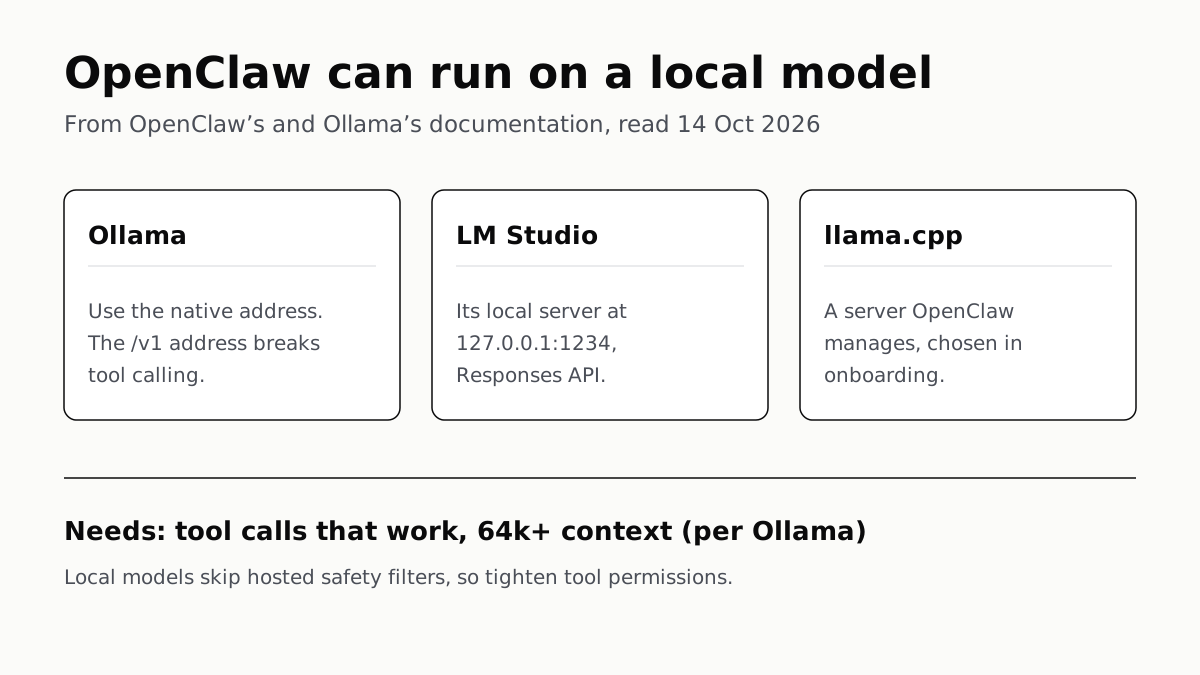
OpenClaw Runs on a Local LLM via Ollama or LM Studio
OpenClaw's docs also cover llama.cpp, vLLM and any OpenAI-compatible server. Ollama advises 64k context; small models are easier to hijack.
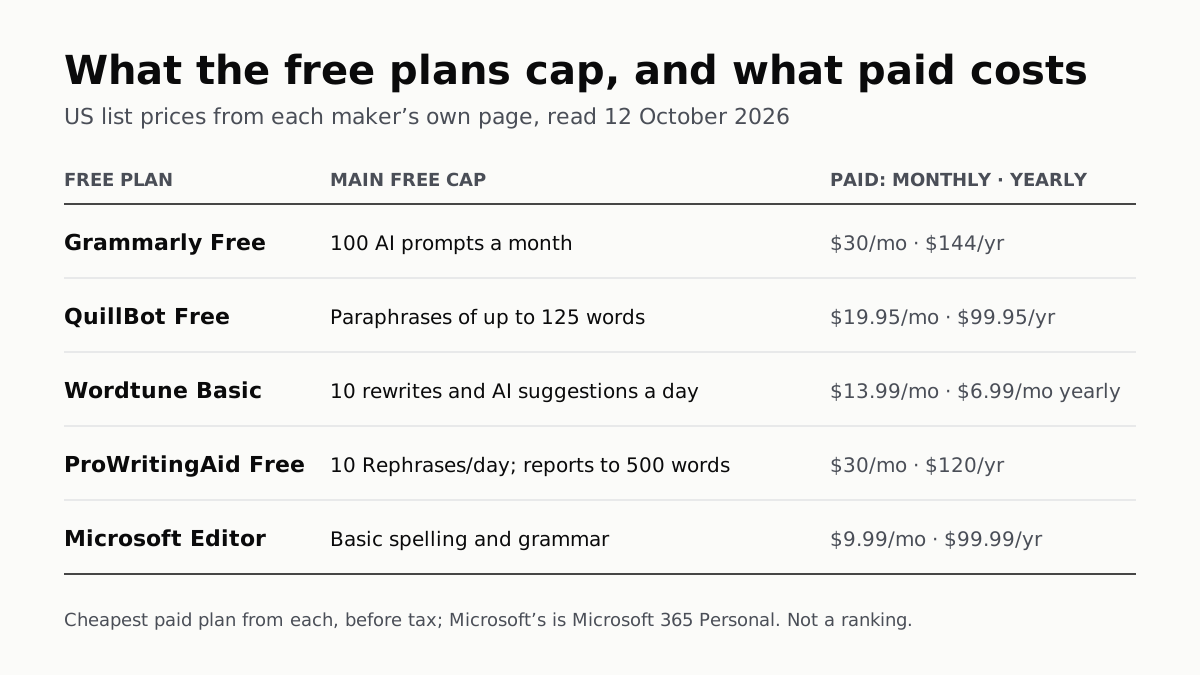
Free AI Writing Tools Ration Rewrites in Different Units
Grammarly gives 100 AI prompts a month, Wordtune 10 rewrites a day, QuillBot 125 words a paraphrase. Yearly billing halves most prices.
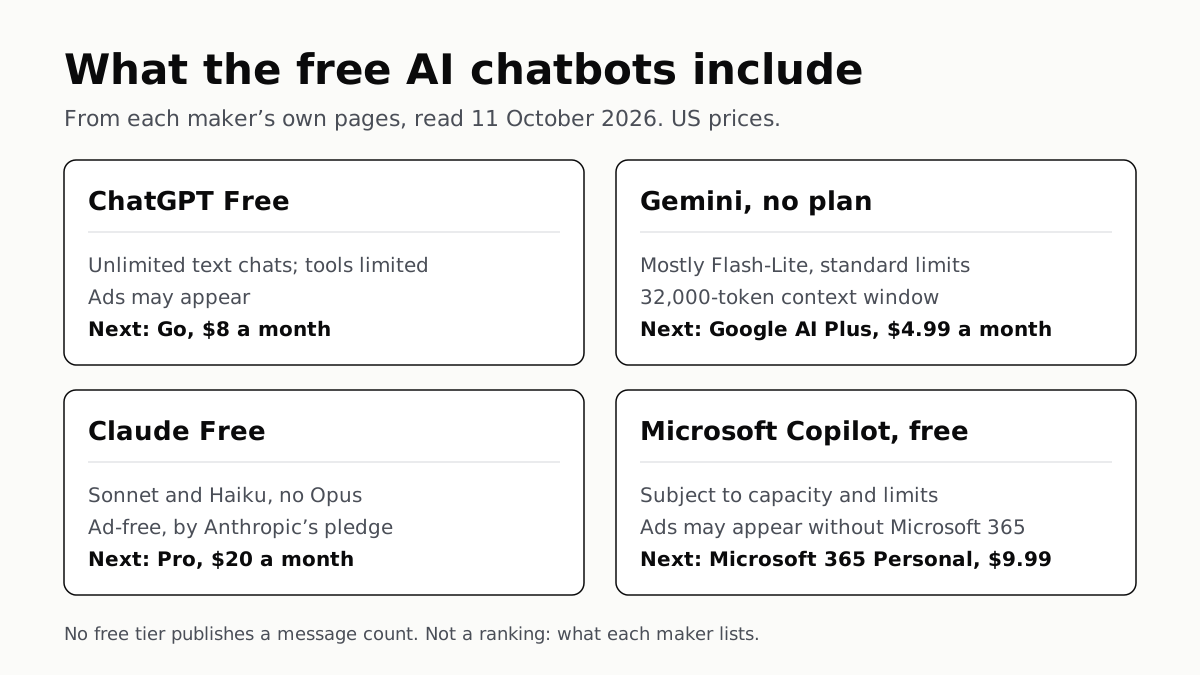
Of Four Free AI Chatbots, Only ChatGPT Lists Unlimited Chat
ChatGPT’s free tier carries ads, as Copilot’s may; Gemini’s leans on Flash-Lite and Claude’s leaves out Opus.
Google’s Offline AI Note-Taker Runs Only on a Mac
Transcription and AI run on the Mac itself, with no phone version. Google says your audio, notes and files never leave the computer.