The FCC’s Router Ban Leaves the Router You Own Alone
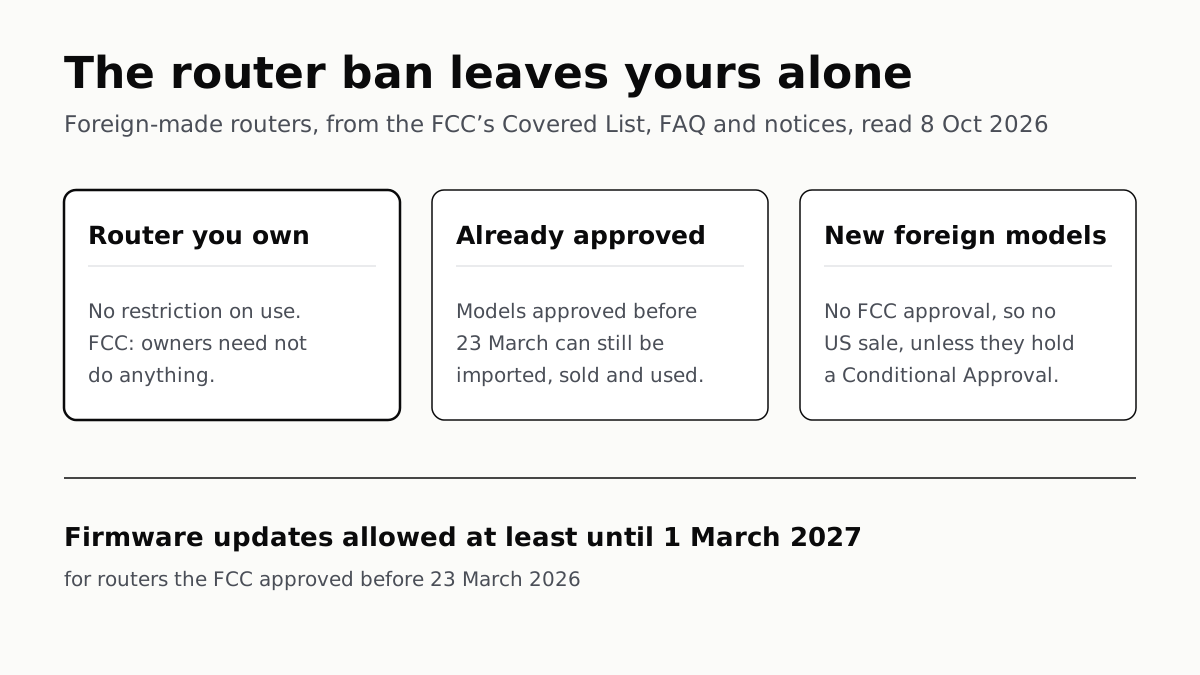
New foreign-made models need a Conditional Approval to reach US shelves. Netgear, Asus and eero have one; TP-Link is not listed.
If you buy through our links, we may earn a commission. It never affects our verdicts or scores — how that works. As an Amazon Associate I earn from qualifying purchases.
The FCC’s ban on foreign-made routers does not touch the router you already own: the FCC says there is no restriction on using it and that owners “do not need to do anything”. You can still buy one, too. The ban stops new foreign-made models getting FCC approval, unless their maker holds a Conditional Approval, and models approved before 23 March 2026 can still be sold.
What changes is which new models reach US shelves. That is where brands now differ: Netgear, Asus and eero hold Conditional Approvals, and TP-Link, now facing lawsuits from at least four states, does not.
What the ban does and does not affect
The FCC added “routers produced in a foreign country, except routers which have been granted a Conditional Approval by DoW or DHS” to its Covered List on 23 March 2026. Equipment on that list cannot get FCC equipment authorisation, and most electronics need that authorisation before they can be imported or sold.
| What the FCC says | |
|---|---|
| A router you already own | No restriction on use; owners “do not need to do anything” |
| Models authorised before 23 March 2026 | May still be imported, sold and used, “as shown by the FCC ID on the device” |
| New foreign-made models without a Conditional Approval | Cannot be authorised, so cannot be imported or sold |
| New models from a maker with a Conditional Approval | Can be authorised within the approval’s dates |
| Firmware and security updates for older models | Allowed at least until 1 March 2027 |
| Routers for the federal government’s exclusive use | Not restricted |
The updates row comes from a separate waiver. Without it, the FCC’s own notice says, rules adopted in 2025 would have barred even security patches for routers that became covered. The waiver lets them continue at least until 1 March 2027, and the FCC says it will decide before then whether to extend it. It permits updates; it does not oblige any maker to ship them. How long each maker says it keeps patching is in our router update end dates.
What counts as “produced in a foreign country”
Design counts as well as manufacture. The FCC’s FAQ, quoting the national-security determination behind the rule, says production covers “any major stage” of making the device, “including manufacturing, assembly, design, and development”. The maker’s nationality is “not relevant”. A router designed in the US and built abroad is covered, and so is one designed abroad and built in the US.
There is one easing. A US-produced router does not become covered just because it contains foreign-made components, unless one of them is a modular transmitter under FCC rules.
The rule is about consumer-grade routers: those meant for homes and self-installable. The FCC’s FAQ sorts devices like this:
| Counts as a router under the rule | Does not |
|---|---|
| Consumer and small-business routers sold or rented at retail | Optical network terminals (ONTs) |
| Portable MiFi and hotspot devices for home use | Femtocells |
| LTE and 5G home-internet boxes | Mobile phones with hotspot features |
| Routers an ISP or professional installs in a home | Industrial, enterprise or military equipment |
| Combined modem-router gateways | Phone adapters (ATAs) with Ethernet ports |
Which brands have a Conditional Approval
A Conditional Approval is a determination by the Department of War or Homeland Security that a router, or a class of them, does not pose the risks the ban targets; the FCC then lists it as exempt. On the FCC’s Conditional Approvals tab, updated 2 October 2026, 22 router companies appear. A selection:
| Company | What the FCC lists | Approval dates |
|---|---|---|
| Netgear | Nighthawk and Orbi routers, CAX gateways, CM cable modems | 14 Apr 2026 – 1 Oct 2027 |
| eero | eero, eero Pro, Max, PoE, Outdoor and Signal; Amazon Leo routers | 22 Apr 2026 – 31 Oct 2027 |
| Asus | RT, ROG GT, ROG Strix GS, TUF Gaming, ExpertWiFi, ZenWiFi Mesh, 5G MiFi; repeaters and access points | 9 Sep 2026 – 6 Mar 2028 |
| SpaceX | Starlink routers | 27 Jul 2026 – 1 Feb 2028 |
| Arcadyan | T-Mobile 5G home-internet boxes; AT&T BGW 720; several Verizon models | 12 Jun 2026 – 12 Dec 2027 |
| TP-Link | No entry | — |
The end date matters less than it looks. The FCC says that after it, new models in that approval cannot be authorised, but devices authorised during the window can still be sold.
Approvals are also scoped to what they name. Netgear’s and Asus’s entries list product series, and the FCC publishes no list of which models count as foreign-produced. Asus’s support page describes its approval as passing “the U.S. FCC’s rigorous cybersecurity review”; the FCC’s notice of 9 September says the Department of War granted it.
Where TP-Link stands
TP-Link has no Conditional Approval on the FCC’s list. TP-Link told Ars Technica on 7 October that its “existing products remain available for sale in the US”, and that for new products it is going through the FCC’s approval process. Ars reported that this leaves TP-Link unable to sell its newest Wi-Fi 8 routers in the US for now.
The lawsuits are a separate matter. Florida’s attorney general filed suit against TP-Link Systems on 6 October 2026, and Iowa’s announced its own the same day, saying TP-Link deceived Iowans “about the origin and safety of their routers”. Ars Technica reports that Montana and Nebraska sued too, with near-identical complaints under state consumer-protection law. These are allegations, not findings. TP-Link called the suits “built on false premises” and says the devices it sells in the US are made in Vietnam and that it is an independent US company.
None of the FCC pages we read mentions TP-Link or the suits. The rule turns on where a router is produced, not on who makes it, and the suits came long after the rule.
What this means if you are shopping
The FCC’s text leaves a buyer two routes: any model authorised before 23 March, whoever makes it, and new models from makers with an approval. If you are weighing whether a Wi-Fi 7 router is worth buying before Black Friday, the ban does not stop you.
Where it bites is the newest hardware from makers without an approval, and buying abroad. The FCC says a router bought outside the US with an FCC ID can be used here without restriction, but for a covered router that never received FCC authorisation, “the general answer is ‘no’”.
If you are replacing a router because smart devices keep dropping off your Wi-Fi, nothing in the rule forces a particular brand on you. The FCC used the same mechanism in July for foreign-produced robotic devices, and as with routers, it applied to new authorisations rather than to devices already in homes, as our robot-vacuum owner report found when a forum thread claimed otherwise.
Questions people ask
Is the US banning TP-Link routers?
Not by name. The FCC rule covers all routers produced in a foreign country, and the Covered List does not name TP-Link. TP-Link has no Conditional Approval listed, so as Ars Technica reported on 7 October, its new models cannot be approved, while models approved before 23 March can still be sold.
Can I still use my TP-Link router?
The FCC says the Covered List does not restrict consumers’ continued use of routers they already bought, and that owners need not do anything. The state lawsuits against TP-Link are separate from the FCC rule and are allegations that have not been decided.
Can I still buy a router in the US?
Yes. Models the FCC authorised before 23 March 2026 can still be imported and sold, and makers with a Conditional Approval, including Netgear, Asus and eero, can still get new models authorised within their approval’s dates.
Will my router still get firmware updates?
The FCC allows updates for routers authorised before 23 March 2026, including security patches, at least until 1 March 2027, and says it will decide before then whether to extend that. Whether your maker ships updates is up to the maker.
Does the router ban include ISP modems and gateways?
Yes for combined modem-router gateways and routers an ISP installs, per the FCC’s FAQ. It lists optical network terminals, femtocells, phone hotspots and industrial or enterprise equipment as outside the definition.
What is an FCC Conditional Approval for routers?
A determination by the Department of War or Homeland Security that a router, or a class of them, does not pose the national-security risk the ban is about. The FCC then exempts it. Each router approval it lists has an end date, after which new models in it cannot be authorised.
How we researched this
No one at bitcritiq has handled this product. Everything here comes from published sources, listed below.
- What this cannot tell you
- This is a reading of the FCC’s published text, not legal advice. The FCC publishes no list of which router models count as “produced in a foreign country”, so we cannot say whether a particular model you are looking at is covered; that depends on where its maker designs and builds it. We did not read the Montana or Nebraska releases or the complaints themselves, and the FCC’s Conditional Approval guidance PDF did not render as text, so what an application must contain is given as Ars Technica reported it. The firmware waiver runs at least until 1 March 2027; the FCC has not said what happens after that.
How we chose this, and what we did
- Why this subject
- Four states sued TP-Link on 6 October 2026, and the coverage (Ars Technica, Tom’s Hardware, The Verge) tied the suits to the FCC’s March ban on foreign-made routers. The reader’s questions are practical and the coverage does not lead with them: does the ban affect the router I already have, can I still buy one, and where does my brand stand. No bitcritiq post covered the router ban.
- How we looked at it
- Read through a browser on 8 October 2026: the FCC Covered List page (updated 2 October 2026) and its Conditional Approvals tab; the FCC FAQ on routers produced in foreign countries (updated 12 May 2026); the FCC fact sheet of 23 March 2026; the Office of Engineering and Technology waiver notice DA 26-286 (23 March 2026); the Public Safety and Homeland Security Bureau notice DA 26-957 (9 September 2026) granting Asus its Conditional Approval; the Florida and Iowa attorney-general news releases of 6 October 2026; and Asus’s support FAQ 1057460. The statement that TP-Link is not on the Conditional Approvals tab has a control: the same tab names Netgear, Asus, eero and 19 other router companies, and the Covered List itself names companies such as Huawei and ZTE where it means them. Montana’s and Nebraska’s suits, and TP-Link’s response, are from Ars Technica’s report of 7 October 2026.
What this rests on
6 claims, 5 official and 1 reported. Nothing here was measured by bitcritiq — see how we test for why. Open a claim to read the source it came from.
Since 23 March 2026, routers produced in a foreign country are on the FCC’s Covered List, except those granted a Conditional Approval by the Department of War or the Department of Homeland Security.Official
FCC Covered List, updated 2 October 2026: “Routers produced in a foreign country, except routers which have been granted a Conditional Approval by DoW or DHS.” Date of inclusion: March 23, 2026.
The ban stops new models getting FCC authorisation; previously authorised models can still be imported, sold and used, and owners need do nothing.Official
FCC router FAQ: “Foreign-produced routers that have previously received FCC authorization (as shown by the FCC ID on the device) may continue to be imported, sold, and used in the U.S.” and “Consumers currently using covered routers in small and home offices do not need to do anything.” Asked whether there are restrictions on consumers’ use of covered routers: “No.”
“Produced in a foreign country” covers any major production stage, including design, regardless of the maker’s nationality, so a router designed in the US but built abroad is covered.Official
FCC router FAQ, quoting the National Security Determination: “Production generally includes any major stage of the process through which the device is made including manufacturing, assembly, design, and development.” “The nationality of the entity or entities producing routers is not relevant.” Designed in the US but manufactured abroad, or the reverse: “Both types of routers are ‘covered.’”
Routers authorised before 23 March 2026 may keep receiving software and firmware updates at least until 1 March 2027.Official
FCC public notice DA 26-286: “All routers authorized for use in the United States may continue to receive software and firmware updates that mitigate harm to U.S. consumers at least until March 1, 2027.” “Prior to March 1, 2027, the OET will re-evaluate whether to further extend applicability.”
Netgear, eero, Asus and Starlink are among 22 router companies with Conditional Approvals listed by the FCC; TP-Link is not on the list.Official
FCC Covered List, Conditional Approvals tab, updated 2 October 2026: entries for Netgear (14 April 2026 – 1 October 2027), eero (22 April 2026 – 31 October 2027), SpaceX’s Starlink routers (27 July 2026 – 1 February 2028) and ASUS Computer International (9 September 2026 – 6 March 2028), among 22 router companies. No TP-Link entry.
Florida and Iowa sued TP-Link Systems on 6 October 2026, alleging it misled consumers about its routers’ origin and safety; Montana and Nebraska filed similar suits, and TP-Link denies the allegations.Reported
Florida AG release dated 6 October 2026; Iowa AG release, 6 October 2026: Bird “has sued TP-Link Systems for deceiving Iowans about the origin and safety of their routers.” Ars Technica, 7 October 2026, reports suits by Montana and Nebraska too, and TP-Link’s Steve Kovsky: “The coordinated lawsuits are built on false premises.”
Sources 9
- List of Equipment and Services Covered By Section 2 of The Secure Networks Act (Covered List and Conditional Approvals) — FCC, updated 2 October 2026OfficialStandards / .govaccessed Oct 8, 2026
- FAQs on Recent Updates to FCC Covered List Regarding Routers Produced in Foreign Countries — FCCOfficialStandards / .govaccessed Oct 8, 2026
- Fact sheet: FCC Updates Covered List to Include Foreign-Made Consumer Routers, Prohibiting Approval of New Models — FCC, 23 March 2026OfficialStandards / .govaccessed Oct 8, 2026
- OET Announces Waiver of Prohibitions on Certain Class I Permissive Changes to Covered Routers — FCC public notice DA 26-286, 23 March 2026OfficialStandards / .govaccessed Oct 8, 2026
Show 5 more · 4 official or standards
- PSHSB Announces Conditional Approval and Exemption of Certain Routers and Advanced Robotic Devices from FCC Covered List — FCC public notice DA 26-957, 9 September 2026OfficialStandards / .govaccessed Oct 8, 2026
- Attorney General James Uthmeier Files Lawsuit Against TP-Link Systems — Florida Office of the Attorney General, 6 October 2026Officialaccessed Oct 8, 2026
- Attorney General Brenna Bird Sues TP-Link Systems for Violating Iowa Consumer Fraud Act — Iowa Attorney General, 6 October 2026OfficialStandards / .govaccessed Oct 8, 2026
- ASUS Has Passed the U.S. FCC’s Rigorous Cybersecurity Review for Consumer Routers — ASUS Support FAQ 1057460Officialaccessed Oct 8, 2026
- TP-Link problems in US grow amid FCC router ban and four state lawsuits — Ars Technica, 7 October 2026accessed Oct 8, 2026
Pass it on
Know someone weighing this up? Send them the answer.
bitcritiq.com/rm9jThe link is permanent: it opens this article for good, even if the title changes.
No email, no account
Follow bitcritiq
Every new article, in whatever reader you already use.
Subscribe by RSSAll the ways to follow
Using Chrome on Android? Open the browser menu and tap Follow. New articles then turn up in the Following tab in Discover.
read next
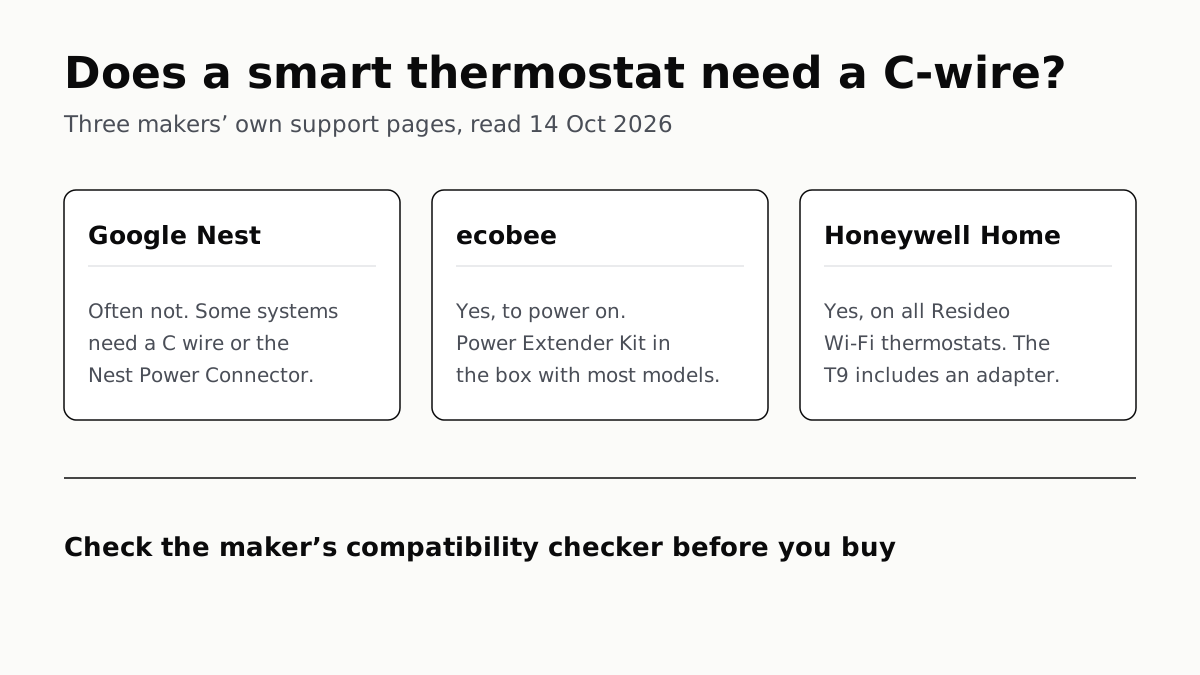
Ecobee and Honeywell Need a C-Wire; Nest Often Doesn’t
Each maker has a fix for homes without the wire, and each sends you to its own compatibility checker before you buy.
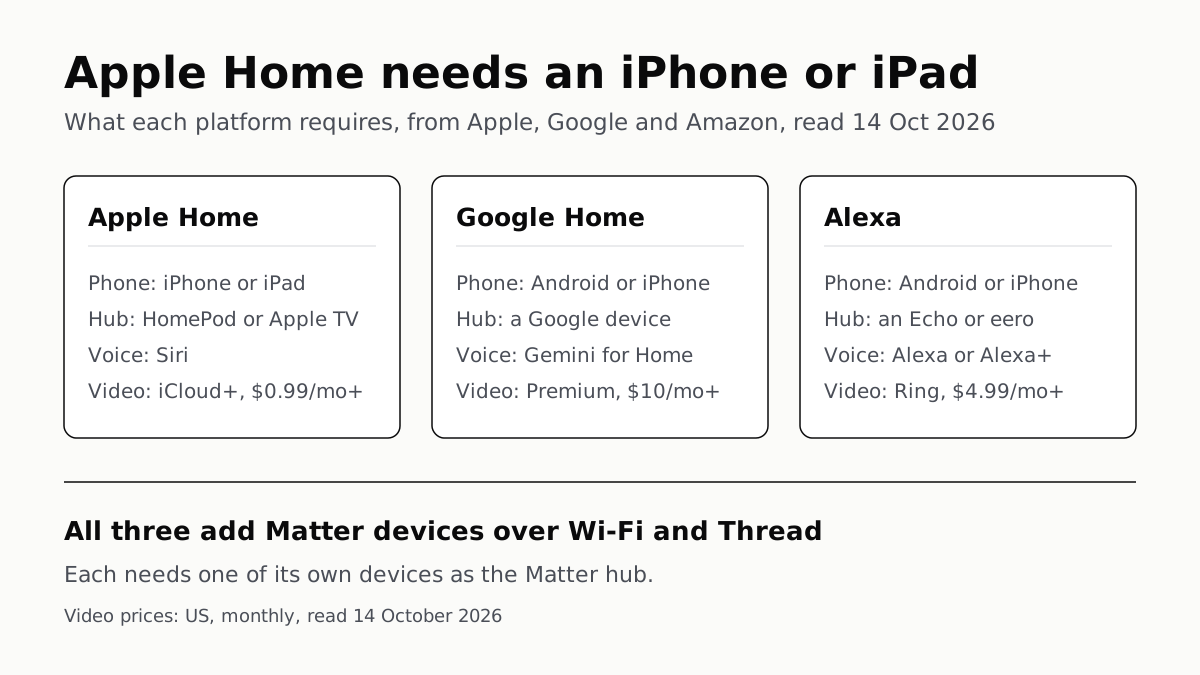
Apple Home Needs an iPhone; Google and Alexa Run on Both
All three add Matter and Thread devices. They differ in which hub you need, which assistant answers and what camera video history costs.
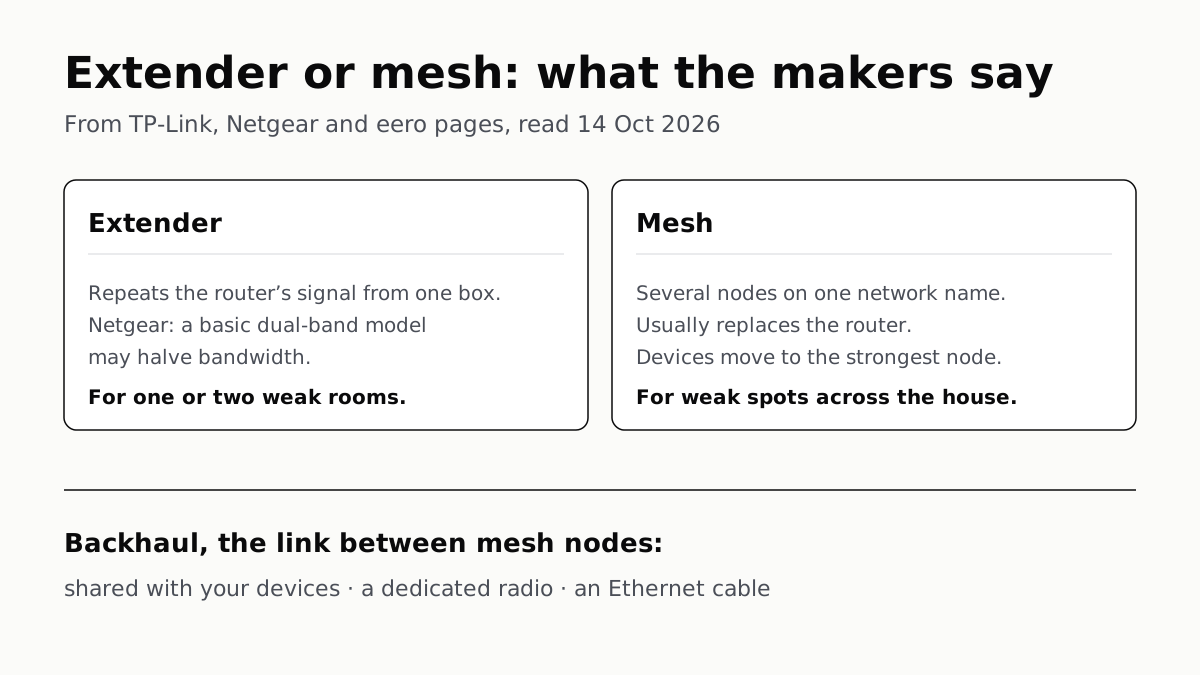
Extender for One Dead Room, Mesh for a Whole House
An extender repeats your router from one plug; mesh runs several nodes as one network. How the nodes link sets the speed.
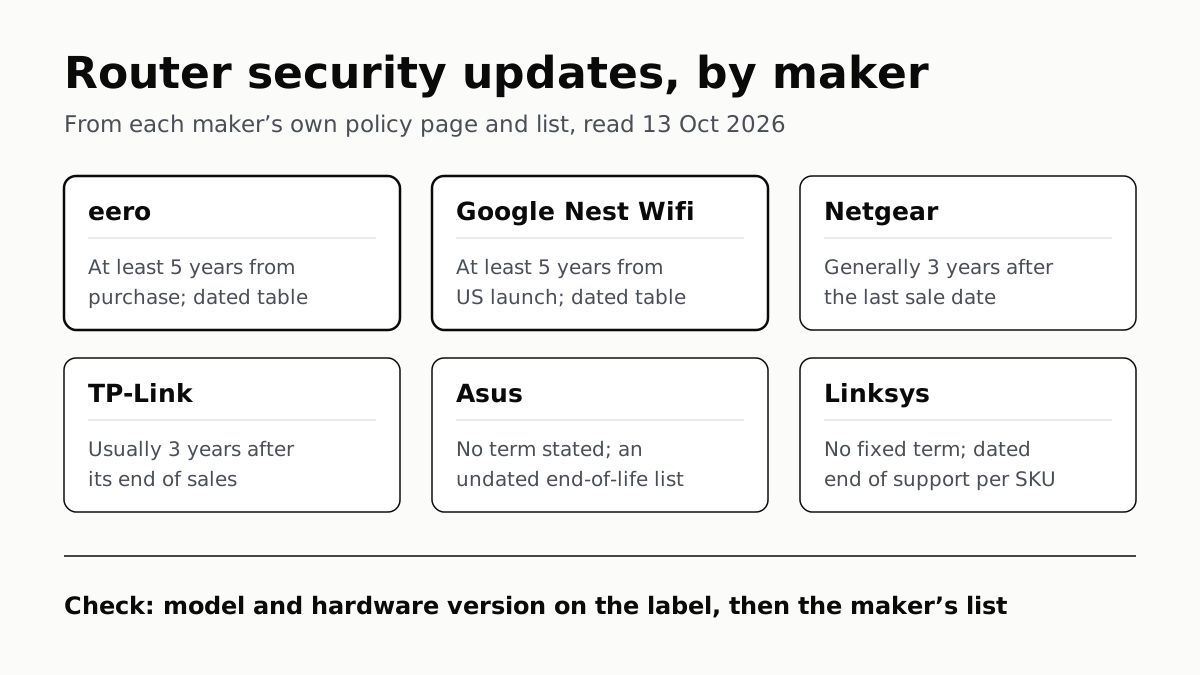
Four Router Makers Set an Update Term; Asus, Linksys Don’t
eero and Google guarantee five years at minimum; Netgear and TP-Link stop about three years after a model leaves sale.