Why Your Smart Home Devices Keep Dropping Offline
Switching platform almost never fixes it. The thing failing is usually the one nobody looks at, and it is not the app.

If you buy through our links, we may earn a commission. It never affects our verdicts or scores — how that works. As an Amazon Associate I earn from qualifying purchases.
If most of your devices are on Wi-Fi, changing platform will not fix this. The platform is the dashboard, not the thing that failed. What failed is one radio in one box trying to keep thirty conversations going at once.
The tell is that the drop-outs are random. A device that is genuinely broken fails the same way every time. A device that works all week and vanishes on Sunday evening is not broken — it lost an argument for airtime.
Why Wi-Fi is the wrong network for this job
Wi-Fi was designed for a few devices moving a lot of data. A smart home is the opposite: many devices, each sending almost nothing, all day, forever.
Every one of those devices shares the same airtime. They take turns, and the more of them there are, the longer each waits. Cheap smart plugs also sit on 2.4 GHz, the oldest and most crowded of the three bands the Wi-Fi Alliance lists for current Wi-Fi — and the one your neighbours are also using.
The consumer-router problem sits on top of that. In a long r/smarthome thread from someone ten years into Google Home and ready to give up, the most useful reply is blunt about where migrating gets you:
platform-hopping won’t fix this if your devices are mostly wifi… they all break the same way when 30+ wifi devices are fighting your router for airtime. the platform is just the dashboard.
The same reply puts an ISP combo router at “probably starts choking around 20” clients against 40–50 for a decent mesh system. Those are experienced estimates rather than published specifications, and the ratio is the point rather than the numbers. An ISP box is provisioned for a household, not for a smart home.
What Thread and Zigbee do differently
This is where the protocol choice stops being pedantry and starts being the fix.
The Thread Group describes Thread as “a low-power and low-latency wireless mesh networking protocol”, built on the “power-efficient IEEE 802.15.4 MAC/PHY” — a different radio standard from Wi-Fi, designed for exactly this traffic pattern.
Then the sentence that matters: Thread networks have no single point of failure and include the ability to self-heal.
In a mesh, mains-powered devices relay for each other. Move a lamp and the network re-routes around it. There is no one box every device must reach, so there is nothing to overload. Zigbee works on the same principle and the same 802.15.4 radio, which is why owners of both report the same experience — the r/smarthome reply recommends moving sensors, bulbs, locks and buttons off Wi-Fi because they “self-heal and don’t care about your wifi.”
The order to fix things in
Cheapest and most effective first. Most people do this backwards, starting with the platform.
- Count your Wi-Fi clients. Your router’s admin page lists them. If it is over about twenty on an ISP-supplied box, you have found your problem and nothing else on this list matters yet.
- Replace the router before the ecosystem. It is one purchase against re-buying every device, and it is the change most likely to work. The US ban on new foreign-made models still leaves previously approved routers on sale; what the FCC router ban changes has the detail.
- Move the small stuff to Thread or Zigbee. Sensors, buttons, bulbs, locks — the many-devices-tiny-messages category. Each one you move is a Wi-Fi client removed.
- Leave the big stuff on Wi-Fi. Cameras and speakers genuinely need the bandwidth, and they are few.
- Change platform last, if at all. By this point you may not want to.
Two things that will not fix it
Matter is not a reliability upgrade. It is a common language, and it does not change which radio a device uses or how many are on it. The same reply is realistic about this: Matter “helps with cross-platform stuff but it doesn’t magically fix flaky cheap chinese wifi plugs. those will still ghost you on any platform.” If you want the distinction properly, Matter, Thread and Zigbee are not three competing standards.
Another Wi-Fi extender usually makes it worse. It adds a client, and on many setups it repeats traffic on the same band, spending airtime you were already short of. (For weak coverage rather than too many devices, mesh and an extender solve different problems.)
What to actually do
- Check the client count before buying anything. It is a two-minute look at a page you already have access to, and it decides everything below it.
- Assume the ISP router is the constraint until proven otherwise. It is the one component nobody chose and everybody has.
- Buy Thread or Zigbee for anything small and battery-powered. That is the category Wi-Fi handles worst and mesh handles best.
- Do not migrate ecosystems to fix drop-outs. Migrate for features, or for local control when the internet goes down. Reliability is a network problem and it will follow you.
- Rule out the boring cause on anything that fails alone. One device dropping while thirty behave is a dying power supply or a flat battery, not a network story.
How we researched this
No one at bitcritiq has handled this product. Everything here comes from published sources, listed below.
- What this cannot tell you
- Device counts quoted from that thread are what experienced owners report, not a specification any manufacturer publishes, and the real number depends on the router, the radio environment and what the devices do. Treat them as an order of magnitude. This also does not cover devices dropping because of a failing power supply or a dying battery, which look identical from the app and are worth ruling out on anything that fails alone.
How we chose this, and what we did
- Why this subject
- The standard response to this is to migrate ecosystems, which is expensive in time and usually changes nothing. That is worth writing about, because the reason it changes nothing is structural and can be explained: the layer that fails is underneath the one people replace.
- How we looked at it
- Took the mesh and reliability claims from the Thread Group and the band structure from the Wi-Fi Alliance, both of which define the technologies in question. Then read a long r/smarthome thread from someone ten years into Google Home and ready to migrate, because the replies contain the diagnosis the vendor pages never state plainly.
Sources 3
- Thread Benefits — Thread GroupOfficialaccessed Aug 29, 2026
- Wi-Fi (MAC/PHY) — Wi-Fi AllianceOfficialaccessed Aug 29, 2026
- Tired of devices going OFFLINE constantly, looking for something better... — r/smarthomeaccessed Aug 29, 2026
Pass it on
Know someone weighing this up? Send them the answer.
bitcritiq.com/m4fvThe link is permanent: it opens this article for good, even if the title changes.
No email, no account
Follow bitcritiq
Every new article, in whatever reader you already use.
Subscribe by RSSAll the ways to follow
Using Chrome on Android? Open the browser menu and tap Follow. New articles then turn up in the Following tab in Discover.
read next
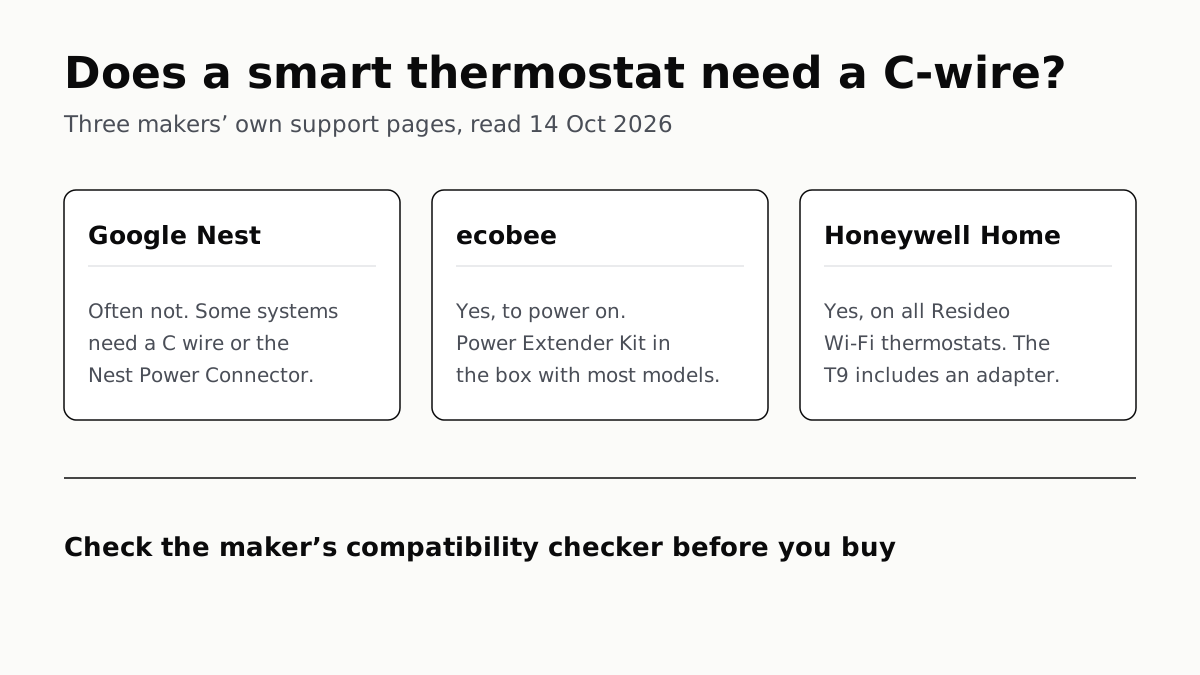
Ecobee and Honeywell Need a C-Wire; Nest Often Doesn’t
Each maker has a fix for homes without the wire, and each sends you to its own compatibility checker before you buy.
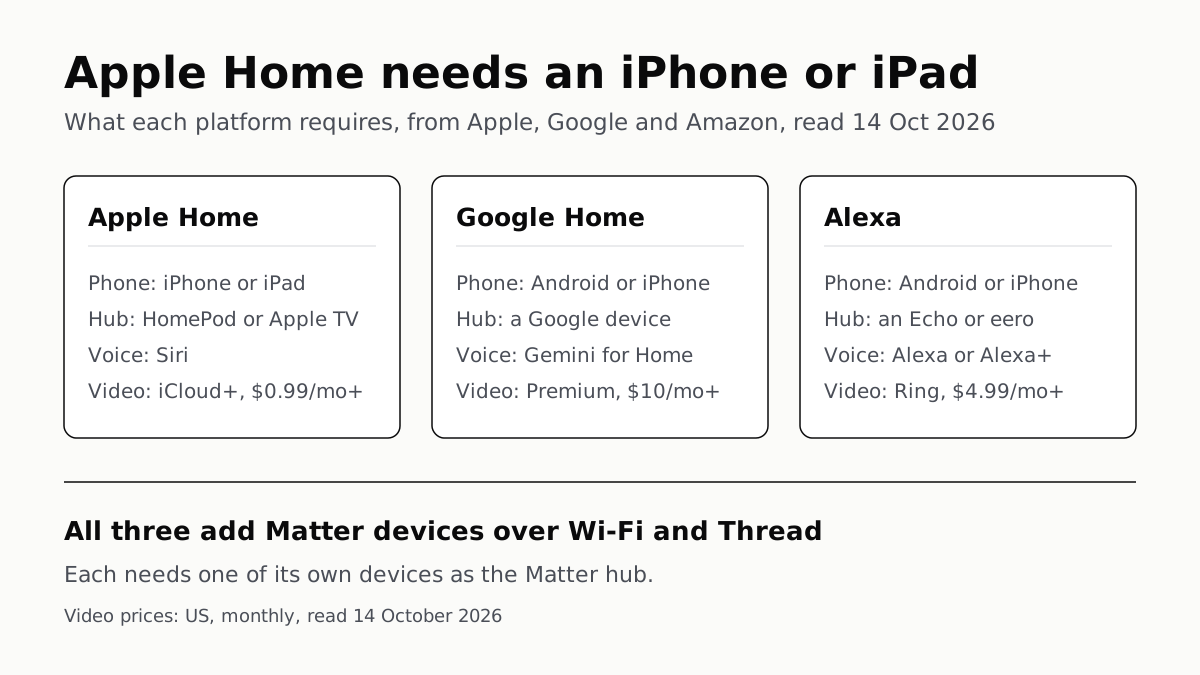
Apple Home Needs an iPhone; Google and Alexa Run on Both
All three add Matter and Thread devices. They differ in which hub you need, which assistant answers and what camera video history costs.
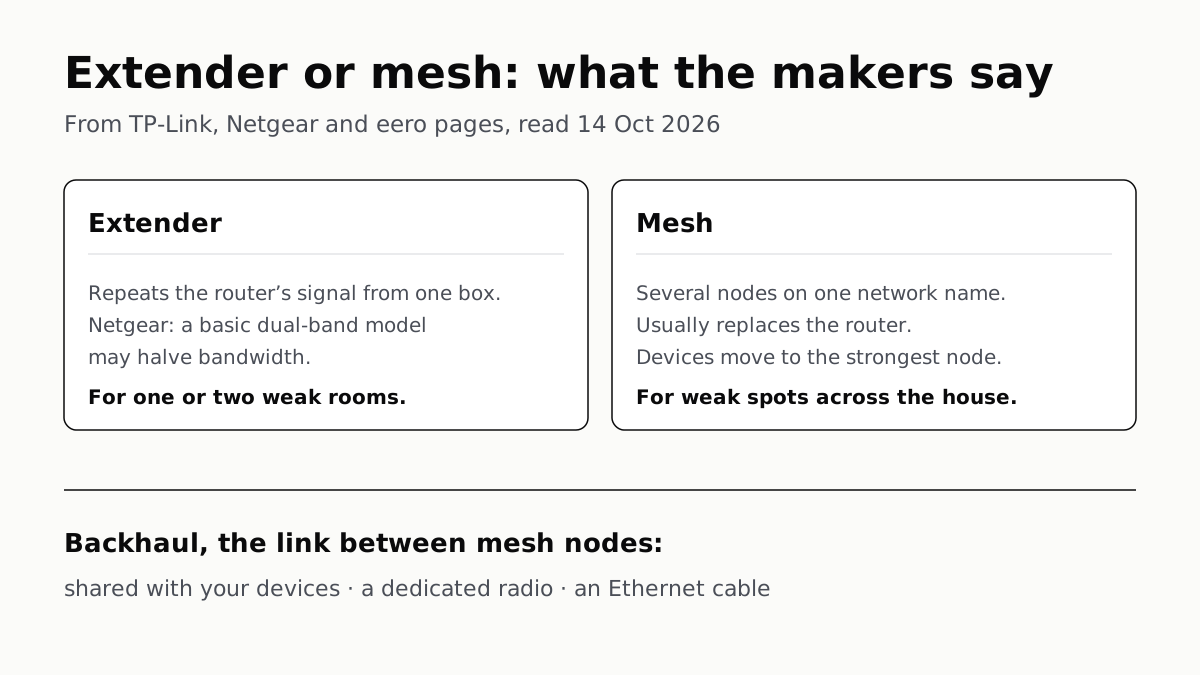
Extender for One Dead Room, Mesh for a Whole House
An extender repeats your router from one plug; mesh runs several nodes as one network. How the nodes link sets the speed.
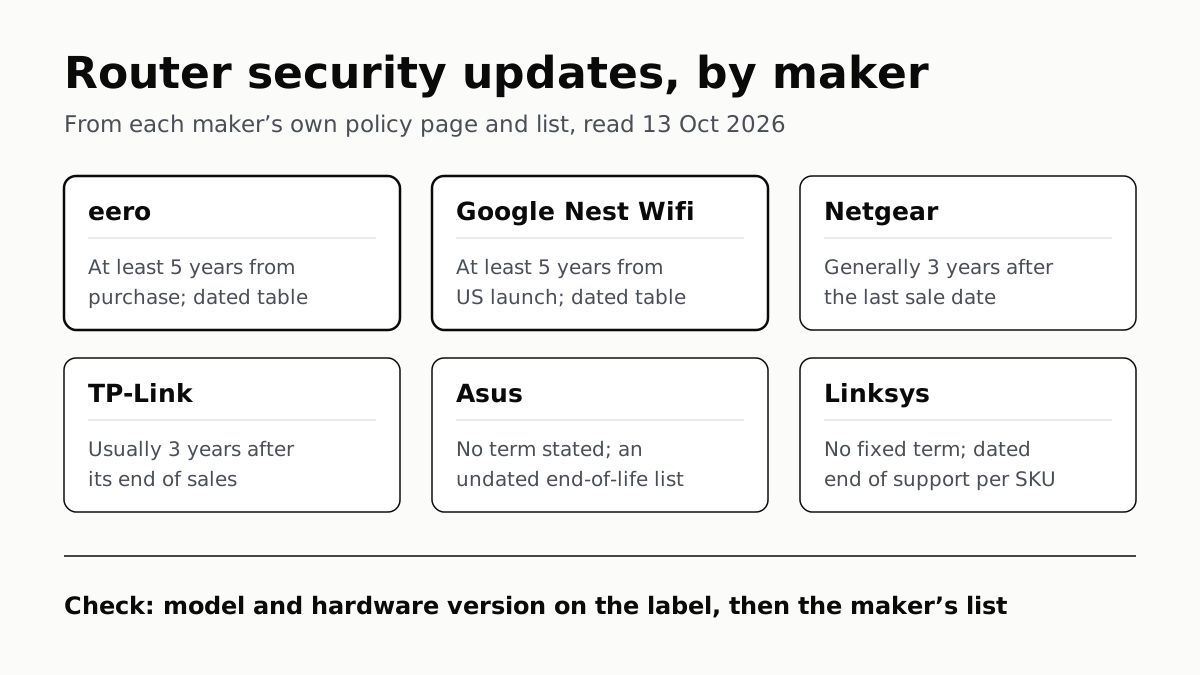
Four Router Makers Set an Update Term; Asus, Linksys Don’t
eero and Google guarantee five years at minimum; Netgear and TP-Link stop about three years after a model leaves sale.