Matter Is the Language, Thread a Network, Zigbee Both
Thread and Zigbee share one radio standard, not a network. Zigbee joins Matter via a bridge; Thread needs a border router to reach Wi-Fi.

If you buy through our links, we may earn a commission. It never affects our verdicts or scores — how that works. As an Amazon Associate I earn from qualifying purchases.
Update, 9 October 2026. Refreshed against the Alliance’s, the Thread Group’s and Apple, Google and Amazon’s own pages. We had written that Zigbee devices “have always needed their own hub”, “usually sold by the same brand as the devices”. Amazon says several Echo and eero models have a Zigbee hub built in, and the Alliance says Zigbee products work with any Zigbee certified platform, so that line is corrected below. The border-router list, the certification section, the newer versions of each standard and the questions at the end are new.
Matter is a shared language for smart home devices, Thread is a low-power IP network that Matter can travel over, and Zigbee is an older standard that is both a network and a language of its own. Thread and Zigbee use the same IEEE 802.15.4 radio standard, but Matter runs natively over Wi-Fi, Ethernet and Thread, and reaches Zigbee devices through a bridge.
The practical consequence is the one that catches people out. A device can be Matter certified and still not work when you get it home, because Matter says what language it speaks and not whether you own the equipment to carry it.
The three side by side
| What it is | Radio | IP-based | What it needs | Certified by | |
|---|---|---|---|---|---|
| Matter | The language devices speak | Runs over Wi-Fi, Ethernet or Thread; Bluetooth LE for setup | Yes | The network underneath, plus a controller such as a smart speaker or hub | Connectivity Standards Alliance, plus the network’s own body |
| Thread | A low-power IPv6 mesh network | IEEE 802.15.4 | Yes | A border router to reach Wi-Fi or Ethernet | Thread Group |
| Zigbee | A network and a language | IEEE 802.15.4, at 2.4 GHz and sub-GHz | No | A Zigbee hub, and a bridge to reach Matter | Connectivity Standards Alliance |
A device described as “Matter over Thread” and one described as “Matter over Wi-Fi” are both Matter. Only the Thread one needs a border router, and that difference decides whether your purchase works this evening.
Matter is the language
The Connectivity Standards Alliance says Matter builds “upon Internet Protocol (IP)” to “enable communication across smart home devices, mobile app, and cloud services”, and defines “a specific set of IP-based networking technologies for device certification.” Its FAQ names them: Matter uses “Bluetooth Low Energy for device setup and Wi-Fi, Thread, and Ethernet for connecting devices.”
So Matter does not replace your network. It selects from existing ones and standardises what travels across them. The newest feature release is Matter 1.6, from 17 June 2026, which the Alliance says adds no new device categories. It lets a device be set up over NFC “even before the device is fully powered on”, and adds Joint Fabric, which lets several apps co-manage one shared Matter network. Cameras arrived a release earlier, in Matter 1.5, though when we checked on 5 October, only SmartThings of the four big platforms listed them.
Matter is local by design. The Alliance’s FAQ says Matter-only devices need “an internet-connected controller — such as those built into smart speakers and smart home hubs” to be controlled from outside the home. That local design is also why Matter devices can keep answering at home when the internet drops.
Thread is one of the networks
The Thread Group describes Thread as an “open IPv6 based protocol”, “based on the power-efficient IEEE 802.15.4 MAC/PHY”, that “extends the internet into low power end devices”. Matter needs IP, and Thread brings IP to battery-powered sensors; Google says most Thread devices “can last longer between battery changes”.
Thread devices relay for each other in a mesh, but to reach your phone and the rest of your network they need a border router. Google’s definition is the plainest: border routers “enable devices to communicate between a Thread network and other networks (usually Wi-Fi or Ethernet).” It is usually a role built into a speaker, display, TV box or router rather than a product bought for itself.
This is where the disappointment comes from. You buy a Matter-over-Thread sensor, own no border router, and it does not connect. The box was accurate; you are missing the network, not the language.
Thread 1.4 targets the other common headache: border routers from several brands in one house. The Thread Group says it standardises “how devices and Thread Border Routers, regardless of the manufacturer, recognize and trust each other”, lets you add border routers to the same network to make the mesh “stronger, farther reaching and more reliable”, and is backward compatible with older Thread devices. A border router does not necessarily run it yet: Amazon’s developer page, last updated on 1 May 2026, says its Echo and eero border routers support Thread 1.1 or 1.3.
Which devices are Thread border routers
Apple also lists the iPhone 15 Pro and later on iOS 18, which can pair Thread accessories itself, but for automations, notifications and remote control Apple wants “a Thread-enabled home hub” or “a compatible third-party Thread border router”. The Wi-Fi-only Apple TV 4K is not on its list. What needs an Apple home hub covers the rest of Apple’s requirements.
Zigbee is a separate network and language
Zigbee predates both and does the whole job itself. The Alliance, which runs Zigbee as well as Matter, calls it “the only complete IoT solution — from mesh network to the universal language that allows smart objects to work together.” Its FAQ says Zigbee is based on the IEEE 802.15.4 radio standard at 2.4 GHz worldwide, with sub-GHz bands in the Americas and Europe. Zigbee 4.0, released in November 2025, adds European 800 MHz and North American 900 MHz radio support and stays backward compatible with Zigbee 3.0.
Same radio standard, different stack. The Alliance says Thread devices use “the same 802.15.4 radio technology as Zigbee but use IP-based technology for the network stack”, and that “there is no native interoperability between Matter and Zigbee devices.”
Zigbee devices join through a hub, which does not have to come from the same brand. The Alliance says Zigbee products “work with every Zigbee certified connected home or business platform”, and Amazon says several Echo and eero devices have “built-in smart home hubs” for Zigbee 1.2 and 3.0 devices. Zigbee Direct, which the Alliance describes in its 4.0 release, also lets you set up and control devices over Bluetooth Low Energy without a hub.
How Zigbee devices get into Matter
Through a bridge. The Alliance says Matter “supports bridges that allow devices using other protocols (such as Zigbee or Z-Wave) to participate in a Matter ecosystem.” The bridge is a feature of the hub, not of the devices, and what it covers varies:
- Philips Hue Bridge (affiliate link to Amazon, opens in a new tab). The Alliance names Signify (Philips Hue) among the smart home makers using Zigbee. Hue says connecting to Matter through its Bridge “supports all Hue products, including older non-Matter supported bulbs”, though lights reached through the Bridge do not use Thread, and Hue products connected only over Bluetooth “cannot be used with Matter”.
- Aqara Hub M3. Aqara says the M3 “serves as a Matter bridge for classic Aqara Zigbee devices”, with a footnote: “some Aqara Zigbee devices cannot be exposed to Matter” because Matter lacks specifications for their device types.
Whichever route, a smart bulb answers only while it has power, which is the main argument for a smart switch over a smart bulb on any light people turn off at the wall.
Who certifies Matter, Thread and Zigbee
Two bodies. The Connectivity Standards Alliance certifies Matter and Zigbee; the Thread Group certifies Thread. Matter certification also covers the network underneath: the Alliance says devices must be “certified to use those technologies as required by their governing organizations”, so a Matter-over-Thread product needs Thread certification too.
- Matter. Testing happens at “any Alliance authorized test service provider”, and the Alliance says: “Only Matter-certified devices will carry the Matter logo.” Certified products appear in the Alliance’s certified-products search.
- Zigbee. The Alliance offers four routes: Product, Platform, Certification by Similarity and its Transfer Program.
- Thread. Products are tested at the Thread Group’s Authorized Test Labs or, for many end products built on a Thread Certified Component, inherit that component’s certification; the Thread Group tells makers to “check with your Thread silicon vendor”. Certified products may carry a “Built on Thread” or “Thread Certified Component” logo.
A logo says a product passed a test, not that you own the hub or border router it needs.
What to actually do
- Before buying anything Matter-branded, find out whether it is Matter over Wi-Fi or Matter over Thread. If it says Thread, check the border-router table above against what you already own.
- If your existing kit is Zigbee, it keeps working through its hub. Whether it reaches Matter depends on that hub having a Matter bridge, and on which device types the bridge exposes.
- Treat “supports Matter” as a promise about the language, not about reachability. Whether a device is reachable, and whether your app supports its device type, is the half that rarely appears on the front of the box.
Questions people ask
What is the Matter Thread protocol?
Two things used together. Matter is the language smart home devices speak, set by the Connectivity Standards Alliance. Thread is a low-power IPv6 mesh network, set by the Thread Group, that Matter can run over. A “Matter over Thread” device speaks Matter across a Thread network and needs a Thread border router to reach your Wi-Fi.
Is Thread the same as Zigbee?
No. Both use the same IEEE 802.15.4 radio standard and both build low-power meshes, but Thread is IP-based and Zigbee is not. Zigbee also defines its own device language, while Thread leaves that to something like Matter. A Thread network and a Zigbee network do not talk to each other directly.
Do I need a Thread border router for Matter?
Only for Matter devices that use Thread. Matter over Wi-Fi and Ethernet devices do not need one. Common border routers include the HomePod mini, the Apple TV 4K Wi-Fi + Ethernet, Nest Hub (2nd gen), Nest Wifi Pro, Google TV Streamer and several Echo models, per each maker’s own list.
Can Zigbee devices work with Matter?
Through a bridge. The Alliance says Matter supports bridges that let Zigbee devices join a Matter setup, but there is no native interoperability. Philips Hue’s Bridge and Aqara’s Hub M3 are two such bridges, and Aqara says some of its Zigbee devices cannot be exposed to Matter.
Who certifies Matter, Thread and Zigbee devices?
The Connectivity Standards Alliance certifies Matter and Zigbee; the Thread Group certifies Thread. A Matter product must also be certified for its network, so a Matter-over-Thread product needs both. Only Matter-certified devices may carry the Matter logo.
Can a Thread product use a certified chip instead of being tested?
Often. The Thread Group says many end products built on a Thread Certified Component can skip testing and inherit the component’s certification, subject to special requirements, and tells makers to check with their Thread silicon vendor. Other products are tested at an Authorized Test Lab.
How we researched this
No one at bitcritiq has handled this product. Everything here comes from published sources, listed below.
- What this cannot tell you
- This explains what the three words mean and what has to be true for a device to work. It is not a compatibility list: whether a specific device works with a specific hub depends on that maker's implementation and on which Matter device types the hub supports, and both change with firmware. The border-router lists are what each maker published when we read them; Amazon's was last updated on 1 May 2026 and Apple's published on 13 January 2026. We did not test any device, and we did not find a page from Apple or Google stating which Thread version their border routers run. Hue's pages name Thread border routers less precisely than Google's own list, so we used Google's.
How we chose this, and what we did
- Why this subject
- These three names appear on the same product boxes and in the same buying advice, phrased as though a shopper has to pick one. They work at different levels, and the confusion has a real cost: people buy a Matter device expecting it to work with what they own, and discover it needs a piece of equipment they do not have. Search Console, 8 September to 5 October 2026, shows readers arriving with “matter thread protocol”, “thread zigbee” and “matter thread zigbee certification” queries, so this refresh adds how Thread and Zigbee relate, which devices are border routers, how Zigbee gets into Matter, and who certifies what.
- How we looked at it
- Re-read on 9 October 2026, through a browser, every definition from the body that owns the standard: the Connectivity Standards Alliance's Matter page, Matter FAQ, Zigbee page, Zigbee FAQ and its Matter 1.6 and Zigbee 4.0 releases; the Thread Group's overview, certification page and support FAQ (Thread 1.4). Border-router lists are each maker's own: Apple Support 102078, Google TV Help 15178609 and Google's Matter and Thread page, and Amazon's Alexa developer pages on Thread and Zigbee. Bridges are from Philips Hue's Matter setup guide and Matter page, and Aqara's Hub M3 release. For the statement that Amazon's border routers do not list Thread 1.4, the control is that the same page names the versions it does support, 1.1 and 1.3.
What this rests on
6 claims, all official. Nothing here was measured by bitcritiq — see how we test for why. Open a claim to read the source it came from.
Thread and Zigbee use the same IEEE 802.15.4 radio technology, but Thread uses an IP-based network stack and Zigbee does not, and Matter and Zigbee devices do not interoperate natively.Official
CSA Matter FAQ: “Thread-based devices support the same 802.15.4 radio technology as Zigbee but use IP-based technology for the network stack” and “there is no native interoperability between Matter and Zigbee devices.” Thread Group: “Based on the power-efficient IEEE 802.15.4 MAC/PHY.”
Matter runs natively over Wi-Fi, Ethernet and Thread, and brings in Zigbee devices through bridges.Official
CSA Matter FAQ: “Matter natively supports Wi-Fi, Ethernet, and Thread” and “Matter supports bridges that allow devices using other protocols (such as Zigbee or Z-Wave) to participate in a Matter ecosystem.”
Matter certification requires the underlying network technology to be certified by its own governing body, and only Matter-certified devices carry the Matter logo.Official
CSA Matter FAQ: “Matter certification requires that devices are certified to use those technologies as required by their governing organizations” and “Only Matter-certified devices will carry the Matter logo.”
The Thread Group certifies Thread products, either by testing at an Authorized Test Lab or by inheriting a Thread Certified Component's certification, and licenses a certified-product logo.Official
Thread Group certification page: “Thread Group members may physically test their products at a global network of independent Authorized Test Labs”; “it is possible to skip testing and directly inherit the component certification”; benefits include a “License to display a Thread Group certified product logo (Thread Certified Component or Built on Thread)”.
Thread 1.4 standardises how Thread devices and border routers from different makers recognise and trust each other, and is backward compatible.Official
Thread Group FAQ: Thread 1.4 “simplifies the process for adding new devices to your network by standardizing how devices and Thread Border Routers, regardless of the manufacturer, recognize and trust each other” and “Thread 1.4 is fully backward compatible”.
Apple, Google and Amazon each list which of their devices are Thread border routers, and Amazon says its border routers support Thread 1.1 or 1.3.Official
Apple Support 102078 lists HomePod mini, HomePod (2nd generation), Apple TV 4K (3rd generation) Wi-Fi + Ethernet and Apple TV 4K (2nd generation); Google TV Help: “Displays: Nest Hub (2nd gen), Nest Hub Max; Wi-Fi routers: Nest Wifi Pro (Wi-Fi 6E); Streaming devices: Google TV Streamer (4K)”; Amazon: “Thread-enabled Amazon Echo and eero devices have built-in Thread Border Routers and support Thread version 1.1 or 1.3”.
Sources 17
- Build With Matter — Connectivity Standards AllianceOfficialaccessed Oct 9, 2026
- Matter FAQ — Connectivity Standards AllianceOfficialaccessed Oct 9, 2026
- Matter 1.6 Enables More Intuitive Setup, Multi-Ecosystem Experiences, and Context-Driven Control — Connectivity Standards Alliance, 17 June 2026Officialaccessed Oct 9, 2026
- Zigbee — Connectivity Standards AllianceOfficialaccessed Oct 9, 2026
Show 13 more · 13 official or standards
- Zigbee FAQ — Connectivity Standards AllianceOfficialaccessed Oct 9, 2026
- The Connectivity Standards Alliance Announces Zigbee 4.0 and Suzi — Connectivity Standards Alliance, 18 November 2025Officialaccessed Oct 9, 2026
- What is Thread — Overview, Thread GroupOfficialaccessed Oct 9, 2026
- Certification — Thread GroupOfficialaccessed Oct 9, 2026
- Support and FAQ, including Thread 1.4 — Thread GroupOfficialaccessed Oct 9, 2026
- If you see a ‘Thread Border Router Required’ or ‘Needs Thread Network’ alert — Apple Support 102078Officialaccessed Oct 9, 2026
- Connect Thread smart devices with Google TV Streamer (4K) — Google TV Help 15178609Officialaccessed Oct 9, 2026
- Matter and Thread — Google HomeOfficialaccessed Oct 9, 2026
- Understand Smart Home Thread Support — Amazon Alexa developer documentationOfficialaccessed Oct 9, 2026
- Understand Smart Home Zigbee Support — Amazon Alexa developer documentationOfficialaccessed Oct 9, 2026
- Philips Hue and Matter: Complete Setup & Support Guide — Philips HueOfficialaccessed Oct 9, 2026
- Philips Hue and Matter — Philips HueOfficialaccessed Oct 9, 2026
- Aqara Unveils Hub M3: A Multi-Protocol Matter Controller with Edge Capabilities — Aqara, 8 January 2024Officialaccessed Oct 9, 2026
Pass it on
Know someone weighing this up? Send them the answer.
bitcritiq.com/wnj3The link is permanent: it opens this article for good, even if the title changes.
No email, no account
Follow bitcritiq
Every new article, in whatever reader you already use.
Subscribe by RSSAll the ways to follow
Using Chrome on Android? Open the browser menu and tap Follow. New articles then turn up in the Following tab in Discover.
read next
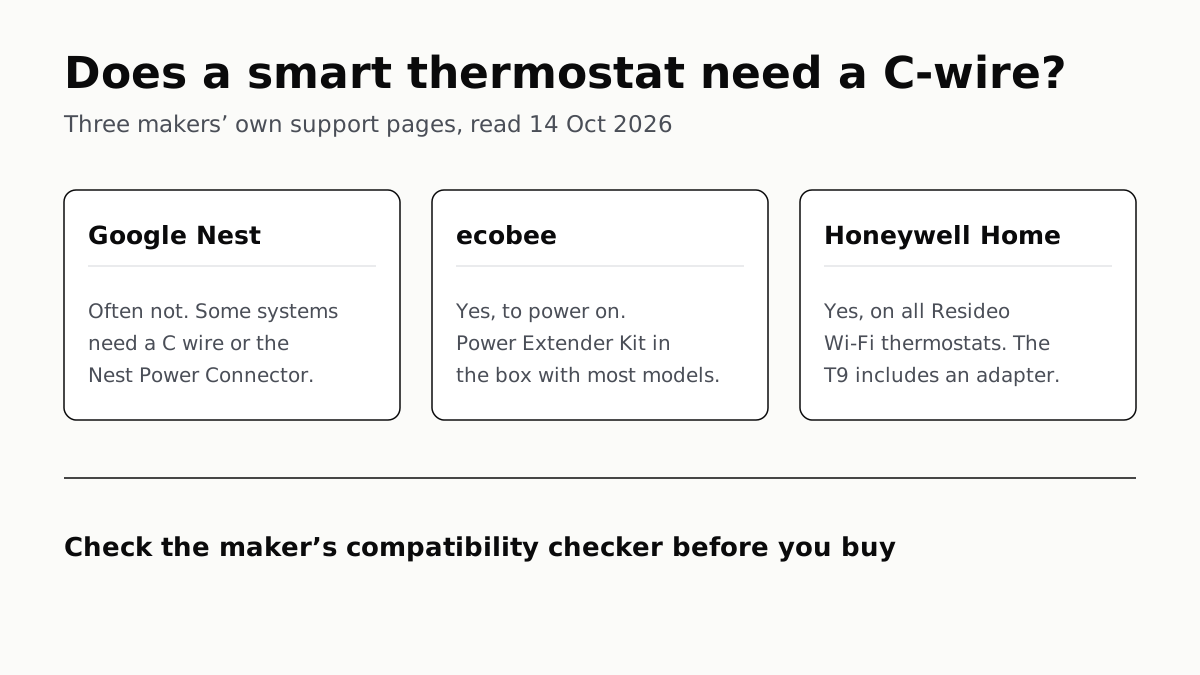
Ecobee and Honeywell Need a C-Wire; Nest Often Doesn’t
Each maker has a fix for homes without the wire, and each sends you to its own compatibility checker before you buy.
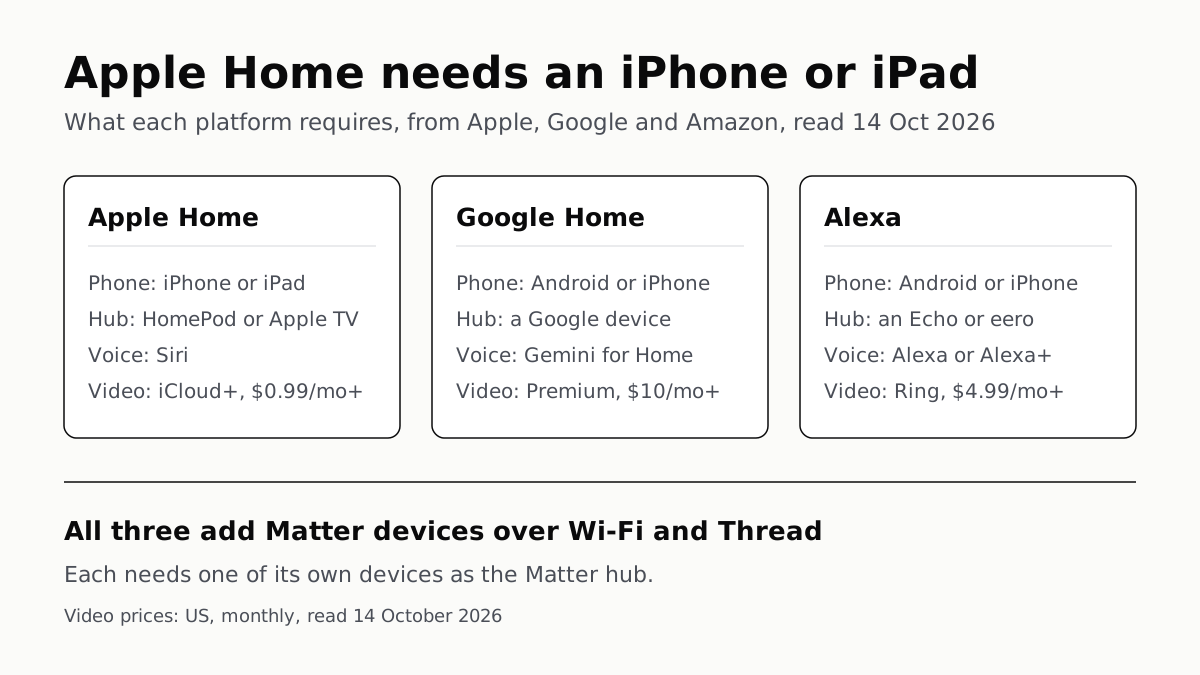
Apple Home Needs an iPhone; Google and Alexa Run on Both
All three add Matter and Thread devices. They differ in which hub you need, which assistant answers and what camera video history costs.
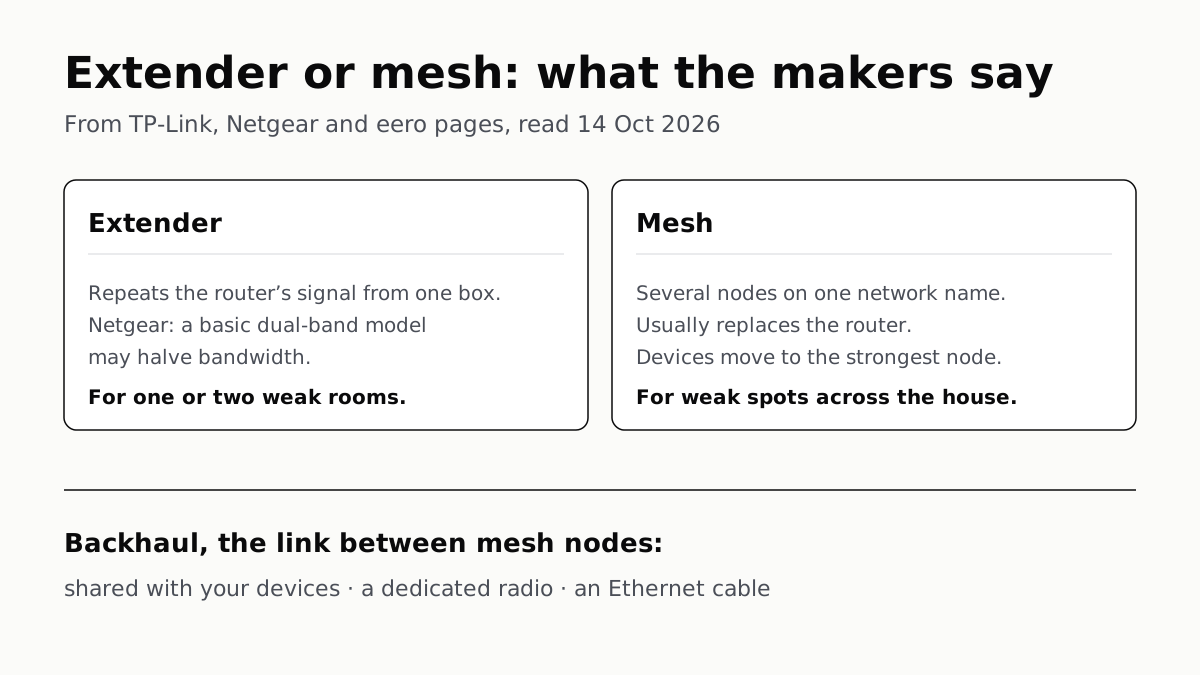
Extender for One Dead Room, Mesh for a Whole House
An extender repeats your router from one plug; mesh runs several nodes as one network. How the nodes link sets the speed.
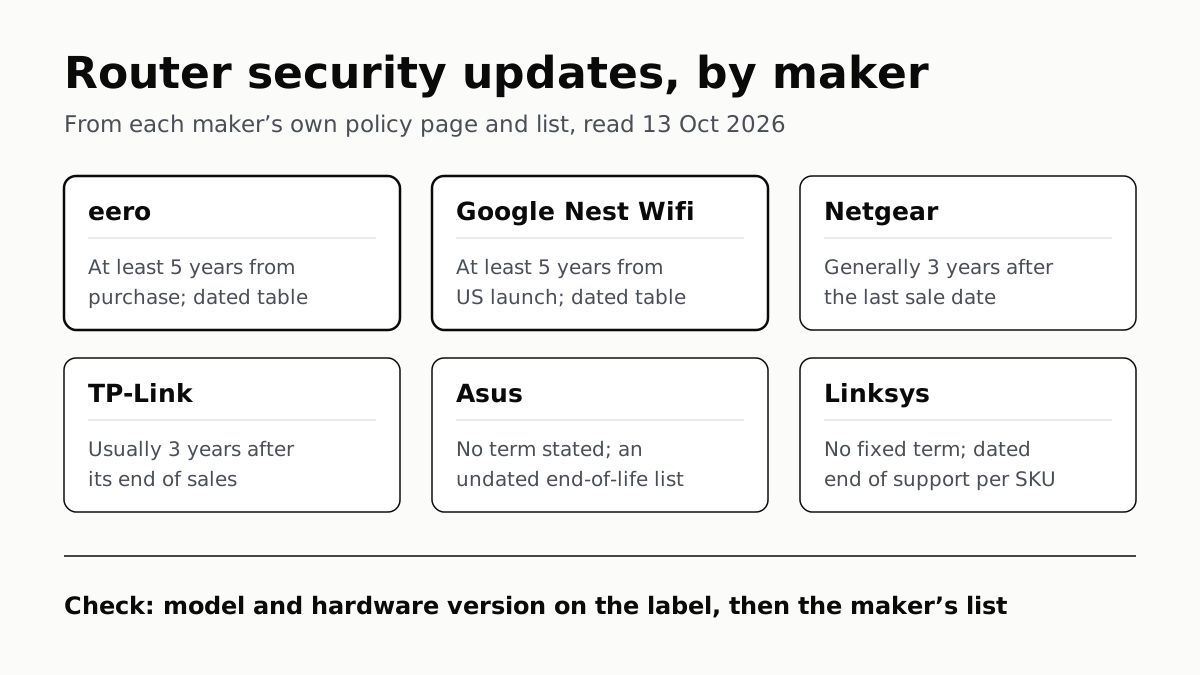
Four Router Makers Set an Update Term; Asus, Linksys Don’t
eero and Google guarantee five years at minimum; Netgear and TP-Link stop about three years after a model leaves sale.