New Fire TV Stick 4K Can Run Off the TV, Lacks Dolby Vision
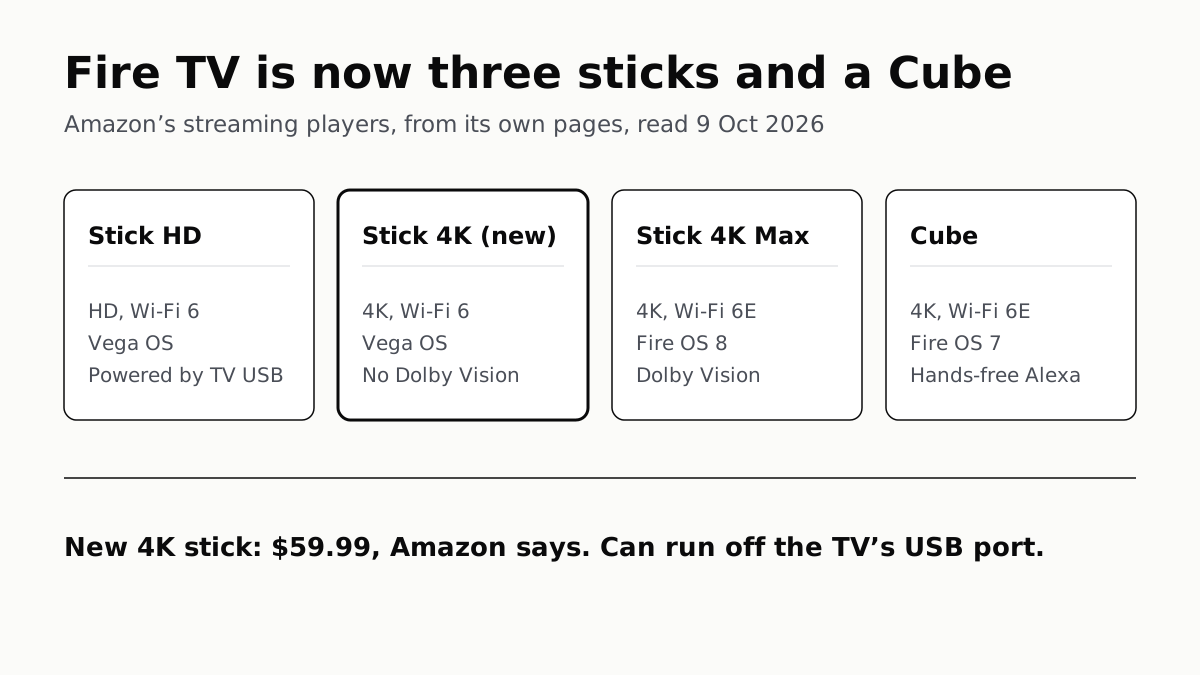
Amazon’s lineup is now three sticks and the Cube. Pick the 4K Max instead if your TV does Dolby Vision or you want Wi-Fi 6E.
If you buy through our links, we may earn a commission. It never affects our verdicts or scores — how that works. As an Amazon Associate I earn from qualifying purchases.
Amazon pitches the new $59.99 Fire TV Stick 4K (affiliate link to Amazon, opens in a new tab) as the middle of its range, and on paper it suits a 4K TV unless that TV supports Dolby Vision: the new stick lists HDR10, HDR10+ and HLG but not Dolby Vision, so the 4K Max (affiliate link to Amazon, opens in a new tab) is the stick that keeps it. The new 4K can run off your TV’s USB port with the cable in the box. Amazon does not say how much power that port has to supply.
Amazon announced the stick on 30 September and in the same post cut its range to “three clear tiers” of stick plus the Fire TV Cube (affiliate link to Amazon, opens in a new tab). Other models, it says, “will also continue to be available while supplies last”.
The four Fire TV players, on Amazon’s own specs
| Stick HD (affiliate link to Amazon, opens in a new tab) | Stick 4K (new) (affiliate link to Amazon, opens in a new tab) | Stick 4K Max (affiliate link to Amazon, opens in a new tab) | Cube (affiliate link to Amazon, opens in a new tab) | |
|---|---|---|---|---|
| Released | 2026 | 2026 | 2023 (2nd Gen) | 2022 (3rd Gen) |
| Resolution | HD | Up to 4K at 60fps | 4K | 4K |
| HDR formats | HDR10, HDR10+, HLG | HDR10, HDR10+, HLG | HDR10, HDR10+, HLG, Dolby Vision | HDR10, HDR10+, HLG, Dolby Vision |
| Wi-Fi | Wi-Fi 6 | Wi-Fi 6 | Wi-Fi 6E | Wi-Fi 6E |
| RAM / storage | 1GB / 8GB | 1GB / 8GB | 2GB / 16GB | 2GB / 16GB |
| Software | Vega OS 1.1 | Vega OS 2.0 | Fire OS 8 | Fire OS 7 |
| Price | $39.99 at Best Buy | $59.99, Amazon says | $84.99 at Best Buy | Not read |
Specs are from Amazon’s developer device-specification pages; Best Buy prices were read on 9 October 2026. Amazon announced the Stick HD at $34.99 in April. Of the four, Amazon describes Direct Power, running off the TV’s USB port, for the Stick HD and the new Stick 4K.
Which one fits your TV
- An HD TV, a spare room or a hotel bag: the Stick HD (affiliate link to Amazon, opens in a new tab). Amazon pitches it at “the HD TV they already have” and at travel.
- A 4K TV that uses HDR10 or HDR10+: the new Stick 4K. It covers the HDR formats your TV can show, and Amazon claims it starts content “nearly 20%” faster than “a similarly priced 4K stick from another leading brand”, a figure from Amazon’s own testing.
- A 4K TV with Dolby Vision: the 4K Max, or the Cube. Check your TV’s spec sheet for the words Dolby Vision. If you are still choosing the TV itself, the TVs reviewers rate highest are listed with their scores.
- A Wi-Fi 6E router, or no way to run a cable: the 4K Max or Cube, the two with 6 GHz Wi-Fi on Amazon’s pages. If streams stall, the last hop from router to stick is worth checking before blaming the stick.
- You want to speak without the remote, or switch a cable box from Fire TV: the Cube. Its page lists a four-microphone array, an HDMI input and a 10/100 Ethernet port.
What changed from the old Fire TV Stick 4K
Three things, on Amazon’s developer pages, comparing the new stick with the Fire TV Stick 4K 2nd Gen from 2023:
- Dolby Vision is gone. The 2023 model lists it; the new one does not. Amazon’s announcement now calls Dolby Vision one of the 4K Max’s “premium features”.
- The software is different. The 2023 stick runs Fire OS 8, as does the 4K Max, whose entry on the same page lists Android 11. The new one runs Vega OS, which Amazon’s developer blog calls “Linux-based”. Amazon says it has added over 2,000 apps to Vega since its first device last year, including Spotify, Xbox and VLC. If you depend on a less common app, check it is listed for the new stick before you switch.
- RAM halves on paper, from 2GB to 1GB. Storage stays at 8GB, Wi-Fi stays at Wi-Fi 6, and the processor stays a quad-core at up to 1.7GHz. Amazon nonetheless claims apps launch “over 35% faster” than on a rival stick; we have not measured either.
On sound, the developer page lists HDMI pass-through for Dolby Atmos on the new stick, meaning it sends the Atmos stream on for a soundbar or receiver to decode. That sits oddly beside the announcement’s description of Atmos as a 4K Max feature, so if Atmos matters, check the developer page rather than the marketing line.
The new Fire TV Remote ships with it. Amazon says the remote pairs with every Fire TV streaming player launched since 2019 and will sell on its own for $14.99 from late October.
What the new stick needs from your TV
An HDMI port and, ideally, a USB port. Amazon’s developer page lists the stick’s own connectors as HDMI 2.1 and USB-C 2.0, and the included cable runs from the stick’s USB-C to the TV’s USB port. Amazon calls this Direct Power.
What Amazon does not publish is the other half: how much current the TV’s port must supply, or what happens if it supplies too little. Neither the announcement nor the developer page gives a power figure. For the Stick HD, Amazon’s April post says that if a TV has no USB port, the stick “can always be powered with a USB-C cable and a wall adapter”. The 4K announcement does not repeat that line.
Plan on buying the adapter if you need one. Best Buy’s listing marks the wall adapter and the 5ft cable as sold separately, and lists only a power cable in the box.
One menu to visit after setup: our guide to switching off TV viewing trackers gives Amazon’s path to the Fire TV privacy settings. Amazon also dates its security updates by model; how long each TV platform says it keeps updating lists its commitment.
When it ships, and where
Amazon says the new Fire TV Stick 4K is $59.99 and began shipping on 30 September in the US, Canada, Japan, Mexico, the UK, Germany, France, Italy, Spain, Switzerland and Australia, with more countries in late October. Best Buy listed it at $59.99 on 9 October.
Engadget, reporting on 30 September, listed the range the day before as five players: the Stick HD, 4K Select, 4K Plus, 4K Max and Cube. The 4K Select and 4K Plus are the two missing from Amazon’s new list; Amazon’s own post names neither.
Questions people ask
Which Fire TV Stick should I buy in 2026?
On Amazon’s specs: the Stick HD for an HD TV or travel, the new Stick 4K for a 4K TV that uses HDR10 or HDR10+, and the 4K Max if your TV supports Dolby Vision or your router has Wi-Fi 6E. The Cube adds hands-free Alexa and an Ethernet port.
Does the new Fire TV Stick 4K support Dolby Vision?
Not according to Amazon’s developer specifications, which list HDR10, HDR10+ and HLG for it. The previous Fire TV Stick 4K, the 4K Max and the Cube all list Dolby Vision as well.
Can the Fire TV Stick 4K be powered by the TV’s USB port?
Yes. Amazon calls it Direct Power and includes a cable for the TV’s USB port. It does not say how much power the port must supply. For the Stick HD it says a USB-C cable and a wall adapter work if the TV has no USB port.
Does the new Fire TV Stick 4K come with a power adapter?
Best Buy’s listing says no: the box has the stick, the remote, a power cable, two AAA batteries and a guide, and its product image marks the wall adapter and 5ft cable as sold separately.
What is the difference between the Fire TV Stick 4K and 4K Max?
On Amazon’s developer pages the 4K Max has Dolby Vision, Wi-Fi 6E, 2GB of RAM, 16GB of storage and Fire OS 8. The new 4K has HDR10+ but no Dolby Vision, Wi-Fi 6, 1GB of RAM, 8GB and Vega OS.
Is the Fire TV Stick 4K Select discontinued?
Amazon has not used that word. Its 30 September announcement names three sticks and the Cube as the lineup and says other existing models stay available while supplies last. Engadget lists the 4K Select and 4K Plus as the two that dropped out.
How we researched this
No one at bitcritiq has handled this product. Everything here comes from published sources, listed below.
- What this cannot tell you
- Nothing here has been handled by us: this is the range on paper, and every speed figure is Amazon's own claim, measured by Amazon. Amazon does not say how much power the stick draws, whether a TV's USB port stays powered when the TV is off, or what happens if the port supplies too little, so we cannot tell you which TVs will run it from USB. Amazon's announcement does not name the 4K Max or Cube generation; the newest of each on its developer pages is the 4K Max 2nd Gen (2023) and the Cube 3rd Gen (2022), which is what the table assumes. We could not read a list price for the Cube at a retailer.
How we chose this, and what we did
- Why this subject
- Amazon announced a new Fire TV Stick 4K on 30 September 2026 and cut its streaming-player range to three sticks and the Cube, a week before Prime Big Deal Days. The owner's questions are which of the four to buy, what changed from the 4K sticks it replaces, and what the new stick needs from a TV now that it draws power from the TV's USB port.
- How we looked at it
- The lineup, prices, ship date and performance claims are from Amazon's newsroom post of 30 September 2026; the Direct Power fallback is from Amazon's Fire TV Stick HD post of 15 April 2026. Chips, RAM, storage, Wi-Fi, HDR formats and operating systems for every model are from Amazon's developer device-specification pages for streaming media players and for the Fire TV Cube, read on 9 October 2026. The absence of a USB power figure was checked against a control: the same developer page lists the stick's ports (HDMI 2.1 and USB-C 2.0) and describes Direct Power, but gives no current, voltage or wattage. Retail prices and the box contents are from Best Buy's listings, read on 9 October. Engadget is used for the before-and-after lineup, labelled as reported. Amazon's own store is not used, and no Amazon store price appears here.
What this rests on
6 claims, 5 official and 1 reported. Nothing here was measured by bitcritiq — see how we test for why. Open a claim to read the source it came from.
Amazon's stick lineup is now three tiers, the Fire TV Stick HD, Fire TV Stick 4K and Fire TV Stick 4K Max, with the Fire TV Cube above them; other existing models stay on sale while supplies last.Official
About Amazon, 30 September 2026: “Amazon is also streamlining its stick lineup to three clear tiers: Fire TV Stick HD … Fire TV Stick 4K … Fire TV Stick 4K Max … And, of course, Amazon still offers Fire TV Cube for enthusiast customers … Other existing models will also continue to be available while supplies last.”
The new Fire TV Stick 4K has 8GB of storage, a quad-core 1.7GHz processor, Wi-Fi 6 and Bluetooth 5.3, supports HDR10, HDR10+ and HLG, and outputs up to 60 frames per second.Official
About Amazon: “The Fire TV Stick 4K comes with 8 GB internal storage, a quad-core 1.7 GHz processor, and support for Wi-Fi 6, Bluetooth 5.3, and Bluetooth Low Energy. It supports HDR10, HDR10+, HLG … and features 2160p, 1080p, and 720p output resolution up to 60 frames per second.” Amazon's developer page lists Memory (RAM) “1GB x32 LPDDR4-3733” and OS “Vega OS version: OS 2.0”.
The new stick can be powered from a TV's USB port with the included cable; Amazon gives no figure for what the port must supply.Official
About Amazon: “Fire TV Stick 4K features Direct Power that lets customers power the device using a TV's USB port with the included cable.” The developer page lists “Connectors / Ports: HDMI 2.1, USB-C 2.0” and “Direct Power – plug it into your TV's USB port … No wall adapter needed”, with no current, voltage or wattage.
The new Fire TV Stick 4K is $59.99 and began shipping on 30 September 2026 in the US and ten other countries.Official
About Amazon: “Fire TV Stick 4K is $59.99 and starts shipping today in the United States, Canada, Japan, Mexico, United Kingdom, Germany, France, Italy, Spain, Switzerland, and Australia, with additional countries following in late October.” Best Buy listed it at $59.99 on 9 October 2026.
Dolby Vision is listed for the Fire TV Stick 4K Max (2nd Gen) and the Fire TV Cube (3rd Gen), and was listed for the Fire TV Stick 4K (2nd Gen), but not for the new Fire TV Stick 4K.Official
Amazon's developer pages, HDR rows: Fire TV Stick 4K – 3rd Gen (2026) “HDR10, HDR10+, HLG”; Fire TV Stick 4K Max – 2nd Gen (2023) “HDR10, HDR10+, HLG, Dolby Vision”; Fire TV Stick 4K – 2nd Gen (2023) “HDR10, HDR10+, HLG, Dolby Vision”; Fire TV Cube – 3rd Gen (2022) “HDR10, HDR10+, HLG, Dolby Vision”.
A wall adapter and long cable for the new stick are sold separately; the box has a power cable for the TV's USB port.Reported
Best Buy's listing, read 9 October 2026, gives the box contents as “Fire TV Stick 4K, Fire TV Remote, Power Cable, 2 AAA batteries, Quick Start Guide”, and its product image reads “Included: Power directly from your TV — Short cable (1.3ft). Sold separately: Power from wall outlet — Long cable (5ft), Wall adapter”.
Sources 9
- Fire TV launches all-new, faster 4K stick and new remote design — About Amazon, 30 September 2026Officialaccessed Oct 9, 2026
- Amazon launches its slimmest ever streaming device, the Fire TV Stick HD — About Amazon, 15 April 2026Officialaccessed Oct 9, 2026
- Device Specifications: Fire TV Streaming Media Player — Amazon DeveloperOfficialaccessed Oct 9, 2026
- Device Specifications: Fire TV Cube — Amazon DeveloperOfficialaccessed Oct 9, 2026
Show 5 more · 1 official or standards
- Getting started with Vega OS development — Amazon Appstore Developer Blog, 13 July 2026Officialaccessed Oct 9, 2026
- Amazon Fire TV Stick 4K (newest model) — Best Buyaccessed Oct 9, 2026
- Amazon Fire TV Stick 2nd Gen 4K Max — Best Buyaccessed Oct 9, 2026
- Amazon Fire TV Stick 2nd Gen HD (2026) — Best Buyaccessed Oct 9, 2026
- Amazon simplifies its Fire TV streaming device lineup — Engadget, 30 September 2026accessed Oct 9, 2026
Pass it on
Know someone weighing this up? Send them the answer.
bitcritiq.com/hq52The link is permanent: it opens this article for good, even if the title changes.
No email, no account
Follow bitcritiq
Every new article, in whatever reader you already use.
Subscribe by RSSAll the ways to follow
Using Chrome on Android? Open the browser menu and tap Follow. New articles then turn up in the Following tab in Discover.
read next
A Soundbar Works Without a Sub; Add One for the Lowest Bass
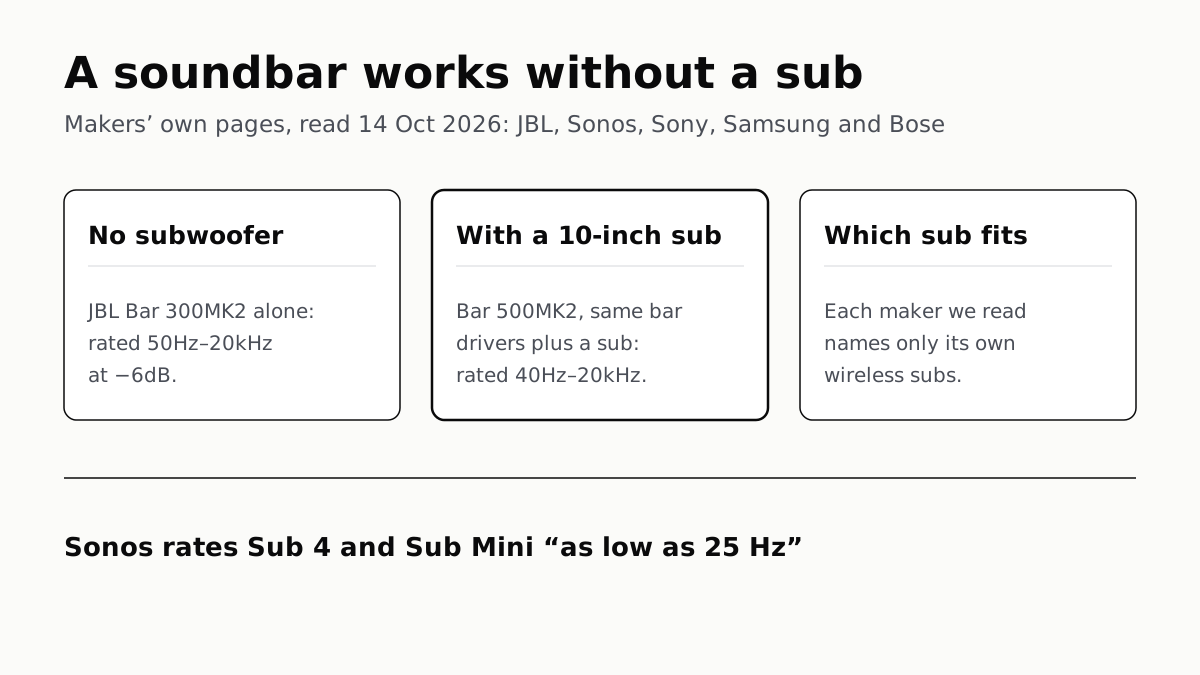
In JBL’s specs, the same bar drivers reach 50Hz alone and 40Hz with a 10-inch sub. Sony, Sonos and Samsung list only their own subs.
Seatback Bluetooth: United on 800+ Planes, Others Starting
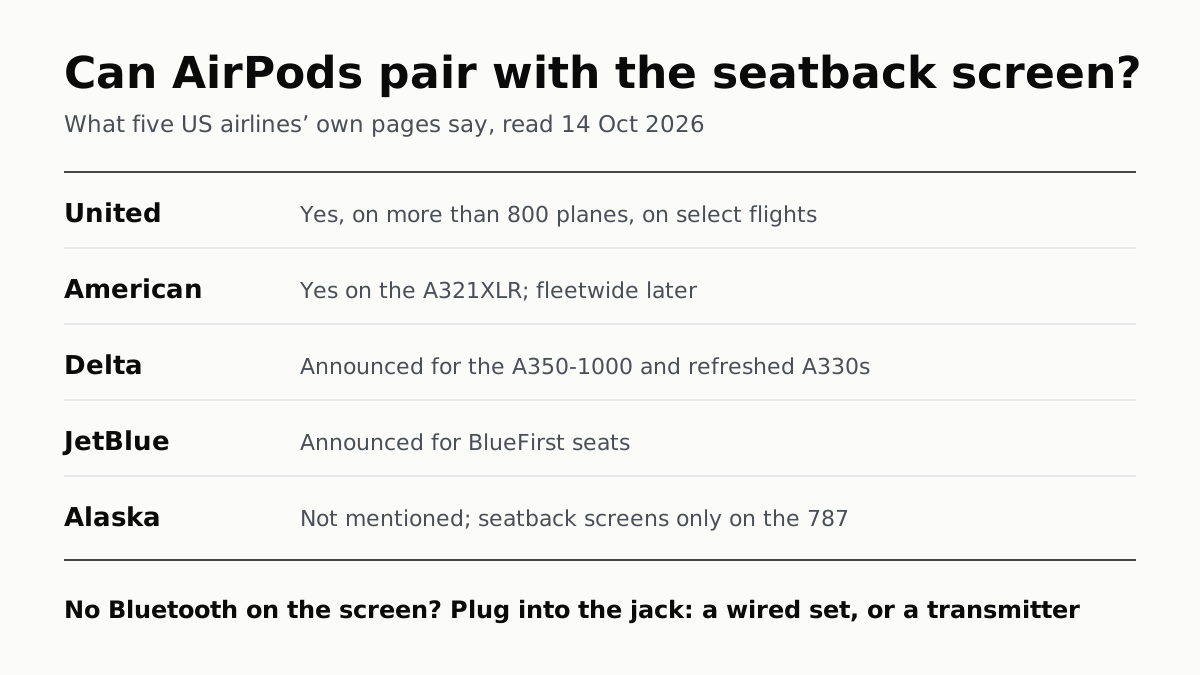
American’s A321XLR has it and JetBlue and Delta have announced it. Without it, the seatback jack needs a wired plug or a transmitter.
HDR10 Is the Fallback; Dolby Vision and HDR10+ Are Upgrades
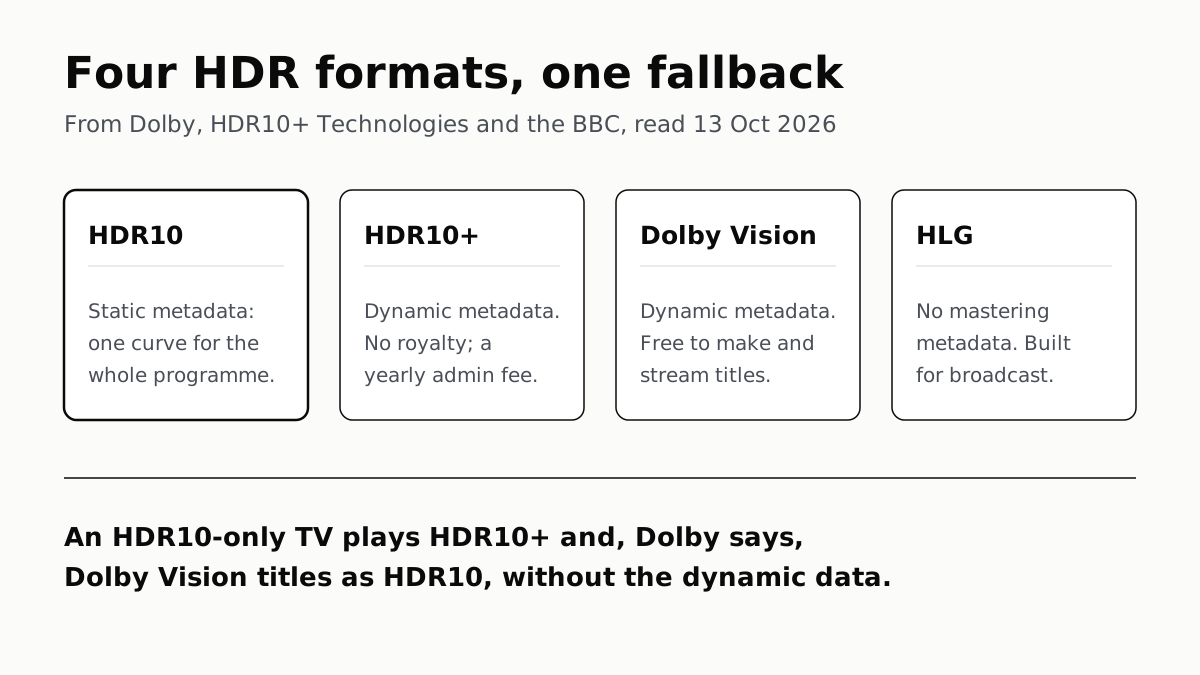
Samsung’s S90F lists HDR10+, not Dolby Vision; LG’s C6 the reverse. TCL’s QM7K lists both.
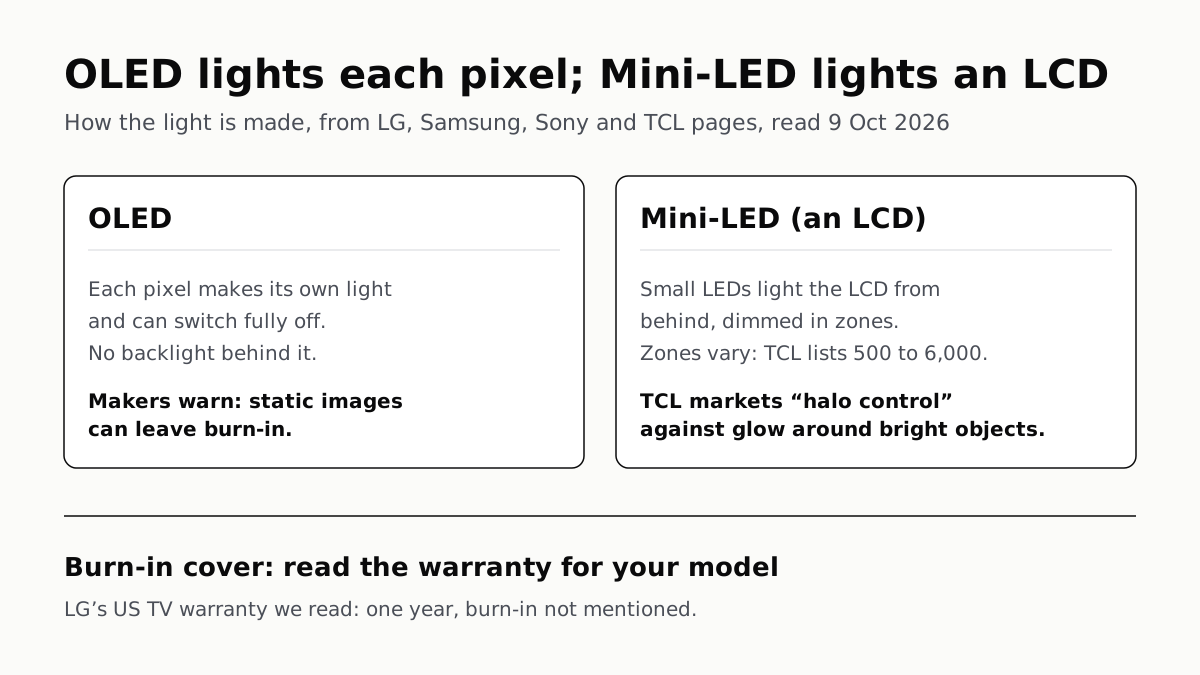
OLED Lights Each Pixel; Mini-LED Lights an LCD Behind It
Self-lit pixels give OLED its blacks and a burn-in risk; a zoned backlight gives Mini-LED brightness and a halo risk.