The Word "Buy" Does Not Mean Buy
Sony's terms say using the word purchase "does not mean or imply any transfer of ownership". Valve's say the same thing shorter.
If you buy through our links, we may earn a commission. It never affects our verdicts or scores — how that works. As an Amazon Associate I earn from qualifying purchases.
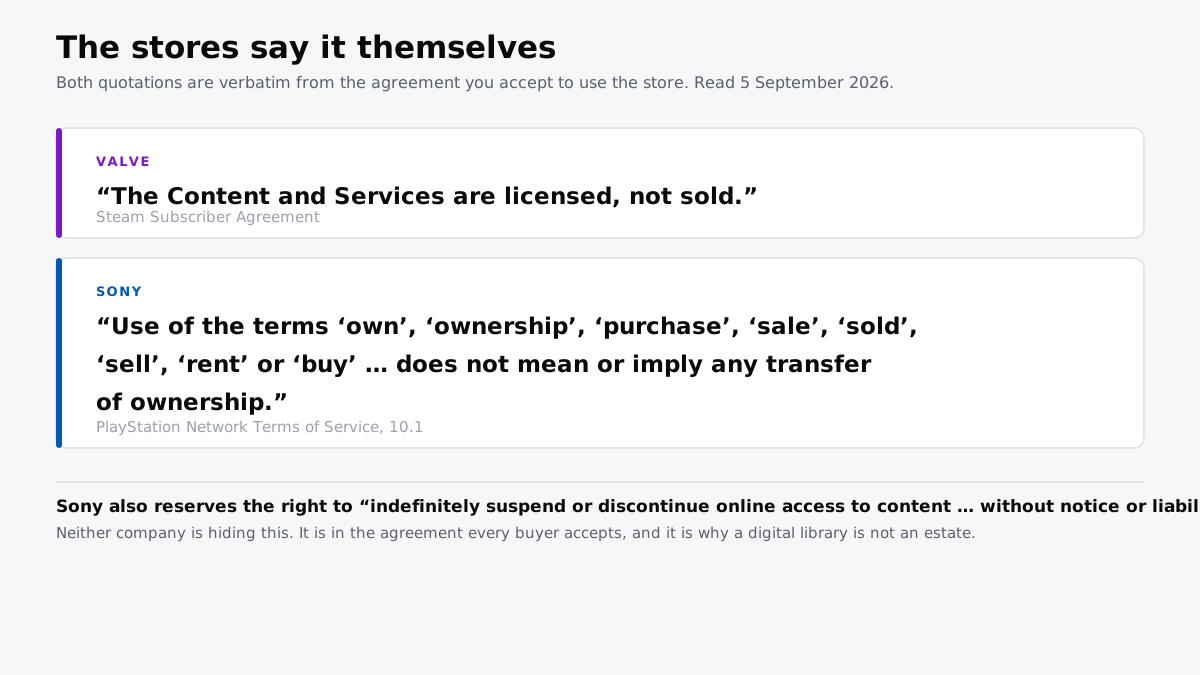
Both storefronts tell you, in their own agreements, that the button marked buy does not do what the word means. Sony’s terms state that using the words purchase, sale, sold, sell or buy “does not mean or imply any transfer of ownership”. Valve puts it in six words: “The Content and Services are licensed, not sold.”
Neither company is hiding this. It is the agreement everybody accepts and nobody reads.
What the licence actually is
Sony’s wording is the more complete of the two, and it names three properties in a single sentence. The licence is:
- Non-exclusive — you are one of many holders, not the owner of a copy
- Revocable — it can be withdrawn
- Non-transferable — it cannot be given, sold or inherited
Valve says the same about transfer in a harder form: subscriptions are not transferable, and even if your access is terminated, the original activation key cannot be registered to any other account. The licence does not return to the pool when it stops being yours. It stops existing.
The clause about switching the servers off
This is the part with practical consequences beyond the philosophical ones. Sony reserves the right to “indefinitely suspend or discontinue online access to content or data associated with your Account at any time … without notice or liability”, and states it makes no commitment to keep online servers available for content that needs them.
Read plainly, that is the mechanism by which a game you paid for can stop working without anybody breaking a promise, because no promise of permanence was made.
Why this lands hardest in December
A licence is the one kind of purchase you cannot wrap.
You cannot buy a digital game, decide it is not right, and pass it to somebody else. You cannot hand your library on. You cannot lend the one you finished. The gifting flows the stores provide are a separate product, bought as a gift from the start, and they are the only route — which is also why the refund clock runs from your purchase rather than from the unwrapping.
What this is not
It is not a scandal, and it is not new. Software has been licensed rather than sold for as long as software has been sold, and the same is true of the film you “buy” from any streaming store.
What has changed is that the physical alternative has mostly gone, so the licence is no longer the cheap convenient option next to a disc. It is the option. Understanding what it is worth is therefore ordinary consumer literacy rather than activism.
What to actually do
- Buy a gift card rather than a game as a gift. It is the only version of this transaction the recipient actually controls.
- Keep the disc where a disc still exists, if resale, lending or handing it on matters to you. That is the entire practical difference. Keeping the machine that reads it is becoming the harder half: two hi-fi makers have dropped a disc product because the drive supply ended.
- Do not plan on a digital library as an asset. It is non-transferable by its own terms and it does not survive the account.
- Treat an online-dependent game as a subscription with no renewal date. The terms make no commitment to keep the servers up, and that is worth knowing before rather than after.
- Read the two sentences. They are quoted in full above, and they are the whole of what you agreed to.
- If you bought on the PlayStation Store between 2019 and 2023, a class-action settlement may owe you a little store credit, and Sony’s settlement has no claim form.
- Keep the disc if you claim Xbox’s digital copy of it. Microsoft’s own rules tie that licence to the disc: Xbox’s disc-to-digital copy lasts while you keep it.
How we researched this
No one at bitcritiq has handled this product. Everything here comes from published sources, listed below.
- What this cannot tell you
- This is a description of contract terms, not legal advice, and consumer protection law in some jurisdictions modifies what those terms can achieve. It covers two storefronts; others differ in wording though rarely in substance. It does not attempt to say how often access is actually withdrawn, which would need data neither company publishes. And it takes no view on whether the arrangement is reasonable, only on what it says, because the reasonableness question depends on what you thought you were buying.
How we chose this, and what we did
- Why this subject
- Digital games are the default way people buy games and the most common gift in the category, and the terms governing them are written in plain language that almost nobody reads. Both major storefronts state the position explicitly rather than burying it, which means this can be reported by quotation rather than by interpretation. It matters at Christmas specifically, because the thing you cannot do with a licence is give it to somebody.
- How we looked at it
- Every quotation is taken verbatim from the agreement itself: the Steam Subscriber Agreement and the PlayStation Network Terms of Service, both read on 5 September 2026. No commentary or news write-up is used as a source for what the terms say.
What this rests on
6 claims, all official. Nothing here was measured by bitcritiq — see how we test for why. Open a claim to read the source it came from.
Valve states in its subscriber agreement that content is licensed rather than sold.Official
The Steam Subscriber Agreement states: "The Content and Services are licensed, not sold."
Sony states that its use of the word purchase does not imply any transfer of ownership.Official
Section 10.1 of the PlayStation Network Terms of Service states that use of the terms own, ownership, purchase, sale, sold, sell, rent or buy does not mean or imply any transfer of ownership.
Sony describes the licence as revocable and non-transferable.Official
Section 10.2 states all content is licensed on a non-exclusive and revocable basis for personal, private, non-transferable, non-commercial, limited use.
Sony reserves the right to discontinue access without notice or liability.Official
Section 13 states it may indefinitely suspend or discontinue online access to content or data associated with an account at any time, without notice or liability, and makes no commitment to keep online servers available.
A Steam licence cannot be moved to another account even after it is terminated.Official
The Steam Subscriber Agreement states subscriptions are not transferable and that even if access is terminated, the original activation key cannot be registered to another account.
Neither company conceals this; both state it in the agreement every buyer accepts.Official
Both passages appear in the standard terms of service presented at account creation and purchase.
Sources 4
- Steam Subscriber Agreement — ValveOfficialaccessed Sep 5, 2026
- PlayStation Network Terms of Service — Sony Interactive EntertainmentOfficialaccessed Sep 5, 2026
- Steam's Refund Window Shuts Before Christmas — bitcritiqaccessed Sep 5, 2026
- What a Console Costs After You Buy It — bitcritiqaccessed Sep 5, 2026
No email, no account
Follow bitcritiq
Every new article, in whatever reader you already use.
Subscribe by RSSAll the ways to follow
Using Chrome on Android? Open the browser menu and tap Follow. New articles then turn up in the Following tab in Discover.
read next
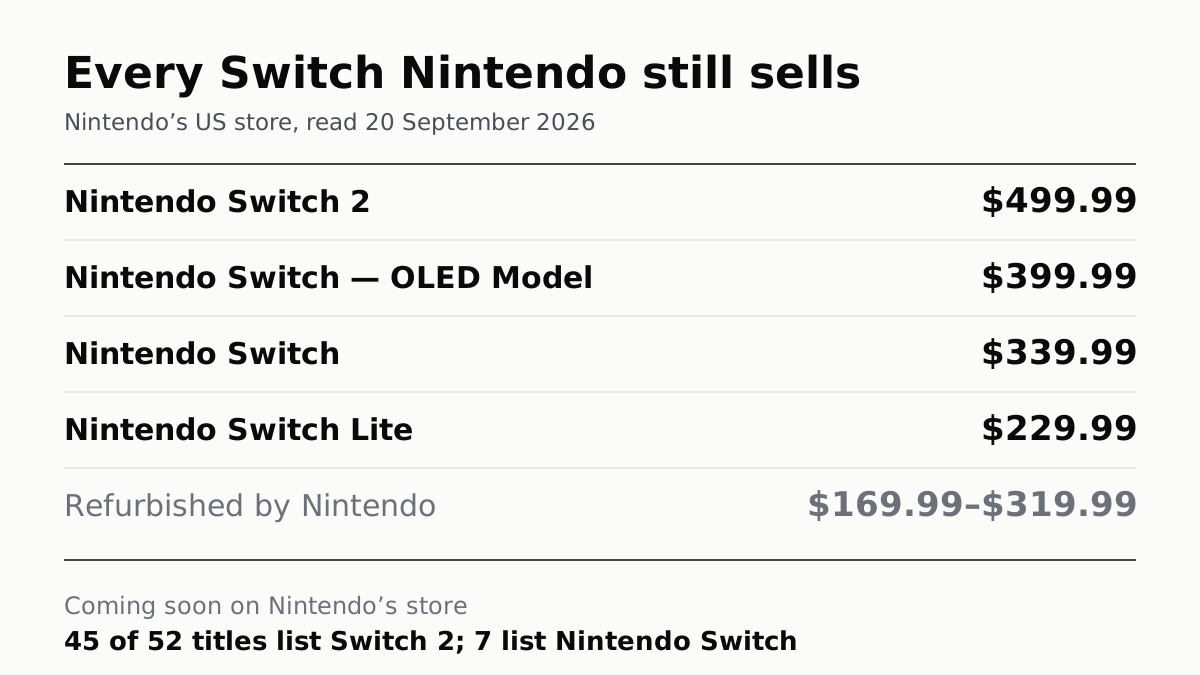
Nintendo Still Sells Three Old Switch Models, From $229.99
The OLED is $399.99, a hundred under a Switch 2. Of the 52 games Nintendo lists as coming soon, seven play on the original.
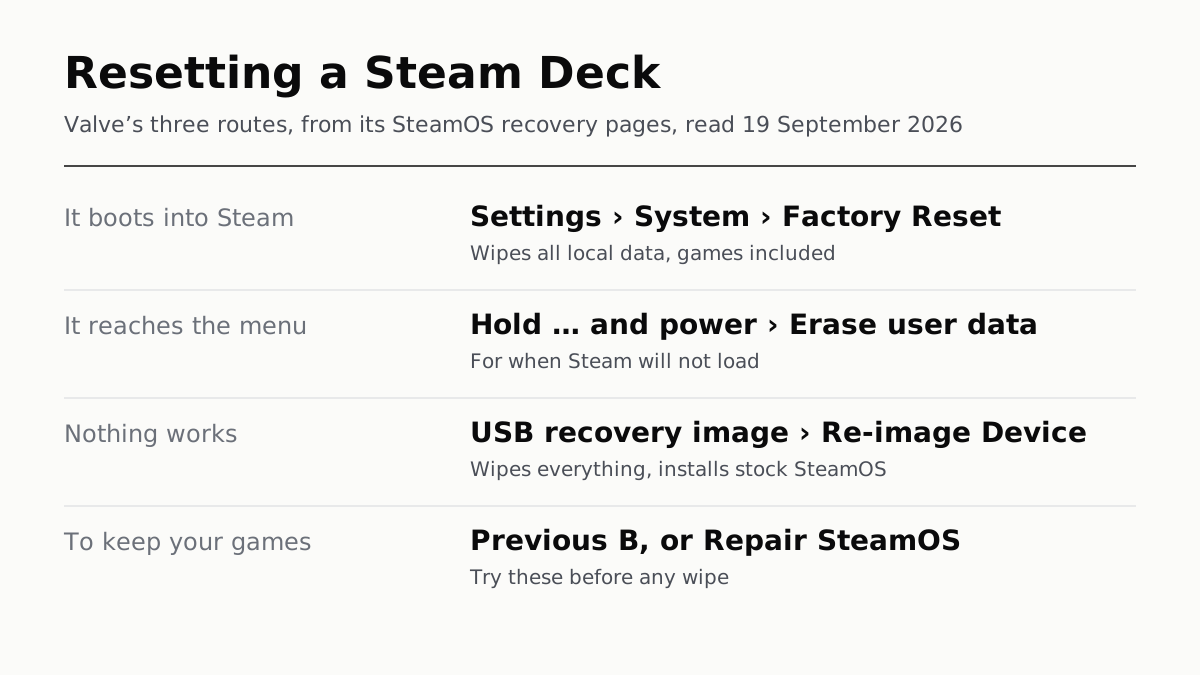
Resetting a Steam Deck Wipes Every Game and Local Save
If it boots, the reset is in Settings, under System. If not, Valve has two more routes, and two repairs that keep your games.
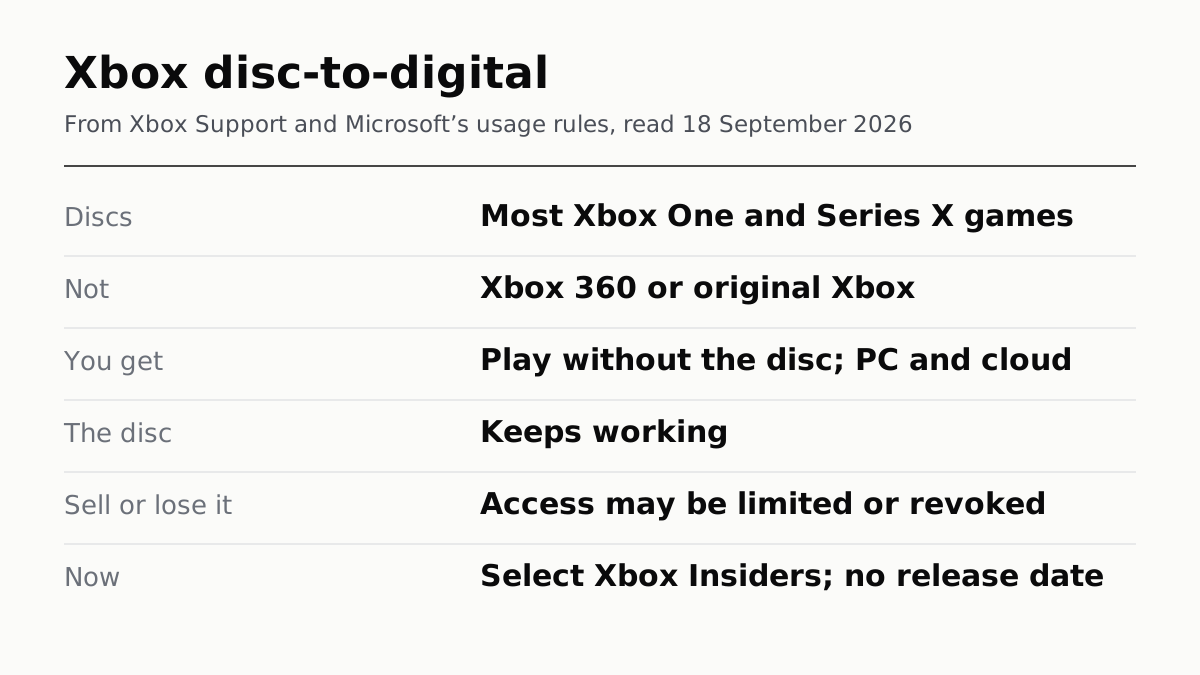
Xbox's Digital Copy of Your Disc Lasts While You Keep It
Disc-to-digital gives Xbox One and Series X discs a digital licence. Sell or lose the disc and Microsoft says access may be revoked.
Proton, FEX and Lepton: How Steam Frame Runs Your Games
Steam Frame's Arm chip runs Windows games through two translation layers, Android ones in a container. Its badge ignores streaming.