Fitbit Edge: $179.99, Out 27 Oct, User-Replaceable Battery
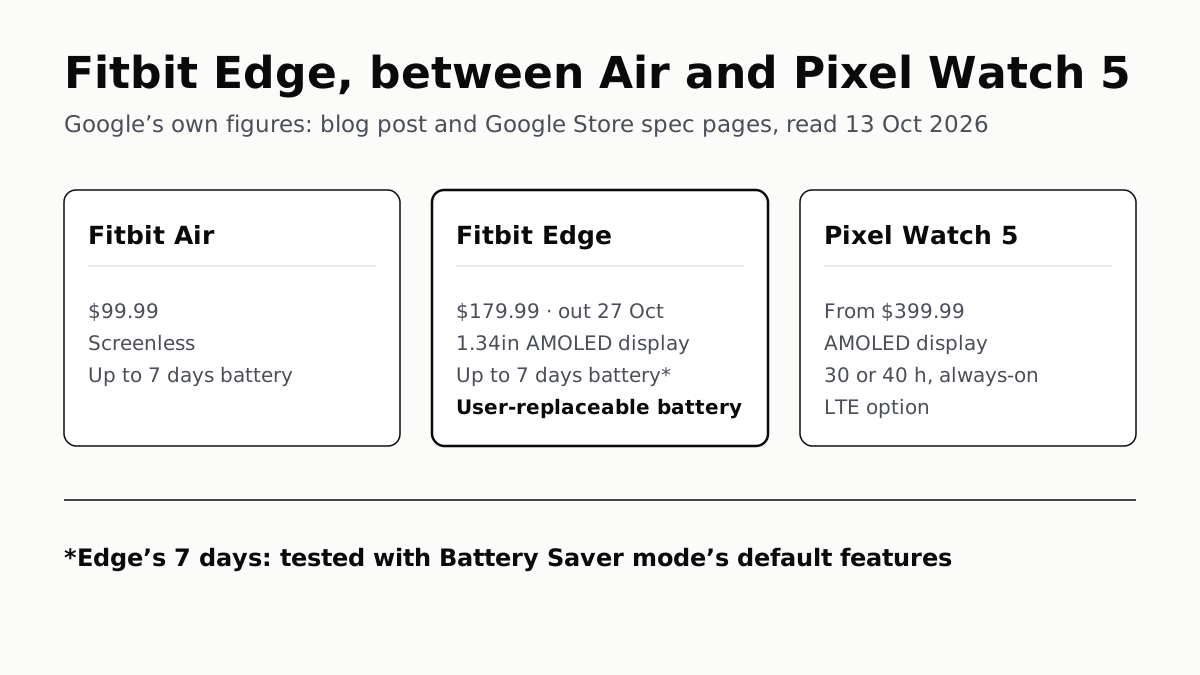
It sits between the screenless $99.99 Air and the $399.99 Pixel Watch 5; its 7-day figure assumes Battery Saver defaults.
If you buy through our links, we may earn a commission. It never affects our verdicts or scores — how that works. As an Amazon Associate I earn from qualifying purchases.
The Google Fitbit Edge is a $179.99 fitness tracker with a 1.34-inch AMOLED screen, on pre-order now and on shelves on 27 October 2026. Google rates it at up to seven days per charge and calls it its first repairable fitness tracker, with a user-replaceable battery. It works with Android 11 or later and iOS 16.4 or later; it does not need a subscription to work, though some features, including the Google Health Coach, need Google Health Premium.
Where it sits: Air, Edge, Pixel Watch 5
Google places the Edge between “an advanced smartwatch like Pixel Watch and the quiet simplicity of a band like Fitbit Air”. On Google’s own spec pages, the difference is mostly a screen and GPS over the Air, and a lower price, a longer rated battery and no cellular option against the Pixel Watch 5 (affiliate link to Amazon, opens in a new tab).
| From Google’s spec pages, 13 Oct 2026 | Fitbit Air (affiliate link to Amazon, opens in a new tab) | Fitbit Edge (affiliate link to Amazon, opens in a new tab) | Pixel Watch 5 (affiliate link to Amazon, opens in a new tab) |
|---|---|---|---|
| Price (Google Store, US) | $99.99 | $179.99 | From $399.99 |
| Display | None (Google calls it “screenless”) | 1.34in AMOLED, always-on | AMOLED LTPO, up to 3000 nits, always-on |
| Rated battery | Up to 7 days | Up to 7 days (Battery Saver defaults) | 30 h (41mm) or 40 h (45mm) with always-on display |
| Full charge | 90 minutes | About 90 minutes | About 45 min (41mm) or 60 min (45mm) |
| Battery user-replaceable | Not stated | Yes | Not stated |
| GPS | Not listed | GPS, Galileo | Dual-frequency GPS, Galileo, Glonass |
| Cellular | Not listed | Not listed (Bluetooth 5.4) | 4G LTE option |
| Weight without band | 5.2g | 17.7g | 31.0g (41mm) or 36.7g (45mm) |
| Phones | Android 11+, iOS 16.4+ | Android 11+, iOS 16.4+ | Android 12+; no iPhone listed |
| Status | On sale | Pre-order; shelves 27 Oct | On sale |
On these pages the Edge is the cheapest of the three with a display and built-in GPS. The Pixel Watch 5 is the one with an LTE option and a two-size case; the Edge is the one Google lists for an iPhone owner who wants a display. If the phone you carry is the deciding question, our smartwatch shortlist starts from exactly that.
The seven-day figure has a condition
Google’s spec page says “up to 7 days of battery life”, and its footnote says the test used a median user’s profile “across a mix of the use of features that are default in Battery Saver mode”. Google’s battery help page gives the Edge up to 2 days with the always-on display and up to 10 hours of continuous GPS.
Charging is quick by Google’s numbers: about 90 minutes from empty to full, and when the battery is low, five minutes for up to a day of use. Both figures assume a 30W adapter, which is sold separately; the box has the USB-C cable. The help page adds that the Edge powers itself down at 4 to 5 percent “to protect your battery’s long term health”.
What “replaceable battery” means here
The spec page states it plainly: “Google Fitbit Edge has a user-replaceable battery”, from a 65mAh cell. Google’s help page sets out the job: 1IP and 2IP Torx screwdrivers, anti-static tweezers and gloves, safety glasses and “a sand bucket in case of thermal venting”. It also says battery replacement “is currently only available for Google Fitbit Edge” among its Fitbit devices, and that options vary by region.
Two things Google does not say: what a replacement battery costs, and where to buy one. And its water-resistance footnote matters to anyone who opens the case: the 5 ATM and IP68 ratings “will diminish or be lost over time due to normal wear and tear, device repair, disassembly or damage”. Apple and Samsung run their own official self-repair programmes; Google’s Edge page names the parts and tools but no shop.
Display, size and finishes
The screen is 1.34 inches, always-on, and Google says it has 46% more viewing area than its previous trackers. The case measures 39.22 × 25.56mm and 11.58mm thick and weighs 17.7g without a band; the housing is recycled aluminum. It has one mechanical side button.
Four finishes ship with a silicone Active Band in small and large: Obsidian (matte black), Fog (silver), Olive (satin pyrite) and Canyon (gold). Google’s pages disagree on two details. The blog calls the screen “Hybrid OLED” where the spec page says “AMOLED”, and the blog counts “more than 50 exercise modes” where the spec page lists “40+”. We have used the spec page in the table.
Phones, account and subscription
The Edge needs a Google Account and the Google Health app on Android 11 or later or iOS 16.4 or later. Google’s footnote says “some features require a Google Health Premium subscription (sold separately)”; the Google Health Coach is one of them. Three months of Premium come with the Edge, and the Google Store lists Premium “from $9.99” without stating the period on that page.
Health features appear on Google’s page under its own names, such as the Health Guardian features; bitcritiq does not assess health or medical capability, so they are outside this page. For what the same launch season brought to Google’s phones, see the Pixel 11 on paper.
Questions people ask
When does the Fitbit Edge come out?
Google says it will be on shelves on 27 October 2026. Pre-orders opened on 12 October through the Google Store and retail partners.
How much is the Fitbit Edge?
$179.99 in the US, from the Google Store. The Stephen Curry Special Edition is $219.99. That puts it $80 above the $99.99 Fitbit Air and $220 below the Pixel Watch 5, which starts at $399.99.
Does the Fitbit Edge work with an iPhone?
Yes, according to Google: it works with most phones running iOS 16.4 or later, as well as Android 11 or later, through the Google Health app and a Google Account. The Pixel Watch 5’s spec page names Android 12 or newer and no iPhone.
Does the Fitbit Edge need a subscription?
Not to work. Google says some features need Google Health Premium, sold separately, including the Google Health Coach. Three months of Premium come with the Edge. The Google Store lists Premium “from $9.99” without saying per what period on that page.
Can you replace the Fitbit Edge battery yourself?
Google lists it as user-replaceable and publishes a procedure that needs 1IP and 2IP Torx screwdrivers and anti-static tools. Google warns that repair or disassembly can reduce water and dust resistance, and does not say what a replacement battery costs.
How long does the Fitbit Edge battery last?
Google says up to 7 days, tested with the features that are default in Battery Saver mode. Its battery help page gives up to 2 days with the always-on display and up to 10 hours of continuous GPS. A full charge takes about 90 minutes.
Does the Fitbit Edge have LTE?
No cellular connection appears on Google’s spec page, which lists Bluetooth 5.4 and built-in GPS. Among Google’s wearables, the Pixel Watch 5 is the one with a 4G LTE option.
How we researched this
No one at bitcritiq has handled this product. Everything here comes from published sources, listed below.
- What this cannot tell you
- We have not worn a Fitbit Edge; it is not on sale until 27 October and every figure here is Google's claim, tested on pre-production hardware. Google's own pages disagree on two points: the blog calls the screen 'Hybrid OLED' and the spec page 'AMOLED', and the blog counts 'more than 50 exercise modes' where the spec page says '40+'. Google does not say what a replacement battery costs or where to buy one, and the Google Health Premium store page shows 'From $9.99' without a billing period. Google gives no release date on the Air or Pixel Watch 5 spec pages; both show as on sale on the Google Store. This page does not assess any health, sleep or fitness feature.
How we chose this, and what we did
- Why this subject
- Google announced the Fitbit Edge on 12 October 2026 and The Verge, Ars Technica and Engadget covered it the same day; no bitcritiq page mentioned it. The buyer's questions are price, date, what it does that the Fitbit Air does not, how it differs from the Pixel Watch 5, whether it works with an iPhone, what the subscription is for, and what Google means by a replaceable battery. This page answers those from the hardware and service side only: bitcritiq does not cover health or medical capability, so health features appear only by Google's own names.
- How we looked at it
- Every figure is from Google, read on 13 October 2026: the blog.google announcement of 12 October with its numbered footnotes (read from the collapsed 'More Information' section), the Google Store tech specs pages for Fitbit Edge, Fitbit Air and Pixel Watch 5, the Google Store home and Google Health Premium pages for prices, and Google Health Help 14226518 on battery life and battery replacement. Absence statements are controlled: the Edge spec page's Connectivity section lists Bluetooth 5.4 and GPS and no cellular, where the same section on the Pixel Watch 5 page lists 4G LTE; the Pixel Watch 5 compatibility line names Android 12 and no iPhone, where the Edge's line names both Android 11 and iOS 16.4. The Air spec page lists price, battery, charging, water rating and phone versions, and no GPS or cellular line, so those cells read 'not listed'.
What this rests on
6 claims, all official. Nothing here was measured by bitcritiq — see how we test for why. Open a claim to read the source it came from.
The Fitbit Edge costs $179.99, is on pre-order now and reaches shelves on 27 October; the Stephen Curry Special Edition is $219.99.Official
Google's announcement: 'Google Fitbit Edge, which retails for $179.99, is now available for pre-order on the Google Store and through retail partners. It will be on shelves October 27.' and the Special Edition is 'available for $219.99'. The Google Store lists it 'From $179.99' with a Pre-order button.
Google rates the Edge at up to seven days per charge, measured with the features that are default in Battery Saver mode.Official
Spec page: 'Up to 7 days of battery life'. Footnote 6: testing used 'a median Fitbit Edge user battery usage profile across a mix of the use of features that are default in Battery Saver mode'. Help 14226518: with always-on display, 'Edge, Luxe, Sense, and Versa 3 have a battery life of up to 2 days'; continuous GPS, 'Edge and Ionic has a battery life of up to 10 hours'.
The Edge's battery is user-replaceable, and Google publishes the tools for doing it.Official
Spec page: 'Google Fitbit Edge has a user-replaceable battery.' Help 14226518, 'Replace your Google Fitbit Edge battery': '1IP Torx screwdriver and a 2IP Torx screwdriver', ESD tweezers and gloves, safety glasses and 'a sand bucket in case of thermal venting'; 'Battery replacement is currently only available for Google Fitbit Edge.'
The Edge works with Android 11 or later and iOS 16.4 or later, and needs a Google Account and the Google Health app.Official
Spec page: 'Works with most phones running Apple iOS 16.4 or higher' and 'Android 11 or newer'; 'Requires Google Account and Google Health app.'
The Edge does not need a subscription to work, but some features, including Google Health Coach, need Google Health Premium; three months come with the tracker.Official
Announcement footnote 2: 'Some features require a Google Health Premium subscription (sold separately).' Footnote 1 on Google Health Coach: 'Requires Google Health Premium subscription (sold separately)'. 'You'll get three months of Google Health Premium on us when you purchase Google Fitbit Edge.'
The Edge has a 1.34-inch always-on AMOLED display and lists Bluetooth 5.4 and GPS, with no cellular option.Official
Spec page, Display: '1.34in / 34mm', 'Always-on display', 'AMOLED color display'. Connectivity: 'Bluetooth® 5.4', 'GPS, Galileo'. The Pixel Watch 5 spec page lists '4G LTE and UMTS' in the same section.
Sources 7
- Google Fitbit Edge: Our all-new smartest fitness tracker ever — Google, 12 October 2026Officialaccessed Oct 13, 2026
- Google Fitbit Edge Tech Specs — Google StoreOfficialaccessed Oct 13, 2026
- Google Fitbit Air Tech Specs — Google StoreOfficialaccessed Oct 13, 2026
- Google Pixel Watch 5 Tech Specs — Google StoreOfficialaccessed Oct 13, 2026
Show 3 more · 3 official or standards
- Extend your Fitbit device's battery life — Google Health Help 14226518Officialaccessed Oct 13, 2026
- Google Health Premium — Google StoreOfficialaccessed Oct 13, 2026
- Google Store home page (US)Officialaccessed Oct 13, 2026
Pass it on
Know someone weighing this up? Send them the answer.
bitcritiq.com/4xb6The link is permanent: it opens this article for good, even if the title changes.
No email, no account
Follow bitcritiq
Every new article, in whatever reader you already use.
Subscribe by RSSAll the ways to follow
Using Chrome on Android? Open the browser menu and tap Follow. New articles then turn up in the Following tab in Discover.
read next
Chargers Rated 100–240V Need Only a Plug Adapter Abroad
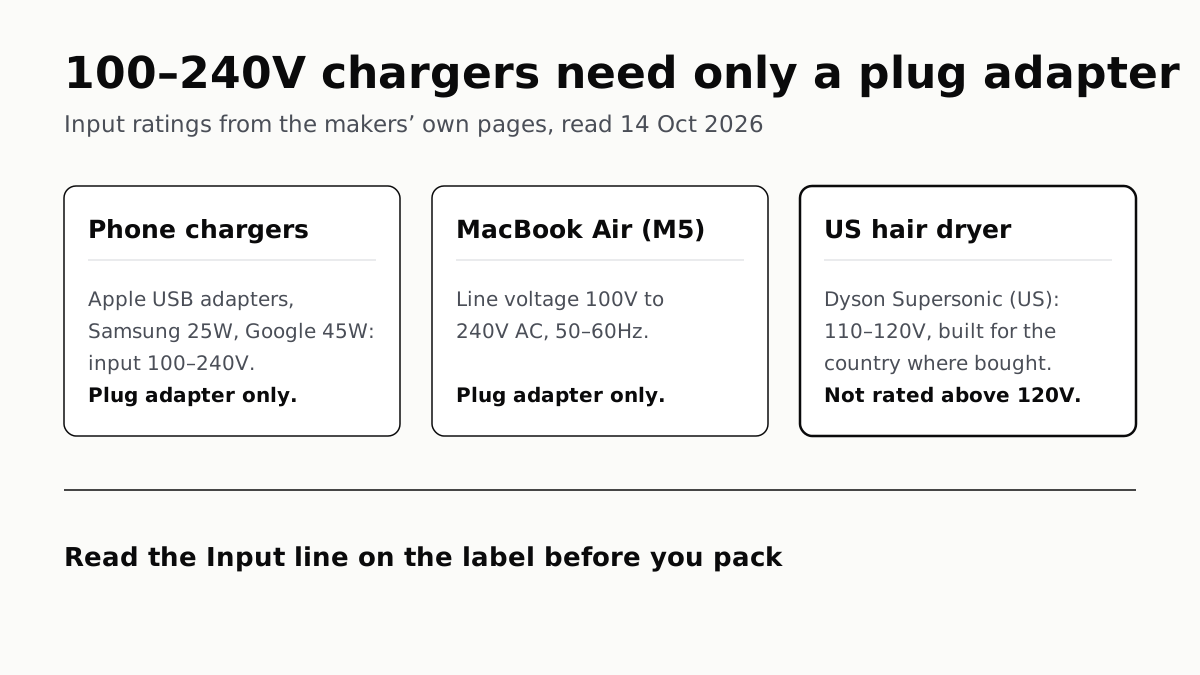
Apple, Samsung and Google rate their chargers, and the MacBook Air, for 100–240V. A hair dryer built for 110–120V is a different case.
Send Your AirTag Link to United, Delta, American, JetBlue
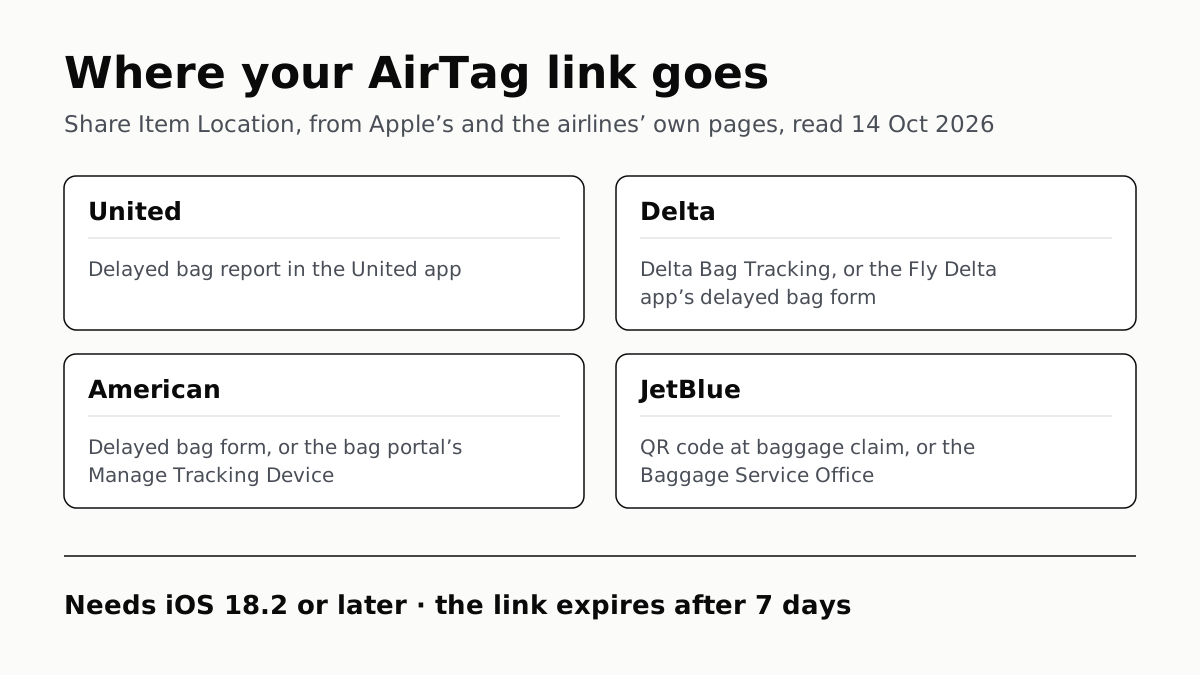
Find My’s Share Item Location makes a seven-day link a bag agent can open. Apple says more than 50 airlines accept it.
Family Link Works From an iPhone. Screen Time Needs Apple
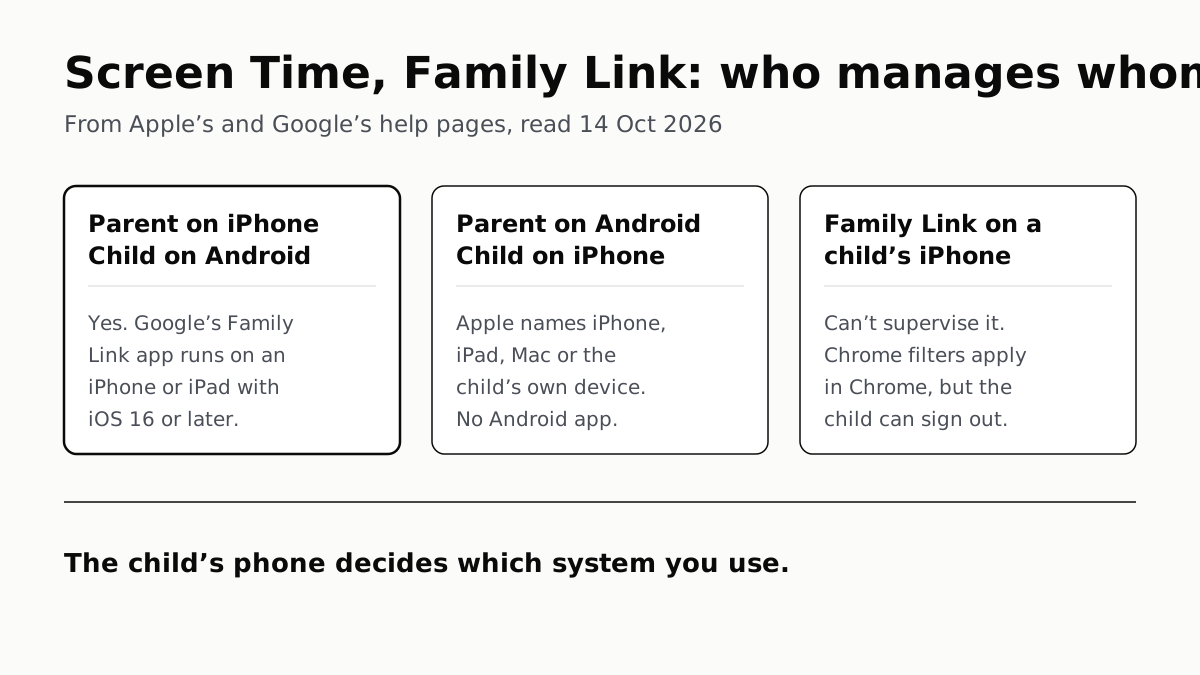
Neither app supervises the other maker’s phones. App limits, downtime, web filters and more, side by side, with iOS 27’s changes.
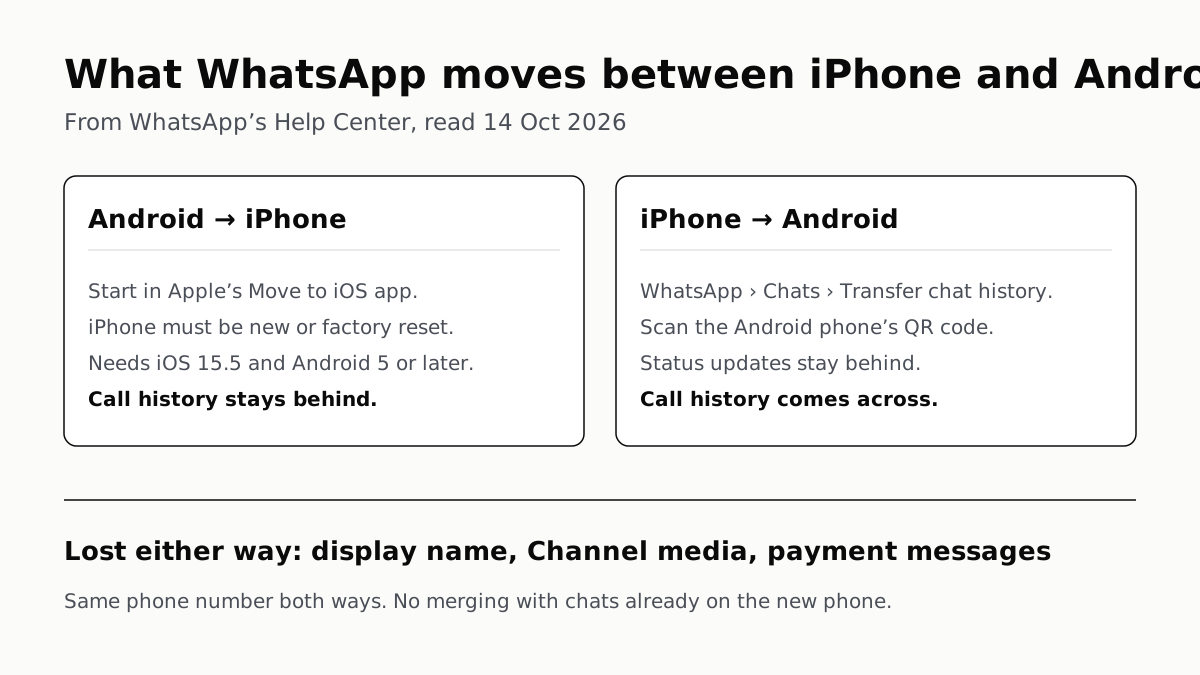
WhatsApp Chats Can Cross Between iPhone and Android
Messages, media and settings move both ways. Display names, Channel media and payment messages don’t, and call logs reach Android alone.