Noise Cancelling Is Best at Hum, Worse at Voices
Microphones make anti-noise against engines and air conditioning. Speech and sudden sounds are harder to cancel, and fit matters too.
If you buy through our links, we may earn a commission. It never affects our verdicts or scores — how that works. As an Amazon Associate I earn from qualifying purchases.
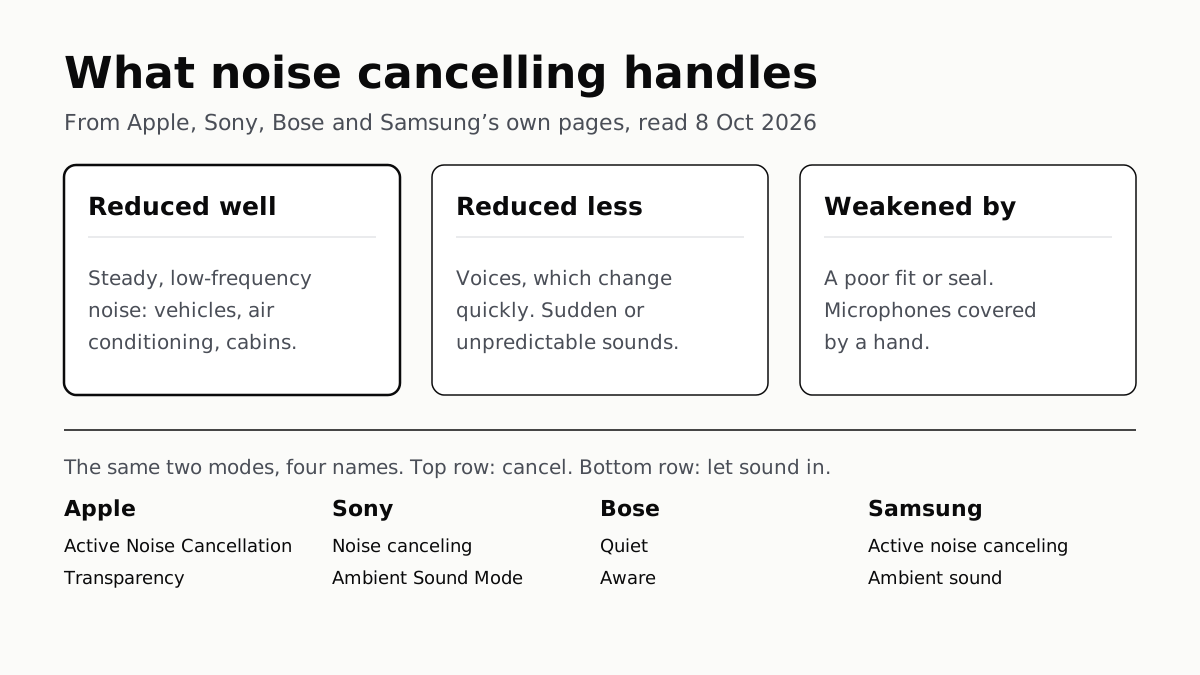
Noise cancelling is very good at steady, low-pitched noise — engines, road roar, air conditioning — and noticeably worse at voices and sudden sounds. Sony’s own help guide says its noise cancelling “works primarily on noise in the low frequency band such as vehicles and air conditioning”, and that the noise “is not completely canceled”.
Bose says the same in plainer words: steady background sounds are “usually easier to reduce than sudden or unpredictable ones”, and voices are harder still “because they change quickly and cover a wider range of sound”.
How it works
Noise-cancelling headphones block sound two ways. The first is physical: ear cups, cushions or silicone tips that stop sound before it reaches you. Bose calls this passive isolation. The second is electronic, and it is the part the word “active” refers to.
Apple’s support page describes that part step by step. An outward-facing microphone picks up the sound around you, and the AirPods “counter with anti-noise, canceling the external sounds before you hear them”. A second, inward-facing microphone “listens inside your ear for unwanted internal sounds”, and the AirPods cancel those too. Sony calls its version “antiphase sound” generated against the noise around you. The microphones and the anti-noise are the active part; the seal is the passive part, and Bose says the two “work best together”.
Only two of the four makers say which noise the electronics handle best:
| Reduced well | Reduced less | Source | |
|---|---|---|---|
| Sony | Low-frequency noise: vehicles, air conditioning | Not stated by type; “not completely canceled” | WH-1000XM6 Help Guide |
| Bose | Steady noise: cabin, road, air-conditioning hum | Voices; sudden or unpredictable sounds | Bose Stories |
| Apple | Not stated by type | Not stated by type | Support 108918 |
| Samsung | Not stated by type | Not stated by type | Support ANS10001322 |
None of the support pages we read puts a decibel figure on how much noise any pair removes. Where Apple publishes a number at all, it is relative: its release says AirPods 5 (affiliate link to Amazon, opens in a new tab) remove “up to 50 percent more noise compared to AirPods 4 with ANC”, with no test conditions, as our AirPods 5 launch piece pointed out. AirPods 5 are also an open-ear design, with no silicone tip sealing the ear.
Fit is half of it
All four makers we read point to fit before the electronics. Bose says “a better seal helps block more outside sound”. Sony’s first fix for weak cancelling is to put the headset back on. Apple’s fit guide says properly fitted AirPods Pro should “create a good acoustic seal for optimal sound quality and noise cancellation”, and the iPhone can run a test that measures that seal. Samsung’s page on weak noise cancelling suggests a different ear tip size first.
The makers also list the ways the electronics go wrong, and they are useful to know before deciding a pair is faulty:
- Covered microphones. Sony says a hand over the microphones can stop noise cancelling working or cause a beeping feedback sound.
- Too quiet a room. Sony says that in a very quiet place “you may not feel the noise canceling effects, or you may feel that some noise is increased”.
- Earbuds too deep. Samsung says some Galaxy Buds can whistle if worn too far into the ear.
- A false trigger. Samsung says humming such as an electric toothbrush can switch on its conversation-detection feature, which temporarily turns noise cancelling off.
The other modes, by name
The opposite of cancelling is letting sound in on purpose. Each maker uses the outside microphones to pipe surrounding sound through, so you can hear a train announcement without taking the headphones off. Apple’s page says simply that Transparency “lets outside sound in”. The names differ more than the idea:
| Maker (model read) | Cancel noise | Let sound in | Automatic |
|---|---|---|---|
| Apple (AirPods with ANC) | Active Noise Cancellation | Transparency | Adaptive, a separate mode |
| Sony (WH-1000XM6) | Noise canceling | Ambient Sound Mode | Auto Ambient Sound, inside Ambient Sound Mode |
| Bose (QC Ultra Headphones 2nd Gen) | Quiet | Aware | ActiveSense, inside Aware only |
| Samsung (Galaxy Buds3 Pro (affiliate link to Amazon, opens in a new tab)) | Active noise canceling | Ambient sound | Adaptive sound, plus automatic switching |
Bose adds Immersion and Cinema, which are full noise cancellation with its spatial audio switched on, not a different level of cancelling.
“Adaptive” is the word to read carefully, because the four makers mean four different things by it. Apple’s Adaptive “blends Active Noise Cancellation and Transparency mode together” as conditions change, and on iOS 27 a slider sets how much outside noise it allows. Bose’s ActiveSense adjusts cancelling to the volume around you, but Bose says it is “only available in Aware mode”. Sony’s Auto Ambient Sound adjusts how much outside sound it lets in when things get noisy. Samsung’s Buds3 Pro can switch modes for you: Ambient sound when it detects a siren, noise cancelling when it detects loud noise such as construction.
Two makers also say their ordinary noise cancelling adjusts itself. Sony’s help guide says performance is “automatically optimized” to how you wear the headset, so “you may notice fluctuations”. Samsung’s says its Adaptive Active noise canceling responds to fit and surroundings, and that “changes in Active noise canceling performance are normal”. On their pairs, cancelling that seems to rise and fall by itself is what the makers describe, not a fault.
Transparency has limits of its own. Sony warns that wind noise can rise in Ambient Sound Mode, and that depending on your surroundings and playback volume, you may not hear outside sound even with it on.
Samsung disagrees with itself
Samsung’s US article on using noise cancelling says the feature is missing only from the original Galaxy Buds and the Buds+, and gives fixes for the Buds Live, Buds Pro, Buds2 and Buds2 Pro. Its troubleshooting article on changing noise-cancelling levels says noise cancelling “is supported only on the Galaxy Buds4 and Buds3 series”. The second may mean the adaptive version only, which the page is about, but it does not say so. Check your own model’s page.
What this means for buying
If what you want to block is a plane cabin, a train or an office air conditioner, that is the noise Sony and Bose describe cancelling best. (On a plane, check which airlines’ seatback screens take Bluetooth.) If it is a colleague talking, expect it quieter but still there. On our earbud shortlist, the Bose QuietComfort Ultra Earbuds (2nd Gen) are the pair reviewers single out for noise cancelling, and our over-ear headphone shortlist covers only noise-cancelling pairs. Whichever you choose, the fit test is the cheapest improvement available.
Mode names on the box tell you less than the manual does: the same gap between marketing and documentation we found when two-device Bluetooth turned out to switch LDAC off.
Questions people ask
How does noise cancelling work?
Microphones on the outside of the headphones pick up surrounding sound, and the headphones play an opposing signal, which Apple calls anti-noise and Sony calls antiphase sound, so the two largely cancel. Apple’s AirPods also use a microphone inside the ear to catch what is left.
What noise does noise cancelling block best?
Steady, low-pitched noise. Sony says its noise cancelling works primarily on low-frequency noise such as vehicles and air conditioning, and Bose names airplane cabin noise, road noise and air-conditioning hum as where the effect is most noticeable.
Do noise cancelling headphones block voices?
Not completely. Bose says voices are harder to cancel than steady background noise because they change quickly and cover a wider range of sound, so nearby conversation may still come through.
What is transparency mode on headphones?
It uses the outside microphones to pass surrounding sound through to you, so you can hear announcements or traffic with the headphones on. Apple calls it Transparency, Sony Ambient Sound Mode, Bose Aware and Samsung Ambient sound.
What does adaptive noise cancelling do?
It changes the balance between cancelling and letting sound in, automatically, as your surroundings change. Apple’s Adaptive is a mode of its own; Bose’s ActiveSense works only inside Aware mode; Samsung and Sony also adjust noise cancelling to fit and surroundings.
Why does my noise cancelling feel weak?
Fit is the first thing every maker points to. Apple says a good acoustic seal is needed for the best noise cancellation, Samsung suggests a different ear tip size, and Sony says to put the headset back on. Covering the microphones can also cause feedback.
Does noise cancelling work without music playing?
Yes. Bose says active noise cancellation works independently of your audio, so it reduces surrounding noise even in silence, and is most noticeable with steady sounds such as cabin noise or air conditioning.
How we researched this
No one at bitcritiq has handled this product. Everything here comes from published sources, listed below.
- What this cannot tell you
- We have not worn or measured any of these headphones, so nothing here says how much quieter any pair makes a room; makers describe the mechanism, not the size of the effect, and none of the support pages we read gives a decibel figure. Each page describes particular models, and mode names and automatic features differ by model and firmware. Bose and Sony state which kinds of noise cancel best in plain words; Apple’s and Samsung’s pages describe the mechanism and fit but do not rank noise types. Samsung’s own pages disagree about which Galaxy Buds have noise cancelling (see the body).
How we chose this, and what we did
- Why this subject
- Google Trends for audio in the four weeks to 4 October was led by “best noise cancelling headphones” and “noise cancelling headphones”, with “best headphones” climbing toward its usual Black Friday peak. bitcritiq had shortlists for headphones and earbuds but no page saying what noise cancelling does and does not remove, which is the question to settle before choosing a pair.
- How we looked at it
- Every claim is from the makers’ own pages, read through a browser on 8 October 2026: Apple Support articles 108918 (Active Noise Cancellation and Transparency modes) and 104979 (Adaptive Audio), Apple’s AirPods fit guide and its AirPods 5 newsroom release; Sony’s WH-1000XM6 Help Guide pages on noise canceling, Ambient Sound Mode and Auto Ambient Sound; Bose’s QuietComfort Ultra Headphones (2nd Gen) modes article and its story ‘How do noise cancelling headphones work?’; Samsung US support articles ANS10001322, ANS10001315, ANS10003394 and TSG10013291. For the absence of decibel figures, the control was Apple’s AirPods 5 release, which does publish a number for noise removal (a relative percentage), so the support pages’ silence on figures is a choice of what to publish rather than a page that never discusses performance.
What this rests on
6 claims, all official. Nothing here was measured by bitcritiq — see how we test for why. Open a claim to read the source it came from.
Noise cancelling uses microphones to pick up outside sound and plays an opposing signal to cancel it.Official
Apple Support 108918: “an outward-facing microphone or microphones detect external sounds, which your AirPods… then counter with anti-noise, canceling the external sounds before you hear them. An inward-facing microphone listens inside your ear for unwanted internal sounds.” Sony’s Help Guide: the function “generates antiphase sound against outside surrounding noises”.
Sony says its noise cancelling works mainly on low-frequency noise and reduces it rather than removing it.Official
Sony WH-1000XM6 Help Guide: “The noise canceling function works primarily on noise in the low frequency band such as vehicles and air conditioning. While noise is reduced, it is not completely canceled.”
Bose says voices and sudden sounds are harder to cancel than steady background noise.Official
Bose, ‘How do noise cancelling headphones work?’: “steady background sounds are usually easier to reduce than sudden or unpredictable ones” and voices “are harder to cancel than steady background noise because they change quickly and cover a wider range of sound.”
Fit and seal are part of how much noise is blocked, alongside the electronics.Official
Bose: “Noise cancelling headphones rely on two technologies working together: passive isolation and active noise cancellation… a better seal helps block more outside sound.” Apple’s fit guide: properly fitted AirPods Pro should “create a good acoustic seal for optimal sound quality and noise cancellation.”
Transparency, Ambient Sound and Aware modes use the outside microphones to let surrounding sound in.Official
Apple 108918: “Transparency mode lets outside sound in.” Sony: “The microphones built into the left and right headset units make it easier to hear ambient sound.” Samsung ANS10001315: “Ambient sound uses the external microphones on your earbuds to let you hear outside noises.” Bose: Aware is “Full transparency with Bose-optimized stereo audio.”
Each maker’s automatic mode works differently: Apple’s Adaptive is its own mode, while Bose’s ActiveSense works only inside Aware.Official
Apple 104979: “Adaptive mode blends Active Noise Cancellation and Transparency mode together to control the level of noise you hear… based on the changing noise conditions in your environment.” Bose: ActiveSense “will automatically adjust the level of noise cancellation based on the volume of noise around you… It is only available in Aware mode.”
Sources 13
- Active Noise Cancellation and Transparency modes for AirPods — Apple Support 108918Officialaccessed Oct 8, 2026
- Use Adaptive Audio with your AirPods — Apple Support 104979Officialaccessed Oct 8, 2026
- Find the right fit with AirPods Pro — AirPods User Guide, Apple SupportOfficialaccessed Oct 8, 2026
- Apple introduces AirPods 5 — Apple Newsroom, 9 September 2026Officialaccessed Oct 8, 2026
Show 9 more · 9 official or standards
- What is noise canceling? — Sony WH-1000XM6 Help GuideOfficialaccessed Oct 8, 2026
- Listening to ambient sound during music playback (Ambient Sound Mode) — Sony WH-1000XM6 Help GuideOfficialaccessed Oct 8, 2026
- Auto Ambient Sound — Sony WH-1000XM6 Help GuideOfficialaccessed Oct 8, 2026
- Using Modes — Bose QuietComfort Ultra Headphones (2nd Gen), Bose SupportOfficialaccessed Oct 8, 2026
- How do noise cancelling headphones work? — Bose StoriesOfficialaccessed Oct 8, 2026
- Use Active noise canceling on your Samsung Galaxy earbuds — Samsung US ANS10001322Officialaccessed Oct 8, 2026
- Use Ambient sound on your Samsung Galaxy earbuds — Samsung US ANS10001315Officialaccessed Oct 8, 2026
- Automatic noise adjustments on the Galaxy Buds3 Pro — Samsung US ANS10003394Officialaccessed Oct 8, 2026
- Why the noise canceling level changes on your Samsung Galaxy Buds — Samsung US TSG10013291Officialaccessed Oct 8, 2026
Pass it on
Know someone weighing this up? Send them the answer.
bitcritiq.com/5q5kThe link is permanent: it opens this article for good, even if the title changes.
No email, no account
Follow bitcritiq
Every new article, in whatever reader you already use.
Subscribe by RSSAll the ways to follow
Using Chrome on Android? Open the browser menu and tap Follow. New articles then turn up in the Following tab in Discover.
read next
A Soundbar Works Without a Sub; Add One for the Lowest Bass
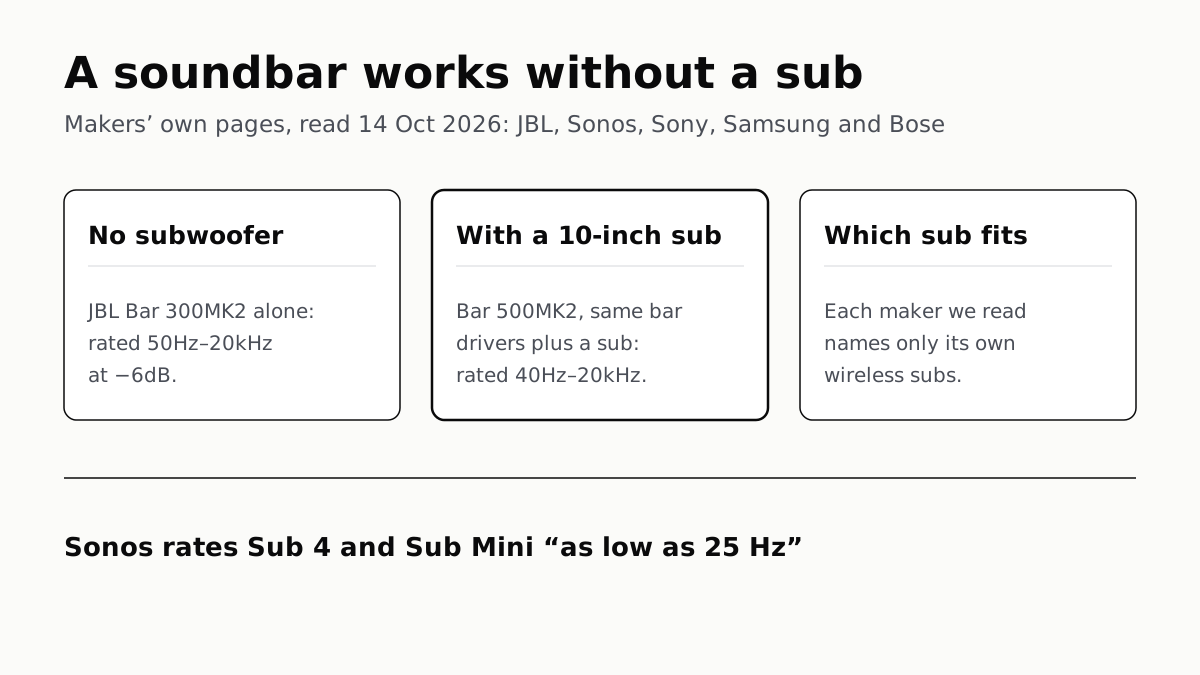
In JBL’s specs, the same bar drivers reach 50Hz alone and 40Hz with a 10-inch sub. Sony, Sonos and Samsung list only their own subs.
Seatback Bluetooth: United on 800+ Planes, Others Starting
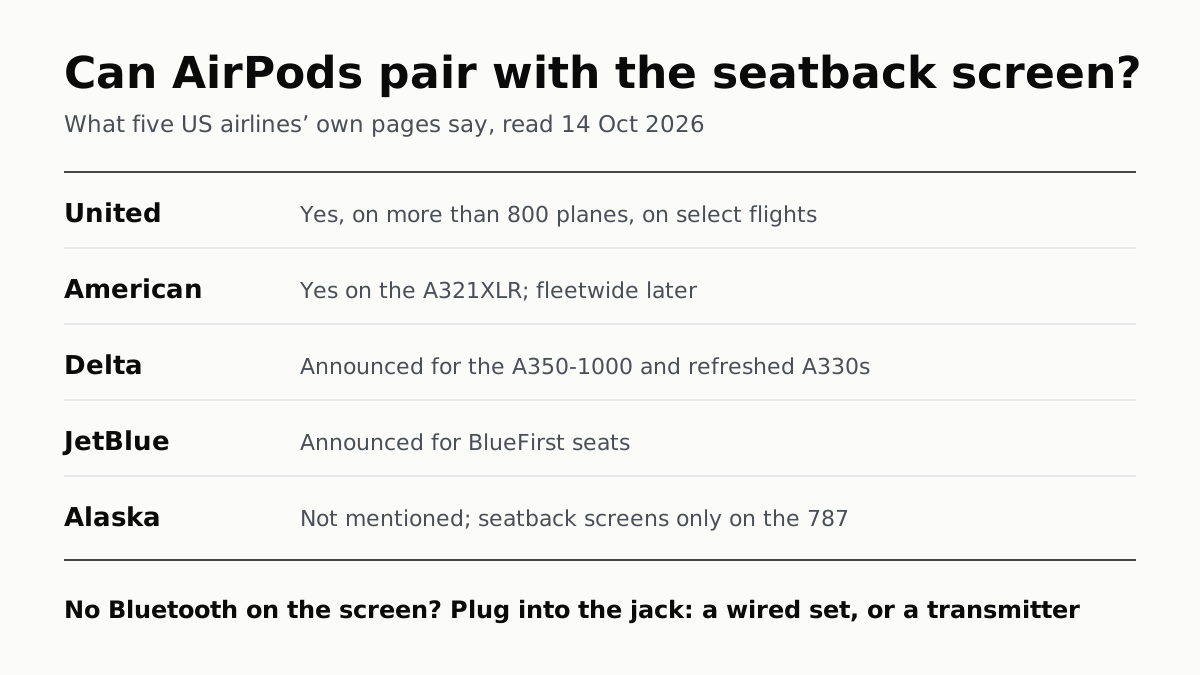
American’s A321XLR has it and JetBlue and Delta have announced it. Without it, the seatback jack needs a wired plug or a transmitter.
HDR10 Is the Fallback; Dolby Vision and HDR10+ Are Upgrades
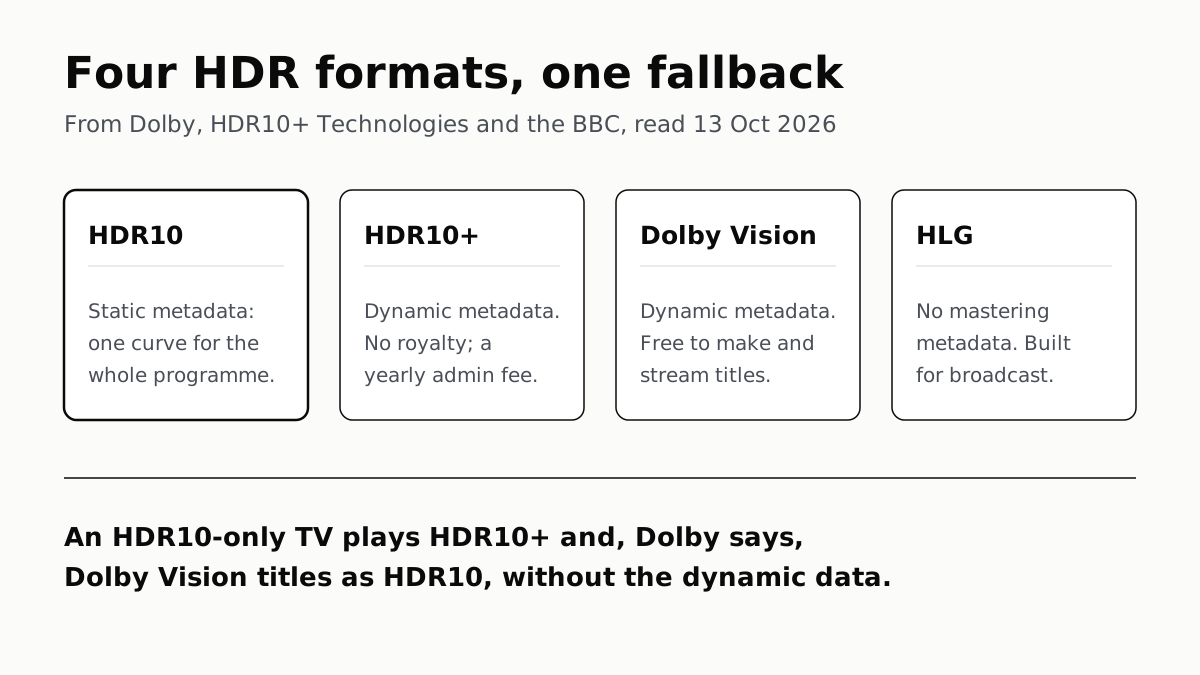
Samsung’s S90F lists HDR10+, not Dolby Vision; LG’s C6 the reverse. TCL’s QM7K lists both.
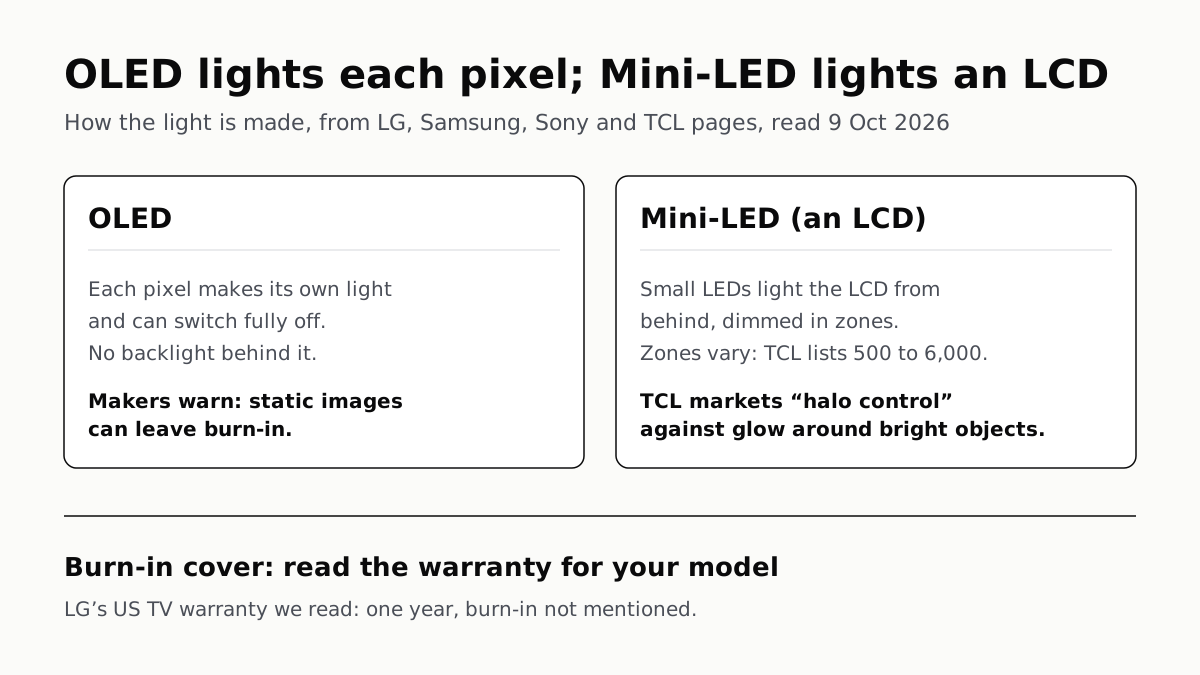
OLED Lights Each Pixel; Mini-LED Lights an LCD Behind It
Self-lit pixels give OLED its blacks and a burn-in risk; a zoned backlight gives Mini-LED brightness and a halo risk.