Two Devices at Once Costs You LDAC
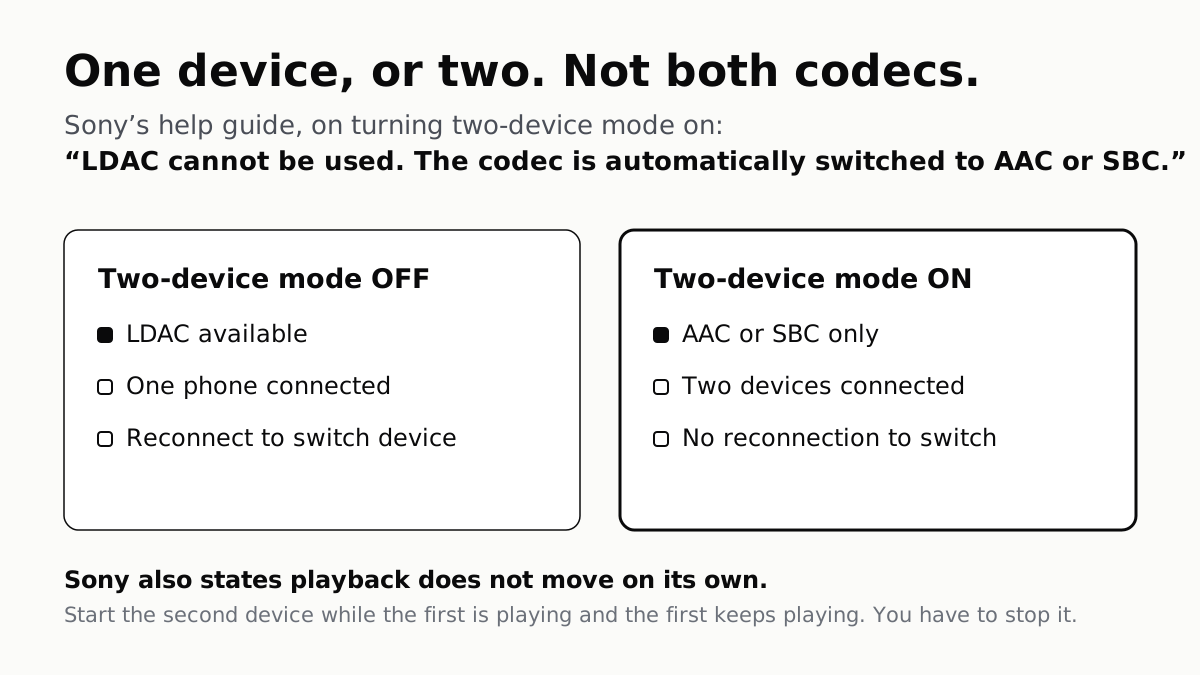
Sony's help guide is explicit: two-device mode switches LDAC off. It also says playback will not move until you stop the first device.
If you buy through our links, we may earn a commission. It never affects our verdicts or scores — how that works. As an Amazon Associate I earn from qualifying purchases.
The feature has a price, and only one maker prints it. Sony’s Help Guide says that turning on two-device mode means “LDAC cannot be used. The codec is automatically switched to the connection by AAC or SBC.”
So the headline codec you may have paid for is off for as long as your laptop and your phone are both connected. Not degraded. Off.
What “seamlessly” is doing in that sentence
Bose’s product page describes the same feature in one line: with multipoint “you can seamlessly connect to two devices simultaneously via Bluetooth.” No caveat, and none is owed on a product page.
Sony’s manual, describing what looks like the same thing, says something a buyer would not guess. Start playback on the second device while the first is still playing and nothing happens — the first keeps playing, and you have to stop it before the second is heard. Switching is manual in the only sense that matters: you do it, the headphones do not.
Both statements can be true of one feature name, which is the problem. Two devices connected is the specification. Which one you hear is a behaviour, and it is not in the specification.
The app is part of the feature
Sony’s mode is not a button on the headset. The Help Guide tells you to install the Sony Headphones Connect app on one of the two devices and enable [Connect to 2 devices simultaneously] there, then connect the second device.
That is worth knowing before you buy a pair for someone who will never install the app, and worth knowing if you are the sort of person who would rather not run a manufacturer’s app at all. On those headphones, refusing the app means refusing the feature.
What happens with a third device
One rule, and it is sensible once stated: connect a third device and the headphones keep the one that played music most recently and drop the other. The device you were last listening to survives; the one merely sitting in standby does not.
Apple’s version is a different mechanism wearing similar words
AirPods switch between devices too, and it is not multipoint. Apple’s guide is specific: it works when you are signed in to the same Apple Account on the devices, and then the AirPods follow whatever you start playing. Apple also publishes a separate page for pairing AirPods with a non-Apple device, which is the tell — an iPhone and a Windows laptop are not one account, so this is not the thing that helps you there.
Neither approach is better in the abstract. They fail differently, which is the useful part: Apple’s depends on an account, Sony’s depends on an app, and only Sony’s costs you a codec.
Three things to check before buying
- Find the maker’s manual, not the product page. Search the model name and “help guide” or “manual”. The caveat that matters is in the manual, and on Sony’s models it is in a Note at the bottom of the page.
- Decide whether you actually use LDAC. If you listen on an iPhone you never had it — our piece on what the codecs really deliver has the rest. If you listen on Android and chose LDAC deliberately, two-device mode is a real trade rather than a free convenience.
- Check what switching costs in calls, which is the case people actually buy this for. A second incoming call while you are already talking rings on the phone, not in your ears, and call audio is the weakest link in the chain anyway.
Bose has since announced a second-generation pair and a cheaper Sport model, both with two-device multipoint; what separates the three on paper includes which ones Bose says support aptX Adaptive.
If you are shopping rather than diagnosing, our headphone shortlist and earbud shortlist rank what the reviews agree on, and neither ranking moves on this feature — because on the evidence above, what “multipoint” gets you depends on whose manual you are reading.
How we researched this
No one at bitcritiq has handled this product. Everything here comes from published sources, listed below.
- What this cannot tell you
- Manufacturer documentation is per-model, and this describes the models named rather than the whole range — Sony's wording is consistent across its recent Help Guides, but another model's page is the one to read before buying that model. Firmware changes behaviour: Bose added multipoint to earbuds that shipped without it. We have not tested any of these headphones, so nothing here says how the switching feels in use, only what the makers commit to in writing.
How we chose this, and what we did
- Why this subject
- Multipoint is on the box of almost every pair of headphones sold this side of $150, described in three words, and the makers' own manuals disagree about what those three words mean. One of them documents a cost that the marketing page does not mention at all.
- How we looked at it
- Every quoted line is from a manufacturer's own documentation, read on 12 September 2026: Sony's Help Guide for the ULT WEAR headset, Bose's own product page for the Ultra Open Earbuds, and Apple's AirPods user guide. Nothing here is measured by us and nothing is taken from a review.
What this rests on
6 claims, all official. Nothing here was measured by bitcritiq — see how we test for why. Open a claim to read the source it came from.
On Sony headphones, turning on two-device mode disables LDAC and drops the connection to AAC or SBC.Official
Sony's Help Guide states: "When [Connect to 2 devices simultaneously] is turned on with the 'Sony | Headphones Connect' app, LDAC cannot be used. The codec is automatically switched to the connection by AAC or SBC."
Sony's two-device mode cannot be switched on from the headphones; it needs the phone app.Official
The same guide instructs the owner to install the Sony Headphones Connect app on one of the two devices and turn on [Connect to 2 devices simultaneously] there before connecting the second device.
On Sony, starting playback on the second device does not move the audio; the first device keeps playing.Official
The guide states that even if you start playback on the second device while the first is playing, the music from the first device continues, and you must stop playback on the first to hear the second.
Connecting a third device drops whichever of the two played music least recently.Official
The guide states the Bluetooth connection with the last device that played music is maintained and the other is disconnected when a third device connects.
Bose describes the same feature on its own product page without any codec caveat.Official
The Ultra Open Earbuds page states: "With multipoint connectivity, you can seamlessly connect to two devices simultaneously via Bluetooth."
Apple's automatic switching is not Bluetooth multipoint; it depends on one Apple Account across the devices.Official
Apple's AirPods guide states that when you are signed in to the same Apple Account on your Apple devices, AirPods connect to whichever device you are listening to, and publishes a separate page for pairing AirPods with a non-Apple device.
Sources 4
- Connecting the headset to 2 devices simultaneously (multipoint connection) — Sony Help Guide, ULT WEAROfficialaccessed Sep 12, 2026
- Bose Ultra Open Earbuds — product pageOfficialaccessed Sep 12, 2026
- Switch AirPods between Apple devices — Apple SupportOfficialaccessed Sep 12, 2026
- Bluetooth Codecs: LDAC's 990kbps Is Rarely 990kbps — bitcritiqaccessed Sep 12, 2026
No email, no account
Follow bitcritiq
Every new article, in whatever reader you already use.
Subscribe by RSSAll the ways to follow
Using Chrome on Android? Open the browser menu and tap Follow. New articles then turn up in the Following tab in Discover.
read next
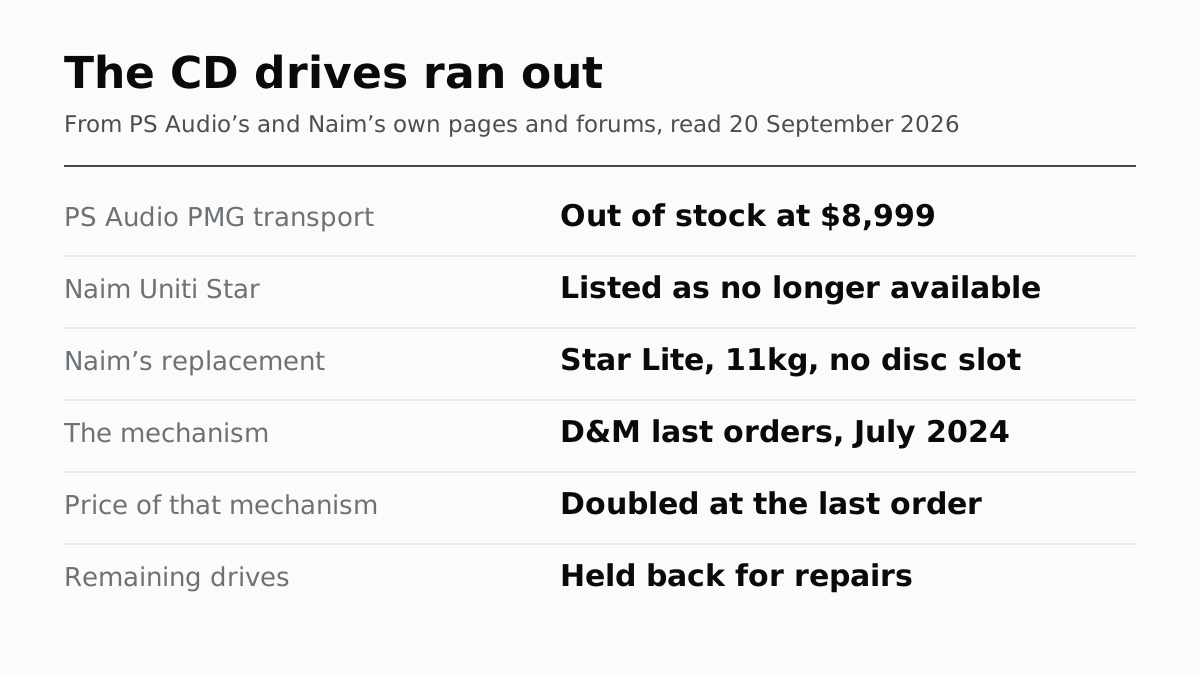
PS Audio and Naim Each Lost a Disc Product to Drive Supply
Both makers say so on their own sites. The mechanism they bought stopped being made, and the drives left over are being kept for repairs.
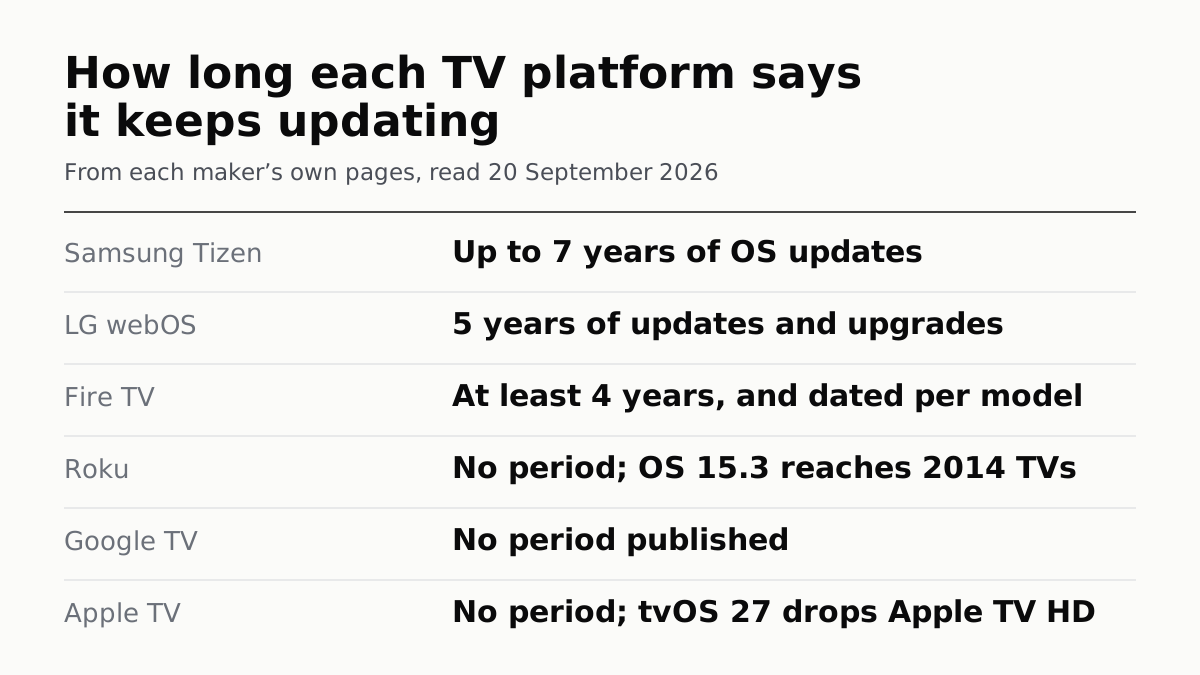
Three TV Platforms Publish an Update Promise. Three Do Not
Samsung says up to seven years of Tizen, LG five of webOS, Amazon at least four with dates per model. Google, Roku and Apple name no period.
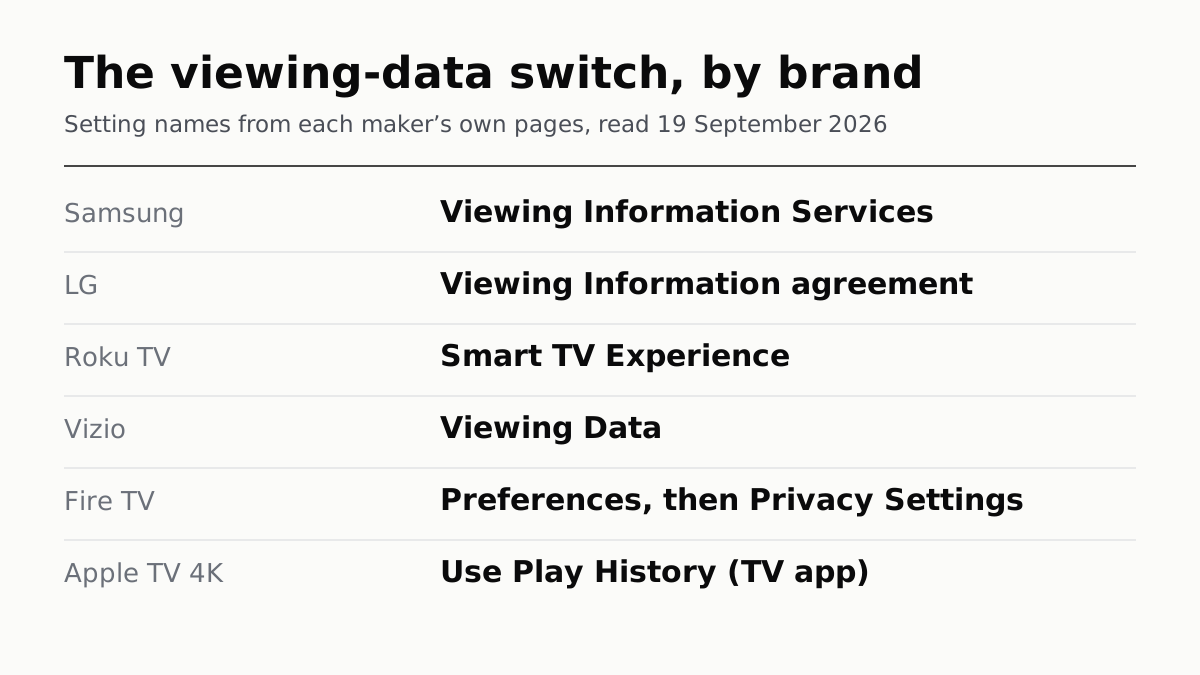
The TV Viewing Tracker Has a Different Name at Each Brand
Samsung, LG, Roku and Vizio all let you switch it off. LG and Roku say it also covers boxes plugged into the TV, not just its tuner.
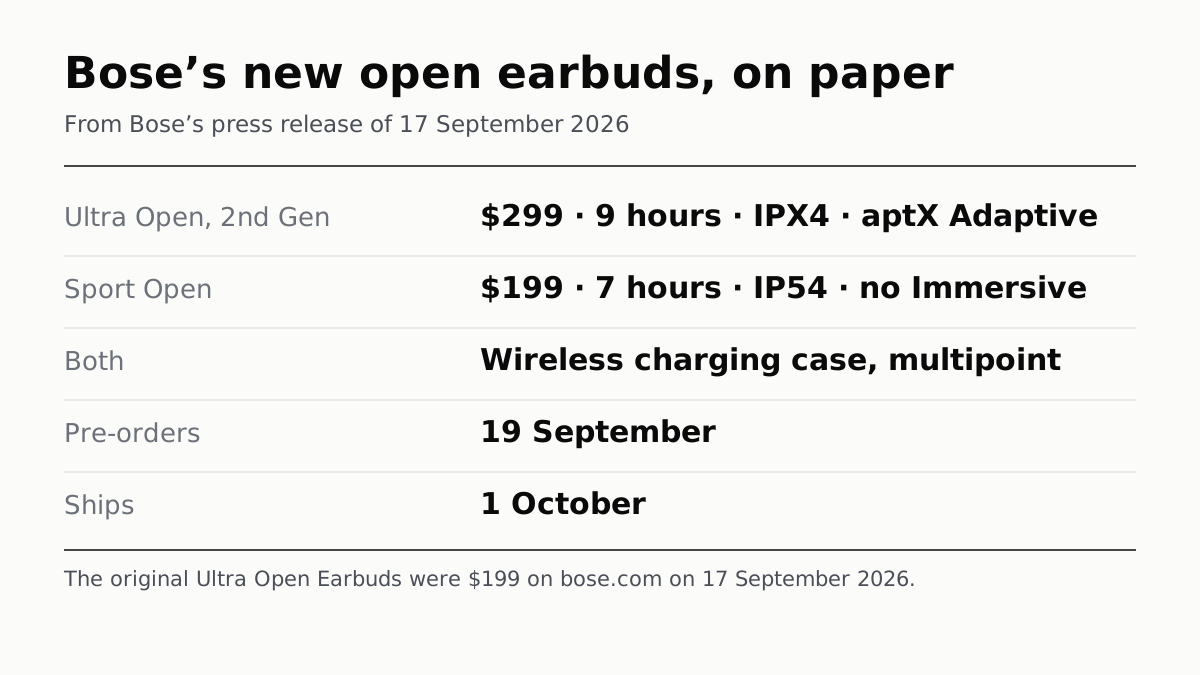
Bose Ultra Open Earbuds 2nd Gen: Two More Hours, Same $299
The new $199 Sport model drops Immersive Audio and makes no aptX claim. The original was $199 on Bose's own store on 17 September.