Klipsch Sells 3 Soundbars; 2 Have Atmos Height Drivers
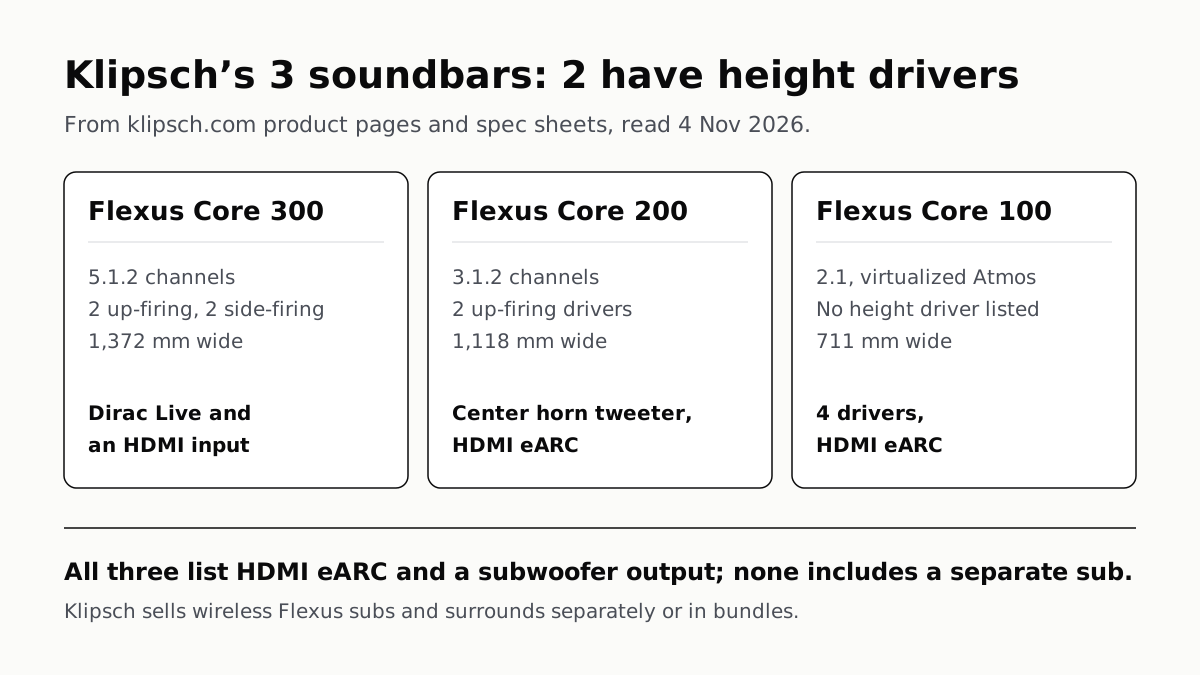
The Core 100 virtualizes Atmos from four drivers. All three connect over HDMI eARC, and none comes with a separate subwoofer.
If you buy through our links, we may earn a commission. It never affects our verdicts or scores — how that works. As an Amazon Associate I earn from qualifying purchases.
Klipsch’s US store lists three soundbars, all Flexus models, and two of them have Atmos height drivers: the Core 300 (5.1.2) and Core 200 (3.1.2). The Core 100 is a 2.1 bar that Klipsch says virtualizes Dolby Atmos. All three connect over HDMI eARC, and none comes with a separate subwoofer.
Each bar lists 4-inch woofers built in, and Klipsch sells two wireless subwoofers and two pairs of wireless surrounds to add later, or bundled with a bar. Klipsch calls the Core 300 (affiliate link to Amazon, opens in a new tab) the world’s first sound bar with built-in Dirac Live room correction; it is also the one of the three that lists an HDMI input.
The three soundbars side by side
From each model’s page title, product page and spec sheet on klipsch.com, read 4 November 2026. Channel labels are Klipsch’s own.
| Model | Channels | Height drivers | Other drivers in bar | TV connection | HDMI input |
|---|---|---|---|---|---|
| Flexus Core 300 (affiliate link to Amazon, opens in a new tab) | 5.1.2 | 2 x 2.25-inch up-firing | 4 x 2.25-inch front, 1 horn tweeter, 2 x 2.25-inch side-firing, 4 x 4-inch woofers | HDMI eARC | 1, HDMI 2.1 pass-through, plus HDMI out |
| Flexus Core 200 (affiliate link to Amazon, opens in a new tab) | 3.1.2 | 2 x 2.25-inch elevation | 4 x 2.25-inch aluminum front, 1 center horn tweeter, 2 x 4-inch woofers | HDMI eARC | None listed |
| Flexus Core 100 (affiliate link to Amazon, opens in a new tab) | 2.1, virtualized Atmos | None listed | 2 x 2.25-inch aluminum front, 2 x 4-inch woofers | HDMI eARC | None listed |
The Atmos split is in the height column: the Core 300 and Core 200 (affiliate link to Amazon, opens in a new tab) pages name two elevation drivers each, and the Core 100 (affiliate link to Amazon, opens in a new tab) page describes “virtual Dolby Atmos technology” from a bar that lists none. Dolby counts processed height without up-firing drivers as Atmos too, as our explainer on Atmos without up-firing speakers sets out.
The Core 300 is the only one of the three Klipsch lists with side-firing drivers. The Core 200 page credits its center-channel horn tweeter with dialogue clarity; the Core 300 lists a horn-loaded tweeter too, and the Core 100 lists none.
Size and output
Klipsch’s spec sheet figures, in millimetres (Klipsch leads with inches and gives centimetres beside them).
| Model | Width | Height | Depth | Max output | System power | Frequency response |
|---|---|---|---|---|---|---|
| Flexus Core 300 (affiliate link to Amazon, opens in a new tab) | 1,372 mm | 78 mm | 126 mm | 106 dB | Not stated | 43 Hz to 20 kHz |
| Flexus Core 200 (affiliate link to Amazon, opens in a new tab) | 1,118 mm | 78 mm | 126 mm | 99.8 dB | 185 W RMS | 43 Hz to 20 kHz |
| Flexus Core 100 (affiliate link to Amazon, opens in a new tab) | 711 mm | 76 mm | 127 mm | 96.4 dB | 100 W RMS | 45 Hz to 20 kHz |
The Core 100 is about half the Core 300’s width, 711 mm against 1,372 mm. The Core 200 and Core 100 boxes include slim-depth wall brackets; the Core 300 spec sheet lists its bracket as sold separately.
Connections and features
All three spec sheets list the same inputs apart from HDMI: optical, Bluetooth and USB-C, with a USB-A port for updates. All three list a wired subwoofer (RCA) output. The Core 300 adds the HDMI 2.1 pass-through input and an HDMI output, so a games console or streaming box can plug into the bar. Lossless Atmos from a TV needs eARC at both ends, which our ARC and eARC explainer covers; all three Flexus bars list eARC.
The Core 300’s pages also list Dirac Live room correction run from the Klipsch Connect Plus app, DTS:X decoding, streaming through AirPlay, Google Cast, TIDAL Connect, QPlay and Spotify Connect, and support for Control4 and RTI control systems. The Core 200 and Core 100 pages both list the same app’s EQ, Night Mode and Dialogue Boost controls.
Adding a subwoofer or surrounds
Klipsch says its transport technology is “built into every Flexus product”, the wireless link between bar, subwoofer and surrounds. It sells four add-ons:
- Flexus Sub 100 (affiliate link to Amazon, opens in a new tab): a 10-inch wireless subwoofer.
- Flexus Sub 200 (affiliate link to Amazon, opens in a new tab): a 12-inch wireless subwoofer.
- Flexus Surr 100 (affiliate link to Amazon, opens in a new tab): a pair of wireless surround speakers.
- Flexus Surr 200 (affiliate link to Amazon, opens in a new tab): a pair of wireless surrounds that Klipsch titles Dolby Atmos, with two 3-inch up-firing and two 3-inch front-firing drivers across the pair, each plugged into its own wall outlet.
The Core 300 page says a system can take a Flexus subwoofer “(or two)”. Klipsch also sells five bundles: the Core 100 + Sub 100, the Core 100 Sound System (bar, 10-inch sub and surrounds, by its title), the Core 200 Sound System, the Core 200 + Sub 100 and the Core 200 + Sub 200.
Prices on klipsch.com
Read 4 November 2026. No listing showed a struck-through price. The Core 200, Core 100 and all five bundles showed “Temporarily Out of Stock. Available for Backorder.”
| Item | Price |
|---|---|
| Flexus Core 300 | $1,199.99 |
| Flexus Core 200 | $574.99 |
| Flexus Core 100 | $349.99 |
| Flexus Sub 200 (12-inch) | $599.99 |
| Flexus Sub 100 (10-inch) | $349.99 |
| Flexus Surr 200 (pair) | $499.99 |
| Flexus Surr 100 (pair) | $249.99 |
| Flexus Wall Mount | $99.99 |
| Core 100 + Sub 100 | $699.98 |
| Core 100 Sound System | $949.97 |
| Core 200 + Sub 100 | $924.98 |
| Core 200 Sound System | $1,174.97 |
| Core 200 + Sub 200 | $1,174.98 |
The three bar-and-sub bundles cost the same as their parts bought separately: $349.99 plus $349.99 for the Core 100 + Sub 100, $574.99 plus $349.99 for the Core 200 + Sub 100, and $574.99 plus $599.99 for the Core 200 + Sub 200.
Polk’s lineup splits the same way on height drivers, as our Polk soundbar guide lays out; for how reviewers score bars from other makers, see our soundbar roundup.
Who each one suits, by the specs
- Height drivers, side-firing drivers and an HDMI input on the bar: the Core 300, the widest at 1,372 mm.
- Height drivers in a shorter bar: the Core 200, 1,118 mm wide, with a center horn tweeter.
- The narrowest bar, with Atmos processed rather than from height drivers: the Core 100, 711 mm wide.
Questions people ask
Which Klipsch soundbars have up-firing Dolby Atmos speakers?
Two of the three on Klipsch’s US store: the Flexus Core 300 and Core 200, which each list two 2.25-inch elevation drivers. The Core 100 lists virtualized Dolby Atmos, with no height driver named on its page.
What is the difference between the Klipsch Flexus Core 200 and Core 300?
The Core 300 is 5.1.2 against 3.1.2, 1,372 mm wide against 1,118 mm, adds two side-firing drivers and two more 4-inch woofers, and lists Dirac Live room correction, an HDMI 2.1 pass-through input and an HDMI output. Both list HDMI eARC.
Does the Klipsch Flexus Core 100 have real Dolby Atmos?
It decodes Atmos but lists no height drivers. Klipsch’s spec sheet calls it “2.1 with Virtualized Dolby Atmos”, from two 2.25-inch aluminum drivers and two 4-inch woofers in a 711 mm bar.
Do Klipsch Flexus soundbars come with a subwoofer?
Not as a separate box. Each bar lists built-in 4-inch woofers, and Klipsch sells the wireless Flexus Sub 100 (10-inch) and Sub 200 (12-inch) on their own or in bar-and-sub bundles. All three bars also list a wired subwoofer output.
Do Klipsch soundbars have HDMI eARC?
All three Flexus bars list HDMI eARC. Only the Core 300 adds an HDMI input, listed as HDMI 2.1 pass-through, and an HDMI output, so a source can plug into the bar rather than the TV.
Can you add wireless surround speakers to a Klipsch soundbar?
Yes. Klipsch sells two wireless surround pairs, the Flexus Surr 100 and Surr 200, and says Klipsch transport technology is built into every Flexus product. Its Surr 200 page lists two 3-inch up-firing drivers per pair.
How we researched this
No one at bitcritiq has handled this product. Everything here comes from published sources, listed below.
- What this cannot tell you
- We have not heard any of these soundbars, and this page does not rank them. All three spec sheets print the 4-inch woofers under the heading “Upfiring drivers”; we count as height drivers only the 2.25-inch drivers Klipsch’s pages call elevation or up-firing Dolby Atmos drivers. The Core 300’s page title, body and spec sheet say 5.1.2, but the description in its page code says 5.0.2; we use 5.1.2. Its page gives the side-firing drivers as 2.25-inch in one place and 2.5-inch in another; the spec sheet says 2.25-inch, which we use. The Core 300 spec sheet lists DTS:X decoding, Wi-Fi streaming services and Control4 and RTI support; we did not settle whether the Core 200 and 100 list the same, so this page does not say either way. The Core 300 spec sheet gives no system power figure. We did not settle which surround pair Klipsch matches to which bar. The Core 200 and Core 100 showed “Temporarily Out of Stock. Available for Backorder.” Prices change; these are 4 November’s.
How we chose this, and what we did
- Why this subject
- Google Trends showed “dolby atmos soundbar” up 110% in our 1 November digest, with the soundbar cluster rising. Klipsch’s Flexus names (Core 100, 200, 300; Sub 100, 200; Surr 100, 200) do not say which bars have height drivers, what the channel layouts are or whether a subwoofer is in the box, and no bitcritiq post covered Klipsch.
- How we looked at it
- Read klipsch.com’s US Sound Bars listing (klipsch.com/sound-bars) through a browser on 4 November 2026. It showed 13 listings: three soundbars (Flexus Core 300, 200 and 100), two wireless subwoofers, two pairs of wireless surrounds, a wall mount and five bundles. The count of 3 soundbars is the rows of our first table. We then read each soundbar’s product page and the spec sheet PDF it links (Core 300 v08, Core 200 v10b, Core 100 v10b), plus the Surr 200 page and spec sheet and the Core 100 Sound System bundle page. Channel layouts are from each page title and spec sheet. Prices are the single price each listing showed; no struck-through price appeared in the page text, so we read them as list prices. The 2 with height drivers are the two whose pages name 2.25-inch elevation or up-firing Dolby Atmos drivers; where we say the Core 100 lists no height driver, the control is that its page lists its 2.25-inch drivers and 4-inch woofers, as the Core 200 page lists its elevation drivers beside the same kinds of driver, and its spec sheet calls it “2.1 with Virtualized Dolby Atmos”.
What this rests on
6 claims, all official. Nothing here was measured by bitcritiq — see how we test for why. Open a claim to read the source it came from.
klipsch.com’s US Sound Bars listing on 4 November 2026 showed three soundbars, the Flexus Core 300, Core 200 and Core 100, beside two subwoofers, two surround pairs, a wall mount and five bundles.Official
klipsch.com/sound-bars: “FLEXUS CORE 300 $1,199.99 Each”, “FLEXUS CORE 200 $574.99 Each”, “FLEXUS CORE 100 $349.99 Each”, “FLEXUS SUB 200 $599.99 Each”, “FLEXUS SUB 100 $349.99 Each”, “FLEXUS SURR 200 $499.99 Per Pair”, “FLEXUS SURR 100 $249.99 Per Pair”, “FLEXUS WALL MOUNT $99.99 Each”, and five bundles.
Klipsch lists the Core 300 as 5.1.2, the Core 200 as 3.1.2 and the Core 100 as 2.1 with virtualized Dolby Atmos.Official
Spec sheets: “SPEAKER SYSTEM 5.1.2 Dolby Atmos Soundbar” (Core 300); “3.1.2 Dolby Atmos Soundbar” (Core 200); “2.1 with Virtualized Dolby Atmos” (Core 100). Core 100 page: “featuring virtual Dolby Atmos technology”.
The Core 300 and Core 200 each list two 2.25-inch elevation drivers for Atmos height; the Core 300 adds two side-firing drivers.Official
Core 300 page: “two 2.25" up-firing Dolby Atmos drivers, two 2.25" side-firing paper cone drivers”. Core 200 page: “immersive Dolby Atmos with two 2.25" elevation drivers”.
All three list HDMI eARC and a subwoofer (RCA) output; only the Core 300 adds an HDMI 2.1 pass-through input and an HDMI output.Official
Core 300: “INPUTS HDMI 2.1 Passthrough, HDMI eARC • Bluetooth • USB-C • Digital Optical OUTPUTS HDMI Out, Subwoofer (RCA) Output”. Core 200 and Core 100: “INPUTS HDMI eARC • Bluetooth • USB-C • Digital Optical OUTPUTS Subwoofer (RCA) Output”.
Klipsch calls the Core 300 the world’s first sound bar with built-in Dirac Live room correction.Official
Core 300 page: “Experience out-of-the-box audio perfection with the world’s first sound bar featuring built-in Dirac Live room correction technology.”
None of the three bars includes a separate subwoofer; each lists built-in 4-inch woofers, and Klipsch sells the wireless Sub 100 (10-inch) and Sub 200 (12-inch) separately or in bundles.Official
Core 300: “two pairs of 4" built-in high-output paper cone subwoofers … no subwoofer required”. Core 100: “dual 4" built-in subwoofers … No subwoofer required.” Sub 200 “12" Wireless Subwoofer”; Sub 100 “10" WIRELESS SUBWOOFER”.
Sources 10
- Sound Bars — Klipsch (US)Officialaccessed Nov 4, 2026
- Flexus Core 300 5.1.2-Channel Dolby Atmos Sound Bar — KlipschOfficialaccessed Nov 4, 2026
- Flexus Core 300 Spec Sheet (v08) — KlipschOfficialaccessed Nov 4, 2026
- Flexus CORE 200 3.1.2-Channel Dolby Atmos Sound Bar — KlipschOfficialaccessed Nov 4, 2026
Show 6 more · 6 official or standards
- Flexus Core 200 Spec Sheet (v10b) — KlipschOfficialaccessed Nov 4, 2026
- Flexus CORE 100 2.1-Channel Dolby Atmos Sound Bar — KlipschOfficialaccessed Nov 4, 2026
- Flexus Core 100 Spec Sheet (v10b) — KlipschOfficialaccessed Nov 4, 2026
- Flexus Surr 200 Wireless Dolby Atmos Surround Sound Speakers — KlipschOfficialaccessed Nov 4, 2026
- Flexus Surr 200 Spec Sheet (v03b) — KlipschOfficialaccessed Nov 4, 2026
- Flexus CORE 100 Sound System — KlipschOfficialaccessed Nov 4, 2026
Pass it on
Know someone weighing this up? Send them the answer.
bitcritiq.com/rz35The link is permanent: it opens this article for good, even if the title changes.
No email, no account
Follow bitcritiq
Every new article, in whatever reader you already use.
Subscribe by RSSAll the ways to follow
Using Chrome on Android? Open the browser menu and tap Follow. New articles then turn up in the Following tab in Discover.
read next
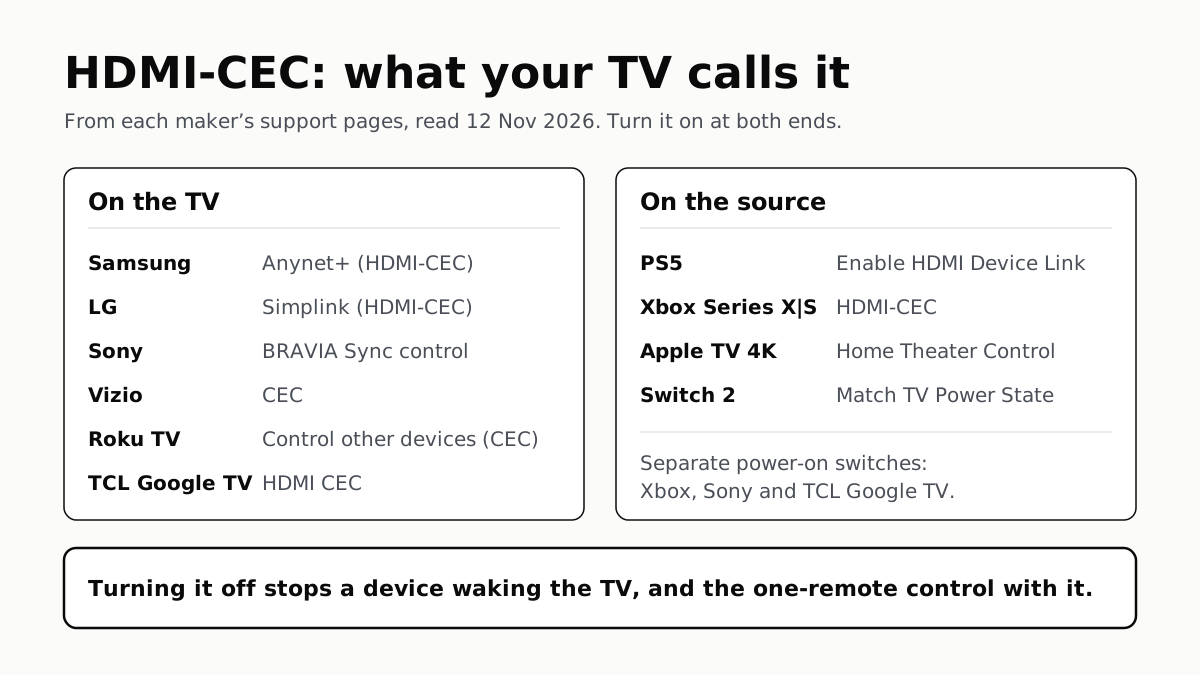
To Use One TV Remote, Turn On HDMI-CEC at Both Ends
Samsung calls it Anynet+, LG Simplink, Sony BRAVIA Sync, Vizio CEC. Consoles, Apple TV and Switch 2 have their own switch.
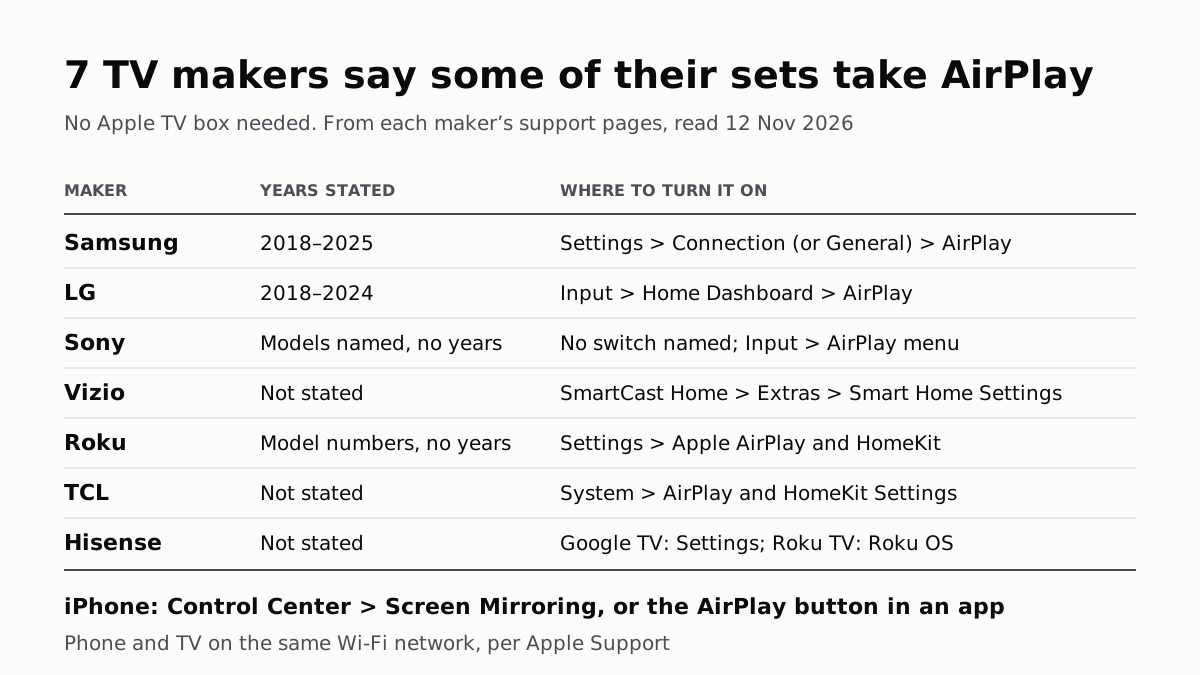
7 TV Makers Build AirPlay Into Some Sets, No Apple TV Needed
Samsung lists 2018–2025 sets and LG 2018–2024. Switch AirPlay on in the TV’s settings, then use Screen Mirroring in Control Center.
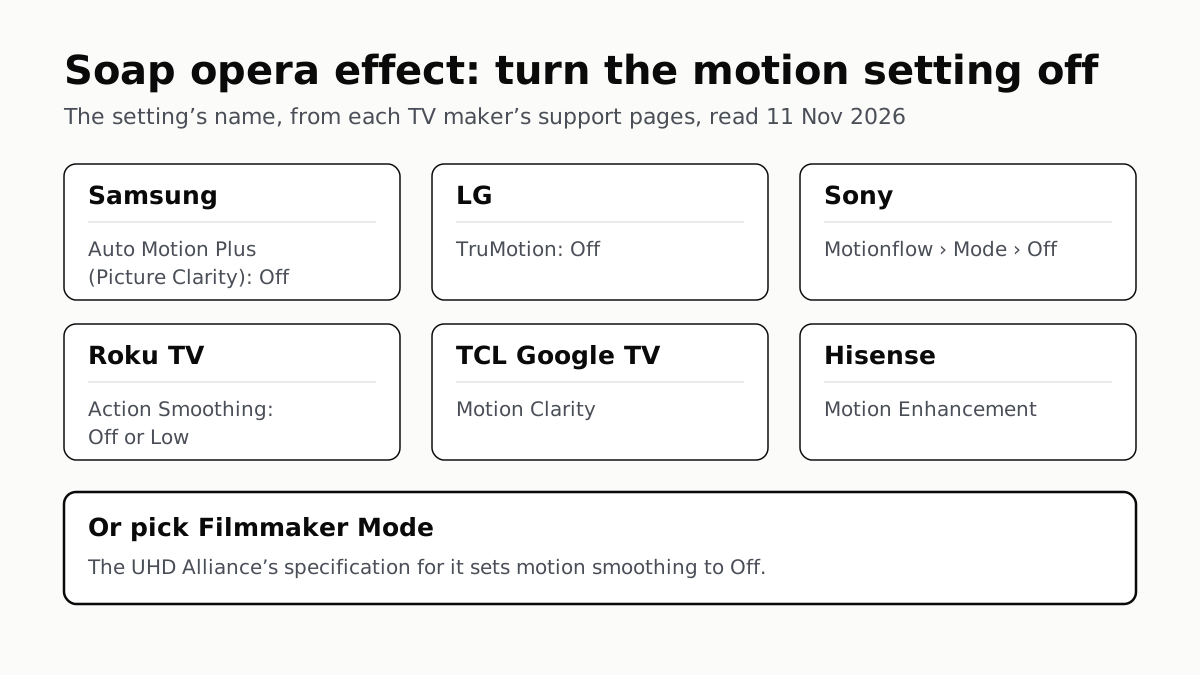
Soap Opera Effect: Set the TV’s Motion Setting to Off
Samsung calls it Auto Motion Plus, LG TruMotion, Sony Motionflow, Roku Action Smoothing. Filmmaker Mode switches it off where offered.
4 of 5 TV Platforms: Antenna and HDMI Work Without Sign-In
Google TV’s basic mode needs no account or internet. Vizio and Samsung let you skip signing in; on Roku it depends on the model.