Power Banks Fly Carry-On Only, Up to 100Wh Without Asking
Delta, American and Southwest cap power banks at 100Wh, not the FAA’s 160Wh, and Southwest allows only one per person.
If you buy through our links, we may earn a commission. It never affects our verdicts or scores — how that works. As an Amazon Associate I earn from qualifying purchases.
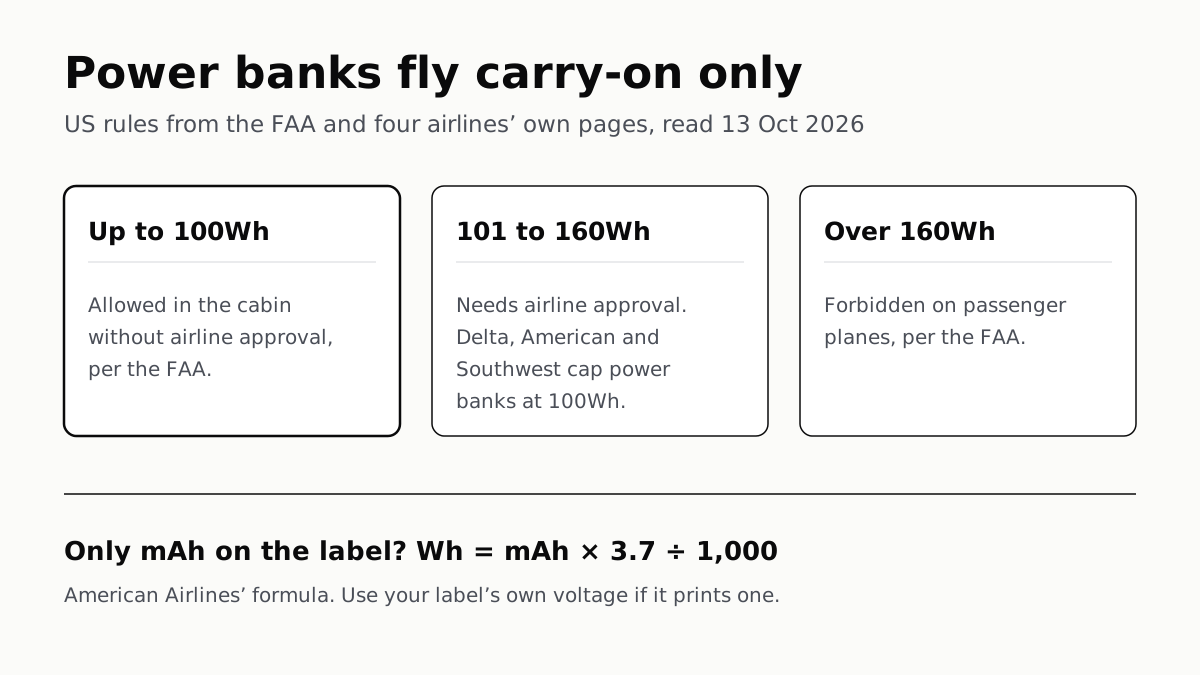
Yes, you can take a power bank on a US flight, but only in your carry-on, and up to 100Wh it needs no one’s permission. Between 101 and 160Wh the FAA requires the airline’s approval, and Delta, American and Southwest cap power banks at 100Wh anyway; above 160Wh is forbidden on passenger planes.
How many you can take is now an airline question. Southwest allows one power bank per person, Delta, American and United allow two, and the FAA sets no count for packs under 100Wh.
The federal limits, by size
The FAA’s rules apply to every US flight, and TSA enforces the carry-on half at the checkpoint: power banks are “Carry On Bags: Yes, Checked Bags: No”.
| Capacity | FAA rule | How many |
|---|---|---|
| Up to 100Wh | Allowed in the cabin, no approval needed | No limit, if for your own use |
| 101–160Wh | Needs the airline’s approval | Two spares per person |
| Over 160Wh | Forbidden on passenger aircraft | None |
Two FAA details catch people out. If your carry-on is checked at the gate or planeside, the power bank has to come out of it and stay with you in the cabin. And damaged or recalled batteries are not allowed in either cabin or hold unless they have been removed or made safe.
The FAA also wants the terminals protected from short circuit: retail packaging, tape over the contacts, or a snug plastic bag or protective pouch.
What four US airlines add
The FAA says many airlines have stricter quantity and watt-hour limits, and Southwest’s, American’s, Delta’s and United’s own pages bear that out.
| Airline | How many | Largest | In the cabin |
|---|---|---|---|
| Southwest | One per person, since 20 April 2026 | 100Wh | Under the seat, not the overhead bin; visible when in use; no charging it from seat power |
| American | Two | 100Wh each | Within reach and visible when in use; not in the overhead bin; no recharging from seat outlets |
| Delta | Two | 100Wh each, “with no exceptions” | Not in the overhead bin; no recharging on board; not used to charge a device during taxi, take-off or landing |
| United | Two | Lists general limits: 100Wh, or up to two at 101–160Wh | On you or in your personal item; not in the overhead bin; no recharging from aircraft power |
So at three of the four, the FAA’s 101–160Wh band does not exist for power banks: there is no approval to ask for. United’s page gives the general battery limits without a separate power-bank cap, and does not say whether a pack over 100Wh counts under them. If yours is that size, ask United before you fly rather than at the gate.
Southwest is the airline to plan around if you fly more than one. One power bank, at or under 100Wh, out of your bag while it is charging something.
Gaming handhelds are where the 100Wh line starts to bite. The ROG Ally X alone carries an 80Whr battery, which is why our piece on handheld battery life treats a 100Wh pack as roughly one full refill.
Reading the label
The FAA says newer lithium-ion batteries have the watt-hour rating printed on them, and American says it is usually on the back or base of the charger. If yours has one, that is the number to use, and you are done.
If it lists only milliamp-hours, the FAA’s formula is: divide the mAh by 1,000, then multiply by the voltage. American Airlines publishes the same thing with the voltage filled in, Wh = mAh × 3.7 ÷ 1,000, and gives a 10,000mAh charger as 37Wh.
| Printed capacity | Watt-hours at 3.7V | Under FAA rules |
|---|---|---|
| 5,000mAh | 18.5Wh | Allowed |
| 10,000mAh | 37Wh | Allowed |
| 20,000mAh | 74Wh | Allowed |
| 25,000mAh | 92.5Wh | Allowed |
| 26,800mAh | 99.2Wh | Allowed, just |
| 30,000mAh | 111Wh | Airline approval; not on Delta, American or Southwest |
| 40,000mAh | 148Wh | Airline approval; not on Delta, American or Southwest |
The table is our arithmetic on American’s formula. If your pack prints a voltage other than 3.7V beside its mAh figure, use that voltage instead: the FAA multiplies by the battery’s own volts, and a different voltage gives a different answer. If the label shows neither watt-hours nor a voltage, there is nothing reliable to work from, and United’s advice for a battery you are unsure about is not to pack it.
Before you pack
- Find the watt-hours on the label, or work them out from mAh and the printed voltage.
- Check your airline’s count. One on Southwest; two on Delta, American and United.
- Put it in the bag that stays with you. If that bag is gate-checked, take the power bank out.
- Leave a damaged or swollen one at home. The FAA bars damaged and recalled batteries from the cabin and the hold.
- On board, keep it with you or under the seat in front, not in the overhead bin, and do not plan on recharging it from the seat power on any of these four airlines.
The phone you are charging deserves a glance too: a battery that drains fast on the ground drains fast in the air, and you can check its battery health in Settings before you leave. If the trip is abroad, the other phone questions are what your carrier charges per day overseas and whether your charger needs more than a plug adapter.
Questions people ask
Can I bring a power bank on a plane?
Yes, in your carry-on. The FAA and TSA both say power banks cannot go in checked bags. If your carry-on is checked at the gate, the FAA says to take the power bank out and keep it with you in the cabin.
What size power bank is allowed on a plane?
Up to 100Wh with no airline approval under FAA rules. 101 to 160Wh needs the airline’s approval, and Delta, American and Southwest cap power banks at 100Wh regardless. Above 160Wh is forbidden on passenger planes.
Is a 20000mAh power bank allowed on a plane?
At 3.7 volts, the figure American Airlines uses, 20,000mAh works out to 74Wh, under the 100Wh limit. Check the label: if it prints a watt-hour rating or a different voltage, that figure is the one that counts.
How do I convert mAh to Wh?
Divide the mAh by 1,000 and multiply by the battery’s voltage. That is the FAA’s formula. American Airlines publishes it as Wh = mAh × 3.7 ÷ 1,000, so a 10,000mAh pack is 37Wh.
How many power banks can I take on a plane?
It depends on the airline. Southwest allows one per person, and Delta, American and United allow two. The FAA itself sets no count under 100Wh for personal use, and two per person between 101 and 160Wh.
Can I use a power bank during the flight?
On the airlines we checked, yes, with conditions. Southwest and American say it must be visible while in use, Delta bars using one to charge a device during taxi, take-off and landing, and none of the four let you recharge it from the seat power.
Why can’t power banks go in checked luggage?
Asked why lithium-ion batteries belong in the cabin, the FAA says they can overheat into thermal runaway, sometimes without warning, and that flight crews are trained to recognise and respond to battery fires in the cabin.
How we researched this
No one at bitcritiq has handled this product. Everything here comes from published sources, listed below.
- What this cannot tell you
- We checked four US airlines, not all of them; regional carriers, partner airlines and international flights can differ, and the FAA says many airlines have stricter limits. Southwest gives an effective date (20 April 2026) for its one-bank rule; Delta’s, American’s and United’s pages give none for theirs. United’s page does not say whether a power bank between 101 and 160Wh counts under its general battery allowance, so we do not say either way. The conversion table assumes 3.7 volts; a battery that prints a different voltage converts differently. We weighed and tested no power banks.
How we chose this, and what we did
- Why this subject
- Our 4 October trends digest showed “travel” rising 500% across four pulls in the ai and mobile categories, heading into holiday travel, and bitcritiq had no page on carrying batteries. The reader’s question has two halves, whether a power bank may fly at all and how big it can be, and in 2026 the second half depends on the airline as much as on federal rules.
- How we looked at it
- Every rule is from a first-party page read through a browser, first on 10 October 2026 and again in full on 13 October 2026, when no rule we cite had changed: the FAA’s PackSafe lithium battery page (last updated 11 August 2026) and its Airline Passengers and Batteries FAQ (last updated 2 October 2026), TSA’s What Can I Bring? entry for power banks, and the battery pages on Southwest’s, American’s, Delta’s and United’s own sites. American’s and the FAA’s collapsed sections were read from the pages’ full text. The mAh-to-Wh table is our arithmetic on American’s published formula; the FAA’s own formula (volts × amp-hours) gives the same result at 3.7 volts. Absence check on United: its page states a two-charger limit and general battery limits of 100Wh and 101–160Wh, and we found no separate watt-hour cap for power banks there, while the same page does give power-bank-specific rules on stowage and recharging.
What this rests on
6 claims, all official. Nothing here was measured by bitcritiq — see how we test for why. Open a claim to read the source it came from.
Power banks must travel in carry-on baggage and cannot be checked.Official
FAA FAQ: “Spare lithium batteries (including power banks and portable chargers) must be carried on and cannot be checked.” TSA: “Carry On Bags: Yes. Checked Bags: No.”
Under FAA rules, batteries up to 100Wh are allowed, 101–160Wh need airline approval, and above 160Wh are forbidden.Official
FAA FAQ: “Rechargeable batteries with a capacity of 0-100 Wh are allowed on passenger aircraft, while those with a capacity of 101-160 Wh require approval from the air carrier, and batteries exceeding 160 Wh are forbidden.”
The FAA sets no count for batteries under 100Wh carried for personal use, and two spares per person between 101 and 160Wh.Official
FAA FAQ: “There are no limits for rechargeable batteries under 100 Wh, provided they are for personal use by the passenger… For lithium-ion rechargeable batteries with a capacity of 101–160 watt-hours per battery, there is a limit of two spare batteries (including power banks and portable chargers) per person.”
Southwest limits each customer to one power bank of no more than 100Wh, effective 20 April 2026, and it must be visible when in use.Official
Southwest Help Center: “each Customer is limited to one power bank (effective April 20, 2026)… must not exceed 100 watt-hours… when in use it must be visible (not stored in a bag).”
Delta and American allow two power banks per person, each no larger than 100Wh.Official
Delta: “No more than two power banks may be carried per person, and they may not exceed an aggregate total of 100 Wh each, with no exceptions.” American: “Limit 2 portable chargers per passenger while onboard. Each charger must not exceed 100 watt hours (Wh).”
Watt-hours can be worked out from mAh by dividing by 1,000 and multiplying by the battery’s voltage.Official
FAA FAQ: “To determine Wh, multiply the volts (V) by the amp hours (Ah)… For milliamp hours (mAh), divide mAh by 1000 (to get to Ah) and then multiply by the V.” American: “Wh = mAh × 3.7 / 1,000. Example: A 10,000 mAh portable charger equals 37 Wh.”
Sources 7
- PackSafe — Lithium Batteries — Federal Aviation Administration (last updated 11 August 2026)OfficialStandards / .govaccessed Oct 13, 2026
- Airline Passengers and Batteries: Frequently Asked Questions — Federal Aviation Administration (last updated 2 October 2026)OfficialStandards / .govaccessed Oct 13, 2026
- What Can I Bring? Power Banks — Transportation Security AdministrationOfficialStandards / .govaccessed Oct 13, 2026
- Traveling with lithium batteries, portable chargers/power banks, e-cigarettes, and lighters — Southwest Airlines Help CenterOfficialaccessed Oct 13, 2026
Show 3 more · 3 official or standards
- Restricted items in bags (Batteries) — American AirlinesOfficialaccessed Oct 13, 2026
- Battery or Fuel-Powered Items — Delta Air LinesOfficialaccessed Oct 13, 2026
- Portable chargers, vapes and electronic devices — United AirlinesOfficialaccessed Oct 13, 2026
Pass it on
Know someone weighing this up? Send them the answer.
bitcritiq.com/5z2kThe link is permanent: it opens this article for good, even if the title changes.
No email, no account
Follow bitcritiq
Every new article, in whatever reader you already use.
Subscribe by RSSAll the ways to follow
Using Chrome on Android? Open the browser menu and tap Follow. New articles then turn up in the Following tab in Discover.
read next
Chargers Rated 100–240V Need Only a Plug Adapter Abroad
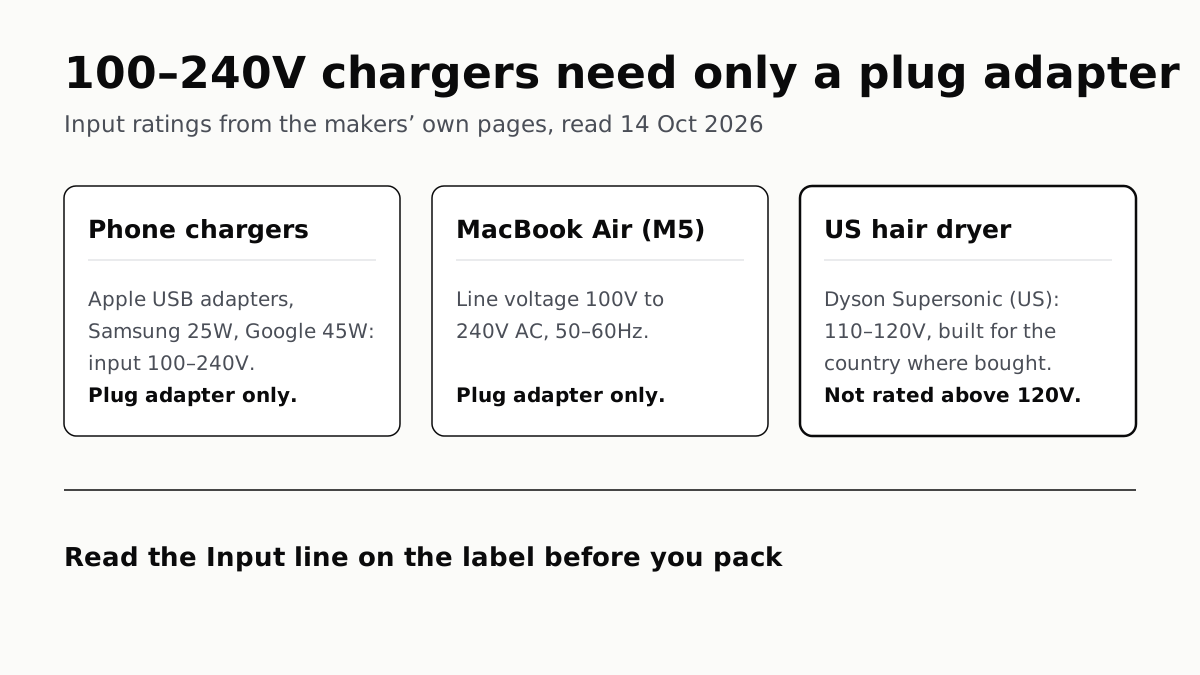
Apple, Samsung and Google rate their chargers, and the MacBook Air, for 100–240V. A hair dryer built for 110–120V is a different case.
Send Your AirTag Link to United, Delta, American, JetBlue
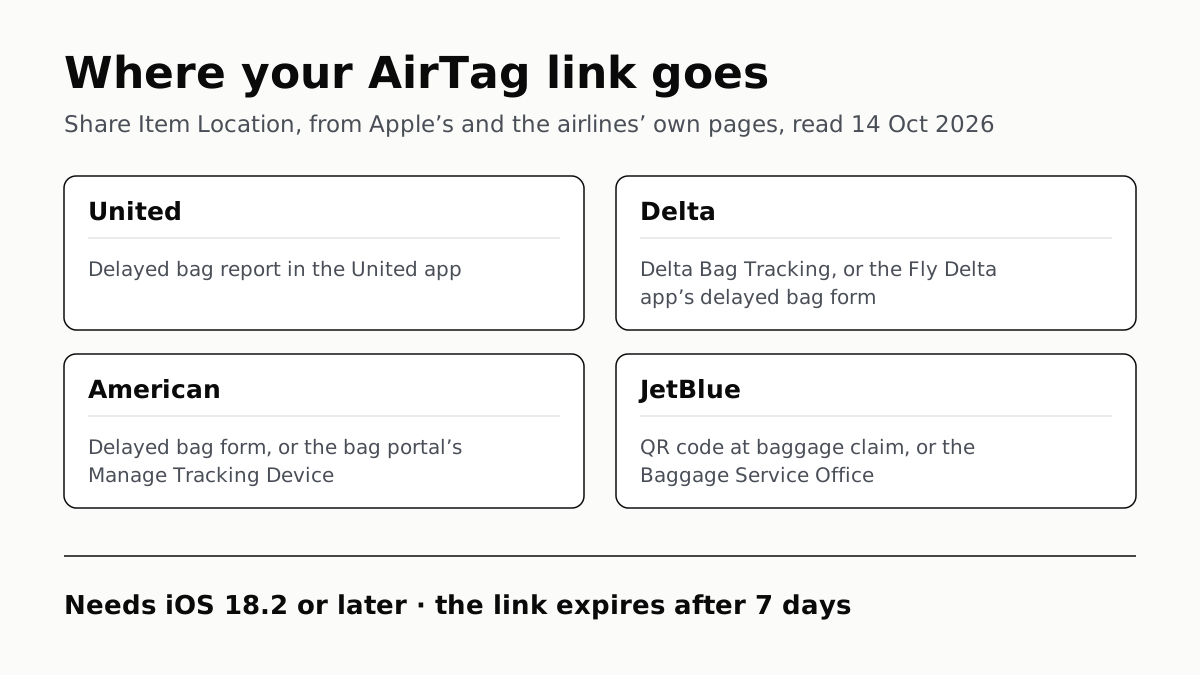
Find My’s Share Item Location makes a seven-day link a bag agent can open. Apple says more than 50 airlines accept it.
Family Link Works From an iPhone. Screen Time Needs Apple
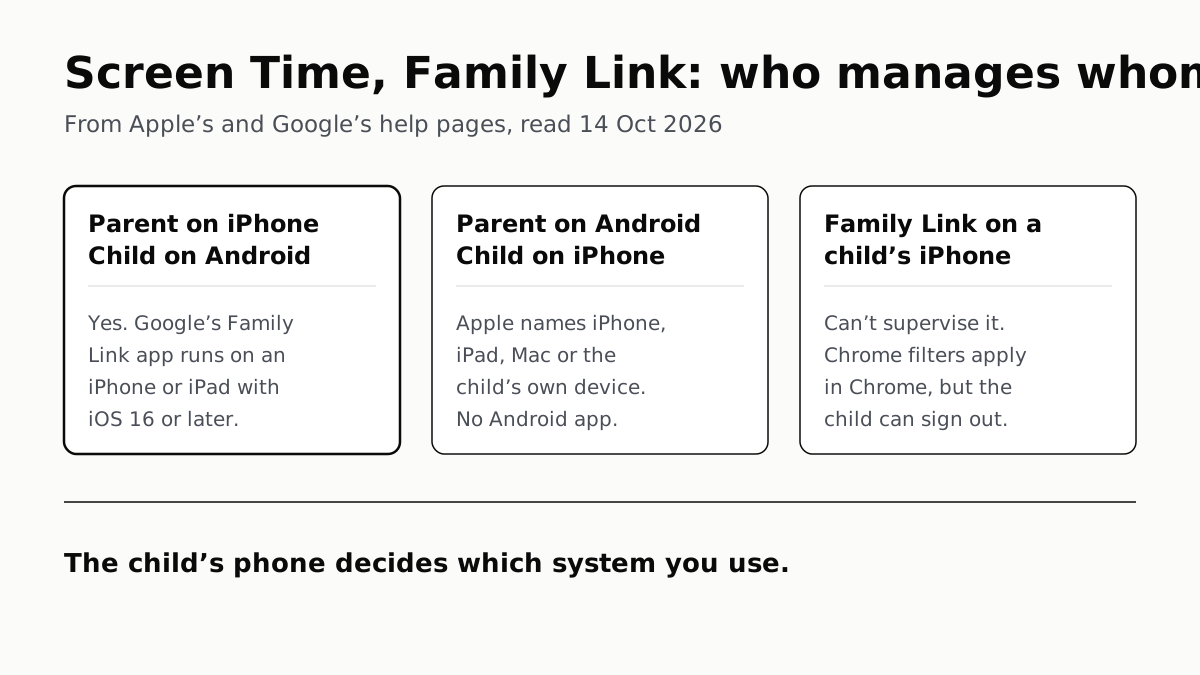
Neither app supervises the other maker’s phones. App limits, downtime, web filters and more, side by side, with iOS 27’s changes.
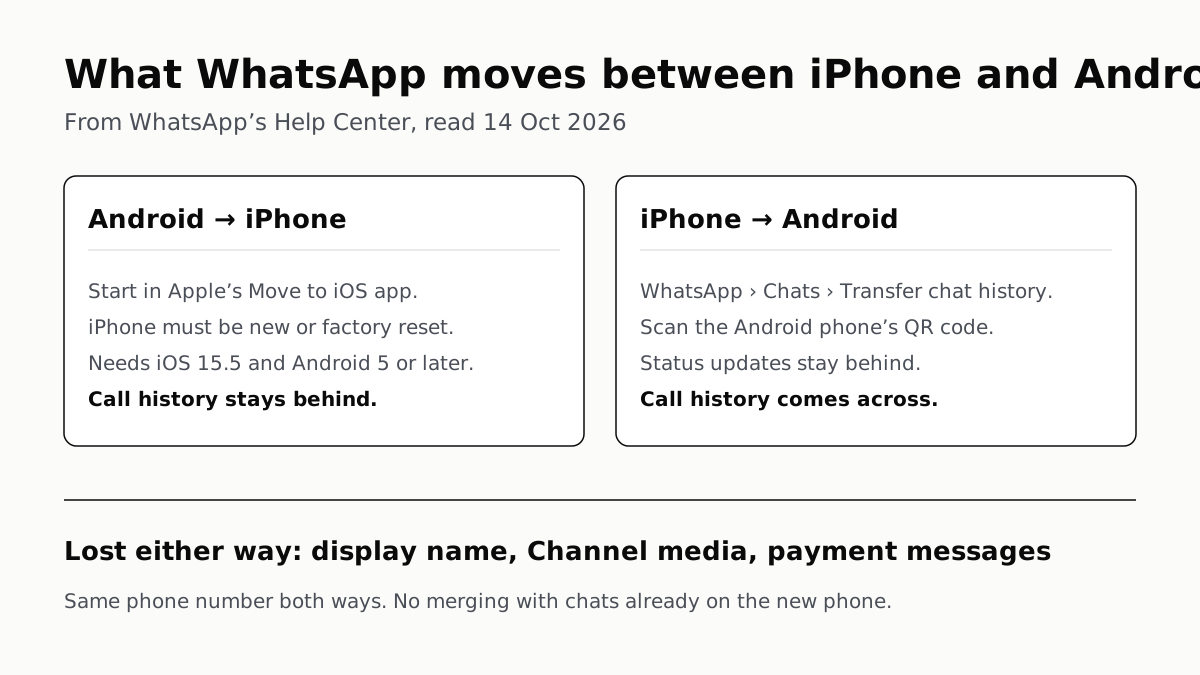
WhatsApp Chats Can Cross Between iPhone and Android
Messages, media and settings move both ways. Display names, Channel media and payment messages don’t, and call logs reach Android alone.