Xreal Aura Costs $1,279, Due to Ship Before the Holidays
Android XR glasses tethered to a Snapdragon puck, with a 70° view. The 16GB model is $1,499, and Xreal gives no battery life in hours.
If you buy through our links, we may earn a commission. It never affects our verdicts or scores — how that works. As an Amazon Associate I earn from qualifying purchases.
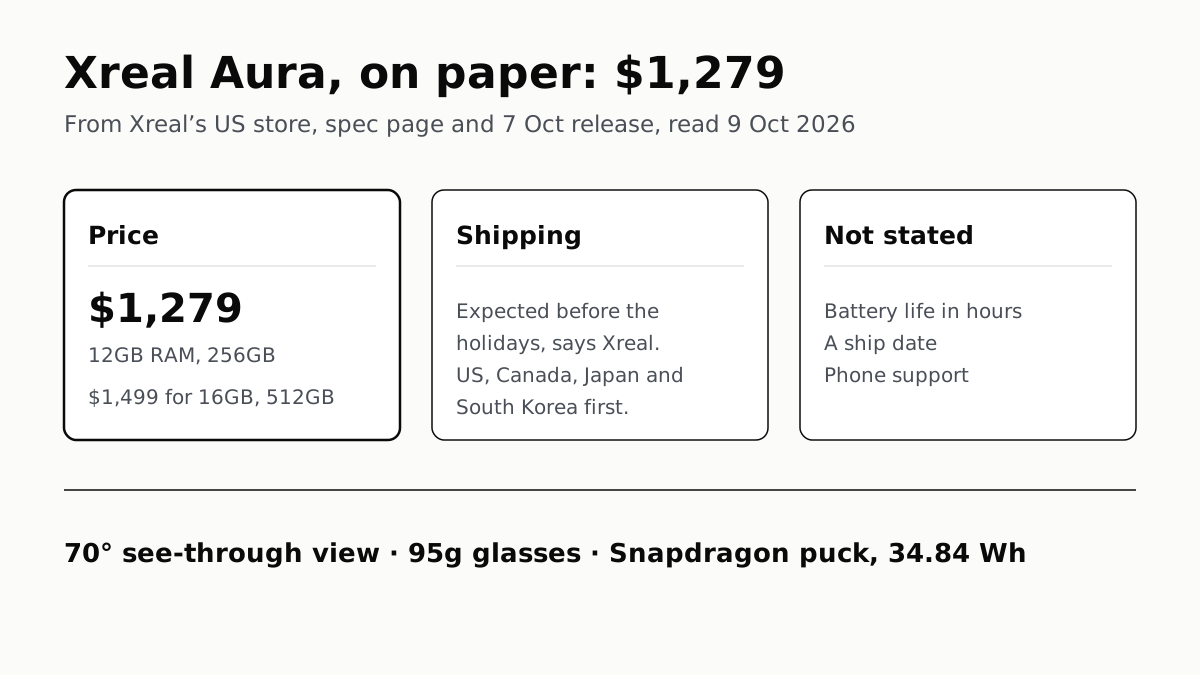
Xreal Aura costs $1,279 on Xreal’s US store with 12GB of memory and 256GB of storage, or $1,499 with 16GB and 512GB, and Xreal expects it to begin shipping before the holidays in the US, Canada, Japan and South Korea. It is a pair of see-through Android XR glasses wired to a pocket compute puck, built with Google and Qualcomm, that puts Google Play apps, Gemini and up to five virtual screens into a 70° view.
“Before the holidays” is an expectation, not a date. Xreal’s store adds that shipping is subject to “production schedules, quality inspections, and logistics conditions”, and its release of 7 October says only that the launch is “just weeks away”. Every figure below is from Xreal’s and Google’s own pages, read on 9 October 2026. We have not worn Aura.
Who can buy one now
Not everyone yet. Xreal’s release says only people who reserved Aura before 7 October can pre-order it now, and that orders open to the general public “in the coming weeks”. New customers can pay a $199 Priority Deposit in the meantime.
The store ranks shipping in groups: Founder Priority Pass holders first, then Launch Credit and Priority Deposit holders, provided they pay the balance by 31 October. Xreal is explicit that this sets dispatch order and “does not guarantee delivery by a specific date”. Both prices showed as regular prices, not sales, with a 30-day return window and a one-year warranty.
Aura, in Xreal’s figures
| Xreal Aura | |
|---|---|
| Price | $1,279 (12GB, 256GB); $1,499 (16GB, 512GB) |
| Shipping | Expected before the holidays: US, Canada, Japan, South Korea; more markets in 2027 |
| Glasses weight | 95g |
| Display | Sony micro-OLED, 1920 × 1200 per eye, up to 120Hz, 1,050 nits peak |
| Field of view | 70°, optical see-through |
| Dimming | Electrochromic, 5 levels, blocks up to 99.9% of outside light |
| Glasses chip | Xreal X1S, 3ms motion-to-photon latency |
| Puck chip | Snapdragon Reality Elite, 48 TOPS of AI processing |
| Puck battery | 4,455mAh, 34.84Wh; no hours given |
| Cameras | Two tracking cameras, hand tracking, a high-resolution camera with a privacy LED |
| Audio | Sound by Bose tuning, four microphones |
| Wireless | Wi-Fi 6/6E, Bluetooth 5.3, GPS |
| Sizes | M (IPD 60–66mm), L (IPD 66–72mm); prescription inserts |
The puck does the computing
Xreal calls the design split compute. The puck runs Android XR on Qualcomm’s Snapdragon Reality Elite and holds the battery, memory, storage and a touchpad; the glasses carry Xreal’s X1S chip for the display and sensors, which Xreal says keeps them light. The puck clips to a pocket or a lanyard and connects by USB-C cable.
You control it with your hands, your voice or the puck’s touchpad, and Bluetooth keyboards, mice and game controllers pair to it. A fingerprint button powers it on, unlocks it and approves payments in supported apps. Xreal lists Wi-Fi, Bluetooth and GPS, and no cellular connection.
What runs on it
Xreal says “millions” of Google Play apps work on day one, including YouTube, Google Maps, Chrome and Google Photos, plus more than 150 apps made for XR. Up to five virtual screens can be placed around you, and Gemini can answer questions about what you are looking at. Xreal’s fine print adds that “some features require setup or subscription” without naming which.
The puck’s second USB-C port takes a DisplayPort signal, and Xreal names a PC, laptop or handheld console as sources, so Aura can act as a large private monitor for a computer or a gaming handheld as well as running apps itself. Xreal’s Wired Mirroring feature is described for a PC.
What Xreal has not said
- Battery life in hours. The spec list gives the puck’s capacity, 34.84Wh, and a 57W charging input, but no runtime. For something sold for films and work sessions, that is a large gap.
- A ship date. Only “before the holidays” on the store and “just weeks away” in the release.
- Phones. No Xreal page we read mentions phones, as a companion or as a display source. The puck does not appear to need one, but whether a phone can feed it video is not stated.
- What the privacy LED shows. Xreal lists “a high-resolution camera with privacy LED indicator” and does not say whether it lights when Gemini uses the camera. Meta, by contrast, says its capture light stays dark for AI requests on most of its glasses.
- The puck’s weight. The glasses are 95g; the puck has no figure.
Xreal’s own pages also disagree. Its product page FAQ still says Aura is “expected to launch in Fall 2026”, that the base price “will not exceed US$1,500”, and lists the UK and 23 EU countries among launch regions. The store and the 7 October release say the first four markets are the US, Canada, Japan and South Korea, with more in 2027. We follow the store and the release.
Against other glasses we have covered
The Verge framed Aura on 7 October as a rival to Meta’s VR Glasses, and on price they are close. On paper they differ more than the price suggests:
| Xreal Aura | Meta VR Glasses | Snap Specs | |
|---|---|---|---|
| Price | $1,279 | $1,299.99 | $2,195 |
| Expected | Before the holidays | Spring 2027 | Later this fall, per Snap in September |
| Computing | Tethered puck | Tethered pocket puck | Standalone, no puck |
| How you see the room | Optical see-through | Camera passthrough | AR display, 51° field of view |
| Battery | Not stated in hours | Up to 3h of media playback | Up to 4h mixed use |
| Weight | 95g glasses | Roughly 100g | 132g or 136g |
Meta’s figures are from our piece on Meta’s 2026 glasses, and Snap’s from our Snap Specs piece. Aura is $20.99 cheaper than Meta’s VR Glasses and, on both makers’ stated timing, due months earlier. The bigger difference is the view: Aura’s lenses let you see the room directly, while Meta’s VR Glasses are a VR headset in glasses form that shows the room through cameras. Against Specs, Aura costs $916 less and has the wider stated field of view, 70° against 51°, but needs its cable and puck where Specs run on their own.
Questions people ask
How much is the Xreal Aura?
$1,279 with 12GB of RAM and 256GB of storage, or $1,499 with 16GB and 512GB, on Xreal’s US store, read 9 October 2026. Neither was a sale price. Xreal lists separate prices for Canada, Japan and South Korea.
When is the Xreal Aura release date?
Xreal has not given one. Its US store says it expects Aura to begin shipping before the holidays in the US, Canada, Japan and South Korea, and its 7 October release calls the launch “just weeks away”. More markets follow in 2027.
Can I pre-order the Xreal Aura?
Only if you reserved one before 7 October. Xreal says general orders open in the coming weeks; until then new customers can pay a $199 Priority Deposit, and deposit holders who pay in full by 31 October get priority shipping.
Does the Xreal Aura need a phone?
Xreal’s pages do not say it does. The puck runs Android XR and Google Play apps itself, with Wi-Fi, Bluetooth and GPS. Xreal names a PC, laptop or handheld console as wired display sources and does not mention phones.
How long does the Xreal Aura battery last?
Xreal does not say. It gives the puck’s battery as 4,455mAh, or 34.84Wh, and a 57W maximum charging input, but no hours of use.
Is the Xreal Aura a VR headset?
Not in the usual sense. The lenses are optical see-through, so you look at the room directly rather than through cameras, and electrochromic dimming can block up to 99.9% of outside light for films or games.
Does the Xreal Aura work with prescription glasses?
Aura comes with an optical insert frame, and Xreal sells Aura prescription lenses as a separate accessory in its US store. The glasses come in two sizes: M for an IPD of 60–66mm and L for 66–72mm.
How we researched this
No one at bitcritiq has handled this product. Everything here comes from published sources, listed below.
- What this cannot tell you
- We have not worn Aura, so nothing here says how it looks, fits or performs. Xreal gives no exact ship date and no battery life in hours. Its product page FAQ still carries reservation-era text (a fall 2026 launch, a base price ‘not to exceed US$1,500’, and UK and EU launch regions) that its store and press release have since superseded; we follow the store and the release. Prices are US; Xreal lists separate prices for Canada, Japan and South Korea.
How we chose this, and what we did
- Why this subject
- Xreal announced Aura’s price on 7 October 2026, and The Verge, CNET and Engadget all covered the price and release that day. No bitcritiq page covered Aura. The buyer’s questions are what it costs, when it arrives, what the money buys and what Xreal has not said, and Xreal’s own pages do not all agree on the answers.
- How we looked at it
- Every price, date and specification is from Xreal or Google, read on 9 October 2026: the XREAL AURA product page on xreal.com (including its collapsed FAQ, read from the page source), the XREAL AURA listing on Xreal’s US store (prices for all four variants read from the store’s product data, where list and compare-at prices were equal, so neither is a sale price), Xreal’s press release on PR Newswire of 7 October 2026, Google’s Keyword posts of 8 December 2025 and 16 June 2026, and Google’s Android XR page. Absence claims are controlled on the same page: Xreal’s spec list gives the puck’s battery capacity and charging input but no hours; it names a PC, laptop or handheld console as DisplayPort sources but no phone; it lists Wi-Fi, Bluetooth and GPS but no cellular; and it names the camera’s privacy LED without saying when it lights. Figures for Meta’s and Snap’s glasses are from our own earlier pieces, which cite those makers’ pages.
What this rests on
6 claims, all official. Nothing here was measured by bitcritiq — see how we test for why. Open a claim to read the source it came from.
Xreal Aura is $1,279 with 12GB of RAM and 256GB of storage, or $1,499 with 16GB and 512GB, on Xreal’s US store.Official
XREAL US Shop, 9 October 2026: “Regular price $1,279.00”, with variants “12GB RAM + 256GB” and “16GB RAM + 512GB”. Press release, 7 October 2026: “12GB RAM + 256GB or 16GB RAM + 512GB storage configurations for $1,279 or $1,499, respectively.”
Xreal expects Aura to begin shipping before the holidays in the US, Canada, Japan and South Korea, with more markets in 2027.Official
XREAL US Shop FAQ: “AURA is expected to begin shipping before the holidays for the US, Canada, Japan, and South Korea… subject to production schedules, quality inspections, and logistics conditions.” Press release: “XREAL AURA will begin shipping soon in the United States, Canada, Japan, and South Korea, with more markets coming in 2027.”
Pre-orders are open to customers who reserved before 7 October; general orders open later.Official
Press release: “only those who already reserved AURA prior to October 7 will be eligible to pre-order AURA and complete their purchases starting today” and “Orders will open to the general public in the coming weeks.”
The glasses weigh 95g and have a 70° optical see-through display, Sony micro-OLED at 1920 × 1200 per eye, up to 120Hz and 1,050 nits.Official
xreal.com/aura specifications: “Weight 95g”, “Sony Micro-OLED, 1920 × 1200 pixels per eye… Max Brightness: 1050nits… Up to 120Hz”, and “70° optical see-through display”.
The tethered puck runs Android XR on Snapdragon Reality Elite and holds a 4,455mAh, 34.84Wh battery; Xreal gives no battery life in hours.Official
xreal.com/aura specifications, Computing puck: “Operating System Android XR”, “Chip Snapdragon® Reality Elite platform, AI Processing 48 TOPS”, “Battery 4455 mAh 34.84 Wh”. The same section gives a 57W maximum charging input but no runtime.
Aura runs Google Play apps and can show a PC over a wired connection; Xreal names a PC, laptop or handheld console as DisplayPort sources.Official
xreal.com/aura: “Millions of apps are available day one on XREAL AURA through Google Play”, “Use Wired Mirroring to turn your PC into a massive, private virtual display”, and “DP-in to PC, laptop, or handheld console”.
Sources 7
- XREAL AURA — product page, xreal.comOfficialaccessed Oct 9, 2026
- XREAL AURA — XREAL US ShopOfficialaccessed Oct 9, 2026
- XREAL AURA Starts at $1,279, Bringing Wired XR Glasses with Android XR to Customers This Year — XREAL via PR Newswire, 7 October 2026Officialaccessed Oct 9, 2026
- Reservations are open for XREAL AURA, plus more news from AWE 2026 — Google, The Keyword, 16 June 2026Officialaccessed Oct 9, 2026
Show 3 more · 2 official or standards
- The Android Show: New features for Galaxy XR and a look at future devices — Google, The Keyword, 8 December 2025Officialaccessed Oct 9, 2026
- Android XR — android.comOfficialaccessed Oct 9, 2026
- At $1,279, Google’s Xreal Aura will go head-to-head with Meta’s VR Glasses — The Verge, 7 October 2026accessed Oct 9, 2026
Pass it on
Know someone weighing this up? Send them the answer.
bitcritiq.com/5rpzThe link is permanent: it opens this article for good, even if the title changes.
No email, no account
Follow bitcritiq
Every new article, in whatever reader you already use.
Subscribe by RSSAll the ways to follow
Using Chrome on Android? Open the browser menu and tap Follow. New articles then turn up in the Following tab in Discover.
read next
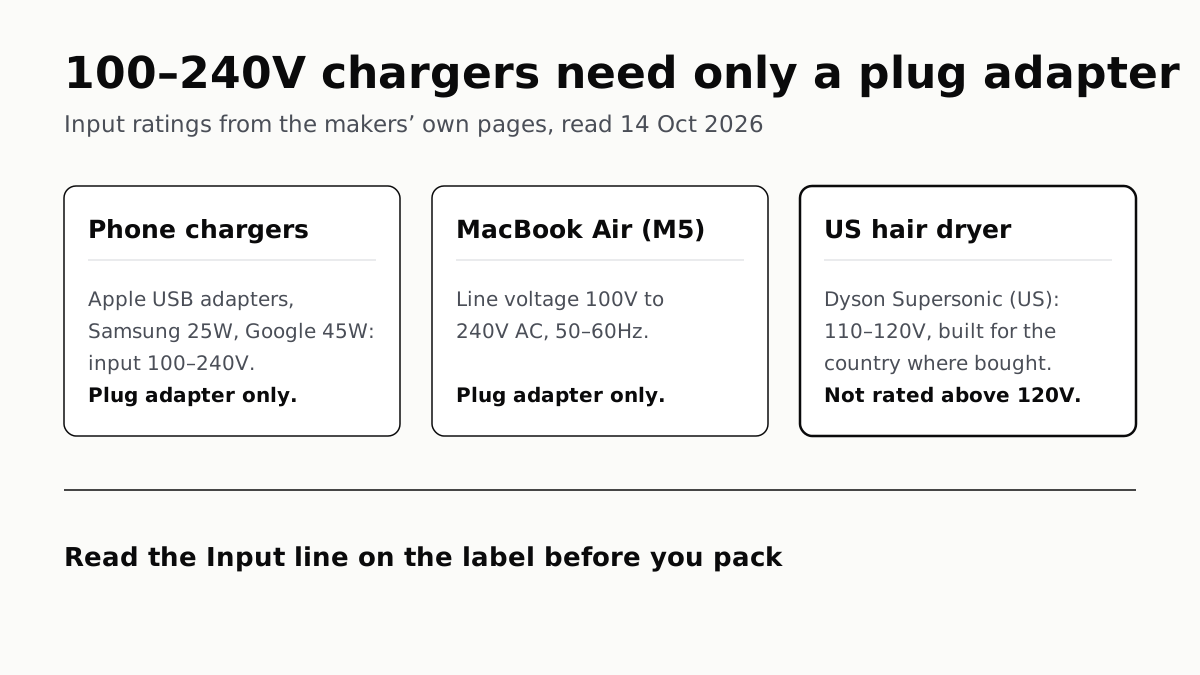
Chargers Rated 100–240V Need Only a Plug Adapter Abroad
Apple, Samsung and Google rate their chargers, and the MacBook Air, for 100–240V. A hair dryer built for 110–120V is a different case.
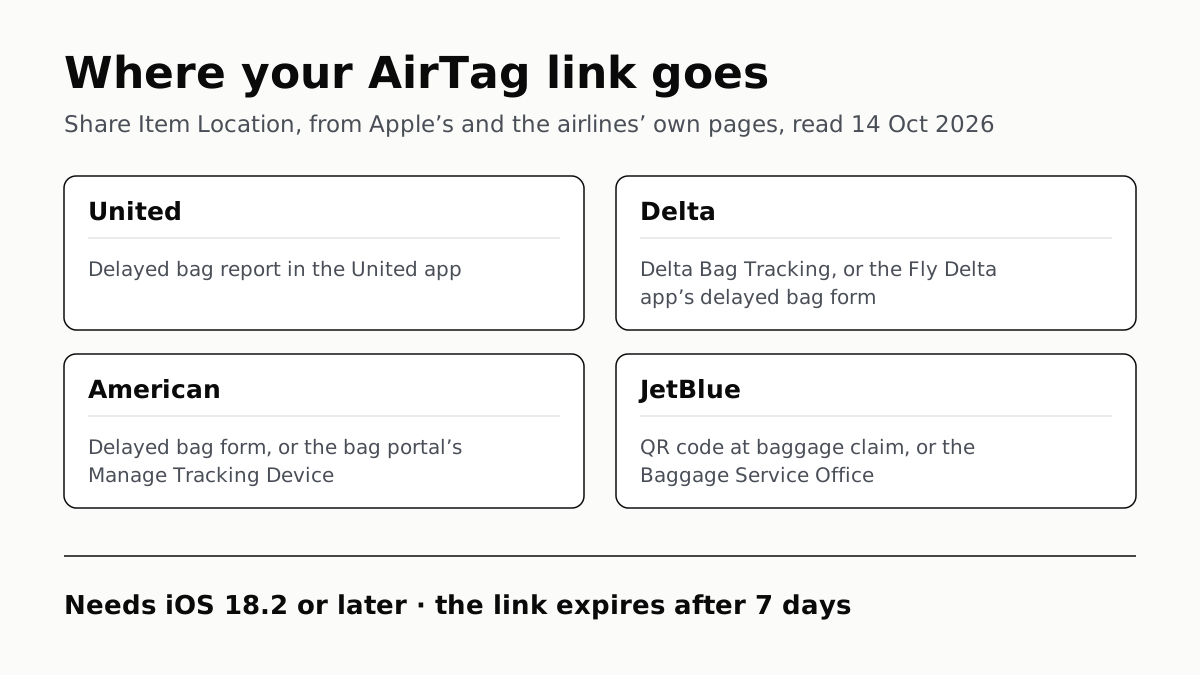
Send Your AirTag Link to United, Delta, American, JetBlue
Find My’s Share Item Location makes a seven-day link a bag agent can open. Apple says more than 50 airlines accept it.
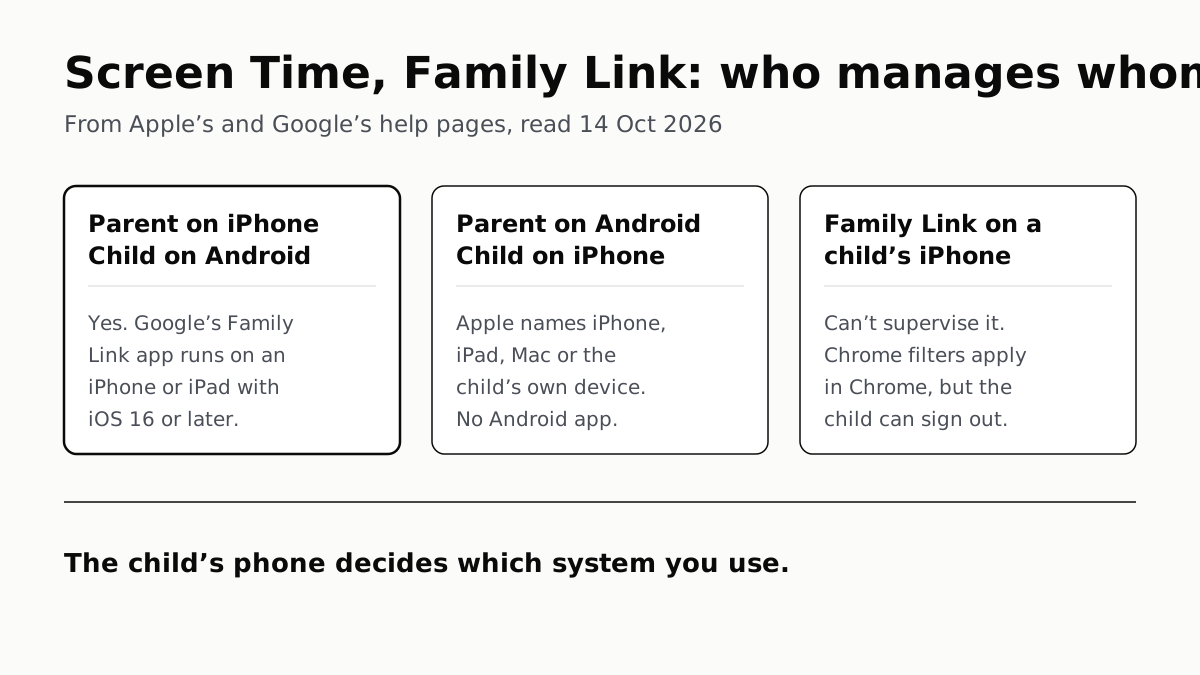
Family Link Works From an iPhone. Screen Time Needs Apple
Neither app supervises the other maker’s phones. App limits, downtime, web filters and more, side by side, with iOS 27’s changes.
WhatsApp Chats Can Cross Between iPhone and Android
Messages, media and settings move both ways. Display names, Channel media and payment messages don’t, and call logs reach Android alone.